How Many Types of MDF Are There? 7 Types Compared by Density & Use
Ever found yourself standing in the lumber aisle, puzzled by the variety of MDF options available? You’re not alone.
Understanding the different types of MDF (Medium Density Fiberboard) can be a game-changer for your next DIY project or home improvement endeavor. Whether you’re crafting furniture, building shelves, or upgrading your home décor, choosing the right type of MDF is crucial for achieving the desired results.
There are 7 main types of MDF, and what actually separates them is density and additives, not just color: standard MDF runs about 45–50 lb/ft³ (roughly 720–800 kg/m³), while ultralight MDF is milled 25–40% lighter at the same thickness. Here’s what each type is actually built for.
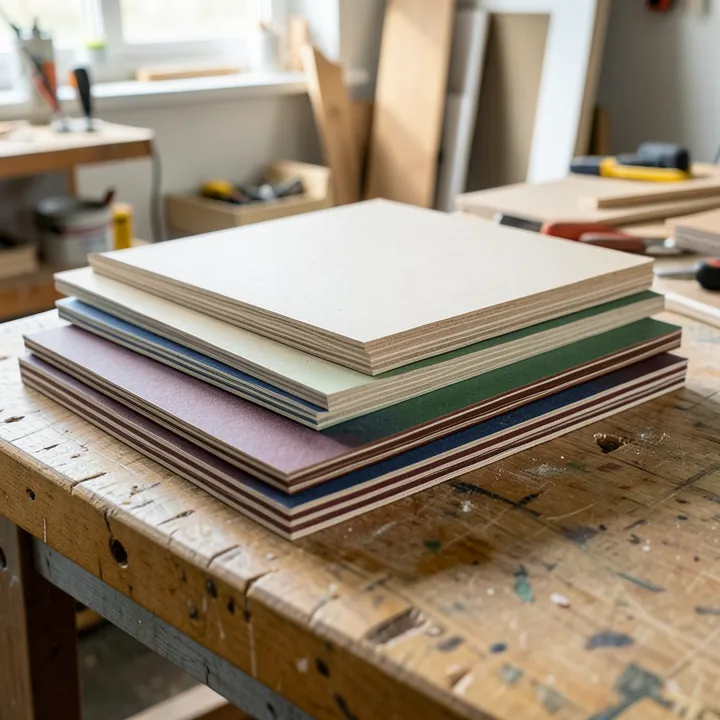
MDF Basics
Best Wood-Specific Countersink Set
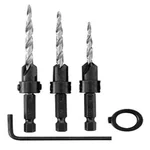 |
Irwin SPEEDBOR Countersink Wood Bit Set – $22.37 MDF’s dense fiber core chips easily around screw heads without a countersink pass first — this set is made for exactly that.
|
Every type of MDF starts the same way: hardwood and softwood scraps get chipped, steamed, and refined into individual wood fibers, then blended with a urea-formaldehyde (UF) resin binder and pressed under heat (around 340–390°F) and several hundred psi of pressure into a flat panel. What changes between the 7 types below is the resin chemistry, the additives mixed in before pressing, and how much the fiber mat gets compressed. Swap the UF resin for a moisture-resistant MDI (diphenylmethane diisocyanate) resin and you get moisture-resistant board. Mix in ammonium polyphosphate before pressing and you get a fire-rated panel. Compress the mat less and you get ultralight MDF at 60–70% of standard density. None of that shows up on the shelf label, which is exactly why it’s easy to grab the wrong one — a standard sheet in a bathroom vanity will swell at the cut edges within a season, while a moisture-resistant sheet in furniture that never touches humidity is just paying extra for nothing. Standard sheets run 4×8 feet at 1/4″ to 1-1/4″ thick, and that sizing carries across every variant on this list.
Standard MDF
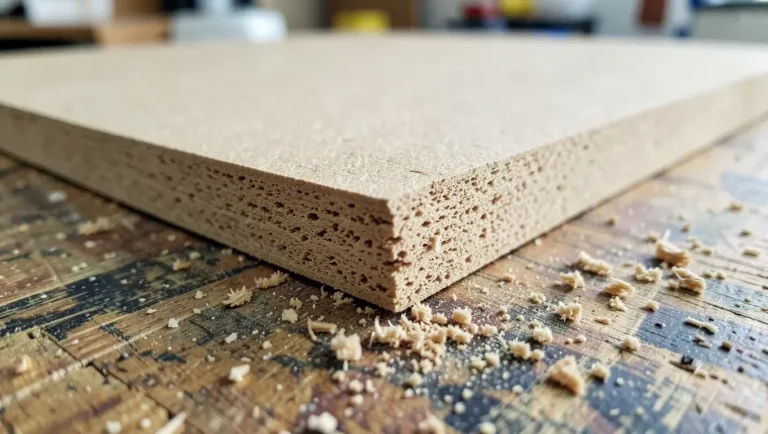
Standard MDF is the baseline everything else on this list gets compared to: 45–50 lb/ft³ density, UF-resin binder, no moisture or fire additives. Its strength comes from that density — a 3/4″ sheet holds a screw pull-out load of roughly 200–250 lbs when the screw goes in perpendicular to the face, though edge-driven screws (into the exposed fiber edge rather than the face) hold noticeably less and benefit from a pilot hole plus wood glue. Because the fiber is uniform with no grain direction, it takes paint and thin veneer better than solid lumber and won’t telegraph grain lines through a painted finish the way oak or pine plywood can. The tradeoff is the UF resin itself: it’s hygroscopic, meaning the board absorbs ambient humidity and can swell 8–15% in thickness if it sits in a damp garage or gets rained on during a job. Kept dry and primed on all six sides (including the cut edges, which soak up moisture fastest), a standard sheet is the cheapest, most workable option for cabinet carcasses, shelving, and interior furniture.
Moisture Resistant MDF
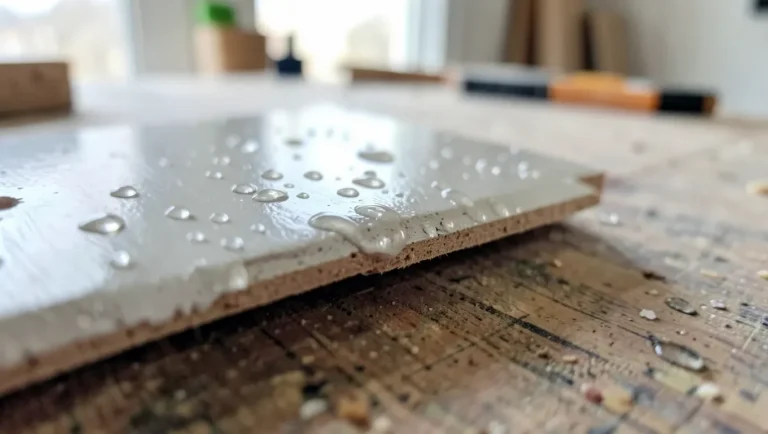
Moisture-resistant MDF (often labeled MR-MDF) swaps most or all of the UF resin for an MDI-based binder, which cures into a bond that doesn’t break down when it absorbs water the way UF does. Manufacturers also add a wax sizing agent to the fiber mix that slows water penetration into the board itself. The result isn’t waterproof — MR-MDF will still swell if it’s submerged or left standing in a puddle — but it resists the everyday humidity swings in a kitchen or bathroom (steam from a shower or dishwasher) that would delaminate standard MDF at the edges within a year. That’s why it shows up in bathroom vanity carcasses, kitchen kickboards, and laundry room cabinetry: places that see moisture in the air constantly but aren’t directly soaked.
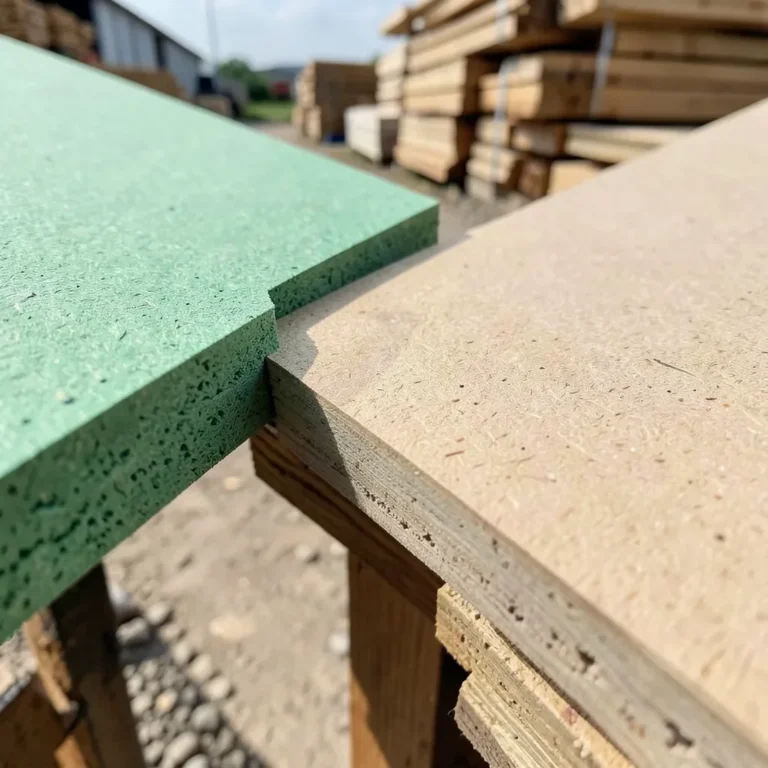
The tell for MR-MDF on a lumber yard shelf is the dye: manufacturers tint the fiber core green (a few brands use blue) specifically so installers can identify it after it’s cut and can’t check the label anymore — a genuine QC measure, not decoration. It machines and sands identically to standard MDF, but because the resin is different, some contact adhesives and finishes formulated for standard UF-based MDF don’t cure the same way on it; check the finish manufacturer’s compatibility notes before spraying lacquer over a large MR-MDF panel.
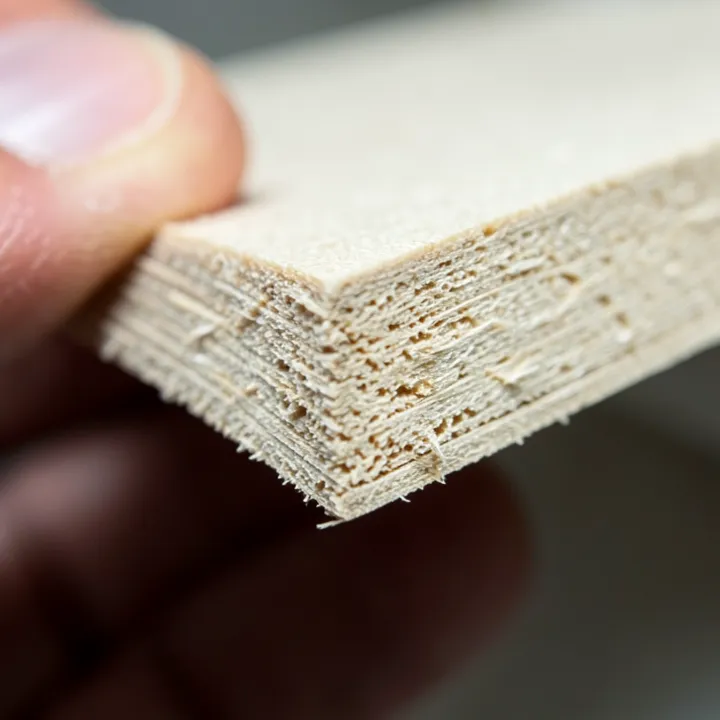
Fire Retardant MDF
Fire-retardant MDF gets ammonium polyphosphate or a similar phosphate-based flame retardant blended into the fiber before pressing, rather than sprayed or coated on afterward — that matters because a surface coating wears off if the board gets cut, sanded, or refinished, while an additive baked into the fiber itself stays effective through the life of the panel. The treatment doesn’t make the board fireproof; it slows ignition and reduces flame spread enough to meet Euroclass B or Class 1 fire ratings, which is why building codes specify it for elevator cab interiors, fire-rated stair stringers, and commercial partition walls in schools and hospitals. Manufacturers tint fire-retardant sheets pink or blue (the color varies by brand) for the same reason MR-MDF is dyed green: so it’s identifiable after cutting. For a home shop, it’s rarely worth the 20–30% price premium over standard MDF unless local code specifically requires a fire rating for the application — a furnace room enclosure or an attached-garage firewall, for example.
Exterior Grade MDF
Exterior-grade MDF (sold under names like MEDEX or Medite Exterior) pushes the MDI-resin approach used in MR-MDF further, using enough of it that the board is rated for direct weather exposure rather than just indoor humidity. That makes it an option for outdoor signage, soffits, and garden furniture where standard or even moisture-resistant MDF would delaminate within a season of rain. It’s not a “seal it once and forget it” material, though: the resin protects the fiber bond, but bare MDF surface still needs an exterior-grade primer and paint (or a laminate) to block UV and standing water, and the cut edges — the most porous part of any MDF panel — need extra coats since that’s where water gets in first. Expect to pay roughly 30–50% more per sheet than standard MDF, which is why it’s usually reserved for pieces that genuinely live outside rather than used as a blanket upgrade.
Ultralight MDF
Ultralight MDF gets its weight savings from how the fiber mat is pressed, not from a different raw material — manufacturers compress it less densely, landing around 30–40 lb/ft³ instead of standard MDF’s 45–50 lb/ft³, a 25–40% weight cut at the same thickness. A full 3/4″ 4×8 sheet of standard MDF weighs close to 96 lbs; the ultralight equivalent comes in around 60–70 lbs. That difference matters most for flat-pack furniture, RV and camper cabinetry, exhibition/trade-show displays, and any project where two people (or one person alone) have to carry and lift full sheets repeatedly.
The lighter density does trade off some strength — screw pull-out and panel stiffness both drop compared to standard MDF, so it’s a better fit for lightly loaded pieces (drawer fronts, decorative panels, display shelving) than for anything carrying real weight, like a workbench top or heavy bookshelf. It still cuts cleanly on a standard saw blade and produces noticeably less fine dust than standard MDF because there’s simply less compressed fiber being cut through, which is a real advantage if you’re machining it indoors without dust collection.
Colored MDF
Colored MDF (Valchromat is the best-known brand) is different from a painted sheet in one important way: the pigment gets mixed into the fiber and resin before pressing, so the color runs all the way through the panel rather than sitting on the surface. Cut a piece of colored MDF and the exposed edge is the same solid color as the face — no white MDF core showing through, which is exactly what happens when you rip a painted sheet on a table saw. That’s the whole appeal for furniture and shelving with visible cut edges, chamfered profiles, or CNC-routed shapes: skate ramp coping, retail display fixtures, and modern furniture with exposed joinery all use it specifically to avoid a paint-and-edgeband step. It comes in a limited palette compared to paint — typically black, white, red, blue, and a handful of others depending on the manufacturer — and costs meaningfully more per sheet than standard MDF, so it’s usually chosen for pieces where the through-color is actually visible in the finished piece, not as a general-purpose material.
Flexible MDF
Flexible MDF comes in two distinct forms, and they work by completely different mechanisms. The first is kerf-cut flexible MDF: a series of parallel slots milled through most of the panel’s thickness on one face, spaced close enough (often every 3/8″–1/2″) that the remaining thin layer can flex around a tight radius, sometimes down to a few inches. The second is genuinely flexible/bendable MDF, made with a different fiber layup that lets the whole panel curve smoothly with no visible slots, but only down to a wider minimum radius (commonly 3–4 feet, depending on thickness and brand). Kerf-cut is cheaper and handles tighter curves but shows slot lines on the back face and needs a backing material once bent; wet-process bendable MDF gives a cleaner curved surface on both sides but costs more and can’t turn as sharp a corner. Both get used for curved walls, reception desks, and furniture with rounded fronts — check which type a supplier is actually selling before ordering, since “flexible MDF” gets used loosely for both.
Applications Of Different MDF Types
Matching the type to the room matters more than most buyers realize. A bathroom vanity built from standard MDF instead of MR-MDF will typically show swelling at the toe-kick and door-bottom edges within 6–18 months of normal shower steam exposure — a callback that costs far more than the price difference between the two boards would have. Commercial kitchens and elevator lobbies specify fire-retardant board because local fire code requires a tested rating on interior finishes, not as an optional upgrade. Exhibition builders and RV cabinet shops default to ultralight MDF because every pound saved on cabinetry is a pound the trailer’s axle rating doesn’t have to absorb. And colored MDF shows up almost exclusively where the cut edge stays visible in the final piece — skate ramps, retail fixtures, furniture with exposed joinery — because that’s the only place its price premium buys something a painted standard sheet can’t match.
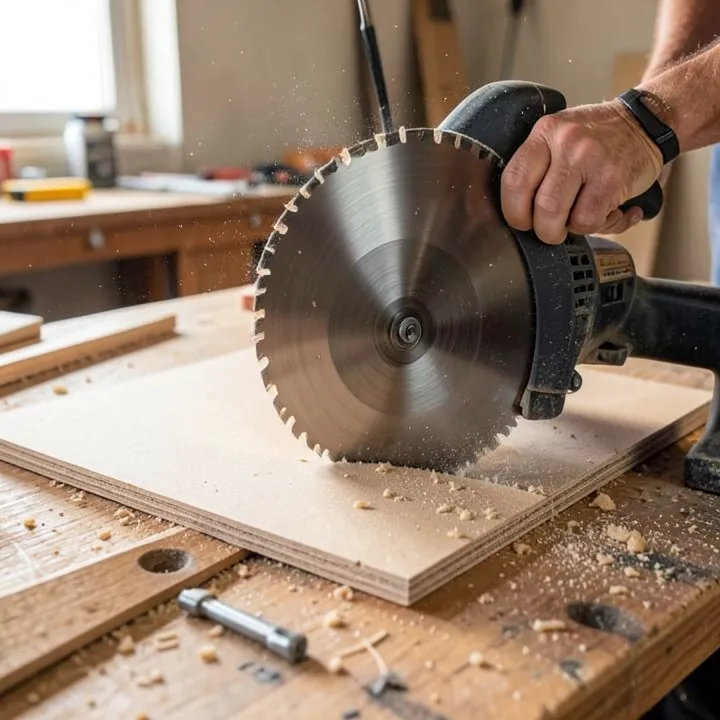
Choosing The Right MDF
Start with the environment the finished piece will actually live in, not the project type. A bookshelf and a bathroom cabinet are both “furniture,” but one sits in stable indoor air and the other sees steam and splashing daily — that difference decides standard versus MR-MDF far more than what you’re building. If the piece has to be moved often (flat-pack, trade show, RV) or carried up stairs solo, ultralight is worth the strength tradeoff. If local code or insurance requires a fire rating for the space, that overrides every other preference. And if cut edges will show in the final design, colored MDF saves an edge-banding or painting step that would otherwise eat the time you saved by using MDF in the first place. When none of those apply, standard MDF is the right default — it’s the cheapest option and the one every specialty variant on this list is built by modifying.
Frequently Asked Questions
How Many Different Types Of MDF Are There?
There are 7 main types: standard, moisture-resistant, fire-retardant, exterior-grade, ultralight, colored, and flexible MDF. Standard MDF is widely used for furniture and construction. Moisture-resistant MDF is ideal for humid environments. Fire-retardant MDF offers enhanced safety features, making it suitable for areas requiring fire protection. The remaining four solve narrower problems: exterior-grade for outdoor exposure, ultralight for weight-sensitive builds, colored for visible cut edges, and flexible for curved panels.
Which Grade Of MDF Is Best?
The best MDF grade depends on your needs. For furniture, choose high-density MDF. Moisture-resistant MDF suits bathrooms and kitchens. Select fire-retardant MDF for safety concerns.
Are There Different Quality Of MDF?
Yes, MDF comes in different quality grades like standard, moisture-resistant, and fire-retardant. Each type suits specific applications. Choose the right grade based on your project’s requirements for durability and performance. Higher-density MDF offers better strength and smoother finishes, ideal for detailed work and furniture making.
What Is The Difference Between MDF And HMR MDF?
MDF stands for Medium Density Fiberboard, ideal for indoor use. HMR MDF is a moisture-resistant variant, suitable for humid environments. Both are versatile, but HMR offers better durability in areas prone to moisture. HMR MDF is commonly used in kitchens and bathrooms due to its enhanced resistance.
Conclusion
The 7 types of MDF covered here all start from the same fiber-and-resin process, and the differences that matter come down to three variables: what resin binds the fibers (standard UF versus moisture-resistant or exterior-grade MDI), what gets added before pressing (flame retardant, color pigment), and how dense the fiber mat is pressed (standard versus ultralight). Once you know which of those three actually applies to your project — moisture exposure, fire code, weight, or visible cut edges — picking the right sheet off the shelf takes a lot less guesswork than the label alone gives you.
Sponsored / affiliate links. As an Amazon Associate I earn from qualifying purchases. I may earn additional commission from eligible campaigns.