How Much Wood Do I Need? Board Foot Calculator & Formula
To find out how much wood you need, calculate the total board feet required: multiply thickness (inches) by width (inches) by length (feet), then divide by 12 for each piece, and add them together. Add 10-15% on top for straightforward cuts, or up to 20-25% for a project with a lot of angles, joinery, or figured grain you’ll be selective about.
The exact number depends on what you’re building, but the method is the same for a bookshelf, a deck, or a stack of firewood: figure out the real volume or length you need, then add a realistic waste margin on top. Below is the actual math, not just “use a calculator.”
The Board Foot Formula
Best For Material Takeoffs
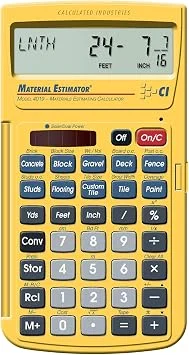 |
Calculated Industries Material Estimator Calculator – $27.42 Does the board-foot and material-quantity math below for you, directly in feet-inch-fraction – no converting to decimals first.
|
A board foot is a unit of volume: a piece of wood 1 inch thick, 12 inches wide, and 1 foot long. Most hardwood is priced and sold by the board foot, which is why it’s worth knowing the formula cold rather than relying on an app every time.
Board feet = (Thickness in inches × Width in inches × Length in feet) ÷ 12
Worked example: a board that’s 1 inch thick, 6 inches wide, and 8 feet long: (1 × 6 × 8) ÷ 12 = 4 board feet. For a project needing several different board sizes, calculate each one separately and add the totals together.
How Much Extra To Buy: A Realistic Waste Margin
A common piece of advice floating around is to “buy three times as much wood as you think you need.” That’s not a realistic rule for most projects – it’s a rough safety margin for complete beginners doing something with heavy waste (like resawing figured lumber for matched grain), not a general standard. For most builds, the actual industry-standard cushion is much smaller:
| Project Type | Recommended Extra |
|---|---|
| Simple, mostly straight cuts (shelving, framing) | 10% |
| Furniture with moderate joinery (tables, cabinets) | 15% |
| Complex joinery, angled cuts, or grain-matching | 20-25% |
| Highly figured wood where you’ll reject boards for appearance | 30%+ |
The “buy triple” advice isn’t wrong because extra wood is bad – it’s wrong because it wastes money on most projects. Calculate your real board-foot total first, then apply a waste percentage that matches your project’s actual complexity, not a flat multiplier.
Calculating Dimensional Lumber (2x4s, 2x6s, Etc.)
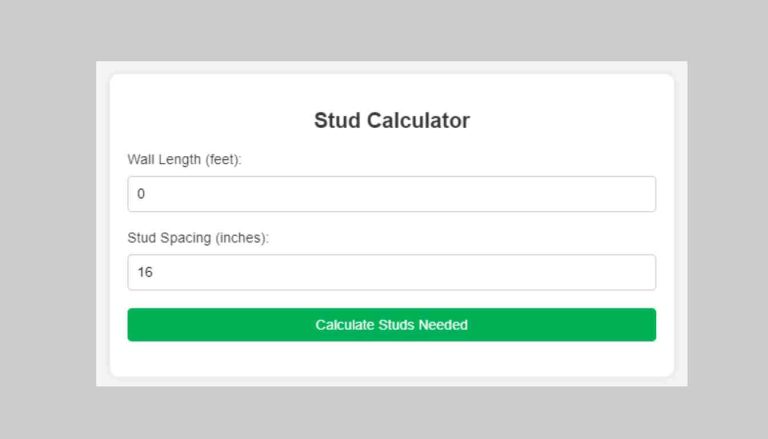
For framing and construction lumber, you’re usually counting pieces rather than board feet. Divide your total linear footage needed by the stock length of the boards you’re buying – but that stock length varies. 2x4s commonly come in 8, 10, 12, and 16-foot lengths, so “divide by 8” only works if you’re specifically buying 8-foot studs. Check what length your lumber yard actually stocks before dividing.
Worked example: a wall needing 96 linear feet of blocking, using 8-foot studs: 96 ÷ 8 = 12 pieces. The same 96 feet using 12-foot lengths would only need 8 pieces – fewer joints, but more waste if your wall sections don’t divide evenly into 12-foot lengths.
Firewood: Cords And Coverage
A full cord of firewood is a stack measuring 4 feet high by 8 feet long by 4 feet deep – 128 cubic feet total. For a typical wood-burning stove used as a primary or significant heat source through a full winter, 3 to 5 cords is a common range, though this varies a lot by climate, stove efficiency, and how much you’re relying on wood heat versus supplementing another source. For occasional weekend fires or a fireplace used a few times a month, a half to one cord often covers a season.
Calculating For A Real Project: A Simple Bookshelf
Say you’re building a bookshelf with two 30-inch-wide by 12-inch-deep shelves plus a top, bottom, and two sides, all from 3/4-inch stock:
- List every piece with its thickness, width, and length.
- Calculate board feet for each piece using the formula above.
- Add all the board-foot totals together for your raw material total.
- Apply a waste percentage based on the project’s joinery complexity (a bookshelf with simple butt joints or dados is closer to the 10-15% range).
- Round up to the nearest board your supplier actually stocks – lumber doesn’t come in the exact fractional board-foot amount your math produces.
Frequently Asked Questions
How do you calculate how much wood you need?
Calculate the total board feet for your project: (thickness in inches × width in inches × length in feet) ÷ 12 for each piece, then add the pieces together. Add 10-25% extra depending on the complexity of the cuts and joinery.
How much firewood do I need for a month?
For a stove used as a significant heat source, expect to use roughly 1 to 1.5 cords per month in cold weather, though this varies by climate and stove efficiency. A full cord (128 cubic feet) is a reasonable starting stock for a single month of heavy use.
What is the formula for determining board feet?
Board feet = (Thickness in inches × Width in inches × Length in feet) ÷ 12. For example, a 1-inch thick, 6-inch wide, 8-foot long board is (1 × 6 × 8) ÷ 12 = 4 board feet.
How do I figure out how many 2x4s I need?
Divide your total linear footage needed by the actual stock length you’re buying (commonly 8, 10, 12, or 16 feet – check with your supplier first). For example, 96 linear feet needed ÷ 8-foot studs = 12 pieces.
Conclusion
Calculating how much wood you need comes down to two real numbers: the board-foot total from your project’s actual dimensions, and a waste percentage that matches how complex the cuts and joinery actually are – not a flat “buy three times as much” rule. Do the math once per project and you’ll consistently buy close to what you actually use.
Sponsored / affiliate links. As an Amazon Associate I earn from qualifying purchases. I may earn additional commission from eligible campaigns.