What Is a Board Foot of Wood? Formula, Chart & Real Example
A board foot of wood is 144 cubic inches of lumber — a piece 1 foot long, 1 foot wide, and 1 inch thick. The working formula is thickness (in) × width (in) × length (ft) ÷ 12, but the number changes depending on whether you plug in a board’s nominal size (2×4) or its actual dressed size (1.5″ × 3.5″). This guide gives the correct formula, worked examples for both, a nominal-vs-actual size chart, and how board feet relate to cubic feet (CFT).
Ready to turn board feet into a purchase? See our guide on how to buy lumber for woodworking for grades, moisture content and how much extra to order.
How to Calculate a Board Foot (Formula + Worked Example)
Both versions of the formula give the same answer — use whichever matches how you measured the board.
All measurements in inches:
Board Feet = (Thickness × Width × Length, all in inches) ÷ 144
Length in feet, width and thickness in inches (the practical case, since a tape measure reads inches across a board’s face):
Board Feet = (Thickness (in) × Width (in) × Length (ft)) ÷ 12
Worked example: a board 1 in. thick, 6 in. wide, 8 ft. long.
Board Feet = (1 × 6 × 8) ÷ 12 = 4 board feet. In the all-inches version: (1 × 6 × 96) ÷ 144 = 4 — same answer.
The 144 and the 12 aren’t arbitrary. Width × thickness in inches gives the board’s cross-sectional area in square inches; 144 square inches make 1 square foot, so dividing by 144 converts that area to square feet. Multiplying by length in inches gives cubic inches, and dividing by another 144 (144 cubic inches per board foot) gets you to board feet in one step — which is why the all-inches version divides by 144 total, while the feet-based version only needs to divide by 12 (it’s already accounted for the length being in feet).
Best Tape Measure For Board Foot Calculations
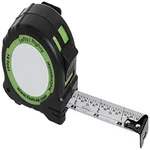 |
FastCap ProCarpenter 16-Foot Measuring Tape – $8.99 Board-foot math is only as accurate as the measurement you start with — this reads standard fractions to 1/16 in. from either hand, which matters when you’re measuring thickness and width on the same board before running the formula above.
|
Why Nominal Lumber Sizes Trip Up Board-Foot Math
A board sold as a “2×4” is not actually 2 inches by 4 inches. Mills plane rough-sawn boards down to a smaller, smooth “dressed” size after drying, per the American Softwood Lumber Standard that U.S. and Canadian mills follow for dimensional softwood lumber. The nominal name stays the same for pricing and ordering, but the wood in your hands is smaller.
| Nominal Size | Actual (Dressed) Size |
|---|---|
| 1″ × 4″ | 0.75″ × 3.5″ |
| 2″ × 4″ | 1.5″ × 3.5″ |
| 2″ × 6″ | 1.5″ × 5.5″ |
| 2″ × 8″ | 1.5″ × 7.25″ |
| 2″ × 10″ | 1.5″ × 9.25″ |
| 2″ × 12″ | 1.5″ × 11.25″ |
📊 A nominal 2×4 x 10 ft. board comes out to 6.67 board feet using its nominal size, but only 4.38 board feet using its actual dressed size (1.5″ × 3.5″ × 10 ft) — a 34% difference on the same physical board. — Source: American Softwood Lumber Standard (PS 20) dimension tables, cross-checked against lumber-yard reference charts, 2026.
This isn’t a mistake so much as an industry convention: U.S. lumber yards price and sell dimensional softwood (2×4, 2×6, and similar framing stock) by nominal size, so a supplier quote in board feet is almost always the nominal number. Rough-sawn hardwood, on the other hand, is typically sold and priced by its actual measured thickness (often marked in quarters, like 4/4 or 8/4) — for that lumber, always measure and calculate with the real dimensions in hand, not a nominal label.
Board Foot vs. Linear Foot vs. Square Foot
These three units get mixed up constantly because they can describe the same board, but they measure different things.
| Unit | What It Measures | Typically Used For |
|---|---|---|
| Linear foot | Length only, regardless of width or thickness | Trim, molding, baseboard |
| Square foot | Area — length × width | Flooring, sheet goods, paneling |
| Board foot | Volume — length × width × thickness | Rough and hardwood lumber pricing |
A 1×12 board and a 2×12 board of the same length have the same linear-foot and square-foot measurements, but the 2×12 has roughly twice the board feet, because board feet is the only one of the three that accounts for thickness. That’s why hardwood and rough lumber — where thickness varies board to board — gets priced by the board foot instead of the linear foot.
Board Foot vs. Cubic Feet (CFT): How They Compare
Board feet and cubic feet (CFT) both measure wood volume, just at different scales. A board foot is a fixed unit: 1 inch thick, 12 inches wide, 12 inches (1 foot) long — 144 cubic inches. A cubic foot is a full 12 × 12 × 12-inch cube — 1,728 cubic inches, or exactly 12 board feet.
| Measurement | Equivalent |
|---|---|
| 1 cubic foot (CFT) | 12 board feet |
| 1 board foot | 1/12 CFT (0.0833 CFT) |
Board feet is the standard retail unit for lumber in the United States and Canada. CFT is the standard commercial unit for pricing sawn timber in much of the South Asian timber trade (India, Pakistan, Bangladesh in particular) — see our full wood CFT calculation guide for that formula and worked examples. If a supplier quotes you in CFT and you need board feet for a U.S. order (or the reverse), multiply or divide by 12 using the table above, or use our board-foot-to-cubic-feet converter to skip the math.
Measuring Wood Accurately Before You Calculate
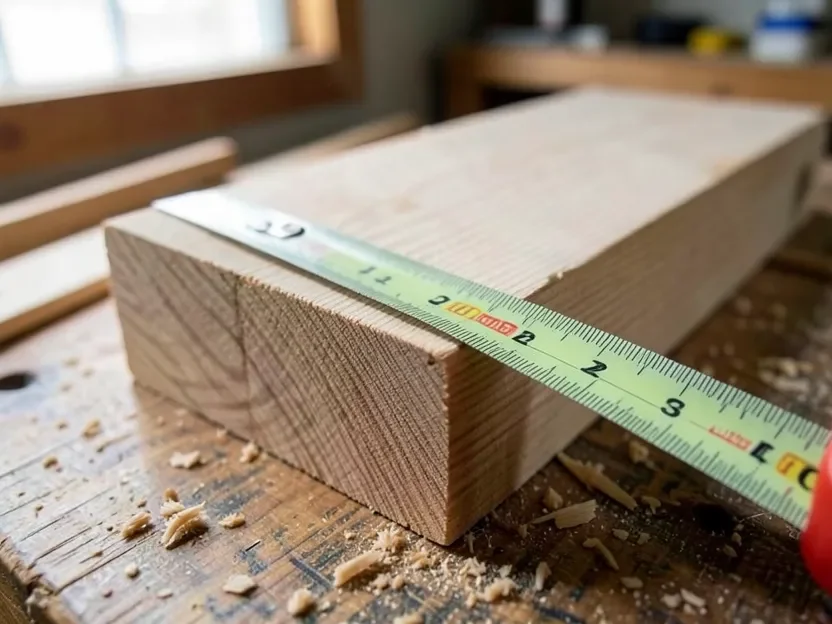
The formula is only as good as the numbers you feed it. A few habits keep the result honest:
- Measure actual dimensions on hardwood and rough-sawn stock. Never assume a labeled thickness — measure the real board with a tape measure or caliper.
- Keep units consistent within one calculation. Decide up front whether length is in feet or inches, and use the matching version of the formula (÷12 or ÷144).
- Round after you calculate, not before. Rounding a 5.5-inch width down to 5 inches before multiplying compounds the error across the whole board.
- Round up, not down, when ordering material. If your total comes out to 24.4 board feet, order 25 — rounding down to save a little is how projects come up short mid-build.
Why Board Foot Measurement Matters for Pricing and Ordering
Lumber yards and hardwood suppliers price stock per board foot because it’s the only unit that captures the full volume of wood you’re buying — two boards of the same length and width but different thickness represent genuinely different amounts of material, and board feet is what reflects that in the price. Getting the calculation right before you order keeps you from under-ordering (a mid-project trip back to the yard, and a color or grain mismatch if the batch is different) or over-ordering (wood sitting in the shop that you paid for and don’t need).
For framing-grade dimensional lumber specifically, our framing lumber calculator runs these numbers automatically for studs, plates, and joists. For every other wood-project measurement — area, volume, weight, unit conversions — the full woodworking calculators hub has the rest of the tools.
Frequently Asked Questions
What is a board foot?
A board foot is a unit of lumber volume equal to 144 cubic inches — a piece of wood 1 foot long, 1 foot wide, and 1 inch thick. It’s the standard unit U.S. and Canadian lumber yards use to price and sell rough and hardwood lumber.
How do you calculate board feet?
Use Board Feet = (Thickness in inches × Width in inches × Length in feet) ÷ 12, or the equivalent all-inches version divided by 144. Both give the same answer — use whichever matches the units you measured in.
Is a 2×4 actually 2 inches by 4 inches?
No. A nominal 2×4 is dressed down to an actual 1.5 by 3.5 inches after milling and drying. Using the nominal size instead of the actual size changes a board-foot calculation by roughly a third, though U.S. lumber yards still price framing lumber by its nominal size as standard practice.
How many board feet are in a cubic foot (CFT)?
One cubic foot (CFT) equals 12 board feet, since a board foot is 1 inch thick by 12 inches wide by 12 inches long, and a cubic foot is a full 12 x 12 x 12-inch cube — 12 times that volume.
Conclusion
Board-foot math comes down to two things: using the version of the formula that matches your units (÷12 for feet, ÷144 for all-inches), and knowing whether the size in front of you is nominal or actual. Measure real dimensions whenever precision matters, round up when you order, and the board-foot figure you land on will hold up whether you’re pricing a hardwood order or estimating a framing job.
Sponsored / affiliate links. As an Amazon Associate I earn from qualifying purchases. I may earn additional commission from eligible campaigns.