How to Calculate Board Feet: Formula, Chart & Real Examples
Board feet equal thickness (in.) × width (in.) × length (ft.) ÷ 12 — but lumber yards price by nominal size (2×4), not the smaller actual size (1.5×3.5 in.) the board is milled down to. Using the wrong dimension can throw a full order off by 25–30%. This guide covers the formula with a corrected 2×4×10 example, a quick-reference chart for common lumber sizes, and how to total board feet for a full order.
What Is a Board Foot?
Best Board Measuring Tool Pick
IRWIN 12-Inch Combination Square – $12.99
Locks at 90° and 45° so you can confirm actual board width and thickness before plugging numbers into the formula above — the chart only works if your measurements are accurate.
- Best for: Checking actual vs. nominal board dimensions before calculating
- Why we picked it: Stainless ruler holds a straight edge for accurate width readings
- Main drawback: 12-inch arm is short for very wide slabs
Compare more measuring options
 Option 1 Micymedo 12-Inch Combination Square – $8.49
|
 Option 2 GRENPRO Combination Square Set – $17.99
|
 Option 3 PEC Tools Aluminum Square Set – $16.69
|
As an Amazon Associate we earn from qualifying purchases.
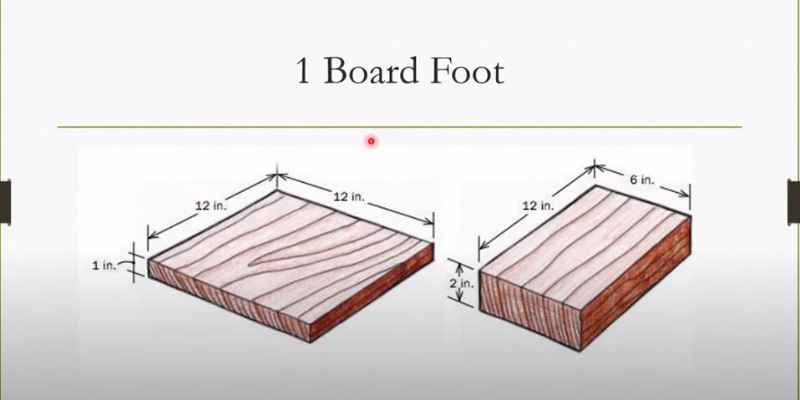
A board foot is a unit of volume used to price and measure lumber, equal to a board 12 inches long, 12 inches wide, and 1 inch thick (144 cubic inches). It is not the same as a square foot, which only measures area — two boards with the same footprint can have very different board footage if their thickness differs. Board feet matter most for hardwood and rough-sawn lumber sold by volume; framing lumber like a 2×4 is usually priced per linear foot instead, though the board foot figure still matters for material takeoffs.
For material planning, start with the woodworking calculators guide to find the right tool for your project, or use the manual formula below if you only need one quick figure.
📊 Rough-sawn hardwood thickness is measured in quarter-inch increments (4/4, 5/4, 8/4) from 3/4″ up to 4″, and grading percentages are based on surface measure, not board footage alone. — Source: American Hardwood Export Council, Grading & Measurement standard
Board foot is a unit of measurement used in the lumber industry and woodworking to determine the volume of a piece of wood. The calculation involves the thickness, width, and length of the wood, and it is essential for estimating the amount of wood needed for a project or determining the value of a particular piece of lumber.
Basic Units for Lumber Measurement
Calculating board feet uses three measurements: length, width, and thickness. Measure the length of the lumber in feet (round to one decimal place), then measure width and thickness in inches. A board foot is a measure of volume — one square foot of lumber that is one inch thick.
Formula for Calculating Board Feet
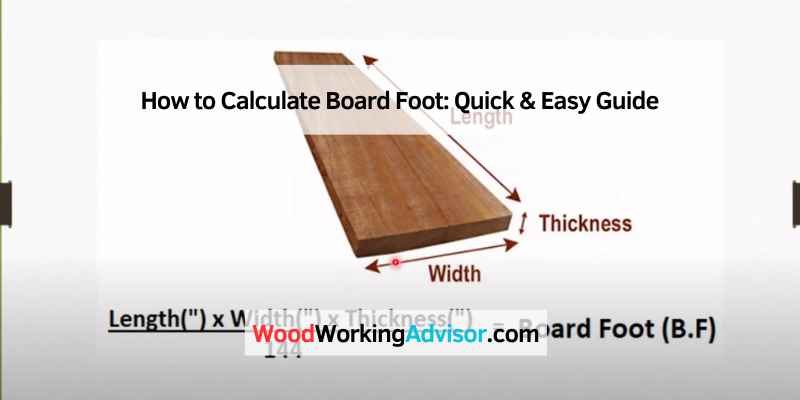
The standard formula is: Board Feet = (Thickness in. × Width in. × Length ft.) ÷ 12. If you prefer to work entirely in inches, use (Thickness in. × Width in. × Length in.) ÷ 144 instead — both formulas give the same answer, they just divide by a different number depending on whether length is in feet or inches. For example, a board measuring 6 feet long, 6 inches wide, and 1 inch thick contains (1 × 6 × 6) ÷ 12 = 3 board feet.
- Measure thickness: Record the board’s thickness in inches — use the nominal size (2″) for standard framing lumber, or the actual milled size for hardwood.
- Measure width: Record the width in inches at the widest face of the board.
- Measure length: Record the length in feet, rounded to one decimal place.
- Multiply and divide: Multiply thickness × width × length, then divide by 12 to get board feet.
Board Feet Quick-Reference Chart for Common Lumber Sizes
These figures use nominal dimensions (the size lumber is sold as, e.g. 2×6), which is how yards actually price and record board footage — not the smaller actual milled size.
| Nominal Size | Bd Ft per Linear Ft | Bd Ft at 8 ft | Bd Ft at 10 ft | Bd Ft at 12 ft |
|---|---|---|---|---|
| 2×4 | 0.67 | 5.33 | 6.67 | 8.00 |
| 2×6 | 1.00 | 8.00 | 10.00 | 12.00 |
| 2×8 | 1.33 | 10.67 | 13.33 | 16.00 |
| 2×10 | 1.67 | 13.33 | 16.67 | 20.00 |
| 2×12 | 2.00 | 16.00 | 20.00 | 24.00 |
How to Calculate Board Feet for Multiple Boards
For a full order, calculate the board feet of one piece, then multiply by the quantity — do not add the raw dimensions together first. Using the chart above, a single 2×6×8 board is 8 board feet. An order of 12 pieces of 2×6×8 is 12 × 8 = 96 board feet total. If your order mixes sizes, calculate each size separately and add the totals; mixing dimensions before dividing by 12 produces a meaningless number.
Board Feet vs. Square Feet vs. Linear Feet
These three measurements are not interchangeable, and mixing them up is a common ordering mistake.
| Measurement | What It Measures | Best For |
|---|---|---|
| Linear Foot | Length only | Trim, molding, fencing rails |
| Square Foot | Area (length × width) | Flooring, sheet goods under 1″ thick |
| Board Foot | Volume (thickness × width × length) | Hardwood, rough-sawn lumber sold by volume |
Calculating Board Feet in Special Cases
For irregular shapes, break the piece into smaller rectangular sections, calculate the board feet of each in cubic inches, add the volumes together, then divide by 144 to convert to board feet.
Nominal versus actual measurements matter because a board is milled smaller than the size it’s sold as. To convert actual measurements to nominal, add roughly 1/4 inch to thickness and 1/2 inch to width (the exact amount varies by mill). A nominal 2×4 measures about 1.5 by 3.5 inches actual — always confirm which figure a supplier is quoting before you order.
Purchasing Lumber by Board Feet
Board foot is the standard unit for pricing hardwood and rough-sawn lumber, and understanding it is essential to estimating project cost accurately. Once you know the board footage you need, multiply it by the price per board foot to get a total, then compare that against a lumber price calculator to sanity-check the number before you order.
“Always order 8–10% more board footage than your cut list calls for. Kiln-dried hardwood loses usable stock to warping, checking, and milling waste that a clean formula on paper never accounts for.”
Common Mistakes and How to Avoid Them
Measurement errors are the most common source of bad board foot totals — small rounding mistakes in width or thickness compound once you multiply across a full order. Confirm every measurement before you calculate, not after.
Confusing nominal and actual dimensions is the second most common mistake — a 2×4 is never actually 2 inches by 4 inches. Ask your supplier which figure they use for pricing before you calculate, since a mismatch can throw your total off by a quarter or more.
For hardwood specifically, misreading the quarter-inch thickness notation (4/4, 5/4, 8/4) is a common error for buyers used to framing lumber sizes — 4/4 means 1 inch thick, not a fraction of an inch.
Advanced Tips for Professionals
When buying thicker material, adjust your per-piece calculation accordingly rather than assuming a standard thickness. For large projects, calculate board footage by lumber size first (using the chart above), then total each size separately before combining — this makes it far easier to catch a measurement error before you order.
Frequently Asked Questions
What Is the Formula for Board Foot Calculation?
Board feet = (thickness in. × width in. × length ft.) ÷ 12. Measure length in feet and width and thickness in inches, then multiply and divide by 12.
How Many Board Feet Are in a 2x4x10?
A 2×4×10 board is 6.67 board feet using nominal dimensions (2 × 4 × 10 ÷ 12). Using the actual milled size (1.5″ × 3.5″), the true figure is closer to 4.375 board feet — lumber yards price by the nominal 6.67 figure.
How Many Board Feet Is a 4×8 Sheet of Plywood?
It depends on thickness: a 4×8 sheet is 32 sq. ft., so board feet equal thickness (in.) × 32. A 1″-thick sheet is 32 board feet, but common 3/4″ plywood is 24 board feet, and 1/2″ plywood is 16 board feet.
How Do You Calculate Board Feet for a 2x2x8?
Use (2 × 2 × 8) ÷ 12 = 2.67 board feet.
What Is the Difference Between Board Feet and Square Feet?
Square feet measure area (length × width) with no thickness factored in. Board feet measure volume (thickness × width × length), which is why board feet are the correct unit for pricing lumber sold by volume.
Why Is Lumber Priced by the Board Foot Instead of by the Piece?
Board foot pricing accounts for thickness, so a thicker board of the same length and width costs more — pricing by the piece alone would undercharge for thick stock and overcharge for thin stock.
Conclusion
Board foot calculation comes down to one formula — thickness × width × length ÷ 12 — applied to the right dimensions. Confirm whether you’re working with nominal or actual measurements, use the chart above for common sizes, and multiply per-piece totals by quantity for a full order rather than combining raw dimensions first.
Sponsored / affiliate links. As an Amazon Associate I earn from qualifying purchases. I may earn additional commission from eligible campaigns.