How Often Does An Oak Tree Produce Acorns? (Full Cycle)
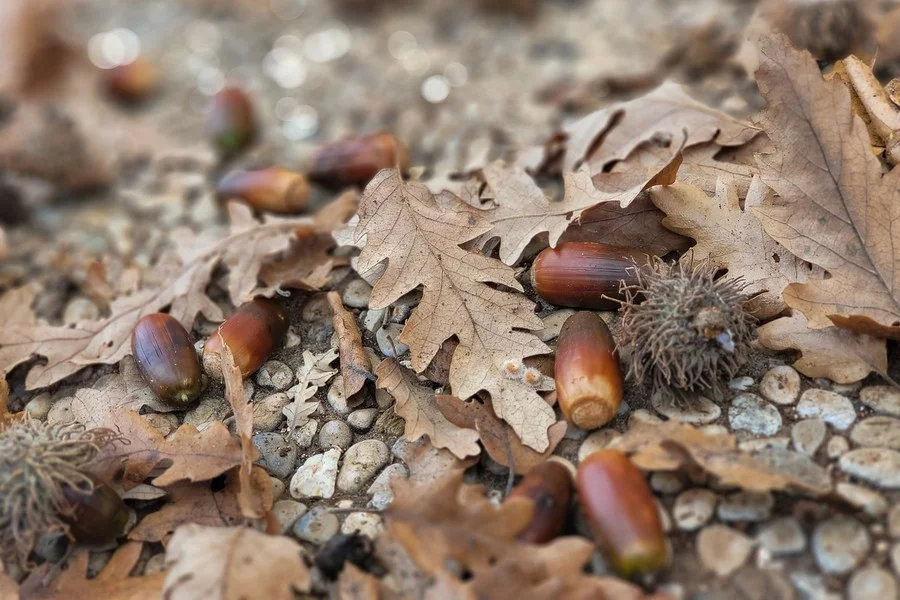
It’s that time of year again, isn’t it? You’re walking outside, maybe enjoying a crisp autumn day, and suddenly you hear it – that familiar thump, thump, thump on the roof or the sidewalk. Or perhaps you’re watching a squirrel dart across the lawn, cheeks bulging with a prize.
Yep, acorns. And if you’re like many of us, you might be wondering: just how often do oak trees actually make these little nuts?
It’s a question that seems simple, but the answer is a bit more detailed than you might think. Oak trees have a life cycle for their acorns that’s quite fascinating. Understanding this cycle helps us appreciate these amazing trees even more.
This article will walk you through the entire acorn production process. We’ll look at when they start, how long it takes, and what makes one year better than another for acorn harvests. We’ll also touch on why this matters for nature and even for us.
Oak trees produce acorns in a cycle that typically lasts about two years from flower to fallen nut. While some oaks produce acorns every year, bumper crops usually happen every two to five years, depending on species and environmental factors like weather and tree health.
The Oak Tree’s Acorn Journey
Let’s dive into the life of an acorn. It all starts with a flower. You might not even notice them, as they are quite small and subtle on oak trees.
These flowers are the very first step in making those acorns that so many creatures (and us!) enjoy.
Oak trees have two types of flowers on the same tree: male and female. The male flowers are in long, dangly catkins. They release pollen into the wind.
The female flowers are small, usually found near the base of new leaf shoots. They wait patiently to catch that pollen.
When a grain of pollen from a suitable oak lands on a receptive female flower, pollination happens. This is the spark that starts the acorn’s development. But this is just the beginning.
The journey from a tiny flower to a mature acorn is a long one, taking more than a single growing season for many oak species.
There are two main ways oak trees produce acorns, based on how long it takes for the fertilized flower to turn into a mature nut. These are known as the “biennial” and “annual” cycles. Most common oaks follow the biennial path.
Biennial Acorn Production: The Two-Year Cycle
This is the most common way oak trees make acorns. It means the whole process, from pollination to the acorn falling from the tree, takes two years. Think of it like a slow-growing plant.
It starts in the spring. Tiny female flowers get pollinated by wind-blown pollen. After pollination, the very young acorn begins to form.
But it doesn’t grow into a full-sized acorn that year. Instead, it goes through its first winter as a tiny, undeveloped nut. It stays protected inside its cap.
Then, in the second spring, this small nut starts to grow rapidly. It swells and matures throughout the summer. By the fall of that second year, the acorn is fully grown and ready to drop.
This is why you often see acorns in the fall. It’s the result of a process that began nearly 18 months earlier.
The species of oak tree plays a big role here. For example, Red Oaks like the Northern Red Oak and Pin Oak generally follow this two-year cycle. They are classic examples of biennial acorn producers.
Annual Acorn Production: The One-Year Cycle
Some oak trees are quicker. They can produce a mature acorn in just one year. These trees are called annuals.
The process is similar, but much faster.
In the spring, the female flowers are pollinated. The acorn starts to develop right away. It grows and matures throughout the summer.
By the fall of the same year, the acorn is ready to fall. This means the entire cycle from flower to nut happens within a single growing season.
White Oaks, such as the White Oak and Bur Oak, are typically annual producers. Their acorns mature much faster than those of the Red Oak group.
Knowing whether your local oaks are Red Oaks or White Oaks can give you a clue about their acorn cycle. This difference in timing is a key part of how different oak species reproduce and spread their seeds.
What is an Acorn Crop?
An acorn crop refers to the total number of acorns a tree or a group of trees produces in a given year. This is not a constant thing. Some years are packed with acorns, while other years might have very few.
This variation is a natural part of the oak tree’s life.
When an oak tree produces a massive amount of acorns, we call it a “mast year” or a “bumper crop.” These years are super important for the entire ecosystem. Animals like deer, squirrels, turkeys, and many birds rely on these abundant acorn harvests to build up their fat reserves for the winter. Without enough acorns, populations of these animals can struggle.
On the flip side, when there are very few acorns, it’s called a “poor mast year.” This can be tough for wildlife. It also means fewer new oak trees might start growing.
How Often Do Oak Trees Produce Acorns? The Cycle Explained
So, to get back to the main question: how often do oak trees produce acorns? It’s not a simple “every year.” It’s more about a pattern of good years and lean years, tied to their internal biological clock and external conditions.
For biennial oaks (the majority, like Red Oaks), the full process from pollination to falling takes two years. Even though the development happens over two years, the tree doesn’t necessarily have a huge crop every two years. Instead, they tend to have major mast years every 2 to 5 years.
In the years between these bumper crops, they still produce acorns, but in much smaller amounts. These are the “off” years or “lean” years for acorns.
For annual oaks (like White Oaks), the cycle is completed in one year. They have the potential to produce acorns every year. However, even these trees experience variations in their crop size.
They too will have better years and worse years, though perhaps not as dramatic as the boom-and-bust cycles seen in some biennial oaks. A good mast year for annual oaks might still happen every 1 to 3 years.
Think of it this way: a biennial oak tree is working on one batch of acorns for year one, and then it starts the process for the next batch in year two. It’s always preparing or maturing acorns. But it takes a specific trigger or condition for a truly massive production to happen.
This irregular pattern of mast years is thought to be a survival strategy. If oaks produced abundant acorns every single year, their main predators (like insects that eat acorns or mammals that eat them) would have an easy time. By having unpredictable, massive crops, oaks can overwhelm these predators.
Most of the acorns get eaten or start growing, and only a fraction might be saved by chance or by animals that manage to store them.
Factors Affecting Acorn Production
Many things can influence how many acorns an oak tree produces. It’s not just the tree’s internal clock. The environment plays a huge role.
Here are some of the main factors:
Weather
This is a big one! Weather conditions during crucial times can make or break an acorn crop.
- Spring Frosts: If a late frost hits in the spring after the female flowers have emerged and pollination has begun, it can kill them. This means no acorns will develop from that year’s flowers.
- Rainfall: Enough rain is needed for the trees to be healthy and produce flowers and nuts. But too much rain during flowering can wash away pollen. Too little rain during nut development can lead to smaller, fewer acorns.
- Temperature: Consistent, favorable temperatures during the growing season are best. Extreme heat or cold can stress the tree and reduce acorn yield.
- Wind: Wind is essential for pollination, as it carries pollen from male to female flowers. Strong winds during pollination season can help, but hurricanes or damaging storms can damage the flowers or developing nuts.
Tree Health and Age
Just like people, older and healthier trees tend to do better. Young oak trees are still establishing themselves and don’t produce many acorns. As they mature, their acorn production increases.
A healthy tree has more energy to put into reproduction. Trees stressed by disease, pests, or drought will often prioritize survival over acorn production. So, a strong, vigorous oak will generally produce more acorns than a struggling one.
Mature oaks, typically between 20 and 100 years old, are usually in their prime for acorn production. After that, production might level off or slowly decline in very old trees, although very old trees can still produce well if healthy.
Sunlight
Oak trees need plenty of sunlight to produce flowers and acorns. Trees growing in dense shade might produce fewer acorns because they aren’t getting enough energy from photosynthesis. Open-grown trees in fields or forest edges often produce more.
Pest and Insect Pressure
Various insects lay their eggs in acorns. The most common is the acorn weevil. The larvae eat the developing acorn from the inside.
High numbers of these insects can significantly reduce the number of viable acorns that fall from the tree.
Other insects can attack the flowers or leaves, impacting the tree’s overall health and its ability to produce acorns. A tree that is fighting off a major insect infestation might skip acorn production altogether to conserve energy.
Competition
If an oak tree is surrounded by other large trees, it has to compete for sunlight, water, and nutrients. This competition can limit its resources and thus its acorn production.
Acorn Cycle: By the Numbers
Two-Year Cycle (Biennial):
- Year 1 Spring: Pollination occurs. Tiny acorn begins to form.
- Year 1 Summer/Fall: Acorn grows slightly, then enters dormancy.
- Year 2 Spring: Acorn rapidly grows and matures.
- Year 2 Fall: Mature acorn drops from the tree.
One-Year Cycle (Annual):
- Year 1 Spring: Pollination occurs. Acorn begins development.
- Year 1 Summer: Acorn grows and matures.
- Year 1 Fall: Mature acorn drops from the tree.
My Own “Acorn Panic” Moment
I remember one fall a few years back. I had just bought my first house, and it had a beautiful, large Red Oak tree in the backyard. I was so excited about the idea of having a real, majestic tree.
But that autumn, I was bewildered. I’d hear acorns hitting the roof, but when I went to look, there were hardly any on the ground. It was so confusing.
I’d expected a carpet of acorns, like I remembered from my childhood visits to my grandparents’ farm. This tree was massive, so why the stingy output? I started to worry I had a sick tree, or maybe it was too young.
I even called an arborist, feeling a bit silly.
The arborist came out, took one look at the tree, and chuckled. He explained about the biennial cycle. He told me that particular year was an “off” year for that type of oak.
He said the previous year must have been a massive mast year, so this year, the tree was taking a break. He explained that the acorns I was hearing were likely just a few that had dropped prematurely or from branches that were more exposed. It was such a relief!
And he also mentioned that the “real” show of acorns would be next year, and the year after that, I’d probably have another big one. He made me feel so much better about my tree and my lack of acorn ground cover.
Real-World Context: Where and Why Acorns Appear
The presence and abundance of acorns are deeply tied to where oak trees grow and how they interact with their surroundings.
Forest Ecosystems
In forests, acorns are a cornerstone food source. During mast years, the forest floor can be thick with acorns. This provides food for squirrels, jays, chipmunks, deer, and many other animals.
The stored acorns that squirrels bury but don’t eat are also how new oak trees start to grow in new places.
The timing of acorn drop is also important. It usually happens in early to mid-fall, giving animals time to gather food before winter sets in. The variation in crops ensures that animals can’t always depend on a predictable food source, which can help keep populations in check and drive natural selection.
Urban and Suburban Environments
Even in cities and suburbs, oak trees provide a vital food source for urban wildlife. Squirrels are the most obvious beneficiaries, but birds like blue jays and woodpeckers also rely on them. The presence of acorn-producing oaks can make a neighborhood a more attractive habitat for these animals.
Homeowners with oak trees might notice more squirrel activity in the fall. They might also see more birds. Sometimes, acorns can become a nuisance if they pile up on driveways or patios, or if they get into gutters.
Understanding the acorn cycle can help you prepare for these times.
Design and Materials
Oak wood itself is famously strong and durable. This is partly why oak trees are so successful. Their tough acorns are also well-protected by their caps.
The cap helps to protect the developing nut from insects and early damage. The hard shell of the acorn adds another layer of protection once it falls.
The design of the acorn, with its cap and protective shell, is a perfect example of natural engineering. It’s built to survive the fall from the tree and the challenges of the environment until conditions are right for germination.
User Behavior and Wildlife Interaction
When acorns are abundant, wildlife behavior changes. Squirrels become incredibly busy, burying acorns everywhere. This burying action is crucial for oak tree dispersal.
Many of the acorns they bury are forgotten and eventually sprout into new trees.
Birds like jays are also important dispersers. They will carry acorns and stash them in various locations, often far from the parent tree. This helps oaks colonize new areas.
The sheer quantity produced in mast years ensures that even with many being eaten, enough are dispersed and survive to create the next generation of oaks.
Acorn Yield: Factors at a Glance
Good Yield Factors:
Healthy Tree
Mild Spring Weather
Good Rainfall
Ample Sunlight
Favorable Pollination
Poor Yield Factors:
Stressed Tree
Late Spring Frost
Drought or Excessive Rain
Shaded Location
High Insect Pests
What This Means for You: When Acorns Are Normal
Understanding the acorn cycle helps demystify why you might see a lot of acorns one year and hardly any the next. Here’s what it means for you:
When It’s Normal to See Many Acorns
It’s perfectly normal for oak trees to produce a heavy crop of acorns (a mast year) roughly every 2 to 5 years. For White Oak varieties, you might see good crops more often, perhaps every 1 to 3 years. These mast years are vital for wildlife and for the regeneration of oak forests.
If you notice your local oaks dropping a huge amount of acorns, consider it a sign of a healthy tree and a healthy ecosystem. Enjoy the abundance, and perhaps even help some of the local wildlife by leaving them be.
When to Be Concerned (or Just Aware)
If an oak tree that is mature and healthy produces very few or no acorns for several consecutive years, it might be a sign of stress. This could be due to:
- Drought: Prolonged dry periods can severely impact acorn production.
- Disease: Certain oak diseases can weaken the tree and affect its reproductive capabilities.
- Pests: A severe infestation of acorn weevils or other damaging insects can reduce the number of acorns.
- Environmental Changes: Extreme weather events or changes in the local environment can also play a role.
For most homeowners, a single year of low acorn production is not a cause for alarm. It’s usually just part of the natural cycle. However, if you see a mature, healthy tree consistently failing to produce acorns for 3-4 years in a row, it might be worth having it checked by a certified arborist.
Simple Checks You Can Do
If you’re curious about your oak tree’s acorn production, here are a few simple things to look for:
- Observe Nearby Oaks: Are other oak trees of the same species in your area producing acorns? If the whole neighborhood is having a low year, it’s likely natural.
- Look at the Tree’s Overall Health: Does the tree have healthy leaves? Is the bark in good condition? Are there signs of major disease or insect damage? A healthy tree is more likely to produce acorns.
- Check for Flowers in Spring: While small, you can sometimes see the male catkins or the tiny female flowers in the spring. Their presence indicates the tree is trying to reproduce.
- Examine Young Acorns: If you see tiny developing acorns in early summer, but they disappear before fall, it could be insect damage or poor weather conditions affecting their development.
Quick Tips for Managing Acorns
If your primary concern is dealing with acorns that fall on your property, here are a few practical ideas:
- Raking and Composting: The simplest method is to rake them up. Acorns can be a great addition to a compost bin, though they do take a while to break down.
- Mulching Around Trees: You can create a mulched area around the base of your oak tree. This can help contain some of the fallen acorns and reduce the mess on your lawn.
- Leaf Blower: For larger areas, a leaf blower can help gather acorns into piles for easier removal.
- Ground Cover: Consider planting ground cover plants under your oak tree. They can help catch and break down acorns, reducing the visible accumulation.
- Educate Neighbors: If acorns are a common topic of discussion with neighbors, sharing this information about the natural cycle might help manage expectations.
Remember, acorns are a sign of a healthy, productive oak tree. While they can sometimes be a nuisance, they are also a vital part of the natural world.
Frequently Asked Questions About Acorn Production
What’s the difference between Red Oak and White Oak acorn cycles?
Red Oaks typically follow a biennial cycle, meaning their acorns take two years to mature. White Oaks usually follow an annual cycle, with acorns maturing in one year. This means White Oaks can potentially produce acorns every year, while Red Oaks have a longer developmental period.
Why do oak trees have bumper crops of acorns sometimes and hardly any others?
This irregular production, known as masting, is a survival strategy. Massive acorn crops overwhelm seed predators like insects and animals, ensuring some acorns survive to sprout. Predictable, heavy crops every year would allow predators to thrive and eat most of the seeds.
Can a young oak tree produce acorns?
Young oak trees are usually not mature enough to produce acorns. They need to reach a certain age and size, typically between 10 to 20 years old, before they start producing seeds. Prime acorn production usually happens in mature trees between 20 and 100 years old.
How do I know if my oak tree is a Red Oak or a White Oak?
You can tell by looking at the leaves. Red Oak leaves have pointed lobes with bristle tips. White Oak leaves have rounded lobes without any bristles.
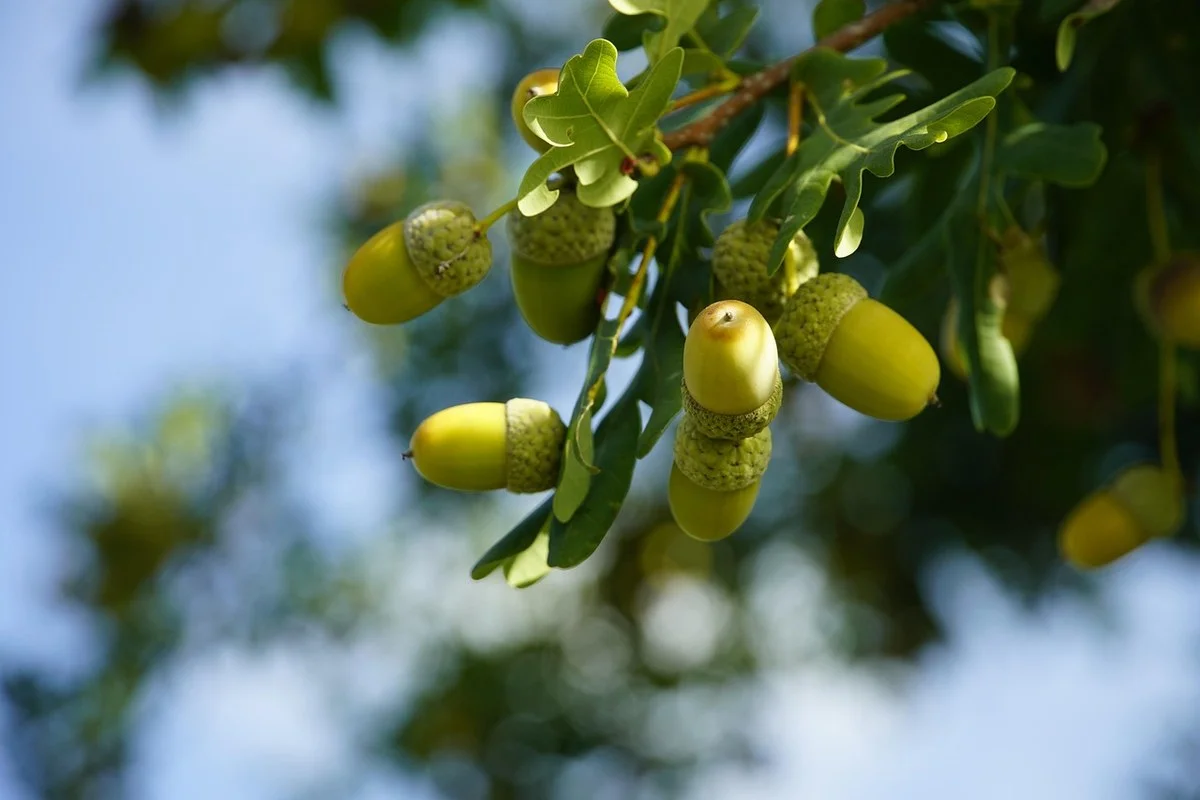
The acorns themselves can also offer clues: White Oak acorns usually have shallow, warty caps, while Red Oak acorns have deeper, saucer-like caps.
Are acorns edible for humans?
Yes, acorns are edible for humans, but they contain tannins that make them bitter and can cause stomach upset if eaten raw in large quantities. They must be processed to remove the tannins, usually by leaching them with water. Historically, they were an important food source for Native Americans.
What happens if an oak tree doesn’t produce acorns for a long time?
If a mature, healthy oak tree consistently fails to produce acorns for several years in a row, it might indicate stress from drought, disease, or pest infestation. It’s not usually a concern for a single year, but a pattern could signal a problem with the tree’s health.
Do all oak trees produce acorns?
Almost all oak trees produce acorns as their primary method of reproduction. There are thousands of oak species worldwide, and acorns are their characteristic fruit and seed. The size, shape, and maturation time of these acorns can vary greatly between species.
Conclusion: The Rhythms of Acorn Season
So, there you have it. The life of an acorn is a patient one, especially for many common oaks. It’s a journey that takes time, resources, and a bit of luck from Mother Nature.
Understanding that most oaks follow a two-year cycle for development, and that truly abundant harvests happen only every few years, helps explain the mystery of acorn seasons.
It’s a rhythm that shapes forests, feeds wildlife, and connects us to the natural world. The next time you hear that familiar thump, you’ll know it’s the culmination of a long and fascinating process.
},
},
},
},
},
},
} ] }