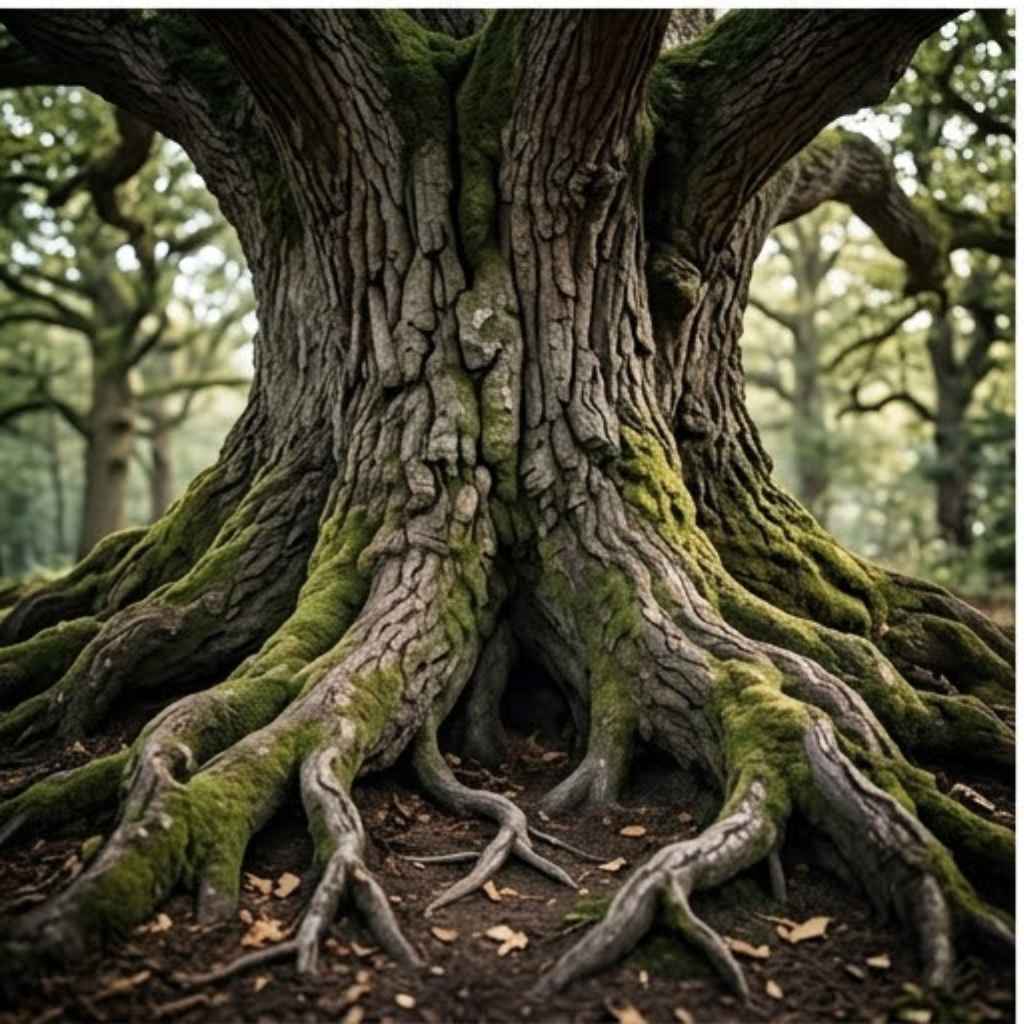
How Old Can Oak Trees Get? Lifespans That Will Shock You
Oak trees can live for a very long time, often between 100 and 300 years. Some species, however, can live much longer, with records of oaks reaching 1,000 years or even more. Their lifespan depends on many things, including the specific type of oak, the environment they grow in, and how well they are cared for.
The Incredible Lifespan of Oak Trees
When we talk about how old oak trees can get, it’s easy to be amazed. These trees are more than just wood and leaves. They are living history books.
Most oak species have a good lifespan. Many common types will live for a century or two. This is a long time for any living thing.
But some oaks are true record-holders. They can live for many, many lifetimes. We’re talking about hundreds of years.
Think about a tree that was alive when your great-great-great-great-grandparents were young. Some of the oldest oaks have seen over a thousand years pass by. That’s a huge amount of time.
What makes one oak live 100 years and another 1,000? It’s a mix of things. The kind of oak tree matters a lot.
The place where it grows is also super important. And, of course, how healthy the tree stays plays a big role.
What Makes an Oak Tree Live So Long?
Oak trees have several tricks up their sleeves. These help them survive for ages. Their strong wood is one big reason.
It helps them resist rot and insect damage. This means they stay strong for longer.
They also have a great root system. Oak roots spread wide and deep. This helps them find water even in dry times.
It also anchors them firmly against strong winds. Imagine a tree that can withstand many storms over centuries. That’s an oak for you.
Oaks also produce acorns. These are their seeds. Many acorns fall each year.
This means they are good at making more oak trees. This helps the species keep going even if some old trees fall.
Another factor is their slow growth. Oaks don’t rush. They grow steadily over many years.
This slow and steady approach helps them build a strong structure. It makes them tough and resilient. They don’t burn out quickly.
Different Kinds of Oaks, Different Lifespans
Just like there are different kinds of dogs, there are many kinds of oak trees. Each type has its own typical lifespan. Some are like the marathon runners of the tree world.
Others are more like sprinters.
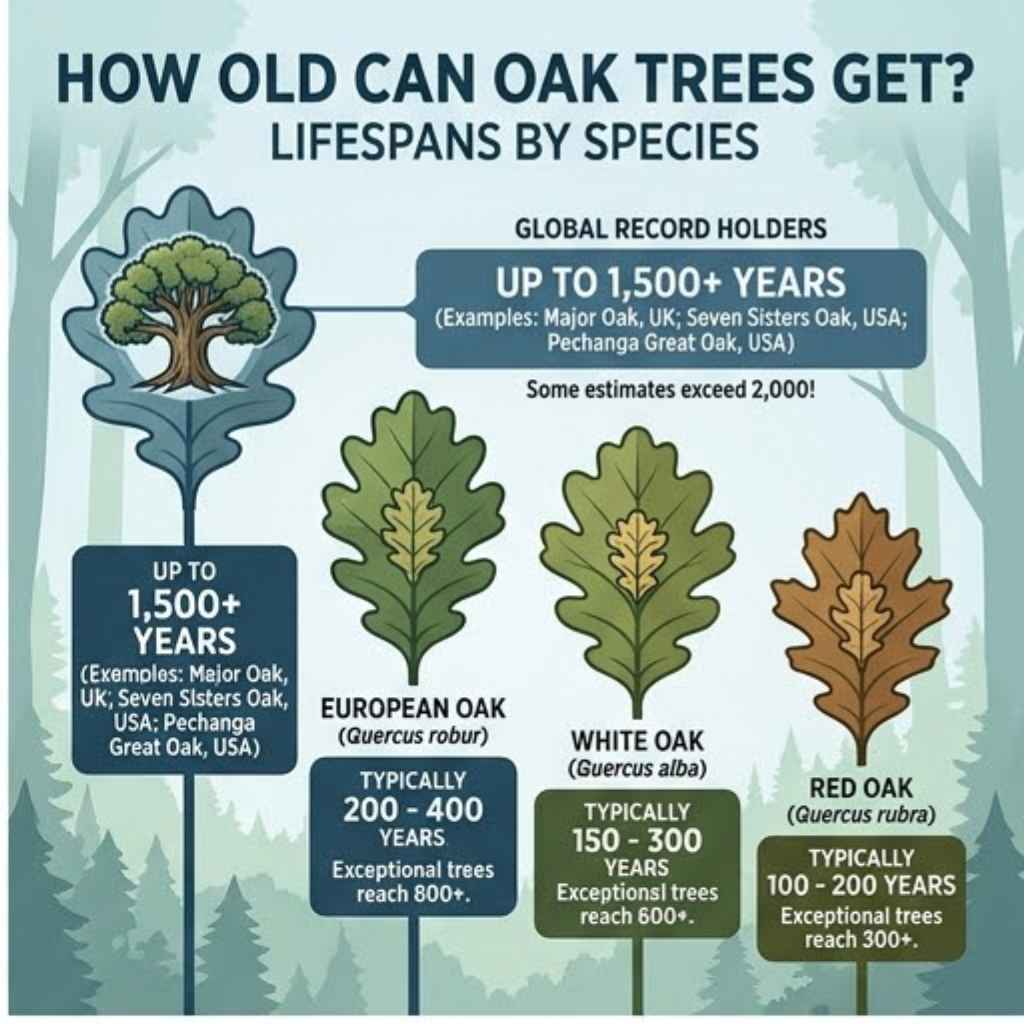
The White Oak (Quercus alba) is a prime example of a long-lived tree. These trees are often found in Eastern North America. They can easily reach 200 to 300 years.
Some have been known to live even longer. They are slow growers but incredibly sturdy.
The Live Oak (Quercus virginiana) is another remarkable species. Found in the Southern United States, these oaks are evergreen. They don’t shed their leaves in winter.
They can live for 100 to 200 years. Some might even touch 400 years in ideal spots. They are known for their wide, spreading canopies.
The Bur Oak (Quercus macrocarpa) is known for its toughness. It can survive in harsher climates than many other oaks. These trees can live for 200 to 400 years.
Their thick bark helps them resist fires, which is a big plus in some areas.
Then there are oaks like the Red Oak species. While still long-lived, they might have slightly shorter lifespans than white oaks on average. Many red oaks live between 100 and 200 years.
But this is still a very long time!
It’s important to remember that these are general numbers. A specific tree’s age can be different. It depends on its environment and health.
The Environment: Where Oaks Thrive
The place where an oak tree grows is super important for how long it lives. Oaks like good soil and enough water. But they are also quite tough.
They can adapt to different conditions.
Oak trees generally prefer well-drained soil. They don’t like having their roots sit in water for too long. This can cause root rot.
Good drainage helps keep their roots healthy and strong. This is key for a long life.
Sunlight is another big factor. Most oaks need plenty of sunlight to grow well. If they are in too much shade, they might not grow as vigorously.
This can shorten their lifespan. They need sun to make food.
Water is, of course, necessary. Oak trees need a steady supply of water, especially when they are young. Mature oaks are more drought-tolerant.
They have deep roots that can reach water far underground. But even they can struggle without enough rain for too long.
Climate also plays a role. Some oak species are better suited to certain climates. For example, some oaks do well in the colder parts of North America.
Others prefer warmer, more humid regions.
When an oak grows in a place with all these things just right—good soil, enough sun, and water, and a suitable climate—it has the best chance to reach its full, long lifespan. It’s like giving a plant the perfect home.
Oak Tree Growth Stages & Longevity
Seedling to Sapling (0-10 years): This is a fragile stage. Survival rates are low. Many are eaten or don’t get enough resources.
Young Tree (10-50 years): The tree grows taller and stronger. It starts to develop a more robust trunk and branches. It’s establishing its place.
Mature Tree (50-200+ years): This is the prime of an oak’s life. It’s producing acorns regularly and is a vital part of the ecosystem. Many species reach their maximum potential lifespan in this stage.
Ancient Tree (300+ years): Only the strongest oaks reach this age. They often have gnarled branches and a very wide trunk. They are living monuments.
The Role of Pests and Diseases
Sadly, not all threats to oak trees are natural like weather. Pests and diseases can also significantly impact how long an oak tree lives. These can weaken the tree over time.
Oak wilt is a serious fungal disease. It can spread quickly through oak trees. It blocks the tree’s water flow.
This can kill a tree in a matter of weeks or months. Unfortunately, there’s no easy cure for oak wilt once a tree is infected.
Various insects can also attack oak trees. The gypsy moth is one example. Large infestations can defoliate trees.
This means they lose all their leaves. If a tree is stressed by losing its leaves for too many years in a row, it can die.
Borers are another group of insects. They tunnel into the wood of the tree. This weakens the tree’s structure.
It can make it more likely to break in storms. It also makes it harder for the tree to transport nutrients.
When trees are healthy and have a good environment, they are much better at fighting off these pests and diseases. A strong tree can often recover from minor attacks. But a stressed tree is more vulnerable.
This is why good care and a healthy environment are so vital for longevity.
Human Impact on Oak Tree Lifespans
Humans have a big effect on how long oak trees live. Sometimes we help them. Other times, we can harm them without meaning to.
Planting oak trees in the right places is a great help. When people plant them in parks or yards, they often provide them with good conditions. They make sure they get enough water, especially when they are young.
They might even protect them from early damage.
However, humans can also cause problems. Development and construction can mean oak trees are cut down. Building roads or houses often requires clearing land.
This removes many mature oaks.
Pollution in the air and soil can also harm oak trees. Acid rain, for instance, can damage leaves and roots. Soil compaction from heavy machinery can make it hard for roots to grow and get air.
Introducing non-native pests and diseases is another human-caused issue. Sometimes, insects or fungi from other parts of the world arrive. Our native trees might have no natural defenses against them.
This can lead to widespread tree death.
On the flip side, conservation efforts help. When people work to protect oak forests or restore degraded areas, they are helping oaks live longer. These efforts can make a real difference.
Myth vs. Reality: Oak Tree Longevity
Myth: All oak trees live for exactly 100 years.
Reality: Lifespans vary greatly by species and environment. Some live much less, others much more.
Myth: Oaks stop growing once they reach maturity.
Reality: Oaks continue to grow throughout their lives, though growth slows significantly after maturity.
Myth: An oak tree that falls is simply old.
Reality: Many factors can cause an oak to fall, including disease, storms, pests, or root damage, not just age.
The Oldest Oak Trees on Record
When we talk about the oldest oak trees, we are talking about true giants. These are trees that have witnessed centuries of human history. They stand as silent witnesses to the passage of time.
One of the most famous examples is the “Old Man of Hoy” in Scotland. While not an oak, it’s a famous ancient tree. For oaks, specific records can be hard to confirm.
Counting tree rings is the best way to know a tree’s exact age. But many very old trees are too large or too difficult to study closely.
In Europe, there are many ancient oak trees. Some are estimated to be over 1,000 years old. For example, the Major Oak in Sherwood Forest, England, is thought to be around 1,000 years old.
It’s a symbol of English history and folklore.
In Lithuania, the Stelmužė Oak is another legend. It’s considered one of the oldest trees in Europe. It’s estimated to be between 1,500 and 2,000 years old.
Imagine a tree that was standing during the Roman Empire!
In North America, the oldest confirmed oaks are still incredibly old. For instance, a specific white oak in Indiana was estimated to be around 400 years old. While not reaching the European extremes, this is still a remarkable age.
The challenge with naming the “oldest” is that trees can be hard to date accurately. Also, many ancient trees are in remote locations. They might not be widely documented.
But the existence of these trees shows the incredible potential lifespan of the oak genus.
Experiencing an Ancient Oak
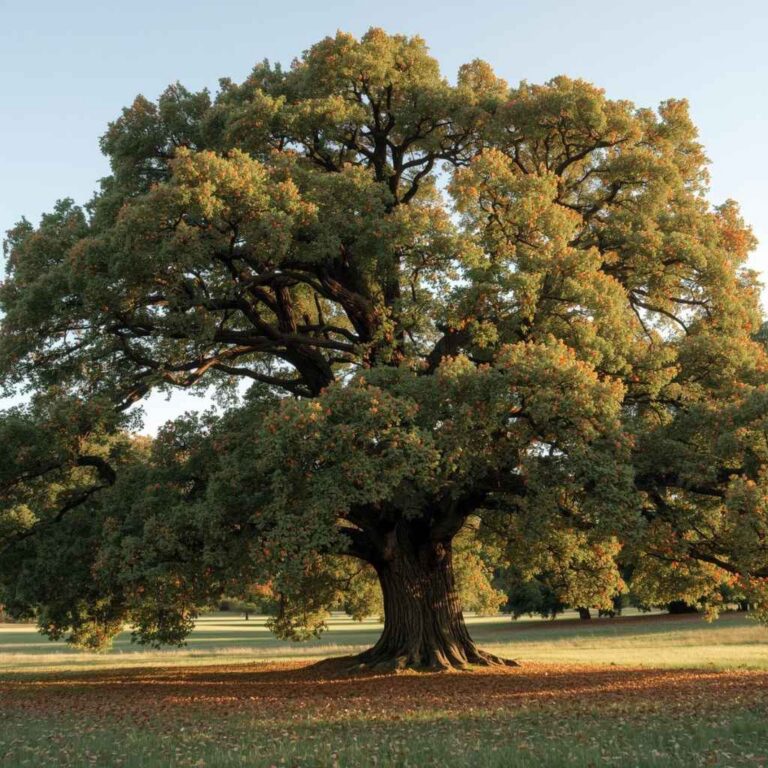
I remember visiting a park in North Carolina a few years ago. There was a massive Live Oak there. It was clearly ancient.
Its trunk was so wide, it would take three people holding hands to reach around it.
The branches spread out like welcoming arms. They were covered in Spanish moss. It looked like a scene from a fairytale.
I felt so small standing next to it. I could almost hear whispers from the past. It made me think about all the things that tree had seen.
Kids had probably played under it for generations. Lovers might have carved their initials into its bark centuries ago. It had weathered countless storms.
It had seen seasons change year after year, for hundreds of years.
There was a feeling of deep peace around the tree. It was humbling. It made me appreciate the slow, steady power of nature.
It also made me feel connected to history. Knowing how old it was made it feel like a living monument. It’s an experience that stays with you.
Signs an Oak Tree is Aging Gracefully
Gnarly Appearance: Old oaks often have twisted, irregular branches. Their bark may become deeply furrowed.
Large Size: They reach impressive heights and trunk diameters over centuries.
Hollows and Cavities: As they age, some parts may decay, creating homes for wildlife.
Slowed Growth: While still alive, their rate of new growth slows significantly.
How to Identify an Old Oak Tree
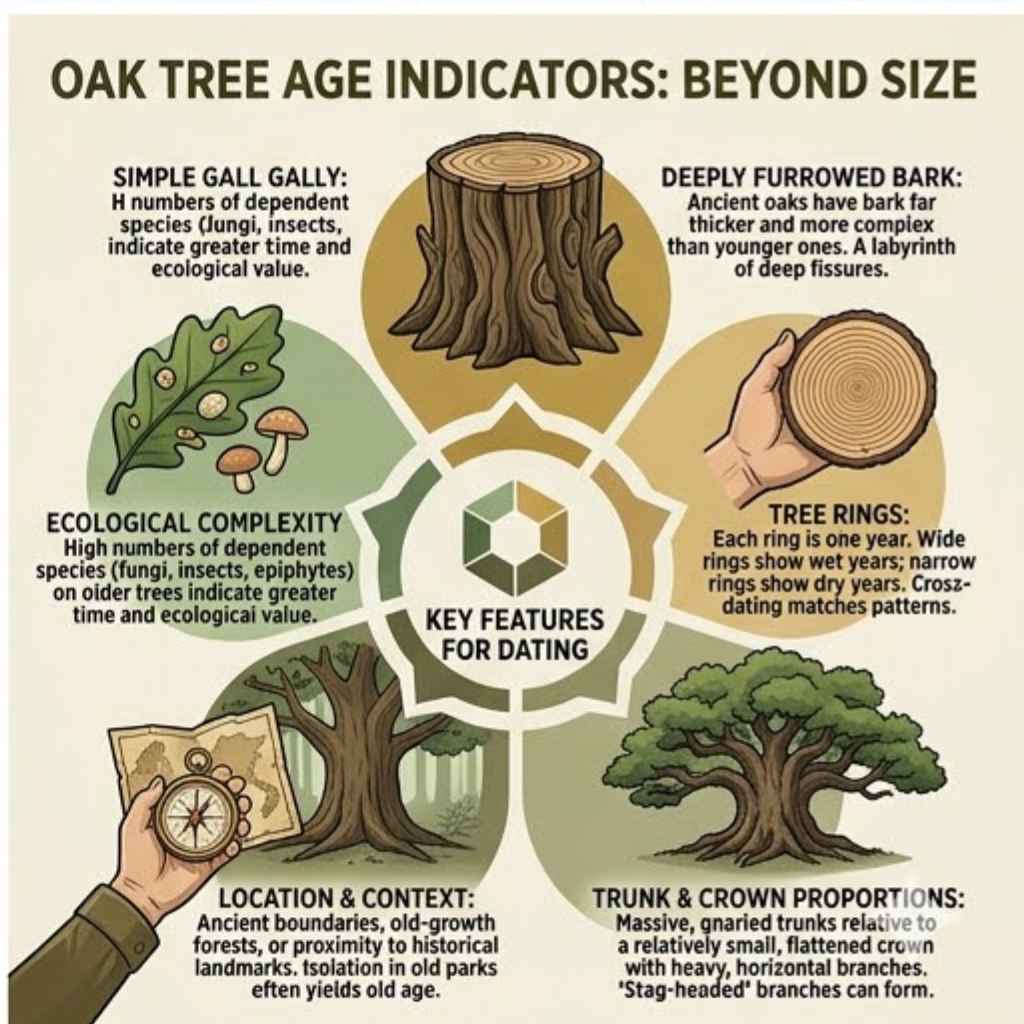
Spotting a truly ancient oak tree isn’t always straightforward. But there are clues to look for. These signs can help you appreciate the age of these natural wonders.
First, size is a major indicator. Older trees are generally much larger. Their trunks are wider.
Their canopies spread out further. Look for a tree that seems overwhelmingly big compared to others around it. It should look like it’s been there forever.
Next, examine the bark. The bark on younger oak trees is often smoother. As the tree ages, the bark develops deep fissures and ridges.
It can look very rough and textured. It might also have a darker color.
Look at the branches. Ancient oaks often have a very irregular shape. Branches might twist and turn in unusual ways.
They can be very thick and heavy-looking. Some older trees might have broken branches that have healed over time.
You might also see signs of wildlife making a home in the tree. Old trees develop cavities and hollows. These are perfect nesting spots for birds, squirrels, and other creatures.
This shows the tree has been around long enough to develop these features.
Finally, consider the context. If the tree is in a very old park or a historic estate, it’s more likely to be old. It might be one of the few original trees left from a different era.
It’s always a good idea to consult with a local arborist or forester if you suspect you’ve found a very old tree. They can often offer insights based on the specific oak species and its location.
What Factors Can Shorten an Oak’s Life?
While oaks are built for longevity, certain factors can drastically cut their lives short. Understanding these can help us protect these trees.
Drought: While mature oaks are drought-tolerant, prolonged or severe droughts can weaken them. Young trees are especially vulnerable. Stress from lack of water makes them susceptible to diseases and pests.
Storm Damage: Severe storms with high winds can break branches or even topple entire trees. Older trees, especially if they have decay, are at higher risk.
Root Damage: Anything that damages the root system can be fatal. This includes construction, soil compaction, and even improper planting. Roots are the tree’s lifeline.
Fire: While some oaks have thick bark that can offer protection, intense fires can kill them. Young trees are particularly vulnerable to fire.
Human Care (or Lack Thereof): Incorrect pruning can harm a tree. Over-watering or under-watering, especially for younger trees, can also cause problems. Sometimes, simply planting a tree in the wrong spot can lead to its demise.
Recognizing these threats helps us appreciate the resilience of oaks that do reach impressive ages.
Quick Check: Is Your Oak Tree Healthy?
Leaves: Are they a healthy green color in the growing season? Are they appearing on time in spring?
Bark: Is it firmly attached? Are there large cracks or peeling sections that look unusual?
Branches: Do they seem strong? Are there many dead or broken branches?
Base of Tree: Is the area around the trunk clear? Are there signs of fungal growth or rot?
When is an Oak Tree Considered “Old”?
Defining when an oak tree is “old” can be a bit flexible. It really depends on the species and its context. But generally, we can break it down:
Young Tree: Up to about 50 years. This is when the tree is still actively growing and developing its main structure.
Mature Tree: From 50 years up to maybe 150 or 200 years. This is the prime of its life. It’s strong, productive, and a key part of its ecosystem.
Old Tree: Typically, anything over 150 to 200 years is considered old for many common oak species. They have reached a significant age.
Ancient Tree: This term is reserved for the true elders. Oaks that are 300, 500, or even 1,000+ years old fall into this category. These are the trees that have weathered many human generations.
It’s also worth noting that the perception of “old” can change. In a forest where trees typically live for 300 years, a 150-year-old tree might just be middle-aged. But in a park where trees are managed, a 100-year-old oak might be considered quite old.
The Importance of Ancient Oaks
Ancient oak trees are incredibly important for many reasons. They are more than just old trees; they are vital parts of our natural and cultural heritage.
Ecological Significance: These old giants provide homes and food for countless species. Birds nest in their branches. Insects live in their bark.
Small mammals find shelter at their base. They support a whole mini-ecosystem.
Historical Markers: Ancient oaks have witnessed centuries of history. They can be living links to the past. They remind us of the long timeline of nature and human presence.
Cultural Symbols: In many cultures, oaks symbolize strength, endurance, and wisdom. They appear in folklore, art, and literature. They hold deep meaning for people.
Environmental Benefits: Like all trees, old oaks help clean the air and water. They absorb carbon dioxide. They provide shade and help cool the environment.
Their large size means they contribute significantly to these benefits.
Protecting these ancient trees is crucial. They offer so much more than just their physical presence. They are irreplaceable treasures.
Conclusion
So, how old can oak trees get? The answer is, remarkably old! Most common oaks live for well over a century, with many reaching 200 to 300 years.
But some exceptional individuals can live for 1,000 years or even longer, standing as true monuments of time. Their longevity is a testament to their robust nature, adaptability, and the conditions they thrive in.
Frequently Asked Questions About Oak Tree Lifespans
What is the average lifespan of an oak tree?
The average lifespan of an oak tree varies quite a bit by species. Many common oak trees live between 100 and 300 years. Some species, like the White Oak, often live longer than others.
Can an oak tree live for 1000 years?
Yes, some oak trees can live for 1,000 years or even more. These are usually ancient specimens of species known for extreme longevity, like certain European oaks. They need ideal conditions to reach such an age.
What makes an oak tree live so long?
Oak trees have several traits that help them live a long time. These include strong wood that resists rot and pests, deep and widespread root systems for stability and water access, and a steady, slow growth habit that builds resilience.
Does the type of oak matter for its lifespan?
Absolutely. Different oak species have naturally different lifespans. For example, White Oaks and Bur Oaks are generally known for living much longer than many Red Oak species, though all oaks are relatively long-lived compared to many other trees.
What are the biggest threats to an oak tree’s lifespan?
The biggest threats include diseases like oak wilt, insect infestations (like borers and gypsy moths), severe droughts, extreme storm damage, root system damage from construction or soil compaction, and harsh environmental conditions like pollution or fire.
How can I tell if an oak tree is very old?
Look for signs like a very large trunk diameter, thick and deeply furrowed bark, gnarled or twisted branches, and potentially hollows or cavities. Also, consider its location – if it’s in an old, undisturbed area, it’s more likely to be ancient.
Are there ways to help an oak tree live longer?
Yes, you can help an oak tree live longer by planting it in the right spot with good drainage and sunlight, watering it consistently when it’s young, protecting its root zone from damage, and avoiding over-pruning. For mature trees, ensuring a healthy environment is key.
Sponsored / affiliate links. As an Amazon Associate I earn from qualifying purchases. I may earn additional commission from eligible campaigns.