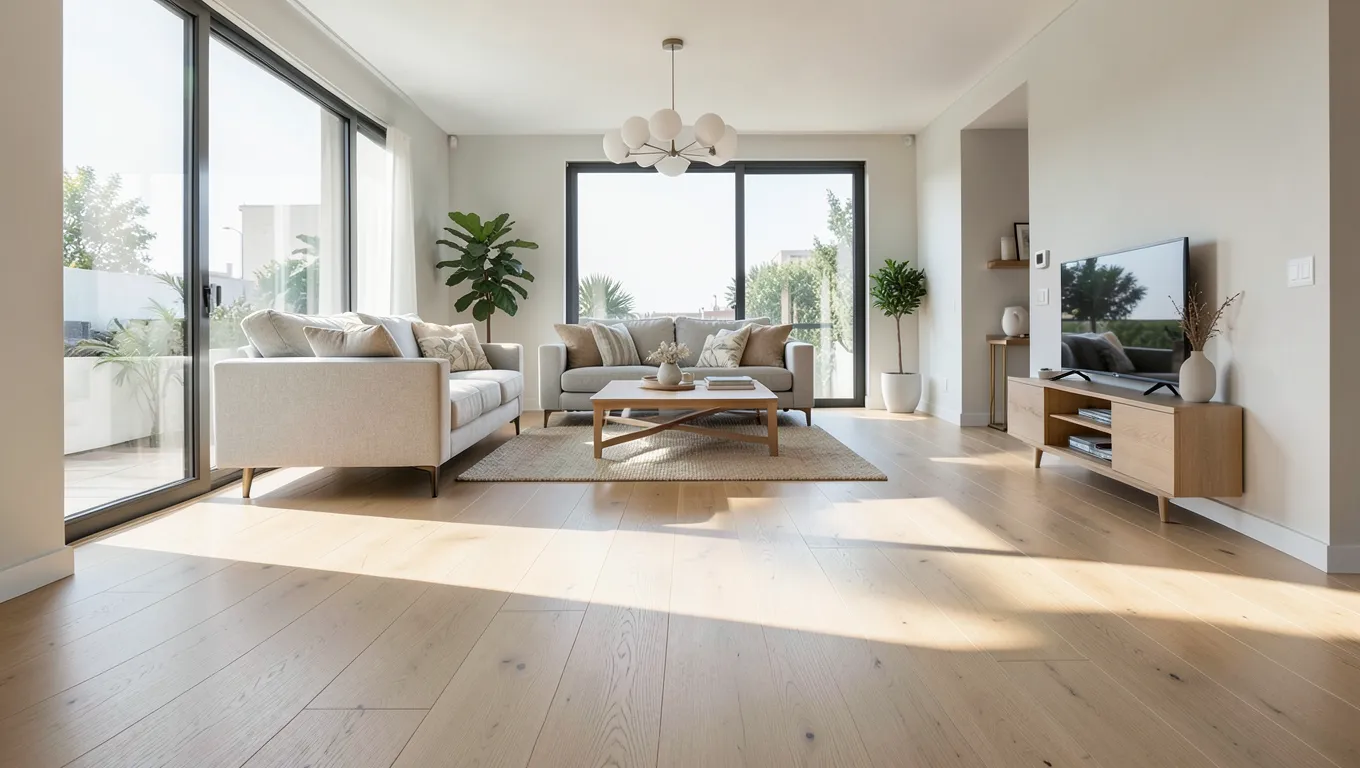
Hardwood Flooring Industry Trends: Solid vs Engineered in 2026
The hardwood flooring market was valued at roughly $59.6 billion in 2026 and is projected to grow to nearly $78 billion by 2030, according to industry research from The Business Research Company, driven mainly by home renovation spending rather than new construction. The bigger story for homeowners isn’t the market size, though – it’s what that growth is actually changing about the floors themselves: wider planks, lower-sheen finishes, and engineered construction that now performs closely enough to solid wood that the old advice to avoid it in kitchens and basements is outdated.
Solid vs. Engineered: The Distinction That Actually Matters
PROTECTS THE FINISH THAT PROTECTS THE FLOOR
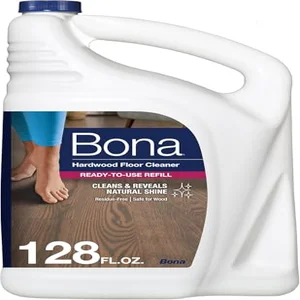 |
Bona Hardwood Floor Cleaner – $19.97 A pH-neutral formula matters more than most people realize – the wrong cleaner is one of the fastest ways to dull a new aluminum oxide finish.
|
Solid hardwood is milled from a single piece of wood, typically 3/4 inch thick, and can be sanded and refinished repeatedly over decades – often 4 to 6 times over a 75-100 year lifespan, losing a small amount of thickness each time. Engineered hardwood bonds a thinner real-wood wear layer (usually 2-6mm) over cross-layered plywood or high-density fiberboard. That cross-layered core is what makes engineered wood more dimensionally stable in humidity swings, which is why it’s the standard recommendation for basements, over radiant heat, and increasingly for kitchens – rooms solid wood used to be ruled out for entirely.
The tradeoff: engineered flooring’s wear layer limits refinishing to roughly 1-3 times depending on thickness, versus solid wood’s much longer refinishing life. If a floor needs to last a century in the same house, solid wins on paper. If it needs to survive a slab foundation, a humid climate, or a kitchen, engineered is usually the technically better choice today, not just the cheaper one.
Trending Wood Species
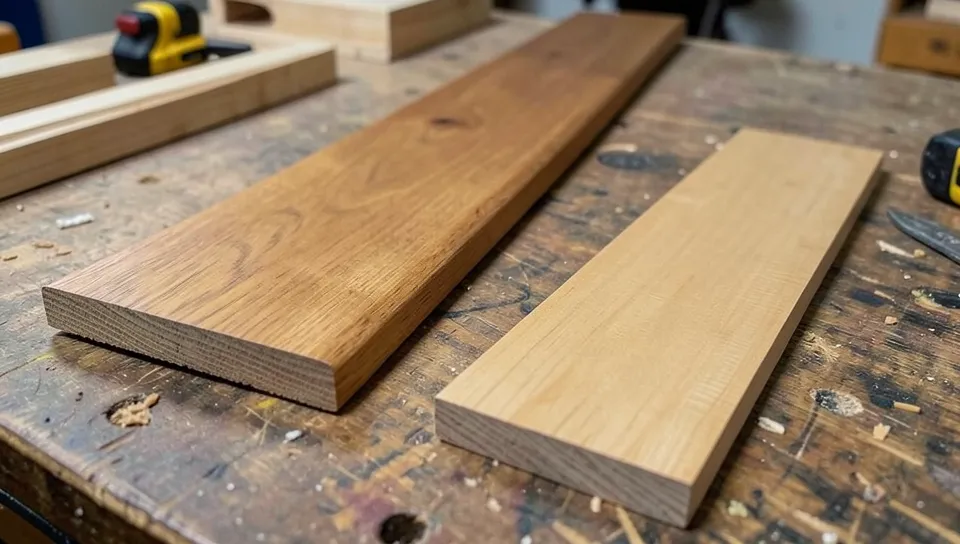
Red and white oak remain the volume leaders because they’re widely available, take stain evenly, and sit around 1,290-1,360 lbf on the Janka hardness scale – durable enough for daily household traffic. Hickory, notably harder at roughly 1,820 lbf, has grown in popularity for its dramatic color and grain variation in busy households. Maple offers a smoother, more uniform look but can blotch under dark stain due to its tight grain. Walnut, softer at around 1,010 lbf, is chosen for color and character rather than pure durability, and tends to go in lower-traffic formal rooms.
The Style Shift: Wide Planks and Low-Sheen Finishes
Plank widths have crept up from the traditional 2.25-inch strip flooring toward 5-7 inch and even 7-inch-plus wide planks, which read as more contemporary and show fewer seams across a room. The tradeoff is visibility of any subfloor movement: wider planks show gaps or cupping more obviously than narrow strip flooring if humidity control in the home is inconsistent, so wide-plank installations lean more heavily on engineered construction for stability.
On finish, low-sheen (matte and satin) topcoats have displaced high-gloss as the default recommendation, mainly because they hide fine scratches and dust far better under normal light. Aluminum oxide-infused urethane finishes, now standard on most factory-finished engineered and solid products, have measurably pushed back the old “hardwood is too fragile for pets and kids” concern – these finishes resist surface scratching well beyond older shop-applied polyurethane.
Sustainable Sourcing: What FSC Certification Actually Verifies
Forest Stewardship Council (FSC) certification tracks a chain of custody – from a managed forest through milling to the finished plank – verifying the wood came from a forest managed to specific regeneration and harvest standards, not simply that it’s “sustainable” in a general sense. Reclaimed wood, salvaged from old barns, factories, or river-logged timber, sidesteps new harvesting entirely and often comes with denser, tighter growth rings than comparably priced new lumber, since much of it was cut from old-growth trees decades or centuries ago. Bamboo is grass, not wood, and reaches harvestable maturity in about 3-5 years versus decades for hardwood trees, but flooring-grade bamboo hardness varies enormously by manufacturing method – strand-woven bamboo can exceed 3,000 lbf on the Janka scale, while cheaper horizontally-laminated bamboo can be softer than pine.
What’s Actually Competing With Hardwood
Luxury vinyl plank (LVP) is the biggest competitive pressure on the category, not laminate. LVP now replicates wood grain texture convincingly, is fully waterproof (not just water-resistant), and costs roughly a third to half of solid hardwood installed. It can’t be refinished, and it doesn’t add the same resale value in most markets, but for a rental property, a basement, or a household that wants zero maintenance, it’s a legitimate alternative rather than a downgrade. Raw material cost swings (a function of timber supply, tariffs, and demand for both flooring and construction lumber) are the other real pressure point – solid oak flooring pricing has moved noticeably with lumber market cycles over the past several years, in a way LVP and laminate, made from more stable synthetic inputs, haven’t.
Myth vs. Reality
| Myth | Hardwood scratches too easily for homes with pets or kids. |
| Reality | Aluminum oxide finishes and harder species (oak, hickory) close most of that gap versus LVP; regular maintenance matters as much as the species choice. |
| Myth | Wood floors can never go in a kitchen or bathroom. |
| Reality | Engineered hardwood’s stable core, paired with prompt spill cleanup, makes kitchens and powder rooms realistic; standing water and true bathrooms with showers are still a bad match for any wood floor. |
Choosing Wood for Your Situation
- Kids or large dogs: Oak or hickory (higher Janka hardness) with an aluminum oxide finish and a matte sheen to hide fine scratches.
- Basement or slab foundation: Engineered hardwood only – solid wood’s seasonal movement and moisture sensitivity make it a poor match below grade.
- Kitchen: Engineered hardwood with prompt spill habits, or LVP if zero-maintenance matters more than resale value.
- Century-length ownership plans: Solid hardwood, since its refinishing life (4-6 times) far exceeds engineered’s 1-3 times.
- Budget-first renovation: Compare installed cost of engineered hardwood against LVP directly – the gap has narrowed enough that it’s worth pricing both before assuming wood is out of reach.
Chicago-area shoppers who want to see and handle planks in person before ordering can visit a local retailer like AB Hardwood Flooring and Supplies, whose showroom carries pre-finished and unfinished hardwood alongside engineered wood and LVT.
Basic Floor Care That Actually Protects the Investment
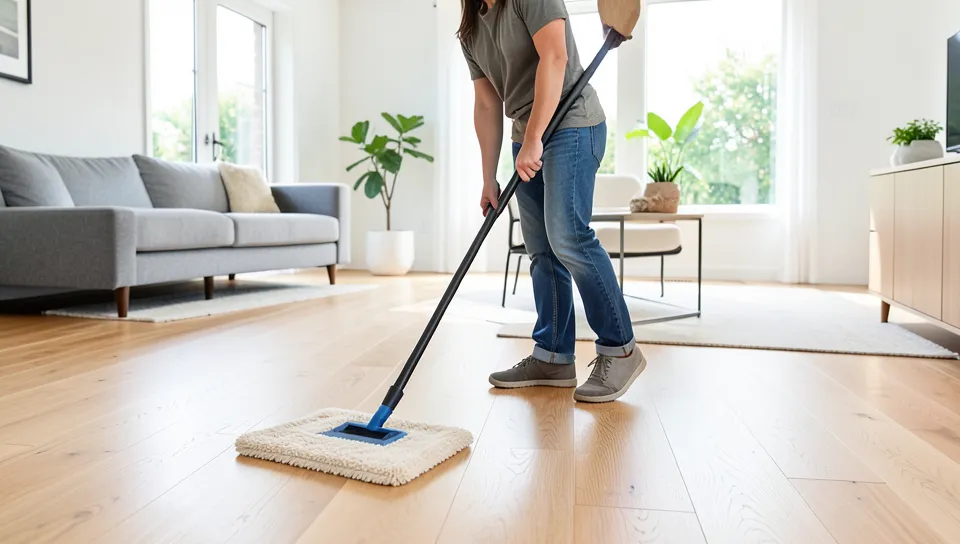
Grit is the real enemy of a wood floor’s finish, not moisture in small amounts – regular sweeping or vacuuming with a hard-floor or soft-brush head removes the sand and dirt that acts like sandpaper under foot traffic. Wipe spills immediately rather than letting them sit, use felt pads under furniture legs, and add a walk-off mat at exterior doors to cut down on tracked-in grit before it ever reaches the floor. A screen-and-recoat (light abrasion plus a fresh topcoat, without removing all the existing finish) every several years extends the interval between full sand-and-refinish jobs considerably, and costs a fraction of a full refinish.
Frequently Asked Questions
Is engineered hardwood really as good as solid hardwood?
For stability in humid rooms or over a slab, engineered is technically the better choice. For maximum refinishing life over a very long ownership horizon, solid wood still wins. Neither is universally “better” – it depends on the room and how long you plan to own the floor.
Can I install hardwood floors myself?
Click-lock engineered hardwood is realistic for an experienced DIYer. Nail-down or glue-down solid hardwood installation is more demanding and is where most homeowners bring in a professional.
How often should I refinish my hardwood floors?
Solid hardwood typically needs a full sand-and-refinish every 7-10 years depending on traffic, and can handle 4-6 refinishes over its life. Engineered hardwood can usually only be refinished 1-3 times, depending on wear-layer thickness.
Are hardwood floors noisy?
They carry more sound than carpet, but a quality underlayment (especially with engineered floors over a subfloor) and area rugs in high-traffic zones reduce this substantially. Loose planks or a poorly nailed subfloor, not the wood itself, are the usual cause of squeaking.
What’s the best wood species for pets and kids?
Oak and hickory, both well above 1,200 lbf on the Janka hardness scale, paired with an aluminum oxide finish and a matte or satin sheen that hides fine scratches better than gloss.
Bottom Line
The hardwood flooring category is growing on the back of renovation spending, not novelty, and the real news isn’t the dollar figures – it’s that engineered construction has closed enough of the performance gap with solid wood to make real hardwood realistic in rooms it used to be ruled out for. Match the wood species and construction type to the room’s humidity and traffic, not just the look you want, and a wood floor bought today should outlast most of the other finishes in the house.
Sponsored / affiliate links. As an Amazon Associate I earn from qualifying purchases. I may earn additional commission from eligible campaigns.