How to Bend Wooden Dowels Without Cracking Them
To bend a wooden dowel, soften it with steam or a long soak in hot water, then bend it slowly around a curved form (a jig) and clamp it there until it dries and cools completely. The dowel’s diameter and species decide almost everything about how tight a curve you can pull off – thin softwood dowels are forgiving; thick hardwood dowels crack easily unless you go slow.
Why Heat and Moisture Are What Actually Bend Wood
Best Dowels for Practicing Bends
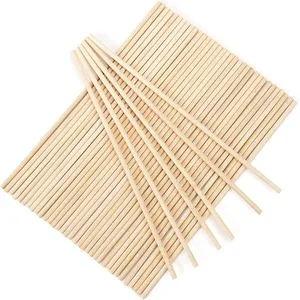 |
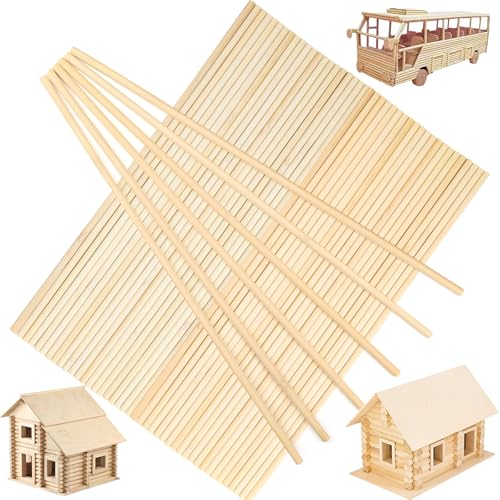
Wood Dowel Rods (50-Pack) – $5.38 A thin 1/4″ diameter is the easiest starting point for a first steam or soak-bend – cheap enough to practice on and forgiving of a cracked attempt or two.
|
Wood bends because heat and moisture temporarily soften lignin, the natural “glue” that holds wood fibers rigid. Once the lignin softens, the fibers can slide past each other slightly as you bend the dowel, and as it dries back out in its new curved position, the lignin re-hardens and locks the fibers in that new shape. That’s the entire mechanism behind steam bending – it’s not the wood stretching, it’s the internal glue temporarily loosening.
This matters for two practical reasons: rushing the heating step (not enough steam time) means the lignin hasn’t softened enough and the dowel cracks instead of curving, and rushing the cooling/drying step (unclamping too soon) means the fibers haven’t re-set yet and the dowel springs most of the way back toward straight.
Picking a Dowel That Will Actually Bend
- Species: Softer, more flexible woods – poplar, ramin, and clear pine dowels – bend more readily than oak or hardwood maple dowels of the same diameter.
- Diameter: A 1/4″ or 3/8″ dowel bends into a much tighter radius than a 3/4″ dowel of the same species. If your project needs a tight curve, go thinner rather than fighting a thick dowel.
- Grain: Check the dowel for knots or grain runout (grain that angles diagonally out of the surface instead of running straight along its length) before you commit time to steaming it – both are where dowels snap.
Method 1: Steam Bending (Best for Anything But the Thinnest Dowels)
- Build or borrow a steam box. A length of PVC pipe capped at both ends with a small inlet hole works fine for dowels, fed by a wallpaper steamer or a kettle with a hose running into it.
- Steam for roughly 1 hour per inch of diameter – a 1/2″ dowel needs about 30 minutes, a 1″ dowel closer to an hour. Thin dowels heat through fast; don’t rush thicker ones.
- Move fast once it’s out. The dowel starts cooling (and re-stiffening) the moment it leaves the steam. Have your jig and clamps set up and ready before you pull it.
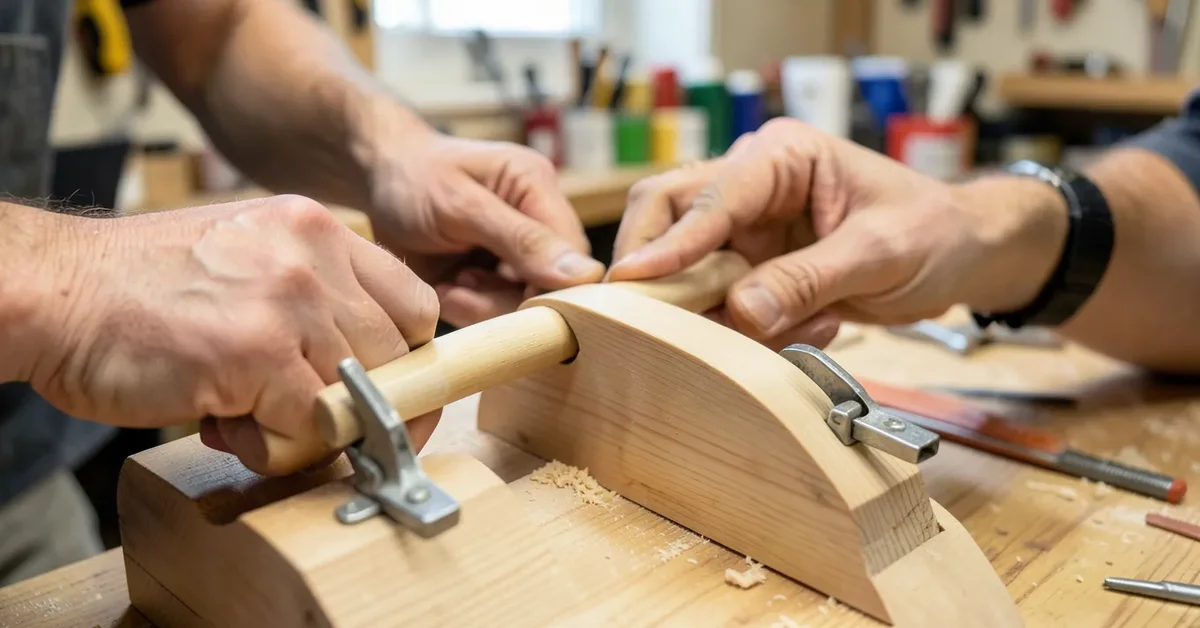
- Bend in one smooth, continuous motion around the jig rather than in small increments – stopping partway lets that section cool and stiffen before the rest is shaped.
- Clamp it to the jig and leave it fully alone for at least 24 hours. This is the step people cut short most often. The wood needs to dry back down in its new shape, not just cool down.
Method 2: Soak-and-Bend (Good Enough for Thin, Gentle Curves)
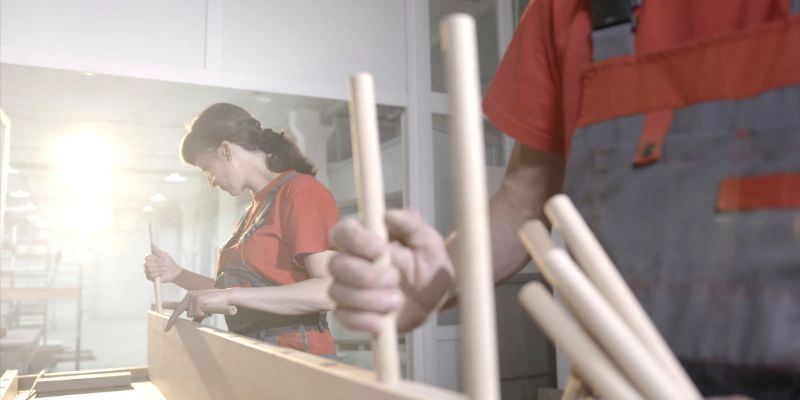
For a thin dowel (1/4″ or less) and a gentle curve, a full steam setup is overkill. Soak the dowel in the hottest tap water you can get (or simmering water on the stove, well short of a rolling boil) for 30-45 minutes, then bend it slowly around your form by hand. It won’t hold as tight a radius as steam bending will, and it works reliably only on thin, flexible stock – past about 3/8″ diameter, plain soaking usually isn’t enough heat to fully soften the lignin, and that’s when a dowel that “felt fine” while bending suddenly cracks.
A Method That Doesn’t Actually Work Well on Round Dowels
Kerf-cutting – cutting a series of parallel slots partway through a piece to let it fold at each cut – is a real, well-established technique, but it’s built for flat stock like plywood or solid boards, where each kerf sits in a single flat plane you can control. On a round dowel, there’s no flat reference face, so a kerf cut into the round surface removes structural material unevenly around the curve and tends to just weaken or snap the dowel rather than producing a clean, controlled bend. If you need a hard-angle bend rather than a smooth curve, a scarf joint (two angled pieces glued together) or a steamed and clamped bend around a sharp-cornered jig will hold up far better than kerfing a dowel.
Fighting Spring-Back
Every steam-bent piece relaxes slightly toward straight after you unclamp it – this is normal, not a failed attempt. Compensate by over-bending 10-15% past your target curve on the jig; the dowel will settle back to close to the shape you actually wanted. If you need a precise, repeatable curve for multiple dowels, cut a test piece first, measure how much it springs back, and adjust your jig accordingly before running the rest of the batch.
Finishing a Bent Dowel
Once fully dry and stable in its new shape, sand lightly with the grain (220-grit is plenty for a dowel that was already smooth), wipe off dust, and finish with the same stain, oil, or poly you’re using on the rest of the project. If the dowel is a load-bearing piece – a shelf support or chair stretcher – check how much weight a wooden dowel can actually support at your chosen diameter before finalizing the design, since bending doesn’t change a dowel’s basic load capacity for its species and thickness.
Frequently Asked Questions
How do you bend wooden dowels easily?
Soften the dowel with steam (roughly an hour per inch of diameter) or, for thin dowels, a 30-45 minute soak in very hot water. Bend it in one smooth motion around a curved jig, clamp it there, and let it dry fully for at least 24 hours before removing the clamps.
Do you need a steam box to bend a dowel?
Not always. Thin dowels (around 1/4″) can often be bent into a gentle curve after just a hot-water soak. Thicker dowels or tighter curves need the more thorough, even heat that steaming provides, since a soak alone often can’t soften the lignin all the way through.
Why does my dowel keep cracking when I bend it?
Usually one of three things: not enough steam or soak time for the dowel’s thickness, bending too fast instead of one continuous smooth motion, or a knot or diagonal grain runout in that section of the dowel that made it weaker than it looked.
Does kerf-cutting work on round dowels?
Not well. Kerf-cutting is designed for flat stock with a single reference plane. On round dowels, it tends to weaken the wood unevenly and cause snapping rather than producing a clean bend – steam bending or a glued scarf joint are better choices for dowels.
Bottom Line
Steam (or a hot soak for thin dowels), a jig, patience during the dry-out period, and a slight over-bend to account for spring-back are what actually get a wooden dowel to hold a curve. Skip kerf-cutting for round stock – it’s the wrong tool for this particular job.
Sponsored / affiliate links. As an Amazon Associate I earn from qualifying purchases. I may earn additional commission from eligible campaigns.