Water in a Garage From Snow
Water in a garage from snow usually comes from one of three sources: snow carried in on vehicles or boots, poor exterior drainage or door sealing, or moisture rising through the slab. Fix the source, not the puddle. If you guess wrong, you can trap water inside, swell wood, rust tools, and keep the floor wet all winter. This guide shows how to trace each source and match it to the right repair.
Why winter garage water starts
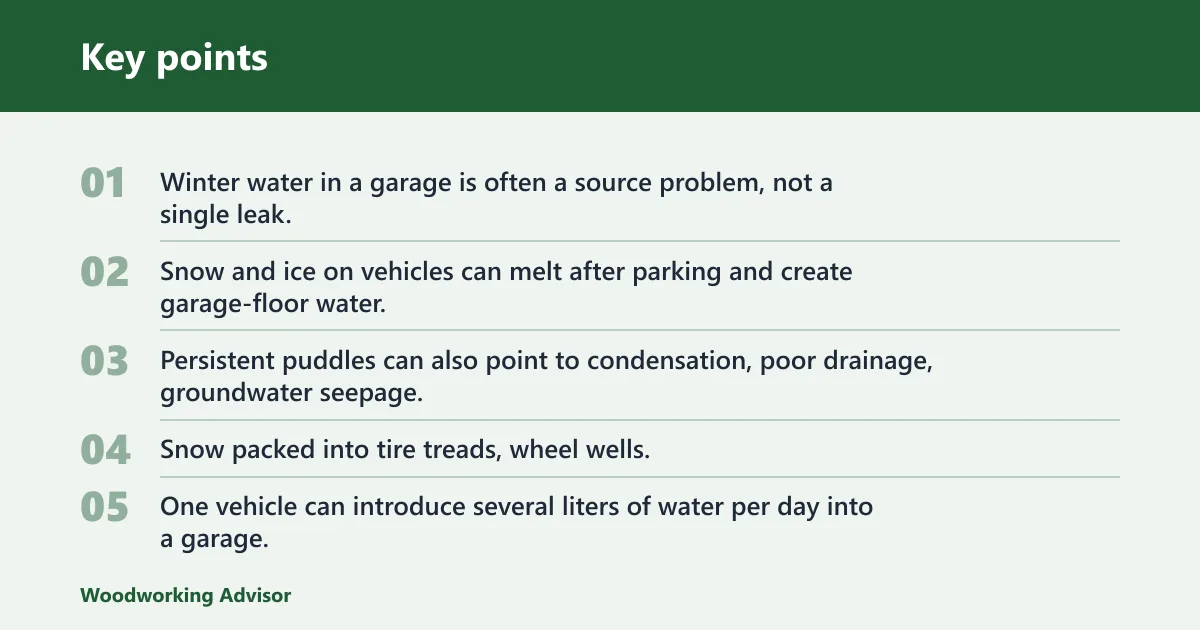


Winter water in a garage is often a source problem, not a single leak. Snow and ice on vehicles can melt after parking and create garage-floor water, while runoff from outside can enter through a worn door seal or a slab with poor slope. Persistent puddles can also point to condensation, poor drainage, groundwater seepage, or a plumbing leak.
Snow carried in on vehicles
Snow packed into tire treads, wheel wells, and undercarriages can drip for hours after parking. One vehicle can introduce several liters of water per day into a garage, which is enough to keep the floor damp through repeated short trips. This is common when slush melts off in a warm garage after a drive on snowy roads.
Boots, shovels, bags, and other items can add to that carry-in load. A common first-timer mistake is to blame the door when the real source is dripping from the vehicle bay after each parking event.
Exterior runoff and poor grading
Water near the garage door after a thaw or storm points to runoff or a worn seal. A garage door threshold seal helps block meltwater at the bottom edge, especially when the slab or driveway slope is poor. Door weatherstripping also matters, because even a few millimeters of gap can let significant water inside during snowmelt.
Concrete slab slope should direct water toward the exit or drain. Low spots collect puddles, and slope errors make freeze-thaw problems worse. Gutters and downspouts belong in this same check, because they should discharge away from the foundation; if they clog or dump water too close to the door, meltwater can move toward the garage instead of away from it.
Slab seepage and condensation
Water that appears away from the door often points to cracks, seepage, condensation, or a plumbing source. Cracks in garage floors and walls can open wider with freeze-thaw cycles and become permanent moisture pathways. Groundwater and hydrostatic pressure are a separate issue; in low-lying areas or places with a high water table, moisture can be pushed through the slab or joints.
Condensation looks different. A thin film or scattered droplets often point to condensation rather than runoff. That happens when warm, humid air meets a cold slab. A taped-down clear plastic square can help separate room-side humidity from slab moisture.
How to trace the source
Use timing, location, and weather pattern before you buy seals or drainage parts. Start by asking when the floor gets wet: after parking, during melt, after rain, or even on dry cold days. Then note where the water shows up first. That pattern often separates vehicle carry-in from exterior entry or slab seepage.
Follow the timing
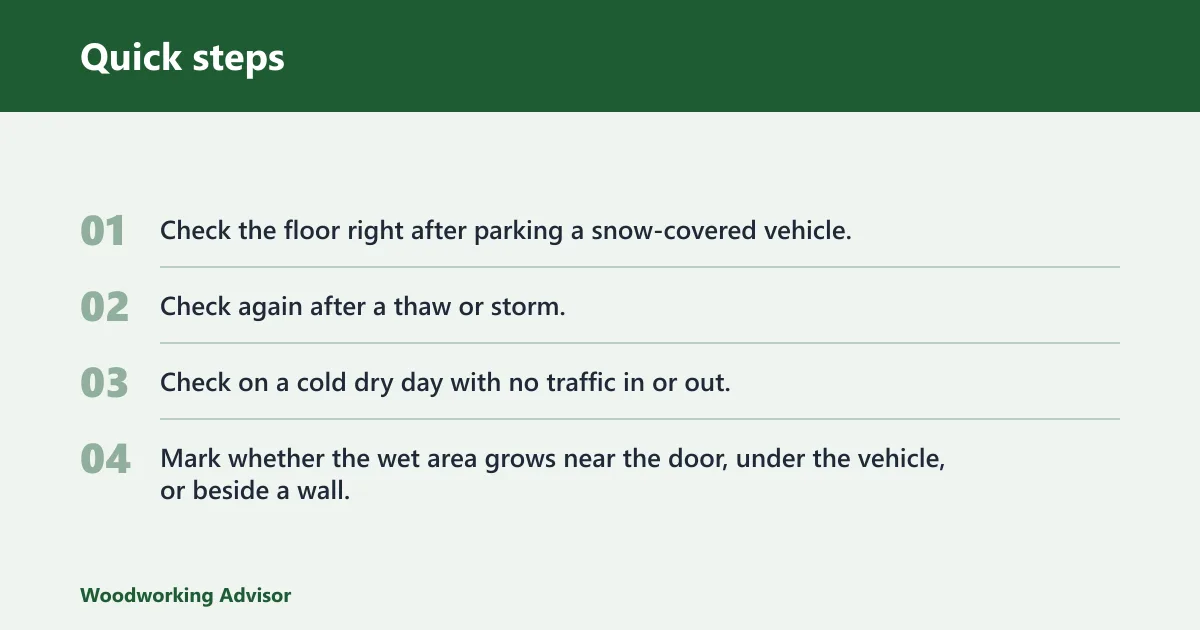
- Check the floor right after parking a snow-covered vehicle.
- Check again after a thaw or storm.
- Check on a cold dry day with no traffic in or out.
- Mark whether the wet area grows near the door, under the vehicle, or beside a wall.
If the floor is dry before parking and wet afterward, vehicle meltwater is likely. If the wet area appears near the door after a thaw, the exterior edge is more suspicious. If moisture shows up on dry days, consider condensation, groundwater, or plumbing.
Separate surface water from seepage
Surface water sits where it was carried or drained. Seepage often starts at a crack, wall joint, or low point and may leave white chalky residue, rust, warped cardboard boxes, or a musty smell. Those warning signs often show up after repeated dampness, not after one wet day.
For example, a garage may stay dry all week, then a wet arc can appear behind the front tires after a snowy commute. That pattern points to drip-off from the car. Suppose instead a damp strip develops along one wall even when the door stays closed. That pattern leans toward seepage or condensation.
Garage water decision table
This table is a source-tracing tool. Match the symptom to the likely cause, run the test, then choose the fix that fits the failure mode.
| Symptom | Likely cause | Confirmation test | Immediate fix | Escalation threshold |
|---|---|---|---|---|
| Wet spot forms under or behind a parked vehicle | Snow carried in on tire treads or undercarriage drip | Move the vehicle out and check whether the spot stays dry until the next snowy drive | Use a garage car containment mat, scrape wheel wells, and shake loose slush before parking | Recurring daily puddles after parking, especially if tools or stored wood are getting damp |
| Water line follows the garage door edge | Threshold seal failure, worn weatherstripping, or driveway slope toward the door | Inspect the bottom seal for cracks and close the door on a strip of paper at the corners and middle | Replace the bottom seal or side weatherstripping and clear snow from the exterior edge | Water still enters after seal replacement, or the slab slopes toward the garage |
| Puddle appears after a thaw or storm near the opening | Exterior runoff from poor grading or downspouts that dump too close | Watch where roof runoff lands and whether water flows back toward the slab | Extend downspouts, add splash blocks, and clear gutters | Runoff keeps reaching the slab even after rerouting discharge |
| Dampness starts at a crack in the floor or wall | Freeze-thaw crack path or joint seepage | Dry the area, then watch for moisture reappearing at the same crack line | Seal the crack with a suitable epoxy or sealant after the slab is dry | Cracks widen, lift, or leak repeatedly after patching |
| Wet floor shows up far from the door, even in dry weather | Groundwater or hydrostatic pressure | Cover a dry spot with taped-down clear plastic square and check for moisture on the underside | Reduce moisture at the perimeter and plan drainage work | Water keeps coming through the slab or joint after surface cleanup |
| Water appears near a pipe, appliance, or floor drain | Plumbing or appliance leak, or a drain issue | Inspect the area after the garage has stayed dry from weather-related sources | Shut off the affected supply if needed and repair the leak | A wet patch keeps returning near the same fitting, valve, or drain |
Is the water coming from your car?
If the puddle forms after you park a snow-covered vehicle, the car is the first place to look. Snow in the tire treads, wheel wells, and undercarriage can melt and drip for hours. A garage car containment mat helps capture that meltwater, slush, and road salt so it does not spread across the floor.
Tire tread and wheel-well slush
Look at the front and rear tires first. Deep tread can hold snow that drops in chunks after the car warms. Wheel wells can keep packed slush hidden until the car sits indoors. A wet band behind the tires often points to this source, especially if the rest of the floor stays dry.
Undercarriage drip after parking
Cold metal and hidden cavities can shed water long after parking. That drip may look like several small spots rather than one large puddle. If the floor gets wet only after a drive on snowy roads, and not after dry trips, the vehicle path is the stronger suspect.
Keep a scraper, brush, and absorbent towel near the entry so you can clear slush before it reaches the concrete. For a woodshop bay, this matters because the first splash can reach plywood, fasteners, and unfinished stock.
Are the door and slab letting it in?
When water gathers at the threshold, the door assembly and slab slope are likely involved. A bottom-edge barrier helps block meltwater, and side seals close the corner gaps where wind-driven water can enter. If the concrete pitches the wrong way, the puddle may return even after you replace the seals.
Threshold seal and weatherstripping checks
Inspect the bottom seal for hardening, splits, or flattening. Check the side weatherstripping for cracks and gaps at the corners and edges. Replacement should match the garage door profile, because a loose fit leaves the same path open. Worn weatherstripping and an uneven concrete slab are common reasons meltwater keeps getting in.
Driveway slope and low spots
Low spots outside the door can feed water toward the opening. Inside, a slab that sags near the front edge can hold puddles and make them freeze, which increases slip risk. If the water pools at the same line after thaw cycles, the floor profile deserves attention before more sealant goes down.
Cracks at the floor edge or wall joint
Cracks near the perimeter can act like entry paths for seepage, especially when they widen through freeze-thaw cycles. If the damp line begins at a crack rather than at the threshold, patching the door alone will not solve it. Epoxy or sealant can help, but only after you confirm the crack is the actual path.
Could the water be coming from outside drainage?
Exterior drainage problems can make a garage look like it has an interior leak. Gutters and downspouts should carry water away from the foundation. If they clog or stop short, runoff can saturate the area near the slab and push meltwater back toward the opening.
Gutters, downspouts, and splash control
Check for blocked gutters, disconnected elbows, and downspout ends that dump next to the garage. Extensions or splash blocks can move the discharge farther from the foundation. This matters in winter because snowmelt from the roof can feed the same path as rain, then refreeze near the door.
Groundwater and hydrostatic pressure
If the garage sits in a low spot or on a high water table, surface fixes may not be enough. Groundwater and hydrostatic pressure can force moisture through the slab or joints even when the exterior edge looks fine. That is a drainage problem, and it often needs perimeter drainage or a sump solution rather than another bead of sealant.
When drainage repair beats patching
Patch repairs make sense for a single crack or a worn seal. They make less sense when the same wet area keeps returning after storms or thaw cycles. If the pattern points to runoff, roof discharge, or groundwater, solve the water path first. Otherwise the patch becomes a repeat job.
What quick fixes work now?
Start with fixes that match the source you found. Replace a tired threshold seal or weatherstripping if the water enters at the door. Add or reroute downspout extensions if roof runoff points at the slab. Use mats, drying, and winter housekeeping if vehicle carry-in is the main cause.
- Clear snow from the vehicle before parking.
- Brush slush from tires, wheel wells, and door sills.
- Lay a containment mat under the parked vehicle.
- Dry the floor at the end of each snowy day.
- Inspect the door edge, slab edge, and downspout discharge after the next thaw.
For attached woodshops, keep electrical cords, extension leads, cardboard, and unfinished lumber off the floor. Water in a garage from snow can damage stored belongings and create slippery conditions fast. A mat reduces the spread, but it does not fix a bad slope, a failed seal, or seepage through the slab.
Frequently asked questions
How to stop water getting into garage
Start by finding where the water first appears. If it shows up at the door after snow, replace worn weatherstripping or the threshold seal and check the slab slope. If it appears after parking a vehicle, use a containment mat and clear slush before you enter. If it appears away from the opening, look for seepage or a leak.
Why is water on my garage floor after snow?
After snow, the most common causes are vehicle meltwater, door-edge runoff, and slab seepage that shows up once the ground warms or the snow thaws. Condensation can also create a thin film or droplets on cold concrete. The location of the wet area usually tells you which source is active.
Sponsored / affiliate links. As an Amazon Associate I earn from qualifying purchases. I may earn additional commission from eligible campaigns.