How to Clean Faux Hardwood Floors: ID Your Floor Type First
“Faux hardwood” covers three different materials — laminate, luxury vinyl plank (LVP), and engineered wood — and they don’t tolerate water the same way. LVP is fully waterproof, laminate’s fiberboard core swells if water sits on it, and engineered wood’s real-wood veneer is the most moisture-sensitive of the three. Cleaning all three the same way causes warped seams and cloudy finishes. This guide covers how to identify what you have, then the right method for each.
Identify Your Floor Type Before You Clean
Best Multi-Surface Floor Cleaner
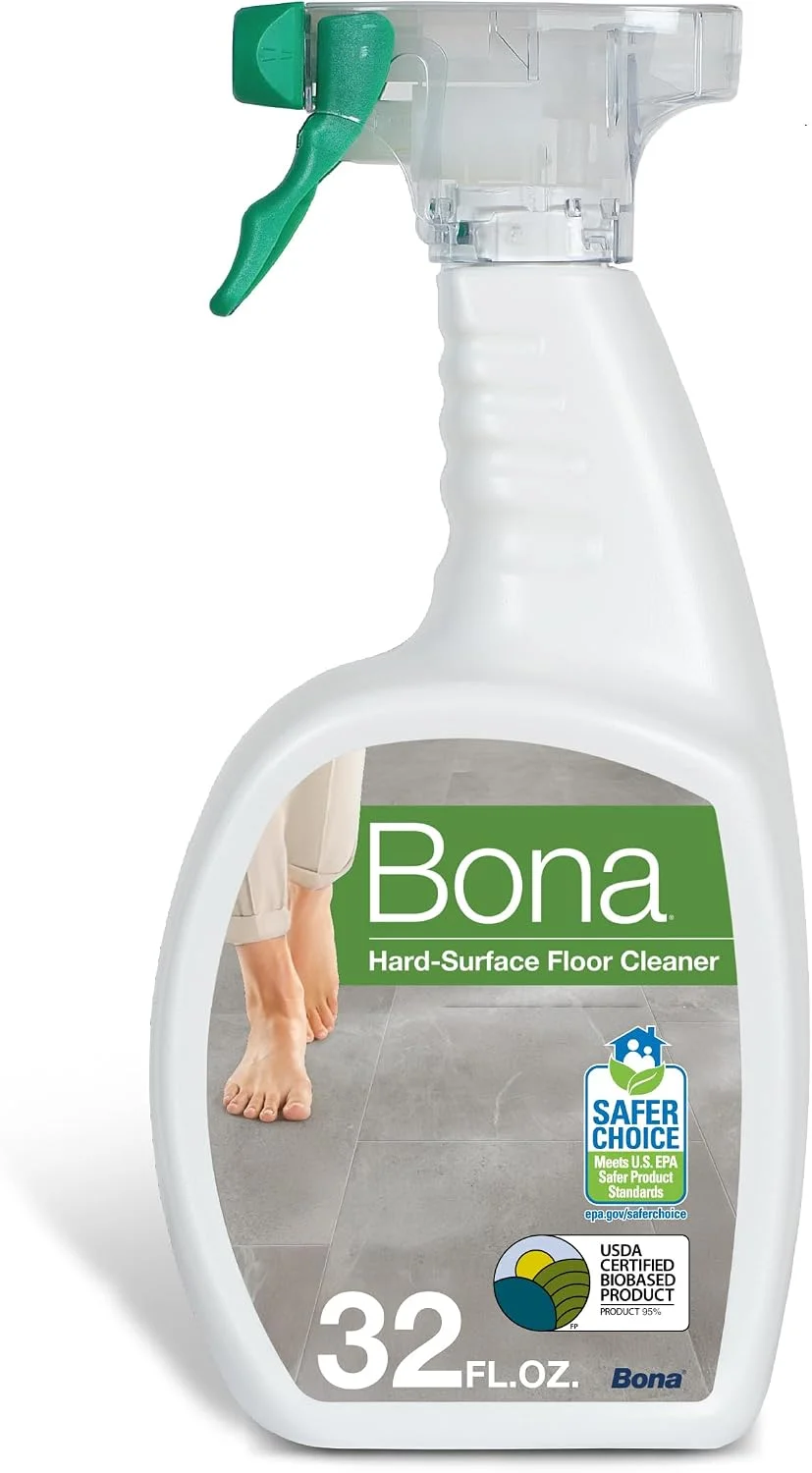 |
Bona Multi-Surface Floor Cleaner Spray (32 oz) – $8.98 Since laminate, LVP, and engineered wood all show up under “faux hardwood” and each reacts differently to harsh cleaners, this pH-neutral formula is labeled safe across all three instead of forcing you to buy a separate cleaner for each.
|
Laminate is a printed wood-look image layer sealed under a clear wear layer, over a dense fiberboard core. Knock on it and it sounds slightly hollow; its core swells if standing water gets into the seams, so it’s water-resistant, not waterproof.
Luxury vinyl plank (LVP) feels a little softer and more flexible underfoot than laminate. Its core is solid PVC, which makes it fully waterproof — the one of the three you can mop wet without worrying about swelling.
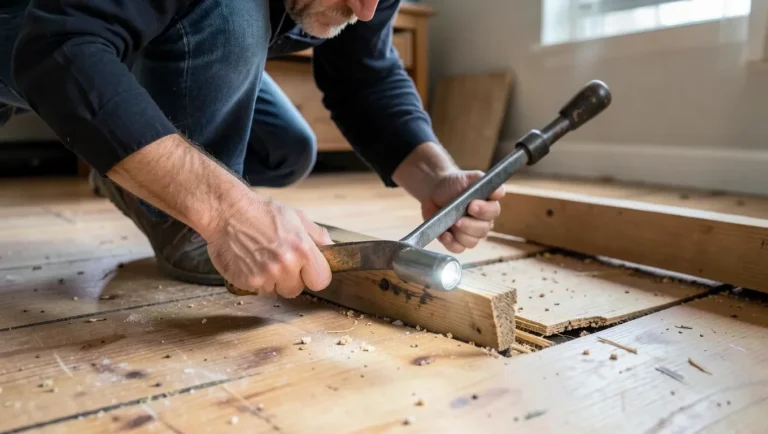
Engineered wood has a thin layer of real wood veneer bonded over plywood. It can be lightly sanded and refinished a limited number of times, unlike the other two, but that real-wood top layer is also the most moisture-sensitive of the three — treat it closer to solid hardwood than to laminate or LVP.
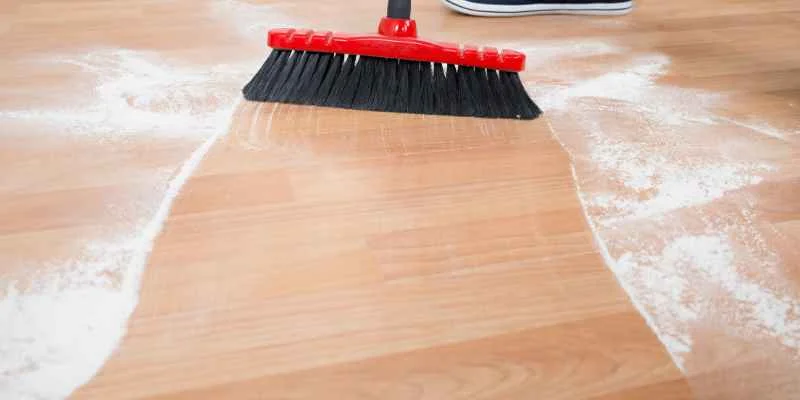
Once you know which one you have, a single mild, pH-neutral cleaner works safely across all three — you just adjust how much water you use.
How to Clean Each Type Safely
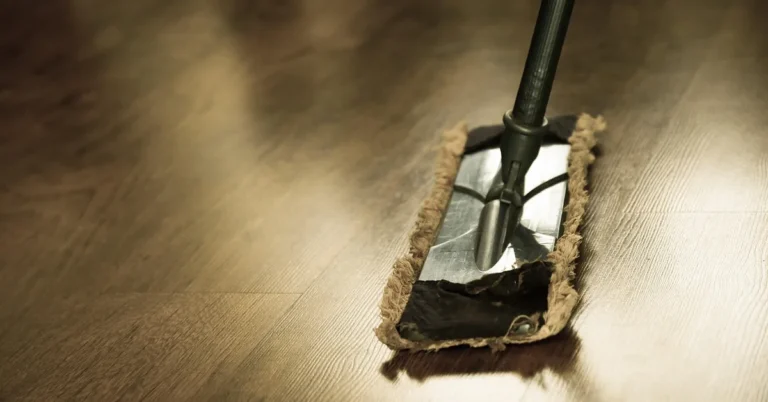
- Laminate: Use a barely damp microfiber mop, never a wet one, and dry the floor immediately after. Never use a steam mop — the heat and moisture together are what push water into the seams and swell the core.
- LVP: You can use a more thoroughly damp mop since the core is waterproof, but still avoid pooling water at the edges and baseboards, where it can seep under the planks.
- Engineered wood: Treat it like solid hardwood — a barely damp mop or a hardwood-specific spray cleaner, and dry immediately. Never let water stand on it.
Skip vinegar on all three. It’s a common DIY suggestion, but vinegar is acidic, and laminate manufacturers specifically warn that repeated vinegar cleaning etches the clear wear layer at a microscopic level, leaving a dull, cloudy floor that sanding won’t fix on laminate or LVP. A pH-neutral cleaner made for the surface does the same cleaning job without that risk.
Removing Tough Stains and Spills
Blot spills immediately with a dry cloth rather than wiping, which can spread liquid into seams before you’ve absorbed it. For a dried spot, a paste of baking soda and a small amount of water, left on for a few minutes and wiped away, lifts most residue without scratching the wear layer. Always test any spot-treatment in an inconspicuous corner first.
Daily and Weekly Maintenance
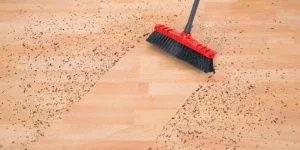
- Sweep or vacuum with a hard-floor setting (no beater bar) daily in high-traffic areas to keep grit from scratching the wear layer underfoot.
- Damp-mop weekly with a pH-neutral cleaner made for your specific floor type.
- Add felt pads under furniture legs and a doormat at entries to cut down on the grit and moisture that cause the most wear.
Frequently Asked Questions
What do you clean fake hardwood floors with?
A pH-neutral cleaner labeled for your specific floor type (laminate, LVP, or engineered wood) applied with a barely damp microfiber mop. Avoid vinegar, ammonia, and steam mops, which can dull the finish or push moisture into the seams.
Can you get faux wood flooring wet?
It depends which faux wood you have. Luxury vinyl plank is fully waterproof and tolerates a wetter mop. Laminate and engineered wood are only water-resistant — standing water can swell laminate’s fiberboard core or damage engineered wood’s real-wood veneer.
Can you use a Swiffer on fake wood floors?
Yes, a dry Swiffer pad for daily dust and a barely damp one for light cleaning both work on laminate, LVP, and engineered wood. Avoid soaking the pad, especially on laminate and engineered wood.
Is it okay to use vinegar to clean laminate floors?
Manufacturers generally advise against it. Vinegar is acidic, and repeated use etches the clear wear layer over time, leaving a dull, cloudy finish. A pH-neutral cleaner made for laminate does the job without that risk.
Conclusion
The cleaning method that works depends on which faux hardwood you actually have — identify laminate, LVP, or engineered wood first, then use a barely damp mop and a pH-neutral cleaner suited to it. Skip vinegar and steam mops, and your floor’s wear layer will stay clear and scratch-free far longer.
Sponsored / affiliate links. As an Amazon Associate I earn from qualifying purchases. I may earn additional commission from eligible campaigns.