DIY Floor Refinishing vs. Hiring a Pro: Cost and Time Compared
DIY hardwood floor refinishing usually saves about $2 to $5 per square foot, but that savings can be made up partly by rental, abrasive, finish, PPE, dust-control, and cleanup costs, and it can leave the room unusable for about 3 to 7 days. Hire a pro when the floor needs sanding, patching, or fast turnaround. A poor refinish can leave swirl marks, uneven stain, dust in the finish, and can thin the wear layer enough to shorten the floor’s life. Below, you’ll compare DIY and pro costs, timeline, cleanup, dust control, and which floor types are safer to leave to a contractor.
| Decision factor | DIY Floor Refinishing | Hiring a Pro | Winner |
|---|---|---|---|
| Upfront cash | About $1.50–$3 per square foot, plus rental and supply costs | $3–$8 per square foot | DIY Floor Refinishing |
| Time and disruption | 3–5 days of active labor, plus up to 7 days of curing before furniture returns | 1–2 days for a 300 sq ft project, with less homeowner labor | Hiring a Pro |
| Dust control | More cleanup and more airborne dust from rental tools | Better dust containment with pro equipment | Hiring a Pro |
| Risk of costly mistakes | Higher risk of gouges, uneven sanding, and finish defects | Lower risk, with more consistent sanding and coating | Hiring a Pro |
| Best fit | Small, empty room with sound solid hardwood and no repair work | Occupied homes, damaged boards, engineered floors, or tight deadlines | Tie |
What a sand-and-refinish package actually includes
DIY floor refinishing usually saves cash and costs more in disruption. Hiring a pro costs more, but it cuts the job to fewer days, keeps dust down, and lowers the chance that a sanding error turns into a full resand or board replacement.
What each option includes
DIY sand-and-finish means you rent the main sanding tools, sand the field with a drum sander, clean the edges with an edge sander, apply finish, and handle the mess yourself. Professional sand-and-refinish usually includes three sanding passes and two to three coats of finish, with a crew set up for faster turnover and better dust containment.
The real trade-off: cash versus disruption
The price gap is real, and the time cost is too. DIY can save money upfront, but it also keeps the room closed, adds cleanup, and can push furniture return back by up to 7 days.
Where screen-and-recoat fits
Screen-and-recoat, also called buff-and-coat, is a lower-cost option when the finish is worn but the wood itself is not damaged. It is not a substitute for full sanding when you need stain changes, deep scratch removal, or board repair, and it does not work well on waxed or contaminated floors.
Cost and time comparison table
The cleanest way to compare the two paths is to split cash cost from lost time. That shows whether the cheaper option is actually cheaper once you count rental days, cleanup, and the room being out of service.
| Category | DIY Floor Refinishing | Hiring a Pro |
|---|---|---|
| Base cost per square foot | $1.50–$3 | $3–$8 |
| Typical 500 sq ft project | Lower cash outlay, but rental and supplies still add up | $1,500–$4,000 |
| Rental equipment | $150–$300 per day for equipment rental alone | Included in the quote |
| Active labor | 3–5 days | 1–2 days for a 300 sq ft project |
| Cure or disruption window | Up to 7 days before furniture returns | Shorter homeowner disruption, depending on finish choice |
| Dust and cleanup burden | Higher | Lower |
DIY cost components
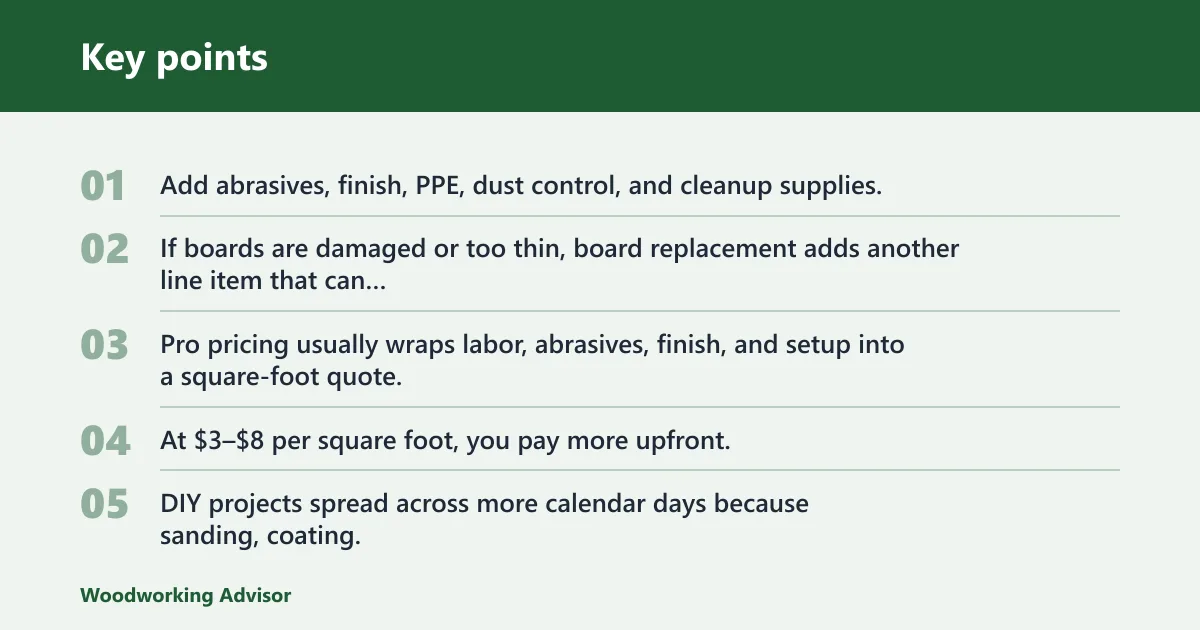
DIY cost is not just the sander rental. Add abrasives, finish, PPE, dust control, and cleanup supplies, then factor in the chance that a sanding error creates extra expense. If boards are damaged or too thin, board replacement adds another line item that can erase the savings quickly.
Professional cost components
Pro pricing usually wraps labor, abrasives, finish, and setup into a square-foot quote. At $3–$8 per square foot, you pay more upfront, but you also avoid paying separately for rental days and a long cleanup window.
Active labor days versus cure days
DIY projects spread across more calendar days because sanding, coating, and drying all interrupt progress. That matters in occupied homes, where the room may be unusable longer than the work itself takes.
Floor refinishing decision matrix
This matrix turns the main trade-off into room-specific guidance. The right choice changes with room size, household traffic, floor type, and repair needs.
| Scenario | DIY Floor Refinishing | Hiring a Pro | Recommended option |
|---|---|---|---|
| Small room | Estimated cash cost stays lower, especially if the room is empty | Higher quote for a small job | DIY Floor Refinishing |
| Occupied family home | More dust, more room shutdown, more disruption to kids and pets | Faster turnover and better dust containment | Hiring a Pro |
| First-time DIY | Higher chance of uneven sanding or finish errors | Lower risk and more consistent results | Hiring a Pro |
| Damaged or engineered floor | Risky if boards are thin or need repair | Better choice when board replacement or veneer limits are involved | Hiring a Pro |
Suppose a 180 sq ft bedroom has solid hardwood with light wear and no board damage. DIY may keep the bill low, especially if you can leave the room empty for several days. The same approach becomes much less attractive in a busy hallway that connects to bedrooms, because dust and shutdown time spread through the house.
A common first-timer mistake is treating a thin engineered wear layer like solid hardwood. If the veneer is too thin, a sanding pass can expose the core or make the floor unsalvageable, which is why that scenario belongs with a contractor, not a rental sander.
What does DIY floor refinishing cost?
DIY refinishing usually lands at $1.50–$3 per square foot before the hidden costs show up. That range includes the obvious rental and supply items, but once you add rental days, abrasives, finish, PPE, dust control, and cleanup supplies, the project can move closer to the low end of a pro bid than many homeowners expect.
Drum sander and edge sander rental
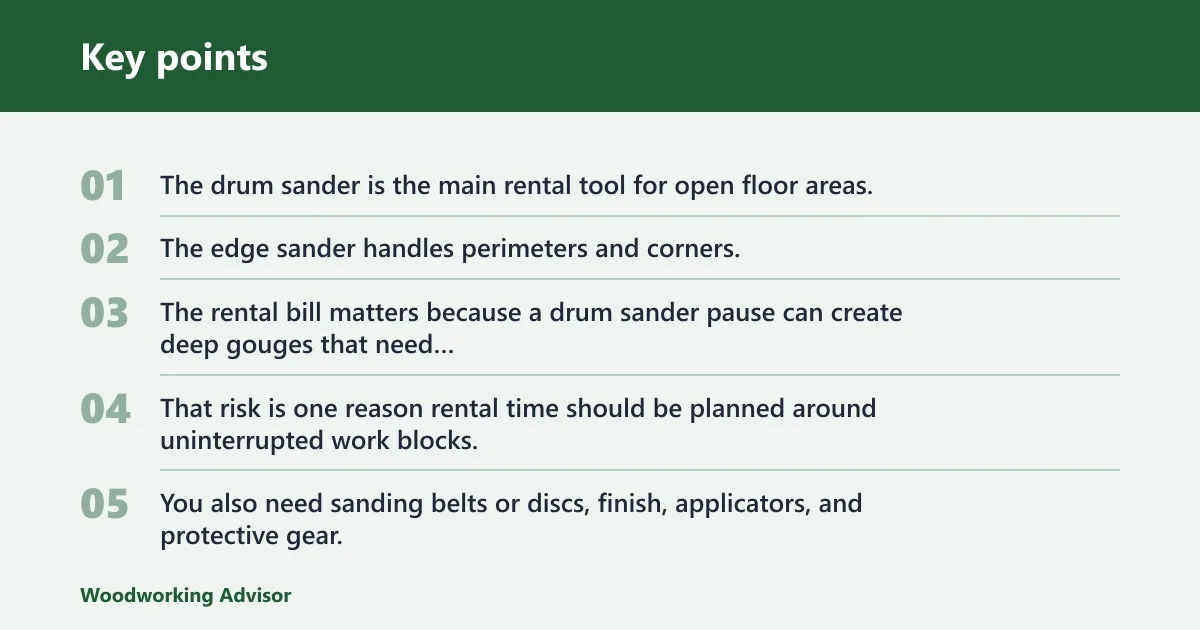
The drum sander is the main rental tool for open floor areas, and it is commonly rented by the day. The edge sander handles perimeters and corners, so you need both machines for a complete DIY sand-and-finish job.
The rental bill matters because a drum sander pause can create deep gouges that need major repair. That risk is one reason rental time should be planned around uninterrupted work blocks, not around an open-ended weekend.
Abrasives, finish, and PPE
You also need sanding belts or discs, finish, applicators, and protective gear. Oil-based polyurethane gives a traditional amber tone, stronger fumes, and slower curing, while water-based polyurethane dries faster, has lower odor, and may require additional coats depending on the product.
Dust control and cleanup supplies
Dust containment is better with pro equipment than with most rental tools. DIY cleanup usually takes more time because dust migrates beyond the work area, settles on trim and vents, and can still end up in the finish if you rush between sanding and coating.
When board replacement raises the bill
If boards are damaged, split, or too thin, board replacement adds both labor and material cost. That extra work is one of the strongest reasons to hire a pro, since repair work sits outside a basic refinish quote and can change the scope fast.
How long does each option take?
DIY takes longer in calendar days because the work comes in stages: prep, sanding, cleanup, finish coats, and cure time. A pro shortens the active job window, which is especially important when a room must return to service quickly.
Typical DIY project-day sequence
Plan on one day for setup and prep, one or more days for sanding, and additional time for finish coats and drying windows. DIY refinishing can take 3–5 days of active labor, and it can add up to 7 days of curing time before furniture returns.
- Clear the room and remove trim or cover adjacent areas.
- Sand the field with the drum sander in controlled passes.
- Use the edge sander on borders, corners, and tight spots.
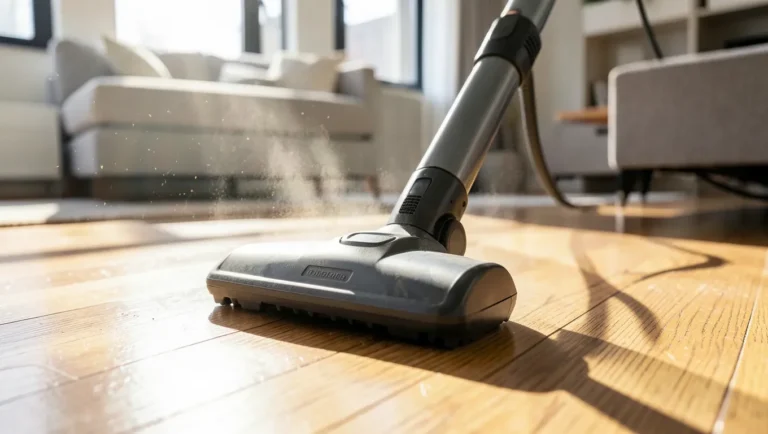
- Vacuum and tack the floor before any finish goes down.
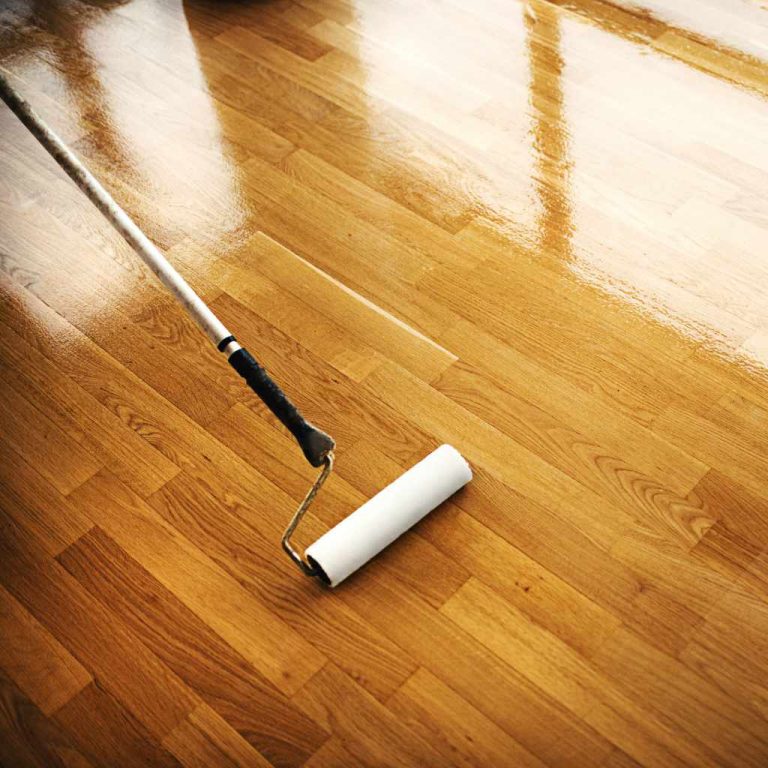
- Apply stain if needed, then apply finish coats with drying time between coats.
- Wait for cure time before moving furniture back.
Professional workflow and turnaround
Professional refinishing for 300 sq ft takes 1–2 days. That shorter schedule reduces room shutdown and makes it easier to manage households that cannot leave a room offline for nearly a week.
Walk-on time and furniture return time
Furniture return is the real deadline, not just walk-on time.
What tools do you need to refinish hardwood floors yourself?
At minimum, you need a drum sander for the main floor area, an edge sander for perimeters, sanding abrasives, a vacuum, finish, and dust control gear. The tool list grows if you need stain, board patching, or better containment around the rest of the house.
Drum sander and edge sander setup
The drum sander handles the broad field of the floor, while the edge sander works along walls and corners. That sequence matters because the two machines leave different scratch patterns, and you need to blend them through the sanding schedule before any finish goes down.
Dust containment and safety gear
Use a respirator, eye protection, hearing protection, and plastic sheeting or other barrier material to limit dust spread. Even with careful prep, rental-tool dust control is usually weaker than the dust containment built into professional systems.
Finish, stain, and applicators
If color change is part of the job, stain adds another layer of timing and risk. Stain errors are often visible immediately, while finish defects may not show until the floor cures and light hits the surface at an angle.
Choose DIY Floor Refinishing if… / Choose Hiring a Pro if…
Choose DIY Floor Refinishing if the room is small, the floor is solid hardwood, the boards are sound, and you can keep the space out of use for several days. It also makes sense when your main goal is lower cash outlay and you are comfortable managing dust, finish timing, and the sanding sequence.
Choose Hiring a Pro if the home is occupied, the room must return to service quickly, the floor needs stain work or board replacement, or the floor is engineered and you do not know the wear-layer thickness. A contractor is also the safer pick when you want better dust containment and lower risk of a costly sanding mistake.


Frequently asked questions
How much does DIY floor refinishing cost compared with hiring a pro?
DIY floor refinishing is estimated at $1.50–$3 per square foot, while professional refinishing costs $3–$8 per square foot. The DIY number can climb once you add rental days, abrasives, finish, PPE, dust control, and cleanup supplies, so the true gap is smaller than the headline numbers suggest.
How long does hardwood floor refinishing take DIY vs professional?
DIY refinishing can take 3–5 days of active labor and up to 7 days of curing before furniture returns. Professional refinishing for 300 sq ft takes 1–2 days, which is why pros are usually the better choice when room downtime is the main constraint.
When is screen-and-recoat enough instead of full sanding?
Screen-and-recoat, also called buff-and-coat, is enough when the finish is worn but the wood itself is still in good shape. If you have deep scratches, staining changes, or damage that reaches the wood, you need full sanding or a repair-first approach instead.
What are the biggest risks of DIY hardwood floor refinishing?
The biggest risks are gouges from the drum sander, uneven sanding, visible finish laps, and dust trapped in the coating. Some mistakes are recoverable with extra sanding and another coat, but deep gouges or severe unevenness can force a full resand or board replacement.
Can engineered hardwood be refinished like solid hardwood?
Not always. Engineered hardwood has a thin wear layer, so it may allow only one light refinish or none at all, depending on veneer thickness. Solid hardwood can often be refinished multiple times, depending on board thickness and prior sanding history, which gives it more sanding margin over the floor’s life.
Is it cheaper to hire a pro if I need stain or board repair too?
Often, yes. Once stain, patching, or board replacement enters the job, the DIY bill grows through extra tools, extra time, and higher mistake risk. A pro can bundle those steps into one scope, which may be cheaper than paying for a failed DIY pass and a second round of repair.
How many days until refinished floors can handle furniture?
That depends on the finish and the job scope, but DIY can add up to 7 days of curing before furniture returns. Water-based polyurethane usually shortens odor and dry time compared with oil-based polyurethane, yet furniture should still wait until the coating has cured enough to avoid dents and imprint marks.
Sponsored / affiliate links. As an Amazon Associate I earn from qualifying purchases. I may earn additional commission from eligible campaigns.