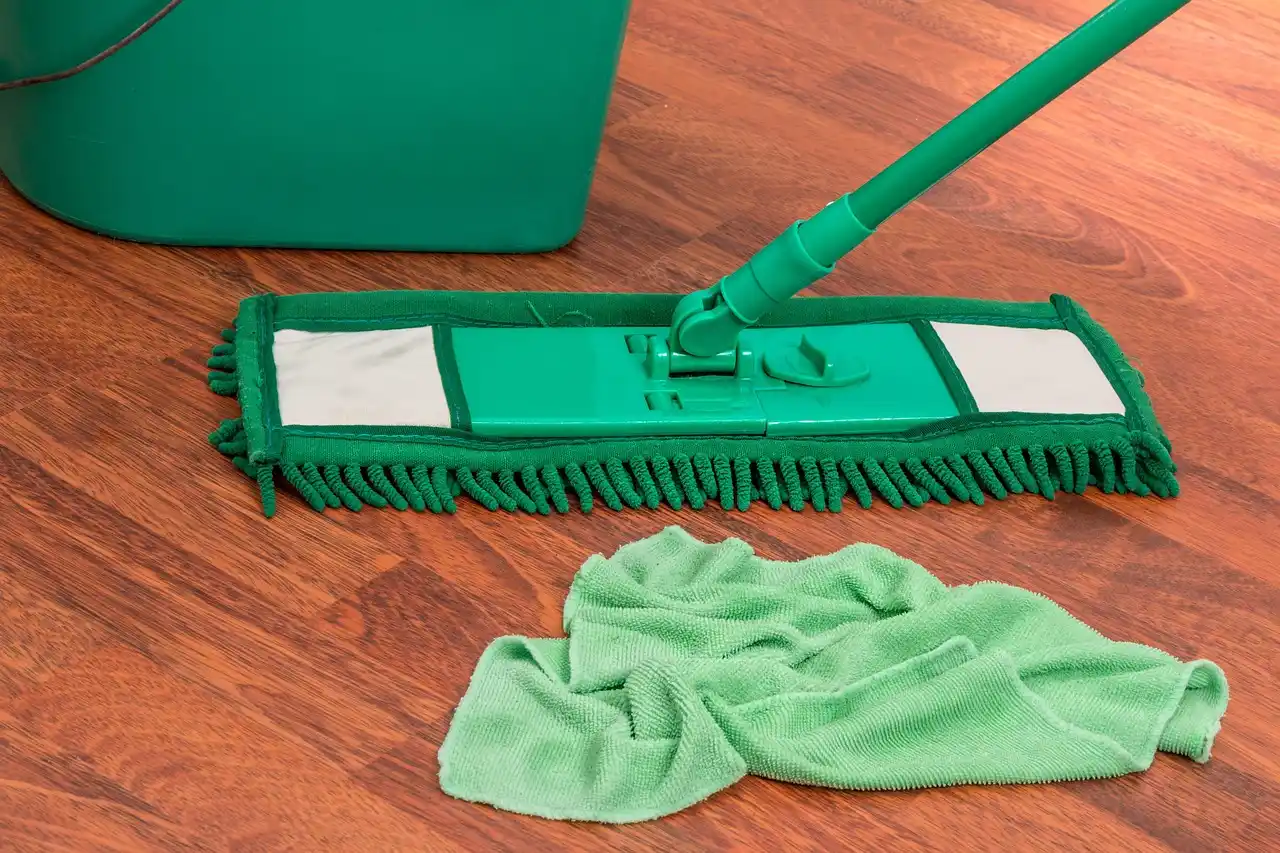
Bona Hardwood Floor Cleaner Review: Does It Work?
Bona Hardwood Floor Cleaner is worth buying for routine cleaning on finished hardwood and other sealed floors, but not for damaged, waxed, or heavily built-up floors. It lifts everyday dirt and light scuffs well, yet dull finish, embedded residue, and water damage need another product or a repair step. This review explains where it works, where it falls short, and what to use instead.
Verdict at a glance
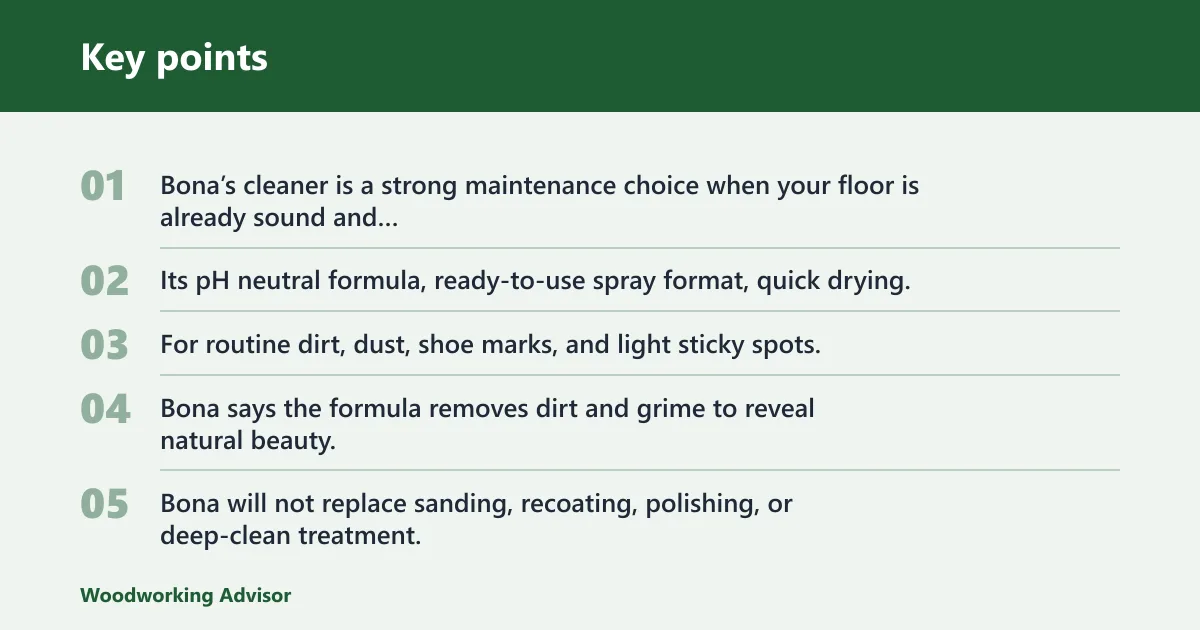


Bona’s cleaner is a strong maintenance choice when your floor is already sound and finished. Its pH neutral formula, ready-to-use spray format, quick drying, and EPA Safer Choice certification fit normal hardwood care, especially for polyurethane-finished floors that need gentle cleaning. It is not a restore-and-fix product.
What Bona cleans well
For routine dirt, dust, shoe marks, and light sticky spots, Bona does what a maintenance cleaner should do: lift surface soil without leaving much moisture behind. Bona says the formula removes dirt and grime to reveal natural beauty, and that claim matches the job description of a daily or weekly cleaner, not a refinisher.
Where it falls short
Bona will not replace sanding, recoating, polishing, or deep-clean treatment. If a floor has haze from old product, wax buildup, damaged finish, or water staining, a spray cleaner can only move around the problem. That is where shoppers often expect too much and end up disappointed.
Bottom-line buying call
Buy Bona if your floor is finished, intact, and just needs regular upkeep. Skip it as a first choice for neglected floors, waxed floors, or any surface that feels sticky even after mopping. For those cases, look at a deep cleaner, a polish, or a floor-care repair step instead.
📊 This Old House lists the Bona Hardwood Floor Cleaner Refill size as 128 ounces. Source: 5 Best Floor Cleaners (2026 Review).
Pros and cons
Pros
- pH neutral formula works well for finished hardwood care.
- Ready-to-use spray makes quick work of routine cleaning.
- Dries fast when used with a microfiber pad and light spray.
- EPA Safer Choice certification is a useful label for buyers who want a more cautious ingredient profile.
- Refillable cartridge and bottle options reduce single-use waste.
Cons
- It does not remove finish damage, scratches, or water injury.
- It can struggle with wax, oil-soap residue, and heavy buildup.
- It is easy to expect shine restoration from a cleaner that is not a polish.
- Overuse or a dirty pad can leave film or streaks.
Who should buy it?
Bona suits you if you have finished hardwood, especially polyurethane-finished floors, and you want a straightforward maintenance cleaner for dust, everyday grime, and light scuffs. It is also a good fit if you prefer a spray-and-mop workflow with microfiber and want a cleaner that dries quickly.
It makes less sense if your floor is dull from wear, coated with old wax, or damaged by water. In those cases, a polish, a deep cleaner, or a refinish may be the correct step. Bona is for keeping a good floor clean, not making a tired floor look new.
Best fit for finished hardwood
Polyurethane-finished hardwood floors are the sweet spot here. That finish type is common, and it generally responds well to a gentle pH-balanced cleaner. Bona fits that maintenance job because it lifts surface dirt without aggressive solvents or excessive water.
When another product makes more sense
If the floor feels tacky after cleaning, has a cloudy film, or shows age-related dullness, another product may be more appropriate. Bona PowerPlus Hardwood Floor Deep Cleaner is often the stronger option for heavy buildup. Bona Hardwood Floor Polish is for reviving dull but intact floors, not for cleaning them.
Say your 2-year-old polyurethane floor in a kitchen shows a few shoe scuffs near the sink and a thin layer of dust under the table. Bona is the right kind of cleaner for that job. Suppose the same floor has years of waxy residue and a cloudy look after mopping; Bona will not solve that by itself.
How to use Bona correctly
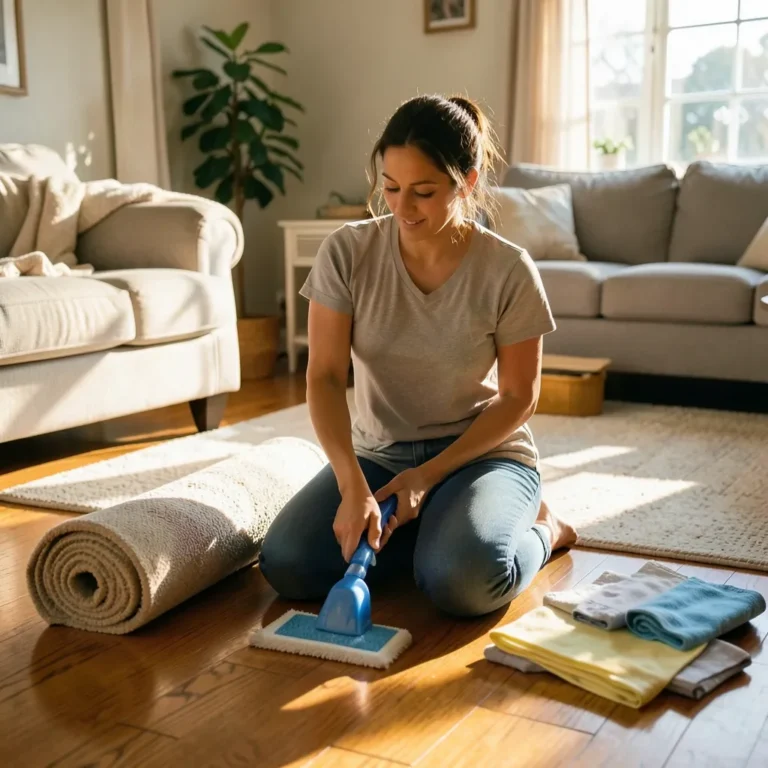
The best results come from a light spray on the pad or mop head, not a soak on the floor. Use a separate microfiber mop or Bona Premium Spray Mop with a microfiber pad, then clean in small sections. That limits moisture, helps the cleaner work evenly, and reduces residue risk.
Spray the pad, not the floor
Bona’s spray workflow is built for controlled application. A damp microfiber pad spreads the cleaner more evenly than a wet floor, and it cuts the chance of streaks. Heavy spraying invites puddling, which is a common cause of film on finished wood.
Use a separate microfiber mop
The Bona Premium Spray Mop uses a refillable cleaner cartridge, a lightweight body, and an extra-large mop head with a separate microfiber pad. That setup matters because the pad does the wiping and the spray does the dosing. A microfiber mop is the safer choice for streak-free results.
Clean weekly or after spills
Bona Microfiber Cleaning Pads are washable up to 500 times, which makes them practical for weekly cleaning and small spill cleanup. For most homes, a dusting pass plus a light mop on a weekly schedule is enough. Spots and spills should be handled sooner so they do not dry into sticky patches.
What to avoid during cleaning
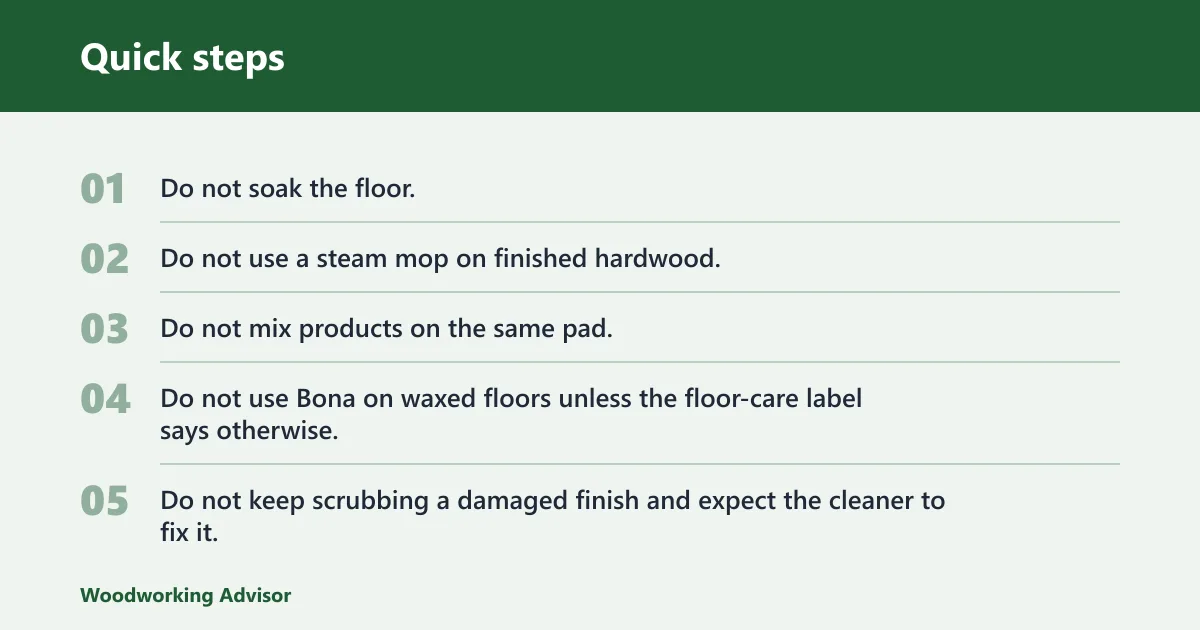
- Do not soak the floor.
- Do not use a steam mop on finished hardwood.
- Do not mix products on the same pad.
- Do not use Bona on waxed floors unless the floor-care label says otherwise.
- Do not keep scrubbing a damaged finish and expect the cleaner to fix it.
Does Bona really clean floors?
Yes, Bona really does clean routine soil on finished floors, especially dust, light grime, and fresh shoe marks. It works best as a maintenance cleaner on a sound finish. It does not clean every problem a floor can have, and it will not restore worn wood or remove finish failure.
Everyday dust and grime
For ordinary soil, Bona is in its element. A pH neutral spray with microfiber is a sensible combination for loose dust and tracked-in debris. This is the kind of cleaning that keeps a floor looking cared for without flooding the surface with water.
Shoe scuffs and sticky spots
Good Housekeeping says Bona quickly cut through sticky soil and removed shoe scuffs, which is the type of performance many homeowners want from a spray cleaner. That said, a floor with repeated sticky buildup may need a deeper cleaner first, not just another pass with the same bottle.
Streaks, residue, and dull film
Bona should dry cleanly when used in light amounts with a clean microfiber pad. Streaks or residue usually point to one of three problems: too much product, a dirty pad, or a floor that already has coating residue on it. In that last case, the cleaner is exposing a bigger issue.
Picture a roughly 1,200-square-foot open-plan first floor with a kitchen island and entryway traffic. If the only problem is daily dust and a few heel marks, Bona is a reasonable choice. If the same area feels tacky after mopping, the issue is probably buildup, not lack of cleaner strength.
Floor cleaner decision table
| Floor condition | Expected Bona result | Likely failure mode | Better alternative |
|---|---|---|---|
| Everyday dust | Lifts loose soil quickly and leaves a clean surface | Pad is already dirty, so dust smears instead of lifts | Dry microfiber dusting, then Bona for a light finish clean |
| Shoe scuffs | Often removes fresh marks from finished wood | Old scuffs can remain if the finish is worn | Bona PowerPlus Hardwood Floor Deep Cleaner for heavier mark-up |
| Sticky residue | May loosen light surface tackiness | Heavy buildup can turn cloudy or smear | Deep cleaner, then a fresh microfiber pad and controlled drying |
| Dull but intact finish | Cleans the surface but does not restore gloss | User expects shine instead of cleaning | Bona Hardwood Floor Polish if the finish is sound |
| Wax buildup | Poor fit; may clean the top layer only | Wax haze stays on the floor and can smear | Wax removal or a floor-care method made for waxed surfaces |
| Water-damaged floors | No real fix; may clean around the damage | Staining, cupping, or finish failure remains visible | Repair, refinishing, or replacement assessment |
Bona versus other options
Bona is a maintenance cleaner, while some competing products aim for broader surface care or heavier cleaning. That difference matters more than brand familiarity. If the floor problem is simple soil, Bona is usually the cleaner answer. If the floor problem is buildup, go stronger or change categories.
Bona versus Murphy
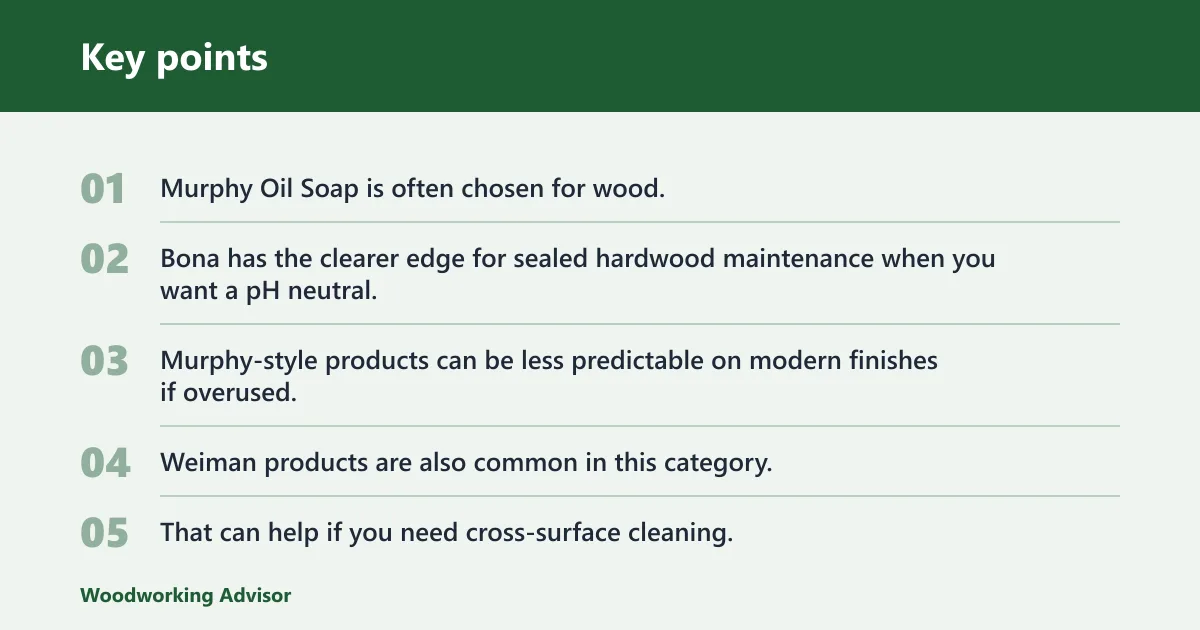
Murphy Oil Soap is often chosen for wood, but many shoppers still compare it with Bona because both sit in the hardwood-cleaning aisle. Bona has the clearer edge for sealed hardwood maintenance when you want a pH neutral, spray-based workflow with less moisture. Murphy-style products can be less predictable on modern finishes if overused.
Bona versus Weiman
Weiman products are also common in this category, and some formulas are aimed at sealed hard floors rather than only hardwood. That can help if you need cross-surface cleaning, but it can also blur the line between a wood-safe maintenance cleaner and a general-purpose floor product. For hardwood-only care, Bona is the narrower, safer fit.
When to choose PowerPlus or polish
Bona PowerPlus Hardwood Floor Deep Cleaner is the better pick for heavy buildup because it uses an oxygenated formula and is meant to clean more aggressively, especially with the deep clean pad. Bona Hardwood Floor Polish is the right call when the floor is already clean but looks tired. It is often described as helping to fill microscopic scratches and comes in high gloss and low gloss versions.
Bona recommends polishing high-traffic hardwood every 2-6 months and low-traffic hardwood every 6-12 months. That is maintenance guidance, not a rescue plan. If the floor is worn enough to need sanding or refinishing, Bona also notes typical hardwood can be refinished every 7-10 years and sanded 4-6 times in its life.
Frequently asked questions
Does Bona Hardwood Floor Cleaner really work on everyday dirt and scuffs?
Yes. It is a good match for routine dirt, light grime, and fresh shoe scuffs on finished hardwood. It is not meant for finish damage or heavy buildup. For normal upkeep, it does the job better than many all-purpose cleaners because it is built for sealed wood surfaces.
Is Bona safe for polyurethane-finished hardwood floors?
Generally, yes. Polyurethane-finished hardwood is one of the most common floor types that fits this cleaner category, and a pH neutral formula is the right kind of choice for it. The key is using it as directed on a finished, sealed surface, not on raw or damaged wood.
Does Bona leave streaks or residue on wood floors?
It should not, if you use a light spray and a clean microfiber pad. Streaks usually come from too much product, a dirty pad, or a floor that already has waxy or oily residue. If residue keeps showing up, the floor likely needs a deeper cleaning step.
How do you use bona hardwood floor cleaner correctly?
Spray the microfiber pad or mop head, not the floor, then wipe in manageable sections. Use a separate microfiber mop for the best control. Clean weekly or after spills, and avoid soaking the surface. The goal is a thin, even application that dries fast.
Is Bona better than Murphy or Weiman for hardwood floors?
For finished hardwood maintenance, Bona is often the cleaner comparison because it is clearly positioned as a hardwood spray cleaner with a microfiber workflow. Murphy and Weiman can work in certain cases, but product labels vary more. If your main need is routine hardwood cleaning, Bona is the simpler fit.
Is Bona safe for kids and pets?
Bona markets the cleaner with Safer Choice certification, which is helpful for buyers who want a more cautious formula profile. Even so, keep kids and pets off the floor until it is dry, and follow the label directions. Safety depends on proper use, not on the brand name alone.
What makes Bona different from deep-cleaning hardwood floor products?
Bona Hardwood Floor Cleaner is for routine maintenance. Deep cleaners, such as Bona PowerPlus Hardwood Floor Deep Cleaner, are meant for heavier buildup and need a stronger cleaning step. The difference is simple: one keeps a good floor clean, while the other tries to break through more stubborn residue.
Sponsored / affiliate links. As an Amazon Associate I earn from qualifying purchases. I may earn additional commission from eligible campaigns.