How to Clean and Dispose of Wood Stain Rags Safely (Fire Risk Explained)
Oil-soaked rags catching fire on their own is not an old wives’ tale – it is a documented chemical reaction, and it has burned down real garages and workshops. The fix takes about five extra minutes: never pile oily rags together, and either lay them flat to dry or submerge them in water until you can dispose of them properly.
Why Oily Rags Actually Catch Fire
Correct Tool For Daily Oily Rag Disposal
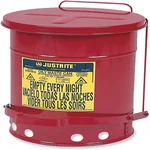 |
Justrite 6-Gallon Galvanized Steel Oily Waste Safety Can – $87 If you stain or finish wood regularly, a dedicated safety can is the one piece of equipment that removes the guesswork from daily rag disposal.
|
Drying oils – linseed oil, tung oil, and most oil-based stains and wipe-on finishes – do not just evaporate as they dry, they oxidize, a chemical reaction with the oxygen in the air that releases heat as a byproduct. A single wet rag laid flat loses that heat to the surrounding air as fast as it is generated. A pile of rags balled up together traps the heat instead, and the reaction accelerates as the temperature rises, which accelerates the reaction further – a feedback loop that can reach ignition temperature with no flame or spark involved at all. This is exactly why fire investigators list “spontaneous combustion of oily rags” as a recurring, real cause of shop and garage fires, not a myth – see our full breakdown of whether wood stain can spontaneously combust for the deeper explanation.
Water-based stains and finishes carry essentially none of this risk, since they dry by evaporation rather than oxidation and do not generate heat as they cure. The two safe-disposal methods below matter specifically for oil-based products – oil-based stain, tung oil, linseed oil, and oil-based polyurethane or varnish.
The Two Safe Disposal Methods
Method 1: Lay Rags Flat to Dry
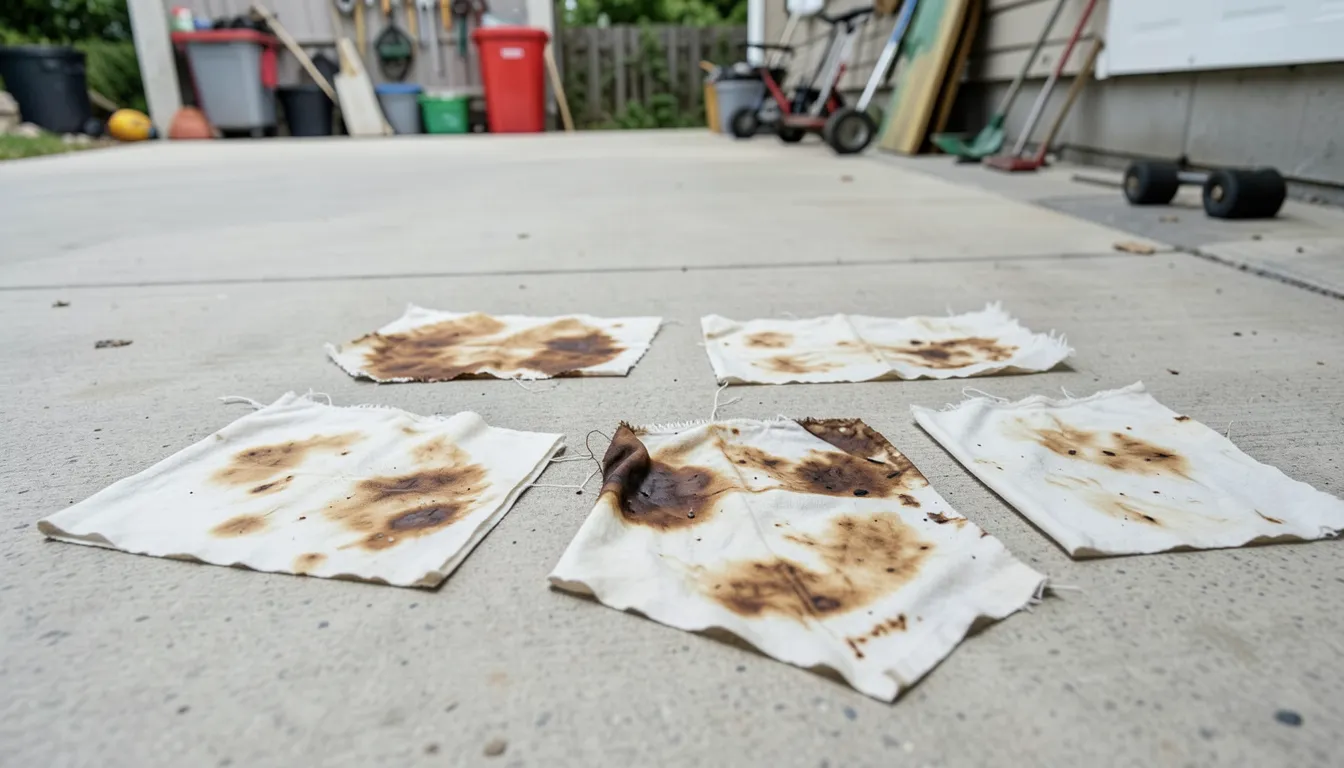
Spread each rag out flat and separate, not touching or overlapping, outdoors on a nonflammable surface like concrete or gravel, away from the building, dry leaves, and anything else combustible. Let them dry completely and go stiff, which usually takes several hours to overnight depending on the product and weather. Once a rag is fully hardened and no longer smells strongly of solvent, the oxidation reaction has mostly run its course and it can go in the regular trash. Do not skip the “spread apart” step – a loose heap on the ground has the same heat-trapping problem as a heap in a bin.
Method 2: Submerge in a Sealed Metal Container of Water
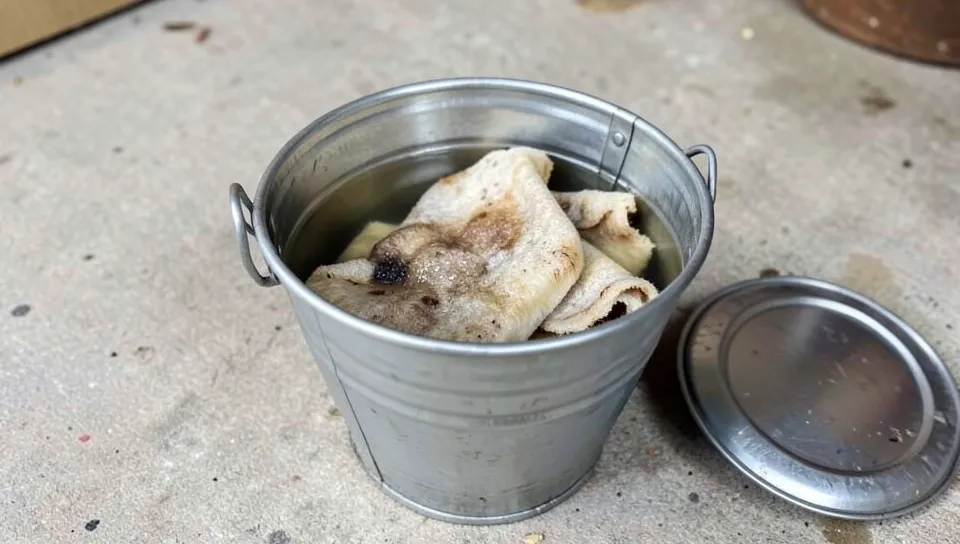
Water excludes the oxygen the oxidation reaction needs, which stops the heat buildup at the source. Drop the used rags into a metal container, fill it with enough water to fully submerge them, and seal the lid. This is the better option when you cannot dry rags outdoors right away, or when you are generating rags daily on a bigger project and do not want a drying rack of them building up. Check with your local waste authority before disposal, since some municipalities classify oil-saturated rags as household hazardous waste rather than regular trash.
What Not to Do
Never pile used oily rags in a heap, a regular plastic trash can, or a cardboard box, even “just for a few hours” – the ignition risk builds from the moment they are balled up together, not after some long delay. Do not run oil-stained rags through a washing machine either; the residue can coat the drum and inner hoses and create a fire risk in the appliance itself on a later load, and most manufacturers warn against it directly.
Cleaning Rags for Reuse
If you want to reuse rags rather than dispose of them, the safety steps still apply first. For oil-based stain, soak the rag in mineral spirits in a metal or glass container for 20 to 30 minutes, then wring it out over a sealed container (not the sink) and let it air dry flat before storing. For water-based stain, a warm-water soak with a mild detergent, then a full rinse and a flat air-dry, is enough. Either way, a rag is not safe to store loosely folded in a drawer until it has fully dried flat first.
Frequently Asked Questions
How should I dispose of wood stain rags safely?
Lay them flat and spread apart outdoors until fully dry and hardened, or submerge them in a sealed metal container filled with water. Never pile oil-soaked rags together, even briefly.
Can wood stain rags really catch fire on their own?
Yes. Oil-based stains and finishes oxidize as they dry, a chemical reaction that releases heat. A pile of rags traps that heat instead of losing it to the air, and the buildup can reach ignition temperature without any flame or spark.
Can I wash wood stain rags in the washing machine?
It is not recommended. Oil residue can coat the washer drum and hoses, creating a fire risk on a later load, and most manufacturers warn against it. Hand-cleaning with the appropriate solvent is the safer option.
Do water-based stain rags pose the same fire risk as oil-based ones?
No. Water-based stains dry by evaporation, not oxidation, and do not generate heat as they cure, so they do not carry the same spontaneous combustion risk as oil-based products.
Sponsored / affiliate links. As an Amazon Associate I earn from qualifying purchases. I may earn additional commission from eligible campaigns.