Does Semi-Solid Stain Peel? Oil-Based Vs. Water-Based
Oil-based semi-solid stain rarely peels because it penetrates into the wood fiber instead of sitting on top as a film — but water-based semi-solid stain peels far more often, since it behaves more like a thin coat of paint. The stain type, not just the “semi-solid” label, decides whether you’ll see peeling.
Confusing the two is why some people swear semi-solid stain never peels while others deal with flaking within two seasons. This guide covers the oil-vs-water distinction that actually predicts peeling, the real causes when it does happen, and how to tell peeling apart from normal wear.
Oil-Based Vs. Water-Based Semi-Solid Stain: Which One Peels?
Best Peel-Resistant Stain Pick
 |
TWP 101 Pro-Series Cedartone Oil-Based Stain – $56.63 An oil-based penetrating semi-transparent stain — the formulation type that resists peeling, unlike the water-based semi-solid stains covered below.
|
As an Amazon Associate we earn from qualifying purchases.
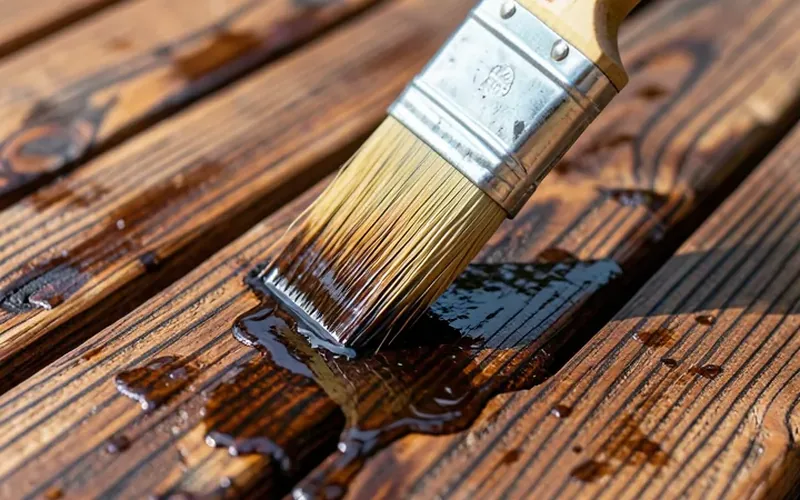
Semi-solid stains penetrate into the wood rather than sitting entirely on top, which is what lets quality oil-based products resist peeling far better than film-forming solid stains or paint. That penetration is the mechanism — and it’s specific to the oil-based formulation.
Water-based semi-solid stains don’t penetrate as deeply. They rely more on surface film to carry pigment, which is exactly the property that makes solid stains and paint prone to peeling. That’s why water-based semi-solid products are prone to peeling and are considerably harder to apply evenly than their oil-based counterparts.
📊 Quality oil-based semi-solid stains are much less prone to peeling than solid stains, since they penetrate the wood rather than forming a surface film — water-based semi-solid stains do not share this advantage. — Source: DeckStainHelp, Film-Forming vs. Penetrating Deck Stains
Key Factors Influencing Stain Durability
Beyond the oil-vs-water question, a few other factors decide how long any semi-solid stain lasts before it needs attention:
- Wood type: Hardwoods generally hold stain longer than softwoods like pine, which absorb unevenly.
- Surface prep: Properly cleaned and sanded wood lets stain penetrate instead of sitting on the surface.
- Sun exposure: South- and west-facing surfaces break down stain faster from UV exposure alone.
- Moisture: Wood that’s still damp when stained traps moisture under the coat, which is a leading cause of peeling regardless of stain type.
Semi-Solid Vs. Solid Stain Vs. Paint
| Finish | Coverage | Peel Risk |
|---|---|---|
| Oil-based semi-transparent/semi-solid | Shows grain through color | Low — penetrates wood |
| Water-based semi-solid | More opaque than oil-based | Higher — more film-forming |
| Solid stain | Full opaque color | Higher — sits on surface |
| Paint | Full opaque, thickest film | Highest — classic peel/crack/flake failure |
If you’re deciding between semi-solid and solid stain specifically, see our Cabot semi-solid vs. solid stain comparison for how those two formulations differ beyond peel resistance.
Preventive Measures To Avoid Peeling
- Confirm the wood is dry: Test with a moisture meter or wait 48+ hours after rain before staining.
- Clean and sand first: Remove dirt, mildew, and any failing old coating — stain won’t penetrate through debris or peeling paint.
- Choose oil-based: If peel resistance is the priority, an oil-based penetrating semi-solid or semi-transparent stain outperforms water-based semi-solid formulas.
- Apply thin, even coats: A heavy coat sits on the surface like a film even with oil-based products, raising peel risk.
What Peeling Actually Looks Like
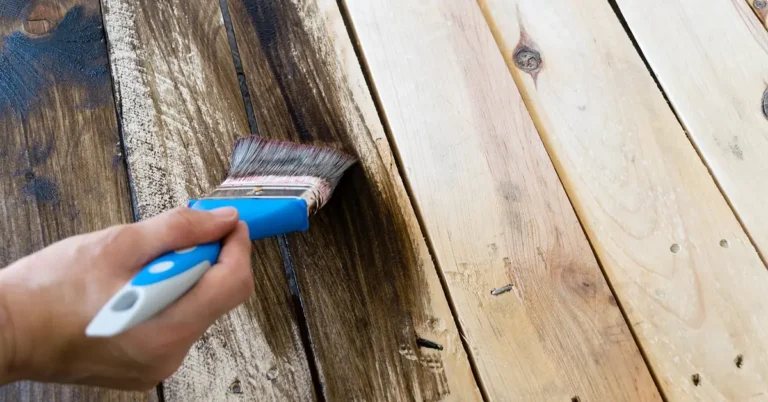
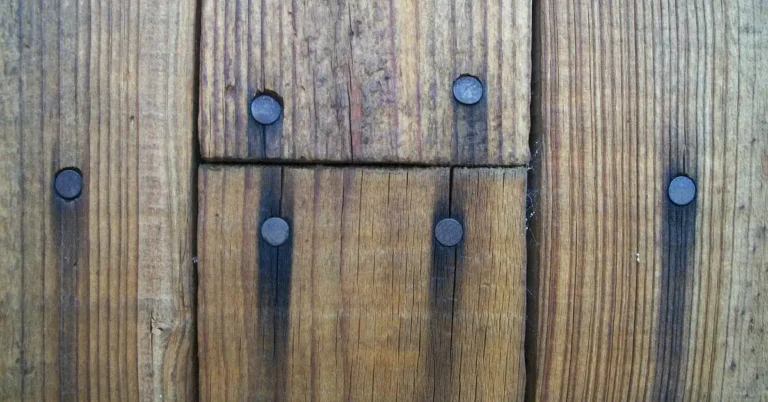
True peeling shows as curling flakes lifting away from the wood in sheets, often starting at board edges or seams where moisture gets trapped underneath. That’s different from normal fading or graying, which happens evenly across the surface without any flaking.
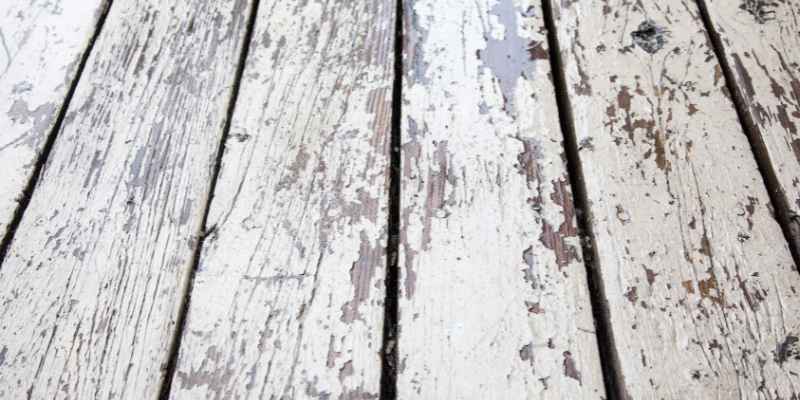
If a stain is genuinely peeling like this, more coats won’t fix it. The failing layer needs to be stripped or sanded off before recoating, or the new coat will fail the same way over the loose material underneath.
Frequently Asked Questions
Does Semi-solid Stain Peel Over Time?
Oil-based semi-solid stain rarely peels because it penetrates the wood fiber. Water-based semi-solid stain peels far more often because it forms more of a surface film. Poor surface prep, trapped moisture, and heavy coats increase peeling risk with either type.
How To Prevent Semi-solid Stain From Peeling?
Choose an oil-based penetrating formula, confirm the wood is fully dry before applying, clean and sand the surface first, and apply thin coats rather than one heavy coat. Each of these reduces the surface-film buildup that leads to peeling.
Is Semi-solid Stain Better Than Solid Stain?
Semi-solid stain shows more wood grain and generally resists peeling better when oil-based, since it penetrates rather than fully coating the surface. Solid stain gives fuller, more uniform color but sits more on top of the wood, closer to paint in peel risk.
Can I Apply Semi-solid Stain Over Old Stain?
Yes, if the old stain is intact and not peeling or flaking. If any of the old coating is lifting, remove it first by sanding or stripping — recoating over failing material just traps the same problem under a new layer.
How Do I Know If My Stain Is Oil-based Or Water-based?
Check the can label or product data sheet — it will state “oil-based,” “alkyd,” or “water-based/acrylic” directly. As a rough field test, oil-based stain typically has a stronger solvent smell and cleans up with mineral spirits rather than water.
Conclusion
Whether semi-solid stain peels comes down to oil-based versus water-based formulation, not the “semi-solid” label itself. Oil-based penetrates the wood and resists peeling; water-based sits more like a film and peels more like paint. Confirm dry wood, clean surface prep, and thin coats either way.
Sponsored / affiliate links. As an Amazon Associate I earn from qualifying purchases. I may earn additional commission from eligible campaigns.