How to Dispose of Stain Rags Safely (Without a Fire Risk)
A balled-up rag soaked in oil-based wood stain can start a fire on its own, with no spark, no flame, and no one in the room — and it’s one of the most common causes of workshop and garage fires that homeowners never see coming.
That’s not an exaggeration. Fire departments and insurers track spontaneous-combustion fires every year, and oil-soaked rags left in a pile are a repeat cause. The good news is that the fix costs almost nothing and takes a few extra minutes: how you dry the rag, what you store it in, and where it goes afterward. Get those three steps right and the risk drops to essentially zero.
Here’s exactly how to dispose of stain rags safely, including the water-submersion method most DIYers have never heard of, what a proper metal waste can actually does, and the specific mistakes that turn a rag into a fire.
Why Oil-Soaked Stain Rags Can Catch Fire on Their Own
Oil-based wood stains — and the linseed oil, tung oil, and other drying oils used as their carrier — don’t just evaporate as they dry. They cure through oxidation, a slow chemical reaction with the air that releases heat as a byproduct. Spread thin across a tabletop, that heat disperses into the room and nothing happens. Balled up inside a rag, the reaction is trapped against itself. The rag’s own fibers act as insulation, heat builds instead of escaping, and if the pile gets hot enough — oil-soaked cotton can reach its ignition point at around 400°F without any outside flame — it starts to smolder and then burns.
National fire data backs this up: spontaneous-combustion and chemical-reaction fires account for an estimated 14,000-plus structure fires a year in the U.S., and shop rags soaked in oil-based finishes are one of the most frequently cited sources. It’s a slow burn nobody’s watching, in a garage or basement, often hours after the project is finished and everyone’s gone to bed.
The fix isn’t complicated. A rag needs three things to ignite this way: oxidizing oil as fuel, enough of it bunched together to trap heat, and time. Remove any one of those — spread the rag flat so heat escapes, or submerge it so there’s no oxygen to react with — and the risk goes away.
BEST OILY RAG SAFETY CAN
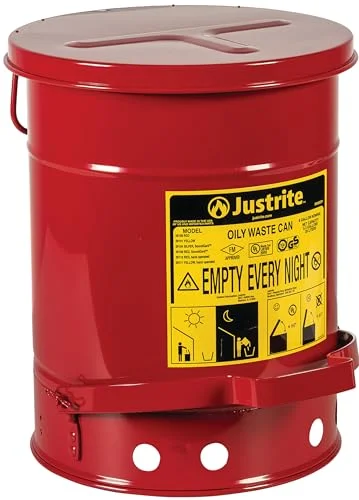 |
Justrite 6 Gallon Galvanized Steel Oily Waste Can – $87.02 A self-closing, foot-pedal safety can built specifically for oil- and solvent-soaked shop rags — the sealed lid cuts off the oxygen a smoldering rag needs, so it’s the same category of container fire departments recommend for anyone who stains regularly.
|
The Water-Submersion Method for Disposing of Oil-Based Stain Rags
This is the method most woodworking forums and DIY guides skip, but it’s the one that actually neutralizes the fire risk before the rag ever leaves your house — not just contains it. Oxidation can’t happen without oxygen, so if the oil never touches air, it can’t generate heat.
- Get a metal container with a tight-fitting lid. An empty paint can, a coffee can, or a dedicated oily waste can all work — just not plastic, which can soften or melt if the contents do heat up.
- Drop the rags in loosely. Don’t compress them; you want water to reach every fiber, not just the outside of a tight wad.
- Fill the container with water until the rags are fully submerged. Add a squirt of dish soap and swirl it in — the detergent breaks the oil’s surface tension so water actually displaces the air trapped in the fibers instead of beading on top of it.
- Seal the lid and store the container away from heat sources. A garage shelf or an exterior wall away from a furnace or water heater is fine. The rags are now inert; they can sit like this indefinitely if needed.
- Take it to a household hazardous waste (HHW) collection site. Most counties run one, often free, and it’s the correct legal disposal point for oil-soaked material — not the regular trash.
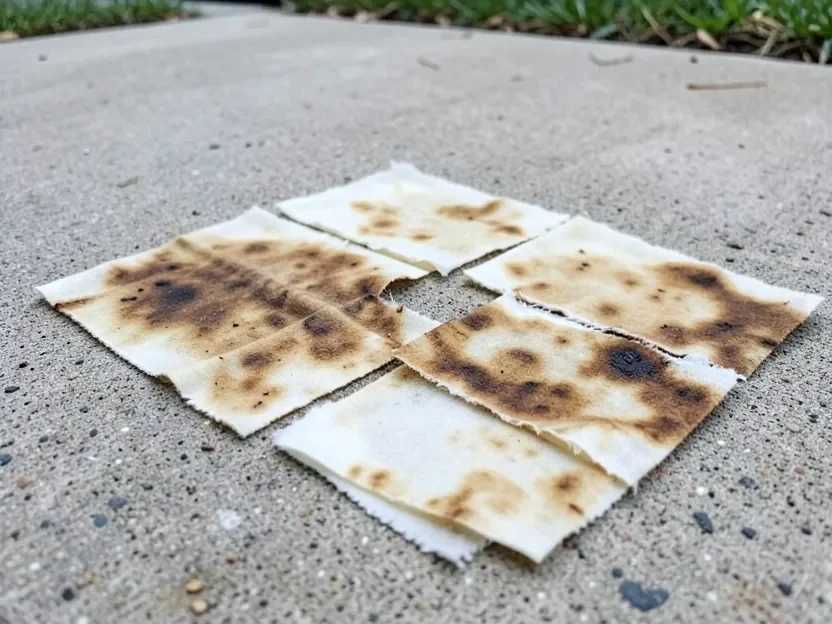
If you’d rather not deal with a water bath, the other reliable option is to let the oil finish curing completely before the rag ever goes near a trash can. Spread each rag flat and separated — not stacked, not touching — outdoors on a non-flammable surface like concrete or a metal tray, weighted down if it’s windy. Once fully cured (usually 24–48 hours depending on the oil and weather), the rag is inert and safe to throw in regular household trash. The failure point people hit is impatience: tossing a rag that “feels dry” into a garbage bag after a couple of hours, before the oxidation reaction has actually finished, then bagging several together where the heat can concentrate again.
Water-Based and Latex Stain Rags Don’t Carry the Same Risk
The spontaneous-combustion hazard is specific to oil-based products — oil-based stains, tung oil, linseed oil, Danish oil, and oil-based polyurethane. Water-based and latex stains dry through evaporation, not oxidation, so they don’t generate heat as they cure and don’t carry the same fire risk.
That doesn’t mean water-based rags go straight in the trash without a thought. Let them air-dry fully first (a few hours is usually enough), since a still-wet rag balled into a trash bag can mold or, in a pinch bin, still add unnecessary moisture. Once dry, they’re safe for regular household trash in most areas — but check your local rules, since some municipalities still classify any stain- or finish-soaked material as household hazardous waste regardless of the base.
What a Metal Safety Can Actually Does (and Why Plastic Won’t Work)
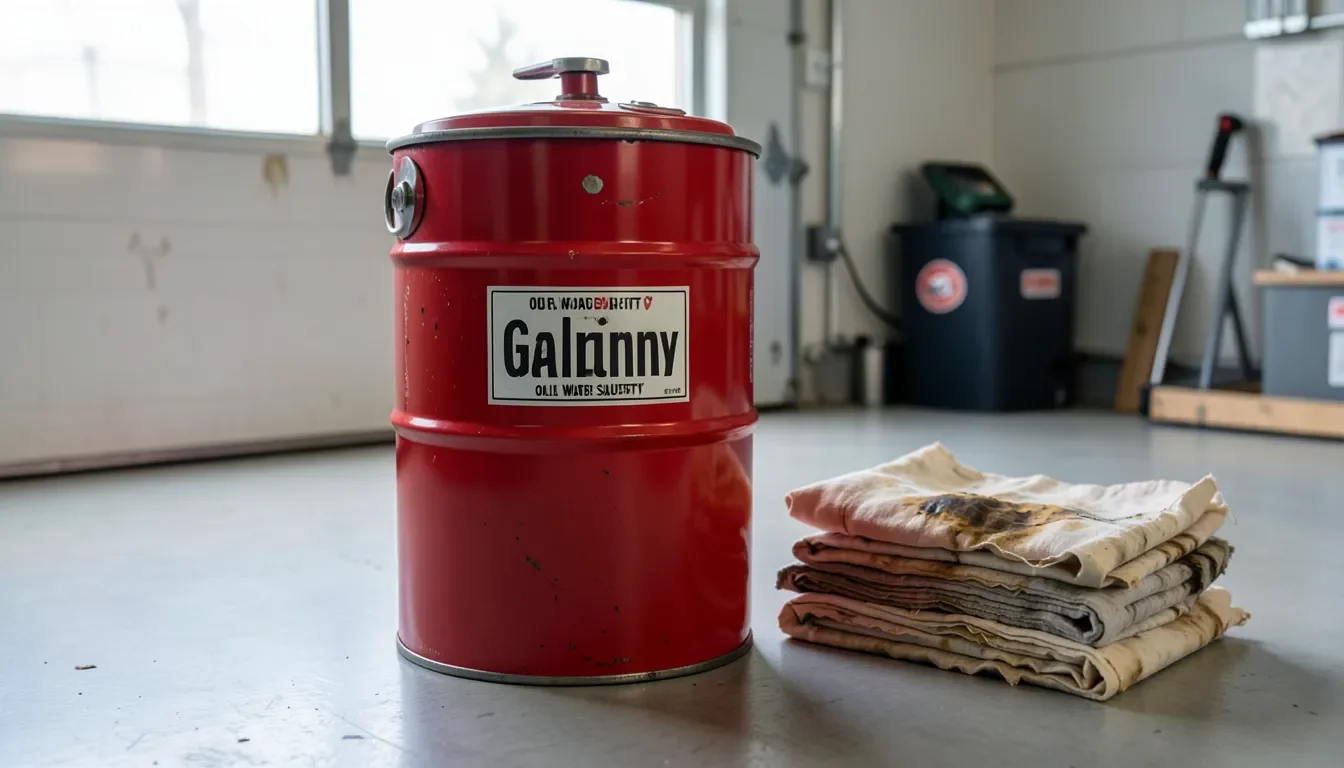
A dedicated oily waste can isn’t just a metal bucket. The self-closing lid is the important part — it stays open while you’re using it, then swings shut on its own, cutting the rags off from the oxygen a fire needs to spread even if one does start smoldering inside. Better models add a raised, ventilated base that lets air circulate around the outside of the can, which disperses heat before it builds and reduces rust from trapped moisture.
Galvanized steel matters for the same reason plastic is a bad idea: steel doesn’t soften, warp, or become fuel itself if the contents do get hot. A plastic bin with a snap-on lid might contain the mess, but it won’t contain a fire, and it can melt and feed one. If you stain or finish wood more than a couple of times a year, a dedicated can is worth the one-time cost; for an occasional single project, the water-submersion method above in a spare metal paint can does the same job for free.
Mistakes That Actually Start Rag Fires
- Tossing a used rag straight into a regular trash can or dumpster. This is the single most common cause — other trash insulates the rag further and no one’s checking on it overnight.
- Piling multiple rags together, wet or dry. A stack behaves like one big rag: more fuel in a smaller footprint means heat builds faster.
- Leaving a used rag on a workbench “for later.” A bench full of sawdust and scrap wood is exactly the fuel a smoldering rag needs to spread beyond itself.
- Storing rags in a closed plastic bag or bin. Same problem as a regular trash can, plus the plastic itself can melt and ignite once the contents heat up.
- Drying rags in a clothes dryer. Residual oil can ignite from the dryer’s heat, and several house fires every year are traced to exactly this.
- Storing near a water heater, furnace, or any pilot light. Even correctly stored rags shouldn’t sit next to an ignition source.
Where to Take Oil-Soaked Rags for Final Disposal
Once rags are submerged and sealed, or fully cured and dry, you still have a couple of legitimate disposal routes:
- Household hazardous waste (HHW) collection. Most counties and many cities run a free or low-cost drop-off for exactly this kind of material — search “[your county] household hazardous waste” to find the nearest site and hours.
- Curbside hazardous-waste pickup. A growing number of municipal trash services offer scheduled hazardous-material pickups a few times a year; check with your local waste hauler.
- Auto parts or hardware stores. Some accept small quantities of oil-soaked shop materials alongside used motor oil recycling — call ahead to confirm before you show up.
- Regular household trash — only once fully cured or water-submerged. A rag that’s genuinely inert (fully dried 24–48+ hours, or still wet inside a sealed water bath) can go in normal trash in most areas, but a still-drying rag never should.
If you’re staining regularly enough that this is a recurring question, it’s worth reading through our full guide to staining wood correctly — a cleaner application technique also means fewer heavily-saturated rags to deal with afterward.
Frequently Asked Questions
What Do You Do With Rags After Staining Wood?
Either submerge them in a sealed metal container filled with water and a little dish soap, or spread them out flat and separated outdoors on a non-flammable surface until the oil finishes curing. Never ball them up and toss them straight in the trash while they’re still wet with oil-based stain.
How Likely Are Stain Rags To Combust?
It’s a real and well-documented risk, not a rare fluke — oxidation and chemical-reaction fires account for an estimated 14,000-plus structure fires annually in the U.S., and oil-soaked shop rags are a frequently cited cause. The risk is specific to oil-based stains and finishes; water-based and latex products don’t cure through the same heat-generating reaction.
How To Dispose Of Rags Soaked In Stains?
Submerge oil-based rags in a sealed metal container of water, then take them to a household hazardous waste collection site — never a regular trash can or dumpster. Water-based stain rags just need to air-dry fully before they’re safe for normal household trash, though it’s worth checking local rules first.
How Do You Keep Stain Rags From Combusting?
Remove one of the three things a smolder needs: air, concentrated fuel, or time. In practice that means submerging rags in water so there’s no oxygen to react with, or spreading them out flat so heat can’t build in a tight pile, and always storing them in a metal, not plastic, container away from any heat source.
Sponsored / affiliate links. As an Amazon Associate I earn from qualifying purchases. I may earn additional commission from eligible campaigns.