Penetrating Stain vs Film-Forming Stain: Key Differences
Penetrating Stain soaks into wood and wears by fading. Film-Forming Stain leaves a surface layer that can crack, peel, and usually needs stripping or sanding before recoating. Choose the wrong type, and you can trap moisture, shorten coating life, and turn routine maintenance into a full removal job. This guide compares failure modes, compatibility on decks, fences, siding, log homes, and railings, and how to tell whether a surface can be refreshed or must be stripped.
This guide is part of our Wood Stain Colors and Stain Problems: Brand Charts, Comparisons and Fixes series.
| Decision factor | Penetrating Stain | Film-Forming Stain | Winner |
|---|---|---|---|
| Failure mode | Fades, dulls, or loses water repellency | Cracks, peels, blisters, or lifts | Penetrating Stain |
| Maintenance path | Clean and recoat when the surface still looks sound | Maintenance coat before failure, then prep-heavy repair if neglected | Penetrating Stain |
| Prep burden after neglect | Usually lighter if the finish is still intact | Often sanding or stripping before recoating | Penetrating Stain |
| Best visual result | More natural wood look | More uniform color and a more finished look | Film-Forming Stain |
| Best fit for exposed horizontal surfaces | Works well when maintenance is kept up | Can work, but failure is less forgiving on decks | Penetrating Stain |
What is the difference between these stain types?
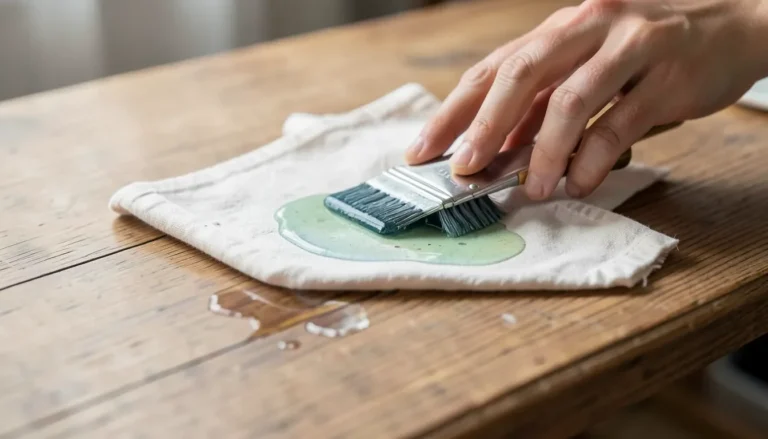
Penetrating Stain moves into the wood fibers instead of building a continuous film. Film-Forming Stain creates a protective surface layer on top of the wood. That difference changes appearance, maintenance, and what happens when the finish starts to fail.
Penetrating Stain: into the fibers
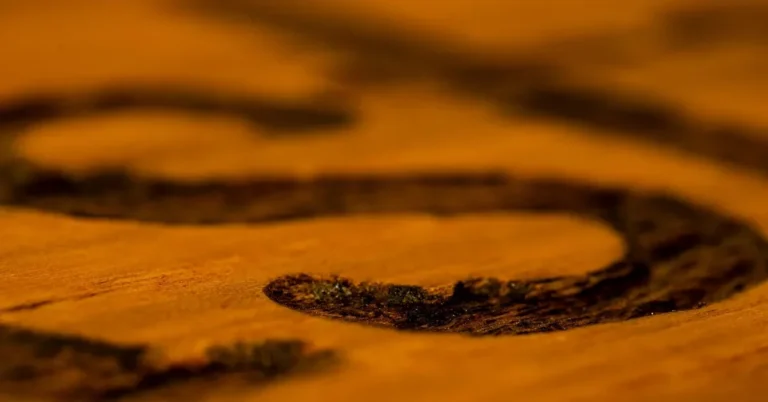
Because penetrating finishes soak in, they usually wear by fading, dulling, or losing water repellency rather than by peeling in sheets. Oil-based stain is often associated with this behavior, including many deck and log products, but the label and resin system matter more than the base alone. A penetrating finish can often be cleaned and recoated before major damage appears.
Film-Forming Stain: on the surface
Film-forming products sit on top of the wood and build a layer that can deliver more uniform color. That same layer is also what can crack, peel, blister, or lift when moisture gets trapped or the system is neglected. Water-based stain is often associated with this behavior, though some oil-based products are film-forming too.
Why the position changes the finish
When color lives in the wood, surface wear shows up as dullness and loss of repellency. When color lives in a film, wear often shows up as visible surface failure first. That is why two stains can both protect wood, yet need very different maintenance paths.
How do they fail over time?
Penetrating Stain usually gives warning through fading and weaker water beading. Film-Forming Stain tends to fail more visibly, with cracking, peeling, blistering, or lifting. Moisture and UV exposure drive both problems, but the repair path is much less forgiving once a surface film breaks down.
Fading and dulling in penetrating finishes
Penetrating finishes commonly age by losing color and water repellency. That is often a maintenance signal, not a disaster. If the wood is still clean, dry, and sound, a fresh coat may restore performance without full removal.
Cracking, peeling, and blistering in film-forming finishes
Film-forming stains can fail from movement, UV wear, or trapped moisture. Once that layer cracks or peels, recoating over the damaged areas rarely solves the problem for long. The loose material must usually come off first.
Moisture trapping and UV wear
On exterior wood, especially decks and other horizontal surfaces, sun and water work faster than they do on vertical faces. A film that is left too long can trap moisture underneath it, which pushes failure from dullness into blistering or lift. That is why maintenance timing matters more for Film-Forming Stain than many homeowners expect.
Which stain type fits which surface?
Exposure matters as much as product type. Decks, fences, siding, railings, and log homes do not age the same way, so the better choice depends on whether the surface sees direct water, strong UV, or frequent hand contact. Surface condition also decides whether recoating is realistic.
Decks and other horizontal surfaces
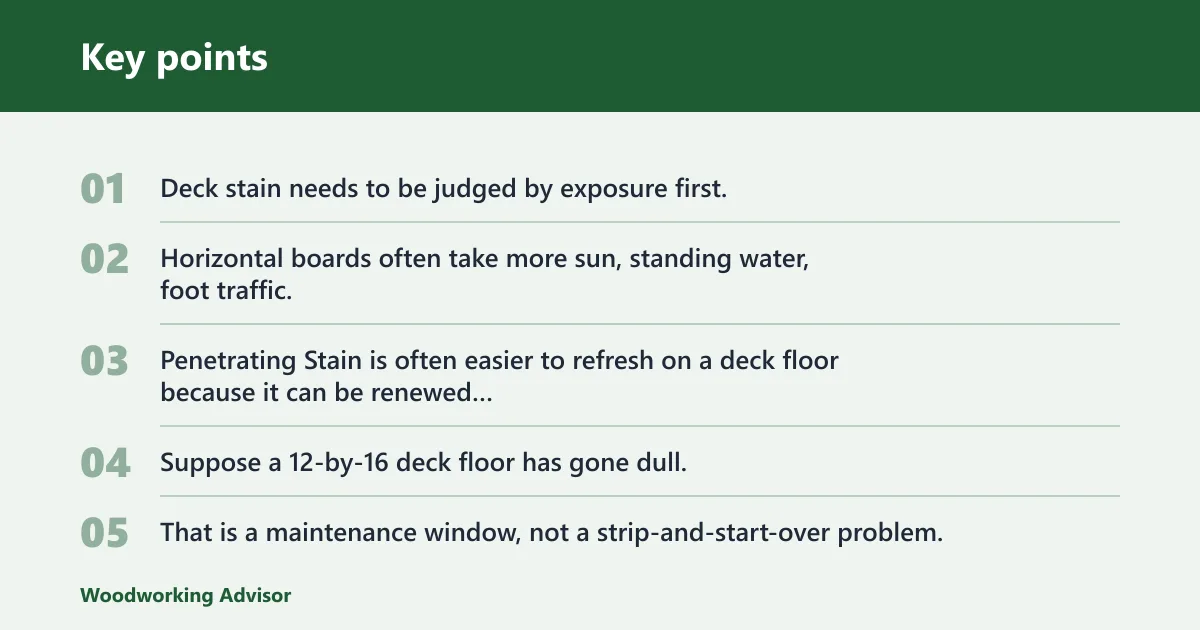
Deck stain needs to be judged by exposure first. Horizontal boards often take more sun, standing water, foot traffic, and grime than vertical siding or fence boards. Penetrating Stain is often easier to refresh on a deck floor because it can be renewed before failure spreads across the surface.
Suppose a 12-by-16 deck floor has gone dull, but the boards still bead water and there is no peeling. That is a maintenance window, not a strip-and-start-over problem. If the same deck shows flaking film near the steps, stripping or sanding becomes the safer path.
Fences, siding, and railings
Vertical surfaces usually dry faster and take less standing water than deck boards. That makes them more forgiving for both systems, but maintenance still depends on the existing finish. Penetrating Stain suits a natural look and easier refresh work, while Film-Forming Stain suits a more finished appearance when the owner is willing to keep up with maintenance coats.
Log homes and mixed systems
Log home stain systems can include clear top coats or other parts of a larger finish stack. That means recoating rules depend on the actual finish condition, not just the product name on the can. If the system is film-forming and has begun to fail, the fix may require a full prep cycle rather than another surface coat.
Which stain type fits which surface?
| Substrate | Exposure | Existing finish condition | Likely failure mode | Maintenance path | Full strip likely? |
|---|---|---|---|---|---|
| Deck floor | High UV, water, and wear | Sound, no peeling, water still beads | Fading or dulling | Clean and recoat before failure spreads | No, if the coating is still sound |
| Vertical fence | Moderate UV, less standing water | Clean and intact | Gradual color loss | Wash, dry, and refresh as needed | Unlikely unless old film is failing |
| Log siding | High weather exposure, varied moisture | Clear top coat intact | Sheen loss or weak water repellency | Recoat within system rules | No, if the system is still sound |
| Railing | Hand contact, sun, rain | Light wear, no lifting | Gloss loss or minor wear-through | Spot prep and maintenance coat | Usually no |
| Previously coated wood with peeling | Any exterior exposure | Peeling, flaking, or blistering | Unsound film and possible moisture trap | Strip or sand, then rebuild | Yes, often |
| Previously coated wood with fading | Any exterior exposure | Intact but tired surface | Loss of color or repellency | Clean and apply maintenance coat if compatible | Not usually |
| Previously coated wood with intact finish | Moderate to high | Sound, dry, and well bonded | Early wear only | Recoat before visible breakdown | No |
Can you recoat over the existing finish?
Yes, sometimes. A maintenance coat is still possible when the finish is sound, the wood is clean and dry, and the new product is compatible with the old one. Once peeling, cracking, or blistering starts, sanding or stripping usually comes first.
When a maintenance coat is still possible
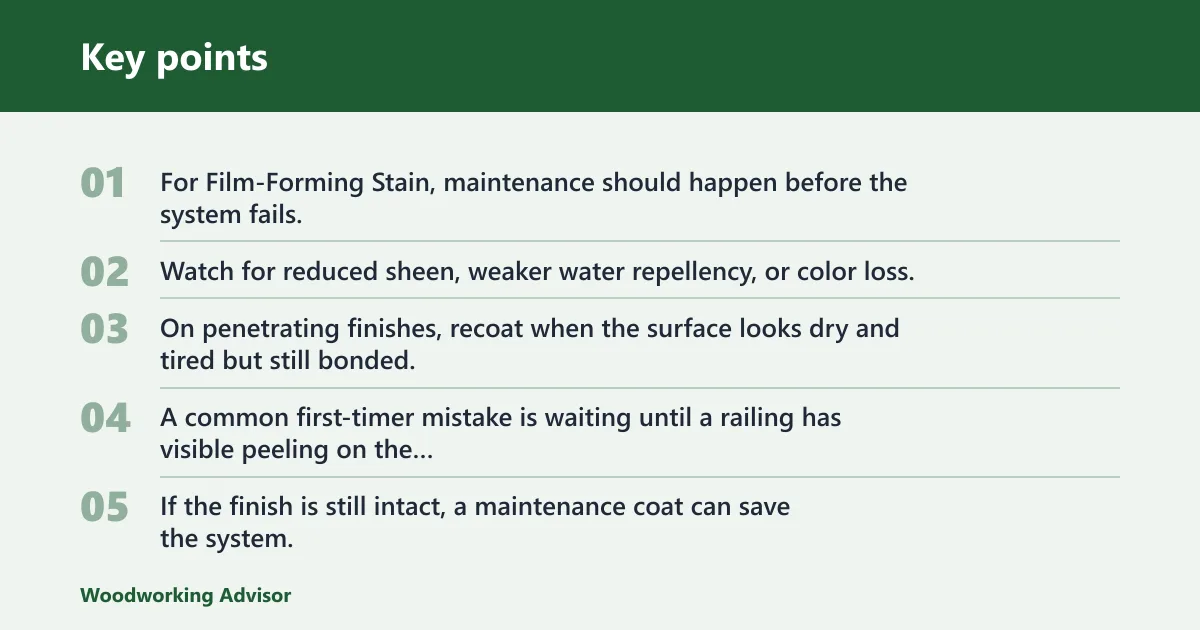
For Film-Forming Stain, maintenance should happen before the system fails. Watch for reduced sheen, weaker water repellency, or color loss. On penetrating finishes, recoat when the surface looks dry and tired but still bonded, not after the wood has become dirty or contaminated.
A common first-timer mistake is waiting until a railing has visible peeling on the sunniest side and then trying to brush on a fresh coat. That only seals trouble in place. If the finish is still intact, a maintenance coat can save the system; if it is already lifting, it cannot.
When sanding or stripping is required
Surface prep starts with a clean, dry, sound substrate. If the old film is failing, especially with flaking or blistering, strip or sand until you reach stable material. Recoating over loose finish only transfers the failure into the new coat.
Compatibility rules across stain families
Compatibility matters when a new stain is going over an existing one. A penetrating product may bond poorly over a sound film, and a film-forming product over a dirty or degraded surface can fail early. Check the label, then match the new system to the condition of the old one.
Oil-based vs water-based: what matters here?
Base type helps predict behavior, but it does not decide it by itself. Oil-based stain is often penetrating, and water-based stain is often film-forming, yet there are exceptions in both directions. The resin system and the product label matter more than the base alone.
Why base type does not decide everything
Falls Decor notes that penetrating stains are often oil-based, while film-forming stains are often water-based, though some are oil-based. That means the label matters more than the solvent family. A homeowner can get the wrong maintenance plan by assuming oil always means penetrating and water always means film-forming.
Common hybrid and exception cases
Some products aim for a more natural look but still leave a partial surface film. Others use water as the carrier yet still behave more like a film. The maintenance path should follow the film behavior you can see, not a shortcut based only on the base.
Reading the label for finish behavior
Check whether the product says it penetrates, forms a film, or is part of a log home stain system with a clear top coat. That description tells you how the finish is meant to age. It also tells you whether your next coat is maintenance or a rebuild.
Choose Penetrating Stain if…
Choose Penetrating Stain if you want a more natural wood look, easier clean-and-recoat maintenance, and a finish that usually fades or dulls before it peels. It is the better fit for decks, fences, siding, and many log home systems when the goal is simpler upkeep and the existing finish is still sound.
Choose Film-Forming Stain if you want a more uniform color and are willing to maintain the system before failure starts. It fits best on surfaces where you can keep up with maintenance coats, keep moisture out of the system, and accept that neglect can lead to stripping or sanding later.


Frequently asked questions
What is the difference between penetrating stain and film-forming stain?
Penetrating Stain soaks into wood fibers and wears down by fading or dulling. Film-Forming Stain creates a surface layer that can crack, peel, blister, or lift if it is neglected. The first tends to be easier to refresh; the second demands better maintenance and prep.
Which stain type is easier to maintain over time?
Penetrating Stain is usually easier to maintain because a sound surface can often be cleaned and recoated. Film-Forming Stain is more demanding since it needs attention before visible failure spreads. Once the film breaks down, maintenance turns into prep-heavy repair.
Why do film-forming stains peel, crack, or blister?
Film-Forming Stain fails when the surface layer loses bond, moves with the wood, or traps moisture underneath. UV wear and weathering weaken the film, then water pressure or wood movement finishes the job. Once that starts, new coating cannot fix loose material.
Do penetrating stains fade instead of peeling?
Yes. Penetrating finishes usually age by fading, dulling, or losing water repellency rather than peeling in sheets. That is why the maintenance decision is often based on color loss and water behavior, not on visible film breakdown.
Can you apply a film-forming stain over a penetrating stain?
Sometimes, but only if the existing penetrating finish is clean, dry, and compatible with the new system. A film-forming product over contamination, residue, or a failing surface can fail early. If the old finish is unsound, prep comes first.
When should you recoat a penetrating stain?
Recoat a penetrating finish when the wood still looks sound but the surface has faded, dulled, or stopped repelling water well. Do not wait for heavy dirt buildup or damage. Once the wood itself is weathered badly, prep becomes more involved.
Is oil-based or water-based stain more likely to be film-forming?
Water-based stain is often associated with film-forming behavior, while oil-based stain is often associated with penetrating behavior. But that is a tendency, not a rule. Read the label and look for whether the product is meant to soak in or build a surface layer.
Sponsored / affiliate links. As an Amazon Associate I earn from qualifying purchases. I may earn additional commission from eligible campaigns.