How to Fix Cracked Wood & Cutting Boards (Food-Safe Methods)
Match the fix to the crack: thin CA glue or finish for hairline checks, glue and clamps for cracks that close by hand, and epoxy for wider gaps. Cutting boards are the exception, because epoxy maker TotalBoat says epoxy should not be used on cutting boards. Use Titebond III glue and mineral oil instead. This guide covers repairs by crack type, why wood cracks, and butterfly keys for splits that keep moving.
How to Fix Cracked Wood: Match the Repair to the Crack
Best Glue for Cutting Boards
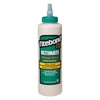 |
Titebond III Ultimate Wood Glue, 16 oz
|
The first decision is not which product to buy but what the crack is doing. Press the two sides together with your hands. If the crack closes, glue and clamps will hide it. If it will not close, it needs a filler that bonds and does not shrink. If it reopens every winter, the wood is still moving and the repair has to account for that.
| Crack type | Best repair | Cure and notes |
|---|---|---|
| Hairline check on the surface | Thin CA glue, or sealer and finish | CA sets in seconds but cures brittle |
| Crack that closes under hand pressure | PVA wood glue plus clamps | Titebond III: 30 to 60 minute clamp time, 24 hour full cure |
| Gap that will not close, or a deep void | Two-part epoxy, tinted with sawdust or stain | WEST SYSTEM 105 resin with 205 hardener mixes 5:1 by volume and reaches a solid state in 6 to 8 hours at 72F |
| Split that reopens with the seasons | Butterfly key set across the crack, plus glue or epoxy | Mechanical fix; glue alone can crack again |
| Cracked cutting board | Food-safe glue (see the cutting board section) | No epoxy on the cutting surface |
For more detail on specific cases, see our guides on repairing split wood and filling cracks with epoxy. This page is the starting point: it helps you pick the right method before you open a tube.
Why Wood Cracks: Moisture, Not Just Age
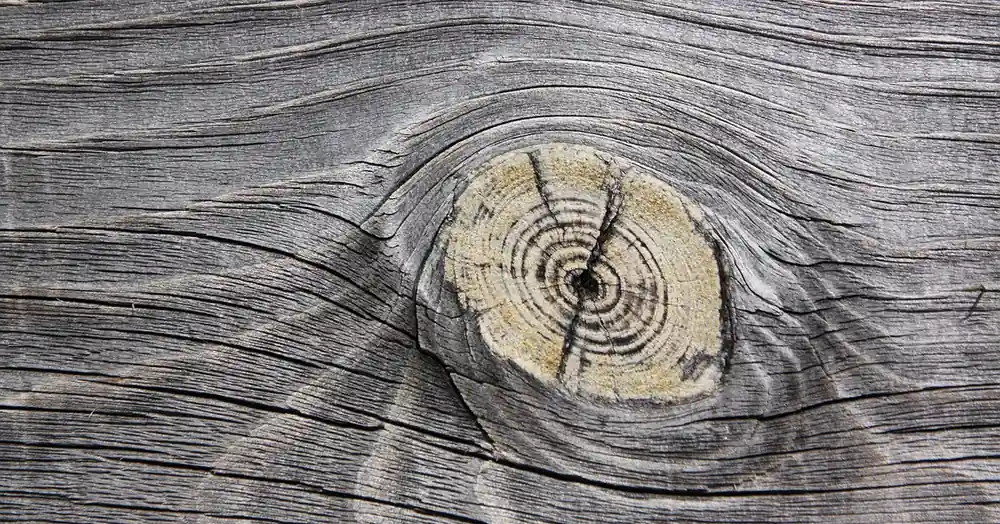
Wood cracks because it shrinks unevenly as it dries. According to the USDA Forest Products Laboratory, shrinkage begins around the fiber saturation point, about 30 percent moisture content, and wood shrinks roughly twice as much along the growth rings (tangentially) as across them (radially). The surface dries first, pulls against the wetter core, and tears along the weakest line. That is a check, and a check that runs through the board is a split.
How much a species moves explains why some boards crack more than others. These figures are green to oven-dry shrinkage from The Wood Database:
| Species | Radial | Tangential | Tangential/radial ratio |
|---|---|---|---|
| Hard maple | 4.8% | 9.9% | 1.9 |
| Red oak | 4.0% | 8.6% | 2.2 |
| Black walnut | 5.5% | 7.8% | 1.4 |
A higher ratio means the wood pulls itself apart more easily. Red oak, at 2.2, is more crack-prone than walnut, at 1.4, for the same drop in humidity. Heating a room in winter, leaving a tabletop in direct sun, or soaking a board in the sink all create the same moisture swing.
How to Fix Cracks in a Wooden Cutting Board
A cutting board crack is a food-safety problem as well as a cosmetic one, so the usual shop fixes do not all apply. Use materials made for indirect food contact, and rule out two common bad ideas first.
Two myths to skip
- Myth: mineral oil closes a crack. It does not. Oil keeps the fibers from drying out, which helps stop new cracks, but it does not bond or fill anything. America’s Test Kitchen recommends oiling a board six or seven times a year to prevent cracking, not to repair it.
- Myth: food-safe epoxy is the answer for a cutting board. Even for a product marketed as food-contact safe, TotalBoat states that epoxy should not be used on cutting boards or other prep areas, because knives can damage the cured finish. It is fine for a serving or charcuterie board, which is not cut on.
Repair a cracked cutting board step by step
- Wash the board and let it dry completely, ideally for a day. Glue will not bond to damp wood.
- Work thin food-safe wood glue into the crack with a toothpick or a thin piece of veneer. Titebond III is the common choice: the maker lists it as FDA-approved for indirect food contact (cutting boards).
- If the crack runs the length of the board or along a glue line, clamp it closed. Titebond III needs 30 to 60 minutes of clamping.
- Leave it for the full 24 hours before using or sanding, then wipe off any squeeze-out and sand the repair flush with 220 grit.
- Finish with food-grade mineral oil or a board cream, and keep oiling on a schedule. Avoid olive and vegetable oil, which can go rancid.
If a crack is too wide to close, or runs all the way through the board and keeps opening, replacing the board is the safer call. That is a judgment call rather than a rule: deep crevices are hard to clean and can hold food residue. For boards that have split along their glue lines, see how to glue a cutting board back together.
How to Fix a Crack in Wood Furniture, Step by Step
- Clean the crack. Remove dust and old finish residue with a brush, compressed air, or a thin blade. Fresh wood on both faces bonds best.
- Test the fit. Squeeze the crack closed without glue. If it closes, glue it. If it does not, plan for epoxy.
- Apply the adhesive. For a closable crack, work PVA glue into both faces. For a gap, mix two-part epoxy exactly at the ratio on the label and tint it with fine sawdust or a little stain.
- Clamp or tape. Clamp closable cracks. For epoxy in a gap, tape the underside so it cannot run through, and overfill slightly.
- Let it cure fully. Follow the maker’s times, since cold rooms slow every adhesive.
- Sand and refinish. Level with 120 then 220 grit and match the finish. See our guide to using wood glue as a filler if you are deciding between the two.
Butterfly Keys: When a Crack Keeps Moving
A butterfly key (also called a bowtie or dutchman) is a bow-tie shaped piece of hardwood set into a mortise across a crack, with the wings oriented across the grain so it locks the two sides together. It is the standard fix for a split in a solid slab or tabletop, where glue alone tends to give way because the wood keeps moving seasonally.
- Thickness: commonly about one quarter to one third of the slab thickness, and at least 1/4 in.
- Mortise depth: roughly one third of the thickness of the piece being reinforced.
- Spacing: place keys across the crack at intervals along its length, and fill the crack with epoxy as you set them.
To stop a slab cracking in the first place, see how to prevent wood slabs from cracking.
Common Repair Mistakes
- Using CA glue on a flexing joint. It cures hard and brittle and can snap again.
- Filling a structural crack with a shrinking filler. It pulls back and leaves a line.
- Gluing a crack that is still opening. The repair fails at the next humidity swing unless you add a key or fix the cause.
- Using polyester or standard wood filler on a cutting surface.
- Skipping the dry-out. Trapped moisture ruins the bond and can cause the crack to return.
Frequently Asked Questions
Can cracked wood be repaired?
Yes. Cracks that close under hand pressure can be glued and clamped, narrow checks can be filled with thin CA glue, and wider or deeper gaps are filled with two-part epoxy. A split that keeps moving with the seasons also needs a mechanical fix such as a butterfly key, or the repair can reopen.
What is the best thing to fill cracks in wood?
It depends on the width. Thin CA glue suits hairline checks, two-part epoxy (often tinted with sawdust) suits deep or wide gaps, and wood glue with clamps suits any crack you can squeeze shut. Avoid using a shrinking filler in a structural crack.
Can you use super glue on wood cracks?
Yes, for narrow cracks. Thin CA glue wicks into hairline checks and sets fast, but it cures hard and brittle, so it is a poor choice where the wood flexes or keeps moving. Do not use it on cutting board surfaces.
How do you fix cracks in a wooden cutting board?
Clean and dry the board, then close a glue-line split or crack with a food-safe wood glue such as Titebond III, clamp it, let it cure for 24 hours, sand flush, and oil it with food-grade mineral oil. Skip epoxy on the cutting surface, since the maker TotalBoat says epoxy should not be used on cutting boards.
Does mineral oil fix a cracked cutting board?
No. Mineral oil does not close or bond a crack. It slows moisture swings in the wood, which helps prevent new cracks, so oil the board regularly and repair existing cracks with glue.
Wood filler vs epoxy for wood cracks: which is better?
Wood filler is easier to sand and fine for shallow cosmetic cracks. Epoxy is stronger and does not shrink, so it is the better choice for deep cracks, outdoor wood, and anything that carries load.
Pick the repair by the crack, not by the product: glue it if it closes, epoxy it if it does not, add a key if it keeps moving, and keep epoxy off any surface you cut food on.
Sponsored / affiliate links. As an Amazon Associate I earn from qualifying purchases. I may earn additional commission from eligible campaigns.