How to Identify Red Maple Trees: Easy Local Field Guide
Figuring out if a tree is a red maple can sometimes feel tricky, especially when you’re just starting out. Lots of trees look similar, and even experts can get fooled. But don’t worry!
This guide is here to make it super simple. We’ll walk you through each step, so you’ll be spotting red maples like a pro in no time. Get ready to learn all the easy ways to tell them apart in your own backyard or local park.
You’ll soon know How to Identify Red Maple Trees: Easy Local Field Guide.
How to Identify Red Maple Trees: A Simple Guide
This section will give you the main tools to start identifying red maple trees. We will look at the most important features you can see, like the leaves and bark. These are the first things most people notice about a tree.
By focusing on these clear signs, you can quickly get a good idea if you’ve found a red maple. We want to make this process as straightforward as possible so you can enjoy learning about nature around you.
Leaf Shape and Arrangement
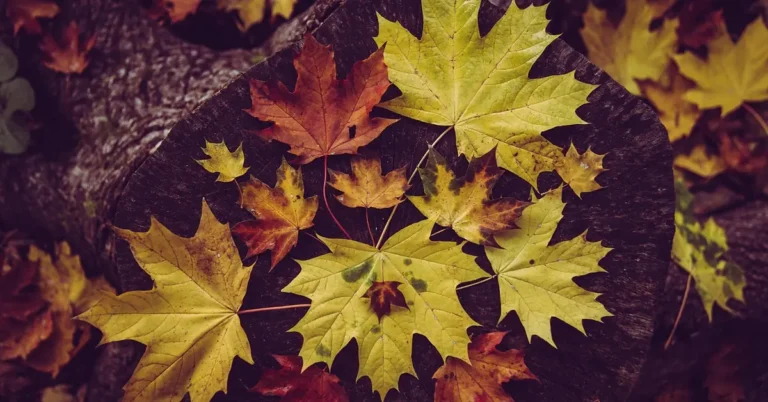
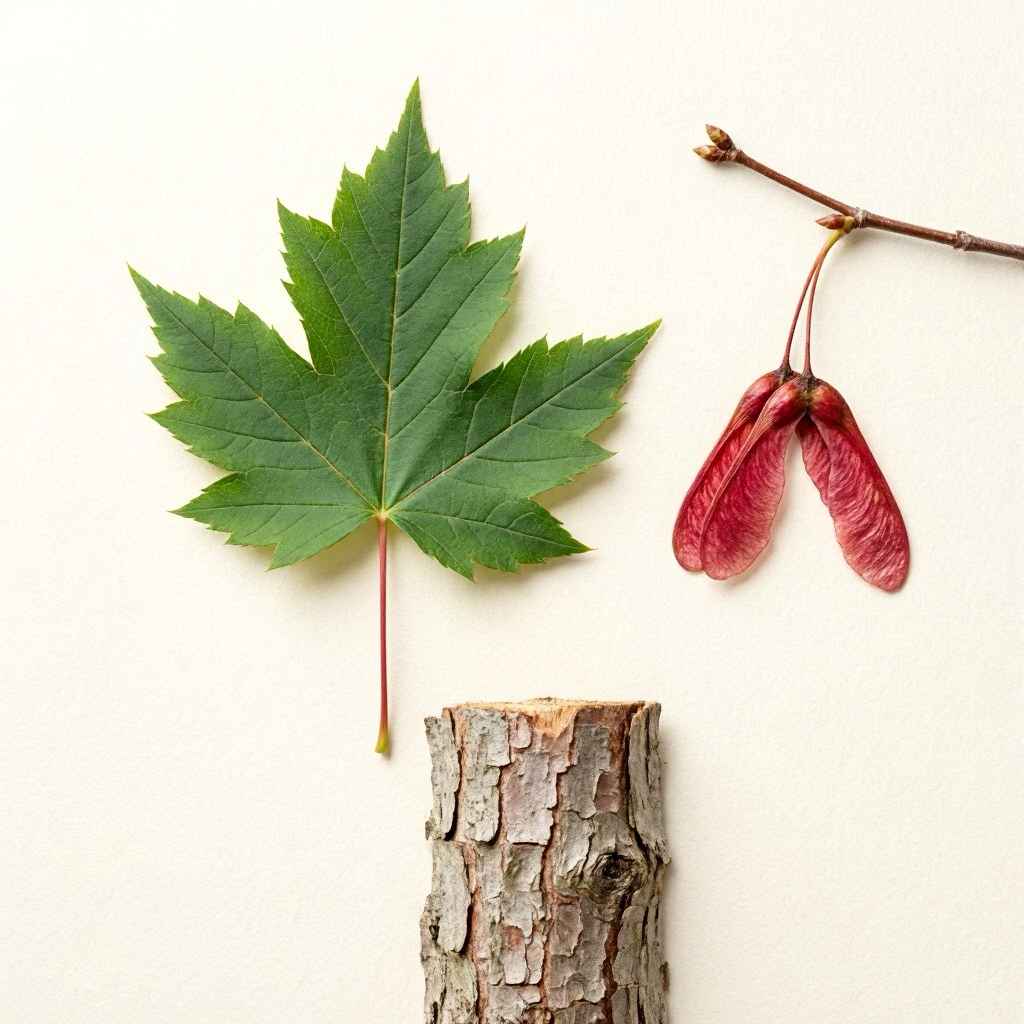
The leaves are your biggest clue for identifying red maple trees. Red maple leaves have a very distinct shape. They are typically palmately lobed, meaning they look like an open hand with fingers.
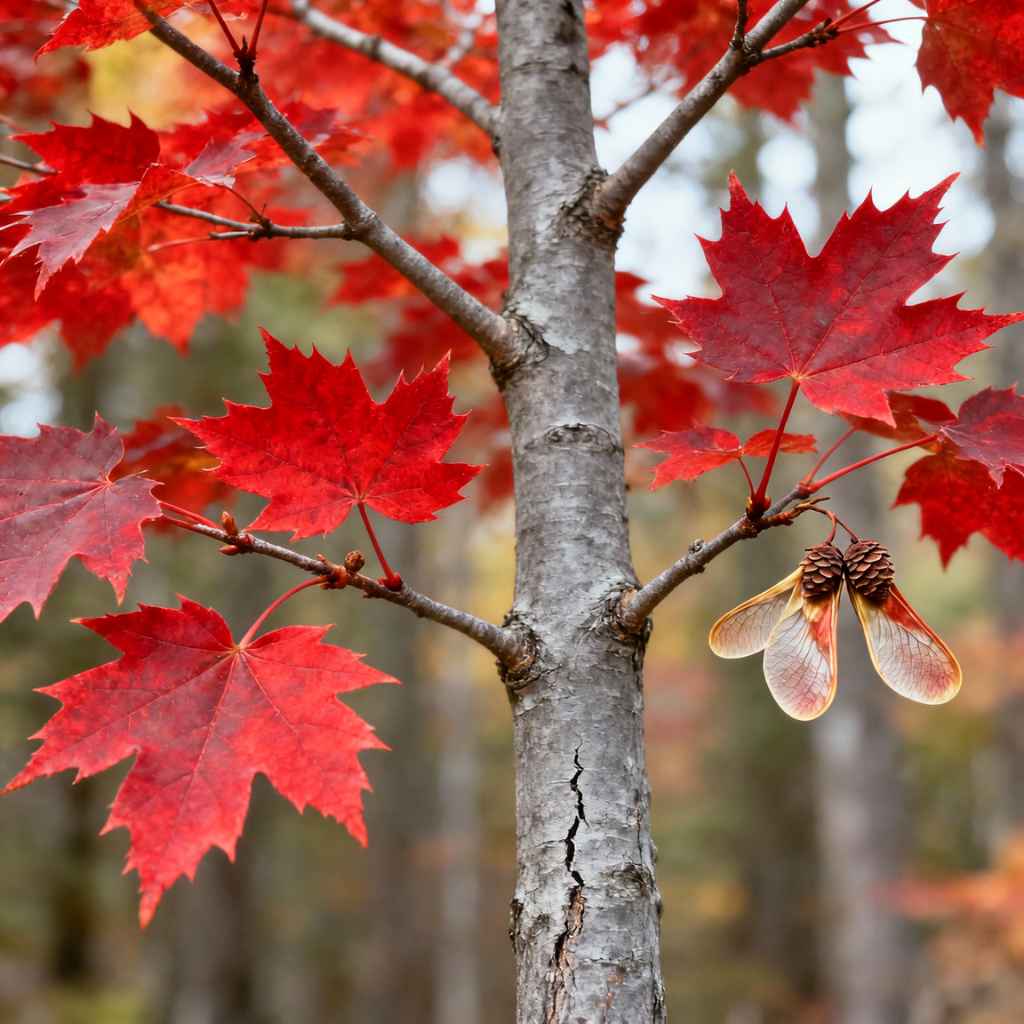
Number of Lobes: Most red maple leaves have three main lobes, with two smaller lobes pointing towards the base of the leaf. Some leaves might have five lobes, but three is most common. The edges of these lobes are usually toothed or serrated, like a saw.
Imagine a hand with three fingers spread out. The middle finger is the longest, and the two side fingers are a bit shorter. That’s a good picture of a red maple leaf.
The edges aren’t smooth; they have little sharp points all along them. This toothing is key. Not all maple leaves are like this; some have smoother edges.
Leaf Arrangement: Maple leaves grow opposite each other on the stem. This means if you look at a twig, you’ll see a pair of leaves coming out at the same spot, directly across from each other. This opposite arrangement is a shared trait for all maple trees.
Think of a clock. If one leaf is at the 12 o’clock position, the other will be at the 6 o’clock position. This isn’t true for many other trees, where leaves might grow in a spiral pattern or alternate sides.
This opposite arrangement helps narrow down your choices when looking at different trees in a forest.
Color Variations: While known for their brilliant red fall color, the leaves themselves are green for most of the year. However, the underside of a red maple leaf often has a lighter, whitish-green hue.
Even when the top of the leaf is a nice, bright green, if you flip it over, you’ll notice it’s much paler. Sometimes, it might even look a little dusty or have fine hairs. This contrast between the top and bottom is a useful clue that helps distinguish red maples from other types of maples, like sugar maples which tend to have a yellower underside.
Bark Characteristics
The bark of a red maple changes as the tree gets older. Young trees have smoother bark, while older ones develop a rougher texture.
Young Trees: When red maples are young, their bark is usually smooth and gray, sometimes with a reddish tint. It’s not rough or deeply furrowed.
Picture the bark of a very young tree. It looks like it could be painted easily. It’s a uniform light gray color, and you won’t find many cracks or ridges.
This smooth texture is a sign that the tree is still growing and hasn’t reached maturity. Many trees start out this way, but the color can be a hint.
Mature Trees: As the tree matures, the bark becomes darker and develops long, narrow ridges that often curl outward at the edges. This gives it a shaggy or flaky appearance.
Think of old, weathered wood that’s starting to peel away in strips. The ridges run up and down the trunk, but they aren’t sharp and deep like those on an oak tree. Instead, they are more rounded and often lift away from the tree trunk, making the bark look like it’s made of overlapping plates or scales.
Coloration: The bark is typically gray to dark gray. In some cases, especially on older trees, it can have a reddish-brown hue, which is where the “red” in red maple comes from.
While not always obvious, if you look closely, you might see hints of red or brown mixed in with the gray. This isn’t a bright red, but a more subtle, earthy tone. It’s one of those features that, when combined with other characteristics like the leaves, strongly points to a red maple.
Buds and Twigs
Looking at the small buds and twigs can offer more clues, especially during seasons when leaves aren’t present. Red maples have distinctive buds.
Bud Shape and Color: Red maple buds are typically small, pointed, and reddish-brown. They are clustered at the end of twigs.
Imagine tiny little reddish triangles or cones sticking out from the branch tip. These buds are usually smooth and appear in groups of two or three. Their bright red color is a strong indicator, especially in winter when there are no leaves to guide you.
Twig Color: Twigs are often slender and can be reddish or greenish-brown. They have a smooth texture.
When you look at a young branch, it won’t feel rough. It will be smooth to the touch. The color can vary, but a reddish or brownish tone is common.
These slender twigs are flexible and often have leaf scars left behind from the previous year.
How to Identify Red Maple Trees: Beyond the Basics
This next part looks at features that can help confirm your identification, especially if you’re still unsure. We’ll discuss the flowers, fruits, and even the shape of the whole tree. These are secondary clues, but they add strong evidence to your identification efforts.
Flowers and Fruits
Red maples produce flowers and fruits, which can be very helpful for identification, particularly in the spring and fall.
Flowers: Red maple flowers appear in early spring, usually before the leaves fully emerge. They are small and typically reddish in color, often growing in clusters.
These aren’t big, showy flowers like you might see on a cherry tree. They are quite small and delicate. Their color is a key feature – a lovely reddish hue that signals the arrival of spring.
They often bloom in large numbers, making the branches look dusted with color.
Fruits (Samaras): The most distinctive feature is the fruit, known as a samara, often called a “helicopter” or “whirlybird.” These are winged seeds that spin as they fall.
Everyone knows the spinning seeds of maple trees! Red maple samaras are usually paired, and their wings form a sharp angle, often less than 90 degrees, between them. They start out green and turn brown as they mature.
Seeing these falling from a tree is a dead giveaway that it’s a maple.
Wing Angle Comparison: While many maples have samaras, the angle of the wings can help differentiate species. Red maple samaras often have a U-shape or a narrow V-shape, with wings angled inward.
If you pick up a few of these spinning seeds, you can look at how the two wings are attached. On a red maple, the angle where they meet is quite sharp, almost like a tight embrace. This is different from, say, a silver maple, where the wings might spread out more widely.
Overall Tree Shape and Size
The general form of the tree can also provide clues about its identity. Red maples have a characteristic shape that can be recognized with a bit of observation.
Crown Shape: Red maples typically have a rounded or oval crown. The branches spread outward, creating a full, dense canopy.
Imagine looking at the tree from a distance. It often looks like a well-formed dome or an egg turned upside down. The branches don’t usually grow in a very upright or irregular pattern.
This symmetrical shape makes them popular for landscaping.
Size and Growth Habit: Red maples are medium to large deciduous trees. They can grow to heights of 40 to 70 feet (12 to 21 meters) and spread about as wide.
These aren’t tiny shrubs or towering giants like some oaks. They are a good medium size, fitting well into many natural and urban settings. Their growth rate is generally considered moderate to fast.
Comparing Red Maple to Similar Trees
It’s helpful to know what other trees might look like a red maple. This way, you can avoid confusion.
| Feature | Red Maple (Acer rubrum) | Sugar Maple (Acer saccharum) | Silver Maple (Acer saccharinum) |
|---|---|---|---|
| Leaf Lobes | 3-5 lobes, serrated edges | 5 lobes, smooth or slightly toothed edges | 5 lobes, deeply cut and coarsely toothed edges |
| Leaf Underside | Whitish-green | Yellowish-green | Silvery-white |
| Bark (Mature) | Ridged, shaggy, sometimes reddish | Deeply furrowed, dark gray | Shaggy, peeling, light gray |
| Twigs | Reddish-brown, smooth | Reddish-brown, smooth | Reddish-brown, smooth |
| Samara Wing Angle | Narrow angle (U or V shape) | Wider angle | Wide angle (almost straight across) |
This table highlights the main differences. For instance, sugar maple leaves have smoother edges and a different underside color. Silver maples have more deeply cut leaves and very distinct silvery undersides.
The samara wing angle is also a strong differentiator.
How to Identify Red Maple Trees: Local Field Guide Tips
This section provides practical advice for using this information in your local area. We’ll talk about where to look and how to use these identification features when you’re out and about. Having a local perspective makes identification much easier because you know what trees are common.
Where to Find Red Maple Trees
Red maples are very adaptable and can be found in a wide range of environments. Knowing where they typically grow will help you find them more easily.
Habitat Diversity: Red maples thrive in many different conditions. You can find them in swamps, moist woodlands, and even on drier, upland sites. They are quite tolerant of various soil types.
This adaptability is why red maples are so common. They don’t need a very specific home. You might see them in a wet area by a creek, a typical deciduous forest, or even in a park where the soil might not be ideal for other trees.
This wide range means you’re likely to encounter them often.
Common Locations: They are frequently found along streams, in bottomlands, and on hillsides. They often grow in mixed hardwood forests with trees like oaks and other maples.
If you’re walking in a typical forest, especially one with some moisture, keep an eye out for red maples. They often grow in groups. They also do very well in areas that have been disturbed, like old fields that are growing back into forests.
Urban and Suburban Settings: Due to their attractive shape and vibrant fall color, red maples are a very popular choice for landscaping in cities and suburbs.
You’ll probably see many red maples planted as shade trees along streets or in yards. Their relatively fast growth and tolerance to pollution make them a practical choice for urban environments. So, even if you don’t live near a forest, you can likely find one nearby.
Field Identification Techniques
Using the features we’ve discussed, here’s how to put it all together when you’re standing in front of a tree.
Start with the Leaves: In spring, summer, or early fall, the leaf shape is your best first clue. Look for the characteristic three-lobed, toothed leaves with a lighter underside.
This is the most obvious sign. When the leaves are out, it’s like the tree is wearing a name tag. Focus on the shape, the number of points, and the texture of the edges.
The color underneath is a secondary but important leaf characteristic.
Check the Twigs and Buds (Year-Round): If leaves aren’t present, or you need more confirmation, examine the twigs. Look for small, reddish, pointed buds at the tips of the branches.
Winter identification can be tricky, but red maple buds are quite distinctive. Their bright red color and sharp points make them stand out against the bare branches of other trees. This is a reliable clue even when the tree is dormant.
Observe the Bark: As the tree gets older, the bark develops a shaggy or ridged appearance. Notice if it has a somewhat reddish-brown tone.
The bark tells a story of the tree’s age. Young trees are smooth; older ones get rough. The specific pattern of the ridges on a red maple, often lifting away, is quite unique.
Don’t rely on bark alone, but it adds to the evidence.
Look for Fruits (Samaras) in Season: In late spring and summer, look for those “helicopter” seeds. The angle of the wings can help confirm it’s a red maple.
Finding the fruit is like finding a signature. The way the two wings of the samara are attached is a critical detail. If they form a tight, sharp angle, it’s a strong indicator of a red maple.
Common Mistakes to Avoid
Sometimes, beginners can misidentify trees. Being aware of these common mix-ups will help you be more accurate.
Confusing with Sugar Maple: Sugar maple leaves have smoother edges and are usually a deeper green on both sides, with a more yellow-green underside. The samaras also have a wider wing angle.
The sugar maple is a common tree and often mistaken for a red maple because both are maples. The key difference is the leaf margin. Sugar maples are less toothed, and their overall leaf shape is broader and more rounded.
Confusing with Silver Maple: Silver maples have much more deeply cut leaves, almost to the center, with very finely toothed edges. Their underside is strikingly silvery-white. The samaras are also very large with wide-spreading wings.
Silver maples look similar, but their leaves are more jagged and their undersides are much whiter. When you see a leaf that looks like it’s been cut with scissors into sharp points, and the back is bright silver, it’s more likely a silver maple.
Relying on Fall Color Alone: While red maples are famous for their red fall color, many other trees can turn red or orange. Fall color should be a secondary clue, not the primary one.
It’s easy to see a tree turn bright red in autumn and assume it’s a red maple. However, other trees like oaks, sumacs, and even some ornamental trees can display brilliant red foliage. Always check the leaves, bark, and buds for confirmation.
How to Identify Red Maple Trees: Easy Local Field Guide Practice
This section is all about putting your new knowledge to work. We’ll offer a few simple practice scenarios to help you solidify your identification skills. The more you practice, the better you’ll become at spotting these beautiful trees.
Scenario 1: A Backyard Tree
You notice a medium-sized tree in your neighbor’s yard. It has leaves that are roughly hand-shaped with three main points and some smaller ones. The edges of the leaves have little teeth.
In the summer, the underside of the leaves looks paler than the top. The bark is gray and has some long, slightly peeling ridges. In the fall, this tree turns a brilliant scarlet.
- Leaf Check: The three-pointed, toothed leaves are a strong indicator. The paler underside also points towards a red maple.This combination of leaf features is a classic red maple sign. The toothing on the edges is an important detail that helps distinguish it from a sugar maple.
- Bark Check: The shaggy, ridged bark fits the description of a mature red maple.Mature trees show their age in their bark. This shaggy appearance is quite typical for red maples once they reach a certain size.
- Fall Color: While not the only clue, the brilliant scarlet fall color strongly supports the red maple identification.This is the signature look for many red maples in autumn. It’s a beautiful display that many people recognize.
Conclusion for Scenario 1: Based on the leaf shape, color, bark, and fall color, this tree is very likely a red maple.
Scenario 2: A Park in Early Spring
You’re walking in a park in April, before the leaves have fully emerged. You see several trees with small, reddish buds clustered at the tips of their twigs. The twigs themselves are slender and reddish-brown.
The bark on the older trees is gray and looks somewhat shaggy. You also notice small, winged seeds on the ground beneath some of them.
- Bud and Twig Check: The reddish, pointed buds are a key feature for identifying red maples in winter or early spring.When there are no leaves, the buds become your most important clue. Their color and shape are very characteristic of red maples.
- Bark Check: The shaggy bark on older trees supports the identification.This rougher bark texture helps confirm that you’re looking at a mature tree, and the shagginess is consistent with red maple.
- Seed Check: The presence of samaras on the ground suggests it’s a maple, and combined with the buds, it strengthens the red maple identification.Finding maple seeds means it’s a maple. Combined with the bud characteristics, it makes the identification more certain.
Conclusion for Scenario 2: The combination of reddish buds, slender twigs, shaggy bark, and samaras strongly indicates these are red maple trees.
Frequently Asked Questions
Question: Are all red maple trees red all year round
Answer: No, red maple trees are not red all year round. They are known for their brilliant red foliage in the fall, but their leaves are green during the spring and summer. The buds and twigs can have a reddish hue year-round, and the bark of mature trees may have reddish undertones.
Question: How can I tell a red maple from a sugar maple
Answer: You can tell them apart by their leaves. Red maple leaves have more toothed edges and typically three main lobes, while sugar maple leaves have smoother edges and five lobes. The underside of red maple leaves is often whitish-green, whereas sugar maple leaves tend to be more yellowish-green.
Question: Do red maple trees have helicopters
Answer: Yes, red maple trees produce fruits called samaras, which are commonly known as “helicopters” or “whirlybirds” because of how they spin when they fall from the tree. These winged seeds are a key identifying feature of maple trees.
Question: When is the best time to identify a red maple
Answer: You can identify a red maple at any time of year, but certain features are more prominent during different seasons. Leaves are easiest to identify in spring and summer, buds and twigs in winter and early spring, and fruits (samaras) in late spring and summer.
Question: Are red maples good for attracting wildlife
Answer: Yes, red maples are good for attracting wildlife. Their flowers provide nectar for early pollinators like bees and butterflies. The seeds (samaras) are eaten by birds and small mammals, and the dense canopy offers shelter and nesting sites for various bird species.
Summary
You can easily identify red maple trees by looking at their distinctive three-lobed, toothed leaves and paler undersides. Pay attention to the reddish buds and twigs, especially in winter. Mature trees have shaggy, ridged bark.
The “helicopter” seeds called samaras, with their narrow wing angles, are another great clue. You’ll find them in diverse habitats and often in urban settings.
Sponsored / affiliate links. As an Amazon Associate I earn from qualifying purchases. I may earn additional commission from eligible campaigns.