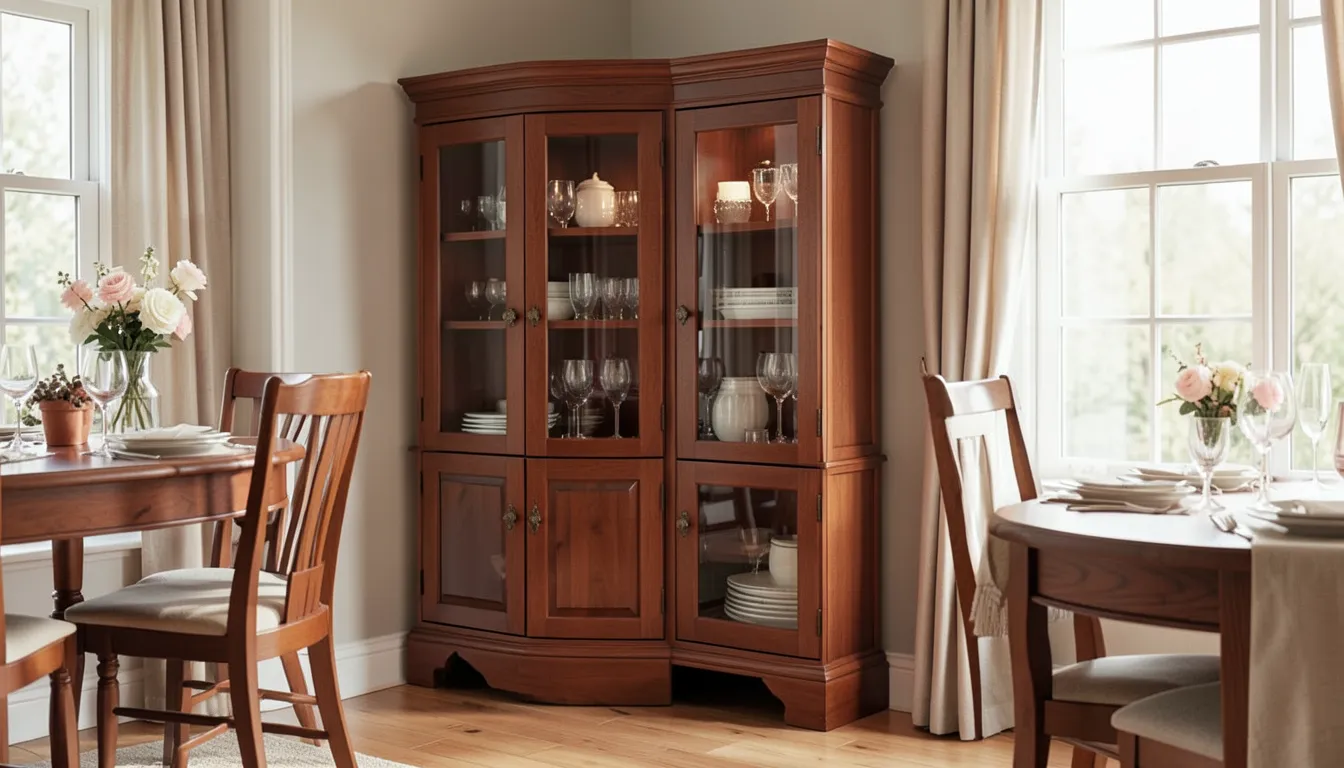
Cherry Wood Corner Cabinet: Styles, Sizes and What to Look For
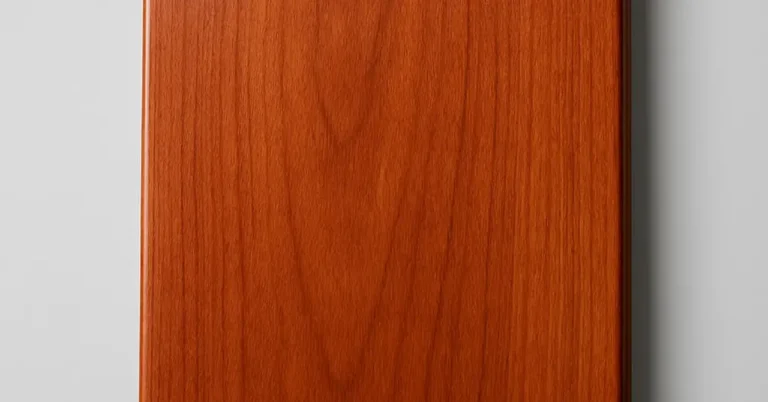
A corner cabinet turns the one spot in a room that usually collects nothing but dust into real, usable storage. Cherry is one of the best woods for the job: it starts out a soft pinkish-brown when freshly milled, then darkens over months and years of light exposure into the deep reddish-brown most people picture when they hear “cherry furniture.” That aging process, combined with a fine, even grain that takes stain and finish beautifully, is why cherry corner cabinets show up as heirloom pieces passed down for decades rather than replaced after a few years.
Understanding Cherry Wood Corner Cabinets
Editor’s Pick: Ready-Made Corner Cabinet
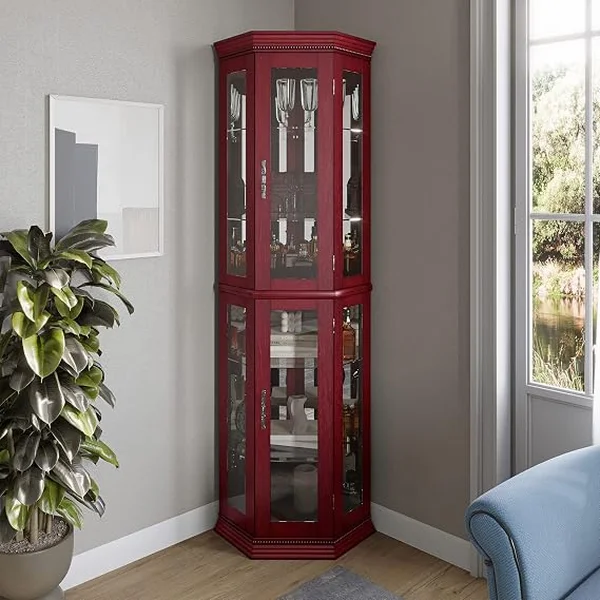 |
BELLEZE Lorona Lighted Corner Curio Cabinet, Cherry – $229.99 If you’d rather buy than build, this is a real corner cabinet in a cherry finish with the display features most people actually want.
|
Beyond the color and grain, cherry earns its reputation because it’s genuinely pleasant to work with at the bench: it carves cleanly, doesn’t tear out under a hand plane the way some ring-porous hardwoods do, and accepts both stain and clear film finishes without the blotching problems that plague woods like pine or birch. A corner cabinet specifically claims a piece of floor space that almost nothing else uses well – the 90-degree dead zone where two walls meet – and turns it into display or closed storage without eating into the room’s usable floor area the way a flat-backed cabinet would.
Types of Cherry Wood Corner Cabinets
Traditional: Detailed carvings, raised-panel or glass doors, ornate feet or crown moldings – built to read as a classic furniture piece.
Modern: Clean flat-panel doors, minimal or hidden hardware, straight lines that let the cherry grain itself be the decoration.
Country/Farmhouse: A slightly rustic finish, sometimes painted or lightly distressed, with simpler black-iron hardware for a cozier feel.
Styles to Consider
The style you pick sets the tone for the whole corner, and by extension a good chunk of the room around it. Traditional styles lean on raised-panel doors, glass fronts for displaying china or collectibles, and hardware like brass knobs or antique-style pulls – details that read as formal and work well in a dining room built around a matching wood dining set.
Mission and Arts and Crafts styles take the opposite approach: simple, strong lines, solid joinery built to be seen rather than hidden, and a finish that lets the cherry’s natural grain do the visual work instead of applied ornament. Contemporary styles go further still – flat-panel doors, minimal or hidden hardware, and an uncluttered silhouette that suits a home with a simpler overall aesthetic. Rustic or farmhouse styles bring warmth through a lightly distressed finish and plain black-iron hardware, and often trade some closed storage for open shelving to keep the piece feeling casual rather than formal.
Cherry Wood Finishes Explained
Natural: Clear finish over raw cherry – shows the wood’s true color and ages into a deeper red-brown over time.
Stained: Deepens the base color and can push it further toward red or brown than natural aging alone would.
Distressed: Deliberately aged and worn-looking, common on farmhouse-style pieces.
Painted: Less common since it hides the grain, but white or cream painted cherry pieces do exist in country-style lines.
Size Matters: Finding the Right Fit
Corner cabinets are measured by side length – the distance from the corner point out along each wall – rather than by a simple width, since the cabinet itself is triangular or angled in plan. Common side lengths run 18, 24, 30, and 36 inches; an 18-inch cabinet fits a tight spot without dominating the room, while a 30- or 36-inch piece gives real storage capacity at the cost of a noticeably bigger footprint.
Depth matters as much as side length: a deeper cabinet holds more but reads as bulkier in a small room, while a shallower one stays compact but limits what fits inside comfortably. Height splits into two real categories – short cabinets meant to sit on a sideboard or table, and full-height units that function as a standalone statement piece – and either can look wrong if it blocks a window or towers awkwardly over the furniture around it, so measure the full wall, not just the corner, before buying.
Door swing is the detail most buyers forget to check. Most corner cabinet doors open outward on a diagonal, which needs more clearance than a flat cabinet door swinging the same distance. In a genuinely tight corner, look for a model with sliding or bi-fold doors, or accept an open-shelf design with no doors at all.
What to Look for in Quality
Four things separate a cabinet that lasts decades from one that loosens up within a couple of years. Construction material comes first: solid cherry throughout – including the drawers and door panels, not just the visible face frame – outlasts a particleboard-core piece with a cherry veneer skin, though a well-made veneer piece over a plywood (not particleboard) core is a reasonable middle ground if solid wood is out of budget.
Joinery is the next tell. Dovetail joints on drawer boxes resist years of opening and closing far better than stapled or glued butt joints, and you can usually see the dovetail’s interlocking pattern on the side of an open drawer without any tools. Door hinges should move smoothly with no binding, and the overall frame shouldn’t flex or rack when you press a hand against a top corner.
Finish quality shows up under close inspection: run a hand over the surface feeling for drips, orange-peel texture, or rough spots, and check inside the cabinet too – a finish that stops at the visible surfaces and skips the interior is a shortcut sign. Hardware should feel solid rather than light and hollow; cheap hardware is one of the easiest things to upgrade later, but it’s still a signal about how much care went into the rest of the piece.
One more detail worth checking: the grain pattern itself can tell you something about how the wood was milled. Quarter-sawn cherry shows a straighter, more uniform grain and tends to be more dimensionally stable than flat-sawn material, which is worth paying attention to on a piece that will sit in one spot in a room with seasonal humidity swings.
Quick Scan: Cabinet Check List
- Wood Type: 100% Solid Cherry?
- Construction: Dovetail drawers? Strong hinges?
- Finish: Smooth, even, protective, applied inside too?
- Hardware: Sturdy and stylish?
- Size: Side length, depth, and door swing all fit the corner?
Real-World Placement and Uses
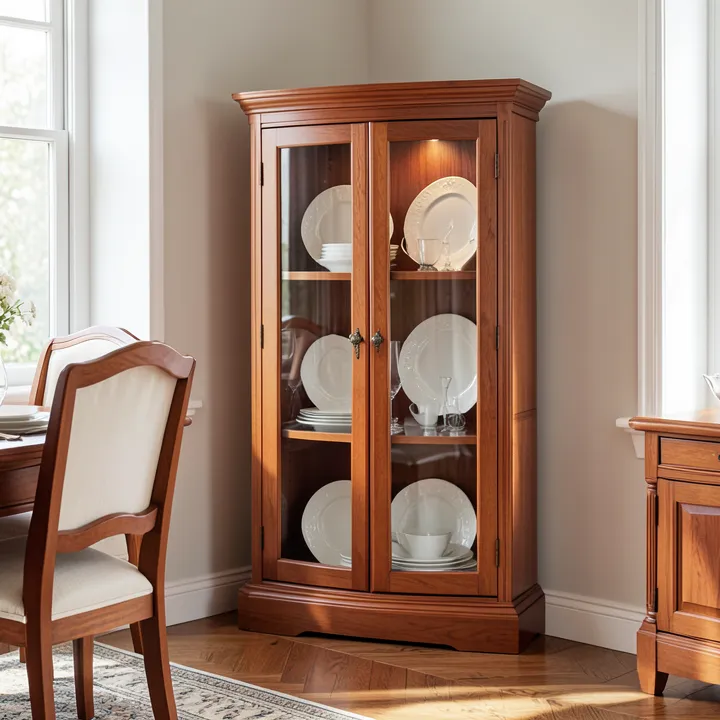
Where a corner cabinet goes should follow the room’s actual function, not just which corner happens to be empty. In a dining room, it’s a natural home for china, serving dishes, and glassware – close enough to the table to be practical, and a glass front turns storage into display. In a living room, the same footprint works for books, board games, media, or decorative pieces on open shelves, and glass doors here cut down visible clutter without hiding everything behind solid panels.
A smaller cabinet earns its keep in a hallway or entryway, holding mail, keys, and a small lamp right where you actually need them on the way in or out. Even a bedroom corner can take one for extra linens or personal items without the bulk of a full dresser. Cherry specifically looks best with some natural light reaching it – the color deepens and shows its grain more clearly – but avoid a spot in direct, harsh sun for hours a day, since that fades the wood unevenly rather than aging it into the uniform deep tone that makes cherry desirable in the first place.
Corner Cabinet Scene Setting
Dining Room: Displaying fine china.
Living Room: Organizing books and games.
Hallway: Welcoming entry decor.
Bedroom: Storing extra linens.
When is a Cherry Wood Corner Cabinet a Good Pick?
A cherry corner cabinet earns its price when a few things line up: you have an awkward corner that a standard flat-backed cabinet can’t use well, you want a piece that improves with age rather than just wearing out, and you’re furnishing a room with a traditional-to-transitional style where a warm reddish-brown wood tone fits naturally. Well-made cherry pieces are genuinely built to become heirlooms – the wood itself gets better looking with decades of light exposure, which is the opposite of what happens to most furniture.
It’s a weaker fit for a strongly modern interior built around bold geometric shapes and cool tones, where a traditional cherry piece can visually clash rather than complement. It’s also not the right call if you need furniture that shrugs off rough daily abuse; cherry is a moderately hard wood but softer than oak or maple, and it dents more easily under real wear. The good news if you already own a traditional piece that no longer matches your decor: the same hardware and finish updates covered in how to make cherry wood furniture look modern work just as well on a corner cabinet as any other cherry piece, so a style mismatch doesn’t have to mean starting over. Budget for a premium price either way – cherry costs more than common softwoods or manufactured board simply because there’s more demand for it than supply of good logs.
Maintaining Your Cherry Wood Cabinet
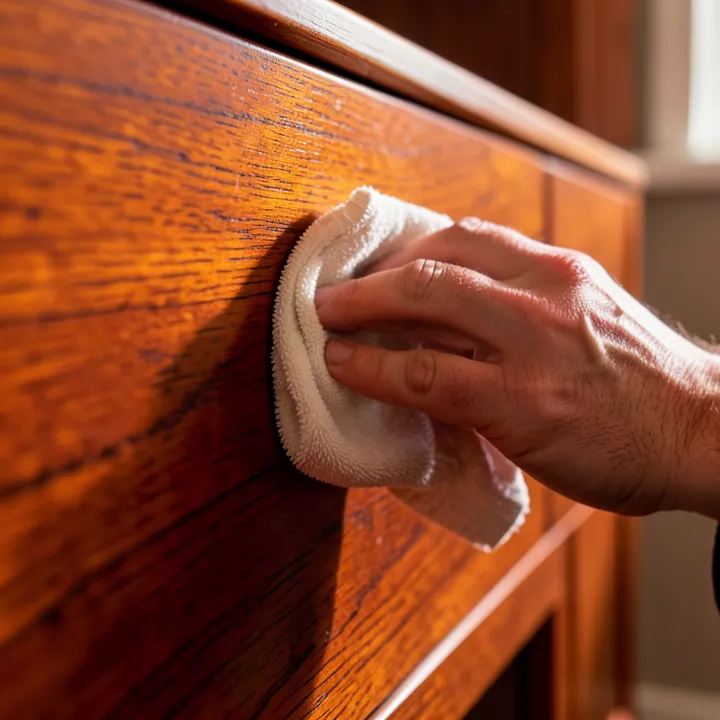
Cherry is genuinely low-maintenance as hardwoods go, provided you handle a small number of things consistently. Dust weekly with a soft, dry cloth to keep grit from scratching the finish over time, and wipe up any spill immediately with a barely damp cloth followed by a dry one – standing moisture is what causes white rings and water spots on a film finish. Skip harsh chemical cleaners entirely; mild soap and water is enough for anything beyond dusting, and even that should get tested on an inconspicuous spot first.
Keep the piece out of hours of direct sun, since that’s the single biggest cause of uneven fading on cherry specifically. Use coasters under drinks set on any exposed top surface, and check hardware every few months for loose screws on hinges and knobs – they work loose gradually with normal use and are a five-minute fix caught early versus a sagging door caught late. An occasional coat of furniture wax or polish (made for finished wood, not raw wood) restores shine and adds a thin protective layer on top of the existing finish.
Quick Maintenance Tips
- Dust often with a soft cloth.
- Wipe spills right away.
- Use mild cleaners only.
- Keep out of strong sun.
- Polish or wax yearly.
Common Questions About Cherry Wood Corner Cabinets
What is the best way to clean a cherry wood corner cabinet?
Dust your cherry wood corner cabinet regularly with a soft, dry cloth. For spills or sticky spots, use a slightly damp cloth with mild soap. Always dry the area immediately after cleaning.
Avoid harsh chemicals or abrasive cleaners, as they can damage the wood finish.
How do I choose the right size cherry wood corner cabinet?
Measure the corner space where you plan to place the cabinet. Note the length along each wall from the corner. Common sizes are based on side lengths like 18, 24, or 30 inches.
Also, consider the height and depth needed for storage and to fit the room’s proportions.
Can cherry wood cabinets be repaired if they get scratched?
Yes, minor scratches on cherry wood can often be repaired. For very light scratches, a furniture polish or a wax stick in a matching color might work. Deeper scratches may require professional refinishing.
The natural aging of cherry wood can also help to mask minor imperfections over time.
What are the advantages of cherry wood for furniture?
Cherry wood is prized for its beautiful color, which deepens with age to a rich reddish-brown. It has a fine, smooth grain that makes it easy to work with and carve. It also takes stains and finishes very well, leading to a smooth, elegant appearance.
Cherry wood furniture is known for its durability and classic appeal.
Are cherry wood corner cabinets expensive?
Cherry wood is a premium hardwood, so cabinets made from it tend to be more expensive than those made from softer woods or composite materials. The cost also depends on the size, style, and craftsmanship of the cabinet. However, the beauty and longevity of cherry wood often make it a worthwhile investment.
How does cherry wood change color over time?
Freshly cut cherry wood has a pale, pinkish-brown color. When exposed to light and air, it gradually darkens over months and years. It develops into a richer, deeper reddish-brown hue.
This aging process is a natural characteristic that many people find beautiful and desirable.
What is the difference between solid cherry and cherry veneer?
Solid cherry furniture is made entirely from cherry wood. Cherry veneer furniture uses a thin layer of cherry wood glued onto a less expensive core material, like particleboard or MDF. Solid cherry is more durable and valuable.
Veneer can look similar but may be more prone to damage if the veneer layer is compromised.
Conclusion
A cherry wood corner cabinet earns its keep by doing two things most furniture can’t: turning a genuinely wasted corner into real storage, and getting more attractive with age instead of just wearing out. Whether you build one, restore an old piece, or buy one ready-made, the same fundamentals decide whether it lasts – solid joinery, an even finish applied inside and out, and hardware that feels as solid as it looks.
Measure your corner carefully, including door swing clearance, before you buy or build, and you’ll end up with a piece that fits the space the first time.
Sponsored / affiliate links. As an Amazon Associate I earn from qualifying purchases. I may earn additional commission from eligible campaigns.