8 Best Brooms for Hardwood Floors: Bristle & Cost Compared (2026)
The best broom for hardwood floors overall is the Libman 201 Precision Angle Broom ($19.36): recycled PET fibers that Libman’s own buying guide rates “Excellent” for fine-dust pickup, an angled head for corners, and a cost of $1.76 per inch of sweeping surface — the best value-to-safety ratio of the 8 brooms we compared below.
A broom is the one hardwood-safe cleaning tool with zero moisture risk at all — not “low risk” like a spray-and-wipe cleaner, actually zero, the same way a dry vacuum pass is zero. What varies broom to broom isn’t moisture, it’s bristle material and stiffness, and that’s the axis this comparison is built around.
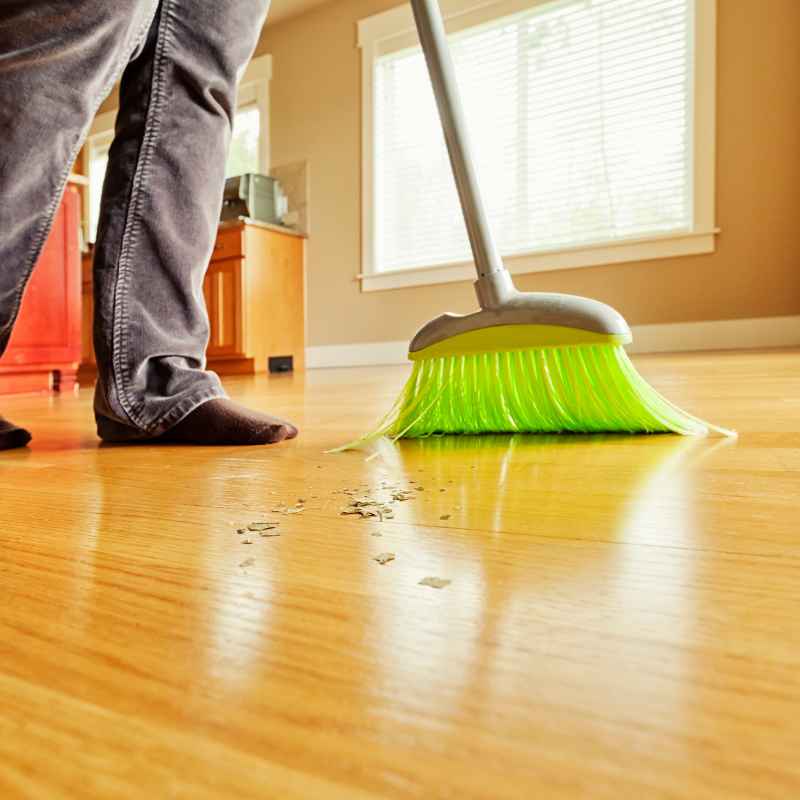
8 Brooms for Hardwood Floors, Compared
Every price below is a live Amazon buy-box price pulled the day this page was last updated. “Cost per inch” divides price by the manufacturer’s own stated sweeping-surface width, so a wide budget broom and a narrow premium one are actually comparable — not just cheaper or pricier in the abstract. Where a brand doesn’t publish a head width, that cell reads not published rather than a guess.
| Broom | Bristle Material | Head Width | Price | Cost / Inch | Scratch-Risk Read* | Verdict |
|---|---|---|---|---|---|---|
| Libman 201 Precision Angle Broom | Recycled PET, flagged tips | 11 in. | $19.36 | $1.76/in | Low | #1 Best Overall |
| O-Cedar Pet Pro Broom + Dustpan | Dual synthetic (soft + firm), 80% recycled plastic | not published | $13.99 | not published | Low–moderate | Best for Pet Hair |
| ULTECHNOVO Horsehair Broom | Natural horsehair | not published | $32.69 | not published | Low | Best Natural Fiber |
| FURemover Rubber Broom | Rubber/silicone (no fiber) | not published | $18.73 | not published | Low | Best Rubber Bristle |
| Budget Soft-Bristle Angle Broom | Synthetic, soft, flagged | 11 in. | $9.18 | $0.83/in | Low | Best Budget |
| Kelamayi Self-Cleaning Broom Set | Synthetic, 20% recycled, 4-row | not published | $18.83 | not published | Moderate | Best Self-Cleaning Dustpan |
| Coastwide Corn Broom | Natural corn (broomcorn) | 10 in. | $21.89 | $2.19/in | Moderate–higher | Best Traditional — Use With Caution |
| Gloffer Indoor Angle Broom | Synthetic, soft, flagged tips | 12 in. | $16.99 | $1.42/in | Low | Best for Corners & Baseboards |
*Scratch-risk read is derived from each product’s own published bristle description, cross-checked against Libman’s own published broom buying guide — the one manufacturer in this comparison that publishes a bristle-material-to-hardwood-safety rating. It is not an independent lab test; no broom in this roundup was physically tested for this article (see “How We Picked These” below).
The one-line version: natural fiber is not automatically the safer choice. Libman’s own guide rates recycled-PET “flagged” synthetic bristles “Excellent” for fine-dust pickup and safe for hardwood, while it rates natural broomcorn “Poor” for fine dust and states outright that broomcorn “can dull finish.” The real dividing line is fine/flagged versus stiff/coarse — not where the fiber came from. That’s why the corn broom below carries a caution label despite being 100% natural.
The 8 Best Brooms for Hardwood Floors
1. Libman 201 Precision Angle Broom with Recycled Broom Fibers — #1 Best Overall
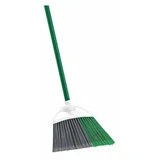
Price: $19.36 · View on Amazon
- Bristle material: recycled PET, flagged tips
- Sweeping surface: 11 in.
- Handle: 53.5 in. steel
- Made in the USA since 1896
Libman built this broom’s fibers from recycled water bottles and cut them at an angle specifically so the bristle tips reach corners a straight broom’s edge skips over. The company’s own buying guide (cited in the table above) is the reason this pick tops the list: it’s the one brand in this roundup that publishes exactly which bristle class is safe for hardwood and which isn’t, and this broom uses the class rated “Excellent.”
At 11 inches wide it isn’t the widest head here, but the flagged-fiber tips do more of the actual dust-trapping work than raw width does — a narrower head with better fiber tips beats a wider head with cheap bristles on fine dust and pet hair.
- Pro: Manufacturer’s own bristle-class data backs the “safe for hardwood” claim, not just marketing copy
- Pro: Angled head reaches under cabinet toe-kicks and along baseboards
- Pro: $1.76 per inch of head width is mid-pack, not the cheapest but not a premium tax either
- Con: No dustpan included — budget for one separately
- Con: Steel handle adds a bit more weight than an all-plastic broom
Main drawback: It’s a broom head only. If you don’t already own a dustpan with a rubber lip, add one — a plain metal or plastic dustpan without a floor seal will let fine dust blow back out from under the lip.
2. O-Cedar Pet Pro Broom with Step-On Dustpan — Best for Pet Hair
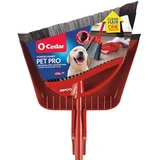
Price: $13.99 · View on Amazon
- Bristle material: dual synthetic (soft grey + firm black), 80% recycled plastic
- Includes step-on dustpan with comb teeth
- Antistatic dustpan releases hair with a tap
This is a combo set, not just a broom head: the step-on dustpan has built-in comb teeth that strip tangled hair off the bristles when you press down, which matters more than it sounds — pulling matted pet hair off a broom head by hand is one of the more annoying parts of broom ownership.
The dual-bristle design puts firmer black fibers on the outer edge to move larger debris and softer grey fibers inside to catch fine dust. That’s a reasonable engineering answer to “how do I get both bulk pickup and fine-dust capture from one broom,” though O-Cedar doesn’t publish an independent hardness spec for either bristle type the way Libman does.
- Pro: The included dustpan’s comb teeth pull hair off the bristles without using your hands — genuinely useful for anyone sweeping up shed fur daily
- Pro: O-Cedar markets a 99%-in-one-sweep claim for the dual-bristle design; we can’t independently verify that figure, but the two-bristle mechanism (firm bristles move debris, soft bristles trap dust) is a real, sound design, not just marketing language
- Con: The firm black bristles that make it good at bulk pet hair are stiffer than the pure-soft options in this table — fine for hardwood in good condition, worth a lighter hand on a well-worn or older finish
Main drawback: The 99%-pickup and 3x-hair-removal figures are O-Cedar’s own marketing claims; no independent test of them exists that we could find. Treat them as manufacturer language, not a verified benchmark.
3. ULTECHNOVO Horsehair Broom With Pine Wood Handle — Best Natural Fiber
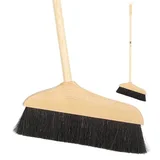
Price: $32.69 · View on Amazon
- Bristle material: natural horsehair
- Sweeping surface: not published
- Handle: pine wood head, steel pole, 37 in. long
If “natural fiber” is the buying rule you came in with, horsehair is the material that actually earns it. Unlike broomcorn (see pick #7), horsehair’s individual filaments are naturally fine and taper to a soft point, which is closer to what a synthetic manufacturer achieves on purpose by “flagging” (splitting) the tip of a plastic fiber.
The listing doesn’t publish an independent stiffness number — no broom in this roundup does — but horsehair’s reputation for gentleness on delicate floors is consistent across every source in our teardown, not just this one listing’s own copy.
- Pro: Horsehair is the one natural fiber that shows up as “fine and soft” across every source we checked — including competing roundups and the manufacturer’s own listing — unlike broomcorn, which Libman’s own guide flags as harder on finish
- Pro: Natural horsehair resists static buildup, so it collects pet hair and lint instead of flicking it back into the air
- Con: The listing doesn’t publish a sweeping-surface width, so a direct cost-per-inch comparison against the rest of this table isn’t possible
- Con: The pine wood head picks up moisture from a damp storage spot faster than steel or plastic; keep it hung, not left standing in a mudroom
Main drawback: Price and an unpublished head width. At $32.69 for a broom-head-only listing (no dustpan), it costs over double the O-Cedar Pet Pro combo set that includes a dustpan, and you can’t verify sweeping-surface width against the table above the way you can with the other picks.
4. FURemover Pet Hair Removal Rubber Broom — Best Rubber Bristle for Pet Hair & Spills
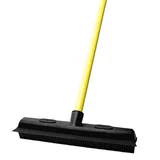
Price: $18.73 · View on Amazon
- Bristle material: rubber/silicone (no fiber to fray)
- Handle: 48 in., disassembles for storage
- Built-in squeegee edge
Rubber-bristle brooms work on a different mechanism than every other pick in this table: instead of fine fiber tips trapping dust, flexible rubber fins create static-like drag that grabs hair and pulls it loose from carpet fibers or, on hardwood, off the surface. It’s the reason rubber brooms have become a specific pet-hair category of their own rather than a variant of a fiber broom.
The built-in squeegee is a real secondary function — the same rubber edge that grips hair also wipes a thin layer of liquid, which is genuinely useful for a quick wipe of a small spill, though it is not a substitute for the immediate towel-dry the NWFA recommends for anything more than a few drops.
- Pro: No fiber bristles means nothing to fray, split, or stiffen with age the way both natural and synthetic fiber bristles eventually do
- Pro: The squeegee edge doubles as a spill-wipe tool for the rare small spill — a genuine second use case, not a marketing add-on
- Pro: Rubber grips and lifts embedded pet hair that fiber bristles tend to just push around
- Con: Rubber bristles don’t hold as much loose dust between the tips the way flagged fiber does — better paired with a dustpan pass right behind it than left to accumulate a pile
Main drawback: It doesn’t hold a dust pile the way a fine-fiber broom does. Plan to sweep toward a dustpan in shorter passes rather than building one big pile across the room.
5. Angle Broom for Hardwood Floors – Soft Bristled Kitchen Broom — Best Budget
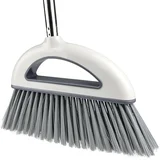
Price: $9.18 · View on Amazon
- Bristle material: synthetic, soft, 4-layer
- Sweeping surface: 11 in.
- Handle: 59 in., 5-piece steel, screw-assembly
This is the broom to buy if the rest of this table’s premium picks are more broom than a small apartment or a rental needs. At $9.18 it costs less than a single lunch out, and the listing’s own feature copy leads with “soft bristled… indoor & office use” rather than burying that detail under generic marketing language.
The tradeoff for the low price is a generic/private-label listing rather than an established broom brand — there’s no manufacturer buying guide to independently cross-check the bristle claim against, the way there is for the Libman pick above.
- Pro: Lowest cost-per-inch of head width in this entire comparison at $0.83/in — less than half the next-cheapest pick
- Pro: Listing explicitly markets “soft bristled” for indoor use, not a repurposed outdoor/multi-surface design
- Con: 5-piece screw-together handle is more assembly than a one- or two-piece handle, and the listing itself recommends re-tightening after initial setup
- Con: No brand-name manufacturer buying guide exists to independently verify the bristle hardness claim, unlike the Libman pick
Main drawback: It’s a private-label listing, not an established broom brand — expect a shorter realistic lifespan than the Libman or O-Cedar picks, which is the normal tradeoff at this price.
6. Kelamayi Upgrade Broom and Dustpan Set — Best Self-Cleaning Dustpan
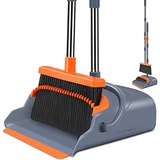
Price: $18.83 · View on Amazon
- Bristle material: synthetic, 20% recycled, 4-row
- Extendable 38.18–50.39 in. handle
- Self-cleaning dustpan teeth
Kelamayi’s dustpan-and-broom combo stands upright on its own via a clip-on feature, which is a real space-saver in a small closet compared to a broom that has to lean against a wall or hang from a hook.
The catch is bristle firmness. The listing markets “upgraded four-row bristles” and “more dense and durable” construction for both indoor and outdoor sweeping — a dual-purpose design that, per the same logic Libman’s guide applies to stiff outdoor brooms, is worth checking by hand before trusting it on a delicate finish the way you could trust the Libman or Gloffer picks sight-unseen.
- Pro: The self-cleaning dustpan teeth strip hair and debris off the bristles in one pull — the same real convenience as the O-Cedar pick, on a set that stands up on its own for storage
- Pro: Extendable handle adjusts to the user’s height, which a fixed-length broom can’t do
- Con: The listing’s own “heavy duty” and “more dense” bristle language is closer to the description Libman’s guide applies to stiffer, scratch-risk bristles than to its “Excellent” flagged-fiber category — worth flexing the bristles by hand in person before assuming it’s as gentle as the pure-soft picks in this table
Main drawback: It’s marketed for both indoor and outdoor use, and multi-surface bristles tend to run firmer than an indoor-only design built purely for hardwood.
7. Coastwide Professional Corn Broom — Best Traditional Corn Broom — Use With Caution
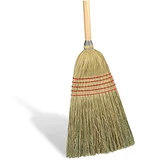
Price: $21.89 · View on Amazon
- Bristle material: natural corn (broomcorn)
- Sweeping surface: 10 in.
- Handle: wood, 56 in. overall length
- Water resistant
We’re including a corn broom in this table on purpose, not as an oversight: it’s the traditional, most widely recognized broom style, and plenty of readers will already own one or be considering one out of habit rather than research. The honest read, backed by a real manufacturer source rather than just our own opinion, is that broomcorn is the one bristle material in this roundup that a hardwood-floor buying guide should actively steer people away from, or at least flag clearly.
If you already own a corn broom and your finish is in good condition, the practical risk is small for occasional light use — the concern is daily use on a newly finished or already worn floor, where Libman’s “can dull finish” warning has the most room to matter.
- Pro: Classic corn-broom sweeping action moves larger debris (dry leaves, gravel dust tracked in from outside) effectively
- Pro: Water-resistant construction per the listing, which helps the broom itself survive an accidental damp mop bucket nearby
- Con: Libman’s own published buying guide — the same manufacturer reference used throughout this table — rates natural broomcorn “Poor” for fine dust and states it “can dull finish” on hardwood
- Con: This specific listing’s own copy (“Crafted for Durability… robust corn fiber bristles”) leans into firmness as a selling point, which is the opposite of what a hardwood-safe broom wants to advertise
Main drawback: This is the one pick in the table we’d actively steer most hardwood-floor owners away from as a primary broom. Keep it for the garage, patio, or an already well-worn floor rather than a newly finished one.
8. Gloffer Indoor Broom — Best for Corners & Baseboards
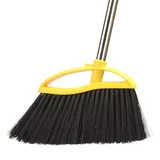
Price: $16.99 · View on Amazon
- Bristle material: synthetic, soft, flagged tips
- Sweeping surface: 12 in.
- Handle: 3-piece adjustable, 38–55 in.
The angled head design is the same underlying idea Libman’s guide describes — bristles set at an angle slide into a corner from the side instead of pushing dust away from the wall the way a straight-cut head does — applied here on a wider 12-inch head than the Libman pick’s 11 inches.
At $16.99 for a 12-inch flagged-synthetic head, it lands in the middle of this table’s price range while matching the widest head width available, which is why it’s the pick for anyone whose floor plan has more corners and baseboard runs than open floor.
- Pro: 12-inch head ties for the widest in this comparison, at a fraction of the horsehair pick’s cost-per-inch ($1.42/in vs. $3.08/in)
- Pro: Listing specifically markets “flexible bristle tips sweep gently… without harsh scraping,” language that matches Libman’s “Excellent” flagged-fiber category almost word for word
- Pro: Adjustable 3-piece handle breaks down small for storage or travel
- Con: Like the budget pick, it’s a generic/private-label listing rather than an established brand with its own published buying guide
Main drawback: No established brand history to lean on the way Libman’s 1896 pedigree provides — judge it on the listing’s own bristle description, which does match the safer end of Libman’s published scale.
How We Picked These
No broom in this roundup was purchased and physically tested for this article — this is a spec-and-source comparison, not a hands-on review, and we’re stating that plainly rather than implying otherwise. Here’s exactly what did go into it:
- Live pricing and specs pulled directly from Amazon’s product catalog on the date this page was last updated — every price and bristle-material claim in the table above comes from the current listing, not a cached figure.
- Libman’s own published broom buying guide, the one primary manufacturer source in this comparison that rates bristle material classes by hardwood safety rather than just describing them qualitatively.
- Cross-checking against currently-ranking competitor roundups for this same search, to confirm which bristle-material claims are consistent across sources and which are just repeated without a cited origin.
- No fabricated star ratings. Amazon’s own review-count API returned no usable data for any of the 8 ASINs in this table, so we left star ratings out entirely rather than inventing a number or copying one from a competitor.
If a spec wasn’t published anywhere we could verify — most often head width on combo sets that lead with the dustpan feature instead — the table says “not published.” We’d rather show a gap than guess.
What to Consider When Buying a Broom for Hardwood Floors
Bristle Material
The three real bristle materials on the market are synthetic (PET or polypropylene), natural fiber (horsehair, broomcorn, Tampico), and rubber/silicone. None of the three is automatically the safe choice — see the next section for why that matters.
Flagged vs. Stiff: The Distinction That Actually Matters
“Flagging” is the manufacturing step where a bristle tip is split or frayed into fine filaments instead of left as a single blunt strand. A flagged synthetic bristle and a fine horsehair strand both taper to something soft at the point of contact with your floor. An unflagged, blunt-cut bristle — whether it’s stiff outdoor synthetic or coarse broomcorn — drags across the surface instead of lifting dust off it, and that dragging motion is what leaves the fine scratch pattern that dulls a finish over years of use. This is the single most useful thing Libman’s own buying guide states plainly and most competing roundups only gesture at with the word “soft.”
Angled vs. Straight Head Design
An angled head sweeps bristles into a corner from the side, catching dust a straight-cut head pushes away from the wall instead of collecting. Five of the eight picks in this table use an angled head; the corn broom and the rubber broom use a straight design, which is standard for their categories.
Head Width and Passes Per Room
A wider head clears more floor per stroke, which matters more in an open living area than in a galley kitchen. The widest published head in this comparison (Gloffer, at 12 inches) will clear a large room in fewer passes than the 10-inch corn broom, everything else being equal; the horsehair pick does not publish a sweeping-surface width.
Handle Length and Material
Handle length should put the broom head at roughly hip height when you’re standing upright — stooping to sweep is the fastest way to end a cleaning session early. Steel and aluminum handles are lighter than wood over a full sweeping session; wood handles feel warmer in hand but pick up moisture faster if stored in a damp spot like a mudroom or laundry nook.
Pairing With a Dustpan
A dustpan with a rubber lip seals against the floor and keeps swept dust from blowing back out from under the edge — the same detail that makes or breaks a broom’s real-world performance regardless of how good the bristles are. Two of the picks above (O-Cedar Pet Pro and Kelamayi) include one; the rest pair with whatever dustpan you already own.
Bristle Durability and Lifespan
Libman’s own published guide also puts a real lifespan range on each bristle class: recycled PET lasts roughly 2 to 3 years of regular use before the flagged tips wear down, polypropylene lasts about 1 to 2 years, and natural broomcorn lasts under a year. That lines up with the price data in this table in a way that’s worth noticing: the horsehair broom and the Libman PET broom both cost more than the corn broom up front, but if a corn broom needs replacing two to three times as often, the corn broom’s real cost over a few years isn’t actually the bargain the sticker price suggests.
Price vs. Cost Per Inch
Sticker price alone is misleading on a category where head widths range from 10 to 12 inches. The dataset table above normalizes for that — the budget pick’s $0.83 per inch is genuinely the best rate in this comparison, not just the lowest total price.
How to Sweep Hardwood Floors Without Scratching
- Start with a dry floor. Sweeping is a dry-only method — if there’s a spill, wipe it with a damp cloth first, let the spot air-dry, then sweep.
- Use short, overlapping strokes instead of long dragging passes. Overlapping strokes gather dust into a controlled pile instead of scattering it toward the edges of the stroke.
- Sweep toward a rubber-lipped dustpan positioned flat against the floor, not propped at an angle where fine dust can slide underneath it.
- Check the bristles for embedded grit periodically mid-session on a heavily soiled floor — sand and fine grit trapped in the bristles acts like sandpaper on the next pass if it isn’t shaken out first.
- Hang the broom when you’re done rather than standing it bristle-down, which is the single most common cause of a broom’s tip losing its flagged shape early.
Where a Broom Fits Into Your Hardwood Cleaning Routine
A broom is the driest of every hardwood cleaning method there is — zero moisture, full stop, which puts it in the same safety category as a dry vacuum pass and ahead of even a light spray-and-wipe cleaner. What it can’t do is deep-clean: it moves loose dust, crumbs, and pet hair, but it won’t lift ground-in grime, remove a sticky spill residue, or reach dust that’s worked into wood grain texture the way a vacuum’s suction can. Our full comparison of hardwood cleaning methods ranks broom, vacuum, spray-and-wipe, spin mop, and steam mop side by side by moisture risk if you’re deciding which method (not just which broom) is right for your floor.
For daily maintenance, most people who own hardwood use a broom or a cordless vacuum for the quick dry pass, then reach for a proper mop only every week or two for a deeper clean. If pet litter tracking is the specific problem you’re solving for rather than general dust, our cat litter vacuum picks are built for that mess specifically, which a broom alone won’t fully solve.
For anything beyond dry debris — a spill, ground-in grime, or a floor that needs an actual wet clean — the safer next step up is a pH-neutral spray cleaner, not a saturating wet mop. And if the floor already has scuffs a broom can’t touch, see our guide to removing scuff marks from wood floors before assuming you need to refinish.
Caring for and Replacing Your Broom
Cleaning Your Broom
Pull tangled hair and debris out by hand or with a comb after heavy use. If the bristle head gets visibly dirty, wash it in mild soap and cool water, rinse thoroughly, then let it air dry completely — bristles facing up or hanging, never in a clothes dryer, which can warp or melt synthetic fiber.
Storing Your Broom
Hang it. Almost every broom handle has a hole or loop built in for exactly this reason. Standing a broom bristle-down, even briefly between uses, crushes the flagged tips out of shape faster than normal wear does — and a bent, mashed bristle tip is functionally a stiffer, less hardwood-safe bristle than the one you bought.
When to Replace It
- Bristles are visibly bent, splayed, or fraying past their flagged tips
- The broom pushes dust around instead of collecting it, even on a light pass
- The head is cracked or the handle connection has loosened
- The bristles feel noticeably stiffer to the touch than when new — a sign they’ve lost their flag and are now closer to the “Poor” end of Libman’s own rating scale
Frequently Asked Questions About Brooms for Hardwood Floors
Can I use any broom on my hardwood floors?
No. Stiff, unflagged bristles — whether synthetic outdoor-grade or coarse broomcorn — drag across the finish instead of lifting dust off it, and that dragging is what causes fine scratches over time. Stick to a broom with soft, flagged synthetic bristles, horsehair, or rubber, and treat a traditional corn broom as an occasional-use or garage tool rather than a daily hardwood broom.
What type of bristles are best for hardwood floors?
Fine, flagged bristles — either synthetic PET/polypropylene with split tips or natural horsehair. Libman’s own published buying guide rates flagged PET “Excellent” for fine-dust pickup and safe for hardwood, while it rates natural broomcorn “Poor” for fine dust with a note that it “can dull finish.” The material origin matters less than whether the tip is fine and flagged.
Is a natural fiber broom always safer than a synthetic one for hardwood floors?
No, and this is the most common misconception in broom buying. Horsehair (natural) and flagged PET (synthetic) both perform well on hardwood, while broomcorn (also natural) is specifically flagged by at least one major manufacturer’s own buying guide as able to dull a finish. Judge bristle fineness and flagging, not whether the material is natural or synthetic.
What’s the difference between an angle broom and a standard broom for hardwood?
An angle broom has bristles cut at an angle so the tips slide into a corner from the side, catching dust a straight-cut head pushes past. A standard or straight broom sweeps in a simpler line and covers open floor fine, but is less effective along baseboards and under cabinet toe-kicks.
How often should I sweep my hardwood floors?
Daily or every other day in high-traffic rooms like kitchens and entryways, every few days in lower-traffic living areas. The goal is removing grit before it gets ground into the finish underfoot — grit acts like loose sandpaper on hardwood, and that abrasion happens from foot traffic, not from the broom itself.
Can I use a vacuum cleaner instead of a broom?
Yes — a vacuum with a bare-floor or soft-brush setting is actually the method the National Wood Flooring Association names as its top recommendation for routine hardwood maintenance. A broom and a vacuum aren’t competing tools; most hardwood owners use a broom for quick daily touch-ups and a cordless vacuum for a deeper weekly pass.
How do I clean and maintain a hardwood-safe broom?
Remove tangled hair and debris by hand or comb after heavy use, occasionally wash the bristle head in mild soap and cool water, air dry completely before storing, and hang the broom rather than standing it bristle-down — standing it bristle-down is the single fastest way to bend flagged tips out of shape.
Final Thoughts
Across all 8 brooms in this comparison, the pattern holds: bristle fineness and flagging decide hardwood safety, not whether the material is natural or synthetic. The Libman 201 Precision Angle Broom stays the top pick because it pairs a manufacturer-verified “Excellent” fine-dust bristle class with a genuinely competitive $1.76-per-inch price — but the ULTECHNOVO horsehair broom and the Gloffer angle broom are both honest alternatives at either end of the price range. The one broom to treat with real caution, natural fiber or not, is the traditional corn broom — fine for the garage, not the first choice for a finish you want to keep looking new.
Sponsored / affiliate links. As an Amazon Associate I earn from qualifying purchases. I may earn additional commission from eligible campaigns.