How to Prevent MDF from Chipping When You Cut It
MDF chips mainly because the fibers at the cut have nothing to hold onto – support the exit side with a backer board, use a sharp high-tooth-count blade, and score the surface with tape or a scoring pass before the final cut. Fix the exit-side support and blade sharpness first; most chipping problems trace back to one of those two things, not to the material itself.
Why MDF Chips More Than Solid Wood
Best Blade for Chip-Free MDF Cuts
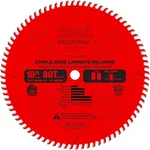 |
Freud LU97R010 10″ 80-Tooth TCG Laminate/Melamine Blade – $122.47 The triple-chip-grind tooth profile this article recommends for shearing MDF’s brittle surface fiber instead of chiseling it.
|
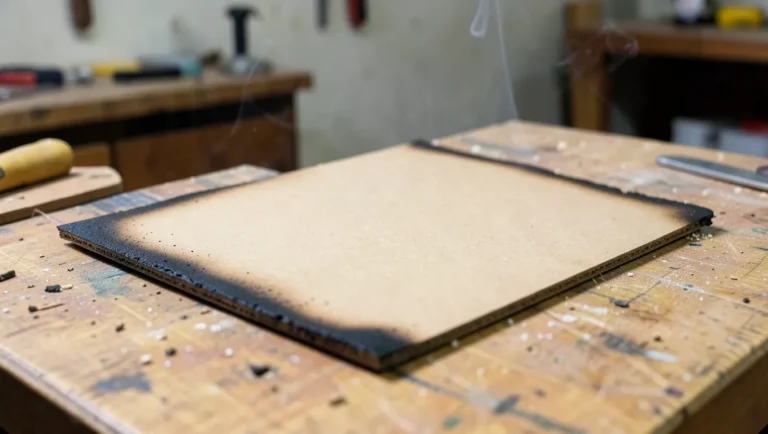
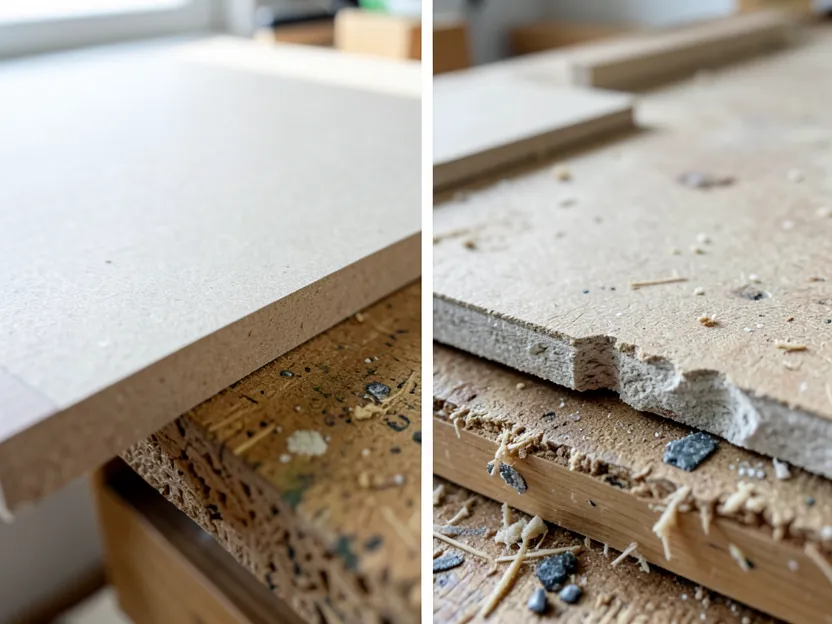
MDF is compressed wood fiber and resin with no grain direction at all, which is actually why it cuts so cleanly on a flat face – there’s no grain to tear out mid-cut. The tradeoff shows up at edges and cut lines: without long wood fibers to bind the surface together, the outermost layer of fiber has almost nothing holding it in place once a blade tooth exits through it, so it shatters instead of shearing cleanly. That’s the mechanism behind essentially every MDF chipping problem – an unsupported exit point where fiber has nowhere to go but out.
Support the Exit Side of Every Cut
This is the single biggest fix and the one most guides skip. Whatever face the blade exits through – the underside on a table saw, the top on a circular saw used upside-down, the back on a router pass – needs something solid backing it up, because an unsupported exit face is exactly where a blade’s spinning teeth blow fibers outward instead of cutting through them. A sacrificial backer board clamped or taped directly under the cut line, or a zero-clearance table saw insert instead of the stock wide-slot insert, closes that gap and gives the fibers somewhere to shear against instead of nowhere.
Blade Choice Matters More Than Technique
A triple-chip-grind (TCG) blade, the same tooth profile used for cutting laminate and melamine, handles MDF’s brittle surface layer better than a standard alternating-top-bevel blade because the flat-topped raker teeth shear fibers instead of chiseling them. Look for at least 60-80 teeth on a 10-inch blade – more teeth means each one removes a smaller bite, which is gentler on the unsupported surface fibers. A dull blade is the other half of this problem: dull carbide doesn’t slice cleanly, it pushes and tears, which is why a blade that cut MDF fine a year ago can suddenly start chipping badly with no other change.
Score the Line Before You Cut
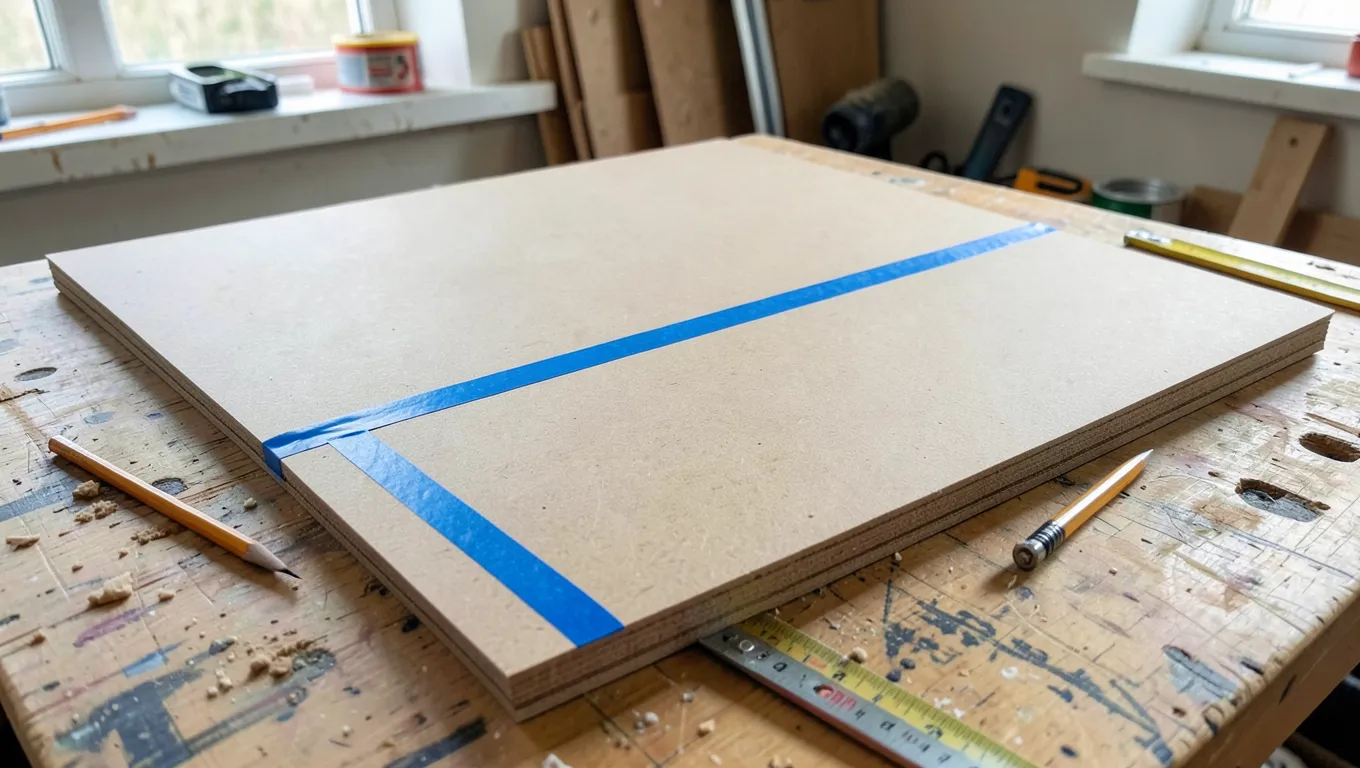
Two low-cost tricks both work by holding the surface fibers together before the blade gets there. Running a strip of blue painter’s tape directly over the cut line gives the surface fiber a thin skin to tear against instead of tearing freely – it won’t stop chipping on its own, but it noticeably reduces it on borderline cuts. The more reliable version is a scoring pass: set the blade depth to about 1/16-1/8 inch and run it once along the line before dropping to full depth, which pre-cuts the surface fibers cleanly so the full-depth pass has nothing left to blow out. A table saw with a scoring blade arbor does this automatically; without one, two passes at different depths gets the same result.
Feed Rate and Cutting Tools
A moderate, steady feed rate beats both extremes – pushing too fast overloads each tooth and causes it to tear rather than shear, while feeding too slowly lets the blade rub and heat-glaze the resin in the MDF, which also chips more easily once it’s been heat-damaged. For a jigsaw or circular saw, a fine-tooth blade at a controlled speed with the workpiece well-clamped does the job; router bits should be sharp carbide and run at a feed rate that produces continuous small chips, not dust (dust usually means you’re rubbing, not cutting).
Protect the Edges After Cutting
Raw MDF edges stay vulnerable even after a clean cut, because that cut surface is now exposed fiber ends with no protective layer at all. Edge banding (iron-on veneer or PVC tape, glued and trimmed flush) is the standard fix for anything that will get handled or bumped. For edges that will just be painted, a coat of sanding sealer or a thin skim of wood filler over the raw edge closes up the porous fiber ends before primer goes on – skip this step and the edge will soak up primer unevenly compared to the face, leaving a visible line where edge meets face after painting.
Storage and Handling
MDF swells and gets more brittle if it takes on moisture, since the exposed fiber ends at any cut edge absorb water readily – store sheets flat, off a concrete floor, and away from damp areas. Stack it flat rather than leaning it against a wall; leaning a full sheet lets it bow under its own weight over time, and a bowed sheet chips more easily at the stress points when you finally do cut it.
Frequently Asked Questions
How do you cut MDF without chipping?
Support the exit side of the cut with a backer board or zero-clearance insert, use a sharp 60-80 tooth TCG blade, and score the line with tape or a shallow first pass before cutting to full depth. Feed at a steady, moderate rate rather than rushing the cut.
Does MDF chip when cutting even with a good blade?
It can if the exit side of the cut isn’t supported – blade sharpness alone doesn’t fix an unsupported exit face, since that’s where fibers blow out regardless of how sharp the teeth are. Combine a sharp blade with backer support for consistently clean cuts.
How do you secure MDF pieces together without splitting it?
Drill pilot holes before driving any screw, since MDF has no grain to flex around a fastener the way solid wood does. Keep screws at least an inch from any edge, and use glue plus screws rather than screws alone for a joint that needs to hold real weight.
How do you stop laminate or MDF edges from chipping when cutting?
Cut with the decorative or laminated face up on a table saw (the blade exits through the bottom) or face down on a circular saw (the blade exits through the top) so the finished face is on the entry side, not the exit side where chipping happens. Tape and a sharp TCG blade help on both faces regardless of orientation.
Bottom Line
Most MDF chipping comes down to an unsupported exit cut and a blade that isn’t sharp or fine enough for the material’s fiber structure. Back up the exit side, run a sharp high-tooth-count blade, and score the line first, and MDF cuts about as cleanly as any sheet good on the market.
Sponsored / affiliate links. As an Amazon Associate I earn from qualifying purchases. I may earn additional commission from eligible campaigns.