Best Way to Join MDF (Pocket Screws, Biscuits, Glue Compared)
The best way to join MDF depends on which part of the board you are joining: face-to-face joints need only glue and clamps, but edges and corners need a joint that does not depend on a screw gripping a raw edge. Rabbets, dados, biscuits, dowels and Confirmat screws all do that. This guide matches each joint to its geometry and gives screw lengths, drilling rules and dust precautions.
Best Way to Join MDF: Match the Joint to the Geometry
Best Cabinet-Joint Screw Pick | |
 |
Highpoint 7 x 50 mm Confirmat Screws, Zinc, 50-Pack, $17.75 A purpose-made fastener for box joints in MDF and particleboard, the screw option the joint table below recommends for cabinet and box corners.
|
As an Amazon Associate we earn from qualifying purchases. | |
Most advice on joining MDF names one favorite method and stops. The right method depends on what is touching what. A face is the smooth, dense surface. An edge or end is the soft, porous core. Fasteners and glue behave very differently on each, so pick the joint after you know which surfaces meet. The table below is the short version.
| What you are joining | Best method | Add | Avoid |
|---|---|---|---|
| Face to face (laminating, doubling a top) | Glue and even clamping | Light screws in waste areas if clamps are short | Gluing a raw edge with no sizing |
| Corner or T joint in a cabinet or box | Rabbet or dado, or a Confirmat screw | Glue on every mating surface | A plain screw alone into a bare edge |
| Edge to edge (making a wider panel) | Glue with biscuits, dowels or a spline | Sized edges, clamps across the panel | Relying on screws in both edges |
| Mitered corner | Plenty of glue, clamped, with a spline or biscuit for alignment | Sealing before paint | Treating the edge as if it were solid wood |
| Hidden joint inside a cabinet | Pocket holes with coarse-thread screws | Glue, and do not over-tighten | Heavy loads on the pocket joint alone |
| Quick fix or knock-down assembly | Confirmat screws | A matched stepped drill bit | Fine-thread wood screws |
Several rows in that table come from Fine Woodworking, where woodworker William Duckworth lists screwed butt joints, biscuits, splines, rabbeted edges and tongues in dadoed grooves as the practical joints for MDF cases, and says pilot holes are essential when screwing into edges. The rest of this guide explains why each choice works and how to do it.
Why MDF Edges Behave Differently From Faces
MDF is made from wood fibers pressed with resin, so it has no grain direction. The faces are dense and smooth. The core, which is what you see at an edge, is softer and more open. That difference is behind most failed MDF joints.
Glue is not very effective because the edges of MDF are porous.
William Duckworth, Fine Woodworking, 2017
Porous means the edge soaks up glue like a sponge, so a single coat can leave the joint starved. Titebond publishes a sizing mix for open end grain: one part glue to one to two parts water, soaked in for no more than two minutes, then a regular coat of glue. That recipe is written for end grain, not for MDF, but an MDF edge is similarly open, so treat it as a starting point and test it on a scrap first. Our guide to the best glue for MDF covers sizing in more detail, and how to glue MDF together walks through clamping and cure time.
Fine Woodworking adds one rule for mitered edges: use plenty of glue, because they are so porous. If the miter will be painted, seal and fill the edge, because a hairline gap along a painted seam is a common cause of cracks. How to stop MDF joints cracking covers that in depth.
Screws in MDF: Pilot Holes, Thread Type and Confirmat
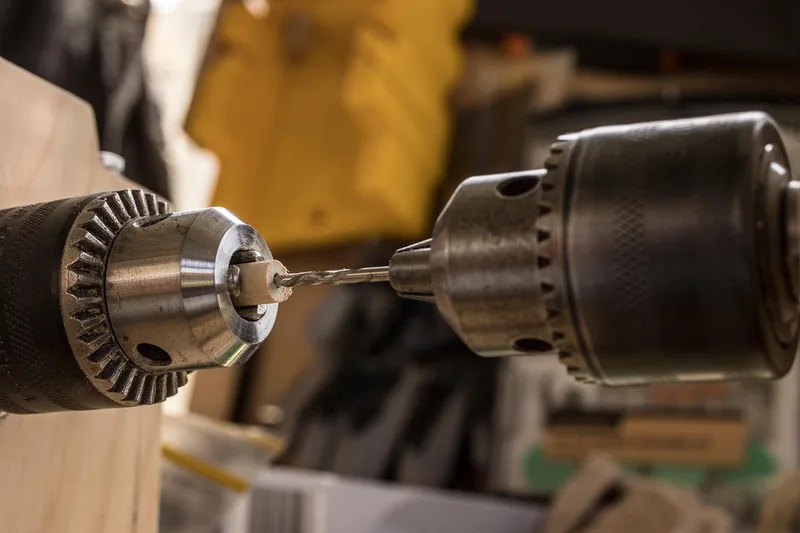
Screws into the face of MDF hold reasonably well. Screws into an edge strip out easily. The fix is the standard screw-joint method, only more important here: drill a pilot hole sized to the screw’s root diameter in the piece the screw bites into, and a slightly larger clearance hole through the top piece, as Fine Woodworking’s screw-joint guide explains. For edge screws, our pilot hole and edge distance guide gives sizes to start from, and strengthening MDF boards covers ways to improve the grip.
Use screws with a coarse thread. Kreg states that coarse-thread screws are ideal for softwoods and sheet goods like plywood and MDF, and warns not to over-tighten, since that can make MDF bulge or break. Stop when the head is flush.
What a Confirmat screw does differently
A Confirmat screw is a thick, coarse, self-tapping screw with a large shoulder under the head. Retailers describe it as made for melamine, particleboard and MDF, with a blunt point and an unthreaded section that helps line up the holes, and a shoulder that stops it pulling through softer material. They say it can be removed and reinstalled many times without losing holding power, which suits furniture you may need to take apart.
- It needs a stepped (two-diameter) drill bit, sold in matched sizes for each screw.
- Woodcraft recommends the 5 x 40 mm size for 1/2 inch material. The 7 x 50 mm size is the larger one, and the one in the product box above.
- Drill straight, from the face of one panel into the edge of the other, and countersink only as far as the head needs.
Pocket Holes in MDF: Screw Length and Limits
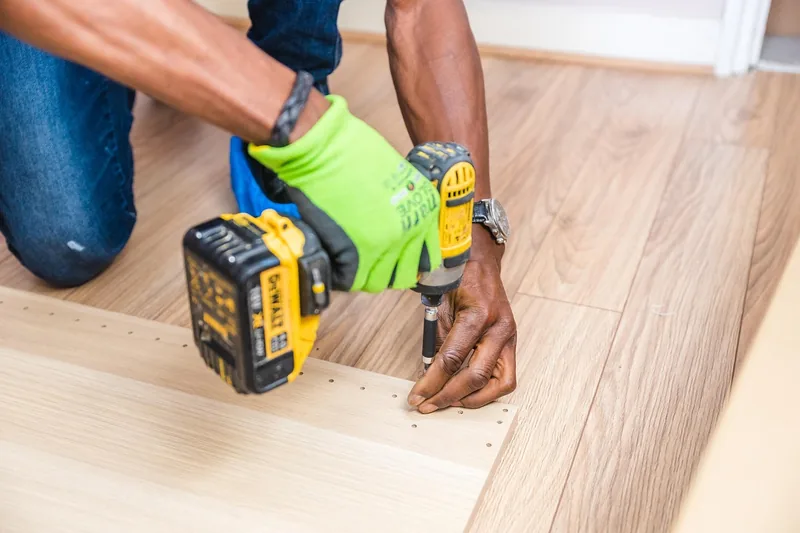
A pocket-hole joint hides the screw on the inside of a cabinet, which makes it a good answer to joining MDF invisibly. It also needs no clamps while the glue sets, because the screws pull the panels together. Match the screw length to the thickness of the panel:
| MDF thickness | Kreg screw length |
|---|---|
| 1/2 to 5/8 inch | 1 inch |
| 3/4 inch | 1-1/4 inches |
| 7/8 to 1 inch | 1-1/2 inches |
| 1-1/4 to 1-3/8 inches | 2 inches |
| 1-1/2 inches | 2-1/2 inches |
The lengths come from the Kreg jig guide, which also says the screw should penetrate the second piece by at least 1/2 inch, and recommends wood glue on the joint so it bonds along the whole surface instead of just at the screws. In a typical corner or T joint the screw tip lands in the face of the second panel, where MDF holds a screw best. If your layout forces it into an edge, treat that screw like any other edge screw: pilot it, glue it and do not rely on it for heavy loads. That last point is our judgment, not a Kreg figure.
Biscuits, Dowels, Splines, Rabbets and Dadoes
These joints share one idea: they move the strength out of the weak edge and into glue surface. They are the better answer for edge-to-edge panels and any corner that carries load.
- Biscuits: quick to cut, and they align the pieces. Fine Woodworking calls their structural contribution moderate and notes screws can be added.
- Dowels: round pins in matching holes add glue surface and alignment. They need accurate drilling, so use a jig. If you cut your own, see how to make wooden dowels.
- Splines: a thin strip of wood in matching grooves. Fine Woodworking says splines align corner joints perfectly and, when clamped with enough glue, need no screws or nails.
- Rabbets: a stepped edge that gives a ledge to register against and more glue area than a butt joint, cut with a dado set or a router.
- Tongue in dado: needs two setups but makes case assembly easier because the parts locate themselves, which helps when working alone.
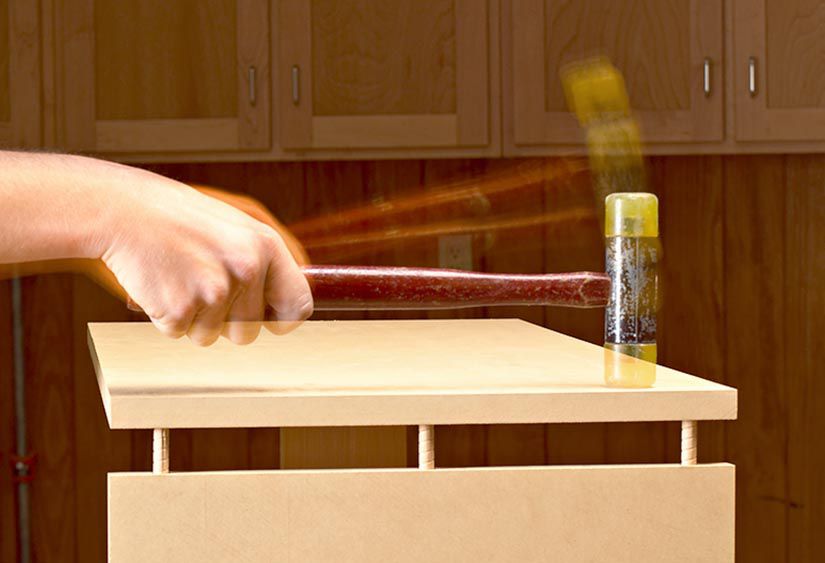
The same reasoning shapes how MDF cabinets are built in practice: the joint does the work, and the fastener keeps it tight while the glue cures.
How to Join an MDF Corner, Step by Step
- Dry fit: assemble the joint without glue and check the corner is square.
- Size the edges: brush a thinned coat of glue on any raw edge and let it soak in, using Titebond’s two-minute limit as a guide.
- Drill first: pilot and clearance holes, or the stepped Confirmat hole, before any glue goes on.
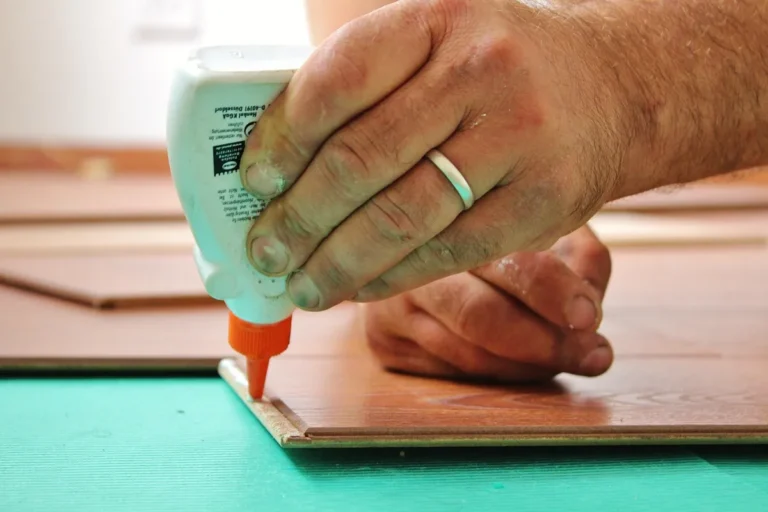
- Glue every mating surface: use PVA wood glue and spread it so both faces are wet.
- Clamp square: bring the corner tight and check it with a square before the glue grabs.
- Drive the screws: sink them until the heads sit flush, and stop before the panel bulges.
- Wipe and wait: clean squeeze-out and leave the joint clamped for the glue’s stated clamp time before stressing it.
MDF Dust and Formaldehyde: What to Know Before You Cut Joints
Every drilled, routed or sanded joint makes fine dust. Duckworth describes MDF dust as, at best, an irritating nuisance, and at worst a health hazard if exposure is extreme. OSHA says wood dust becomes a potential health problem when particles from sanding and cutting become airborne, and lists allergic respiratory symptoms and cancer among the possible effects, adding that the extent of the hazards has not been clearly established.
Practical steps follow from that: cut and drill with a dust extractor or vacuum attached where you can, work with good ventilation, and wear a respirator or dust mask rated for fine particles. The Composite Panel Association notes that California Air Resources Board and U.S. EPA rules limit formaldehyde emissions from MDF, and that some manufacturers offer no-added-formaldehyde and ultra-low-emitting panels. If you are sensitive to dust or fumes, ask about those panels. Our page Is MDF Bad for Your Health goes into more detail.
Common Mistakes When Joining MDF
- Driving a fine-thread wood screw straight into a bare edge with no pilot hole.
- Gluing a raw edge without sizing it, then clamping a starved joint.
- Over-tightening pocket or Confirmat screws until the surface bulges.
- Using a screw alone for a load-bearing edge joint instead of adding glue and a biscuit, dowel or spline.
- Skipping the dry fit, so squareness problems show up after the glue has set.
- Cutting and drilling without dust control.
If a joint has already failed, repairing MDF screw holes and fixing MDF wood cover the repair, and can MDF be repaired helps you decide whether to fix or replace the panel. For gluing MDF to solid wood, see can you glue MDF to wood, and for the full assembly sequence, best way to put MDF together. Material properties are in properties of MDF and MDF advantages and disadvantages.
Frequently Asked Questions
What is the best way to join two pieces of MDF?
Glue plus a mechanical joint. Face-to-face pieces need only glue and clamps. At corners, use a joint that does not rely on a screw gripping a raw edge, such as a rabbet, dado, spline, biscuit, dowel or Confirmat screw, and add glue. A plain screw into a bare edge is the weakest option.
How do you join MDF at 90 degrees?
Cut a rabbet or dado so the panels register against each other, then glue it and add screws or Confirmat screws from the outside face. If you only have a butt joint, size the edge, glue it, and drive screws through pre-drilled pilot and clearance holes.
Can you screw into the edge of MDF?
Yes, but only with a pilot hole, and the grip is weaker than in the face. Fine Woodworking’s guidance is that pilot holes are needed to stop edges splitting. For a joint that carries load, switch to a Confirmat screw or add glue and a dowel or biscuit.
How do you join MDF so the fasteners do not show?
Hide the fastener inside the joint or on a hidden face. Pocket holes go on the inside of a cabinet, biscuits, dowels and splines sit inside the glue line, and a Confirmat screw can go on an interior face. Fill and prime any exposed edge before painting.
Are pocket holes good for MDF?
They work if you use coarse-thread screws, add glue and do not over-tighten. Kreg says to use coarse-thread screws for MDF and warns that over-tightening can make MDF bulge or break. They suit hidden cabinet joints rather than heavy-load edge joints.
Conclusion
Choose the joint by the surfaces that meet. Glue and clamps are enough for faces. For corners and edges, move the strength into the glue line with a rabbet, dado, spline, biscuit or dowel, or use a Confirmat or properly piloted screw, and always add glue. Seal raw edges, drill pilot holes, stop tightening when the head is flush, and control the dust.
Sponsored / affiliate links. As an Amazon Associate I earn from qualifying purchases. I may earn additional commission from eligible campaigns.