Wood Stain Colors on Pine: Why They Never Match the Can
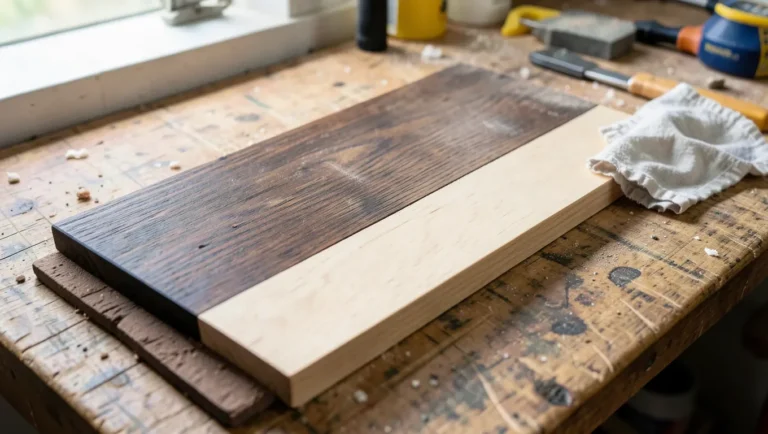
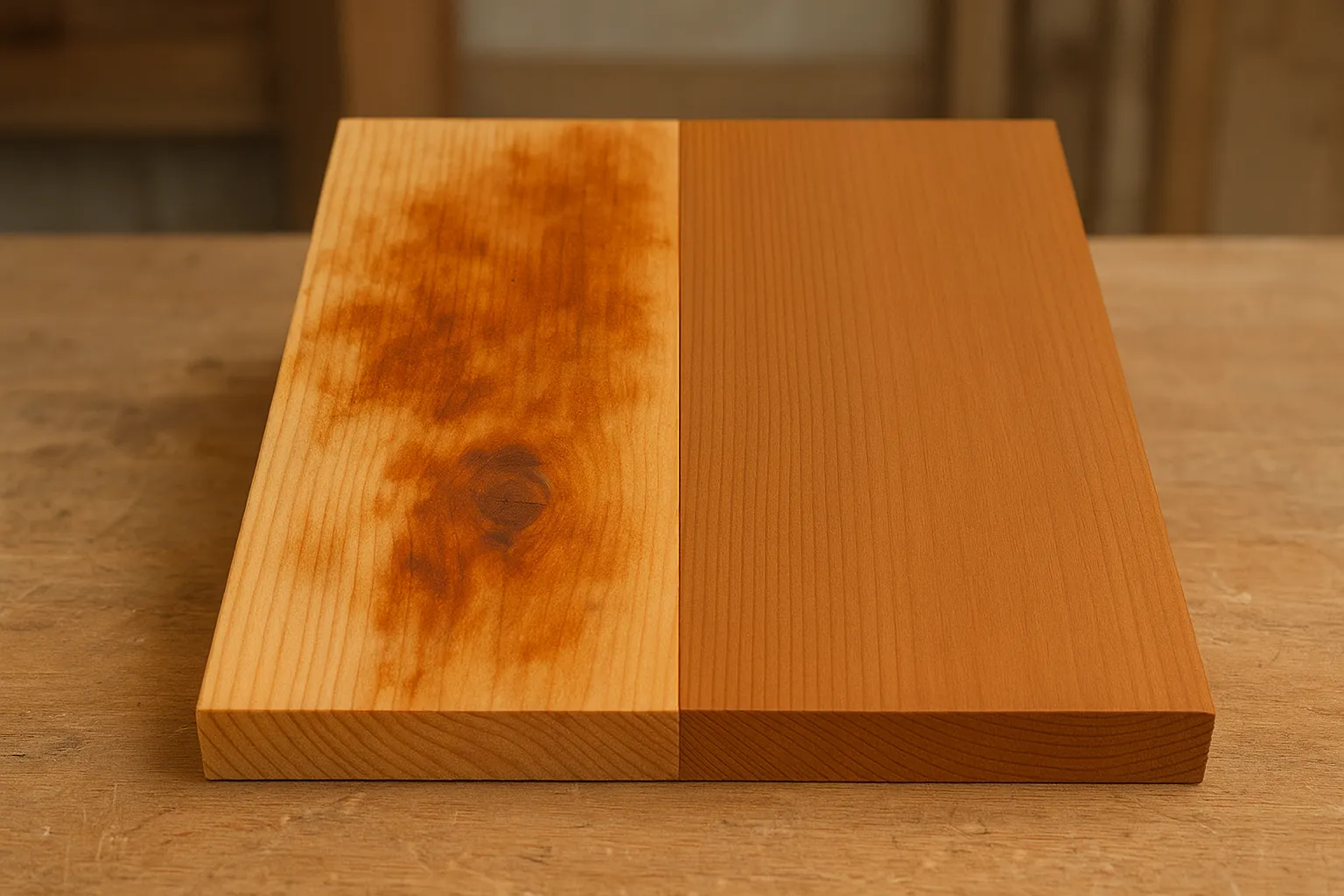
Wood stain colors on pine almost never match the sample photo on the can, because most of those photos are shot on oak or maple, not pine. Pine’s soft, uneven grain pulls stain into blotchy dark patches and pushes nearly every color several shades warmer — more orange or yellow — than the same product looks on a harder wood. A pre-stain wood conditioner evens out that absorption before color goes on. Below is how seven popular stain colors actually render on raw and conditioned pine, and the wood science behind why.
Quick Answer
Stain colors look warmer, more orange, and less even on pine than on oak or maple because pine’s soft earlywood absorbs stain far faster than its dense latewood, and because pine’s own yellow-tan base color shows through translucent stain. A pre-stain wood conditioner, applied within 2 hours of staining, corrects both problems at once.
Why Does Wood Stain Look Different on Pine Than the Can Shows?
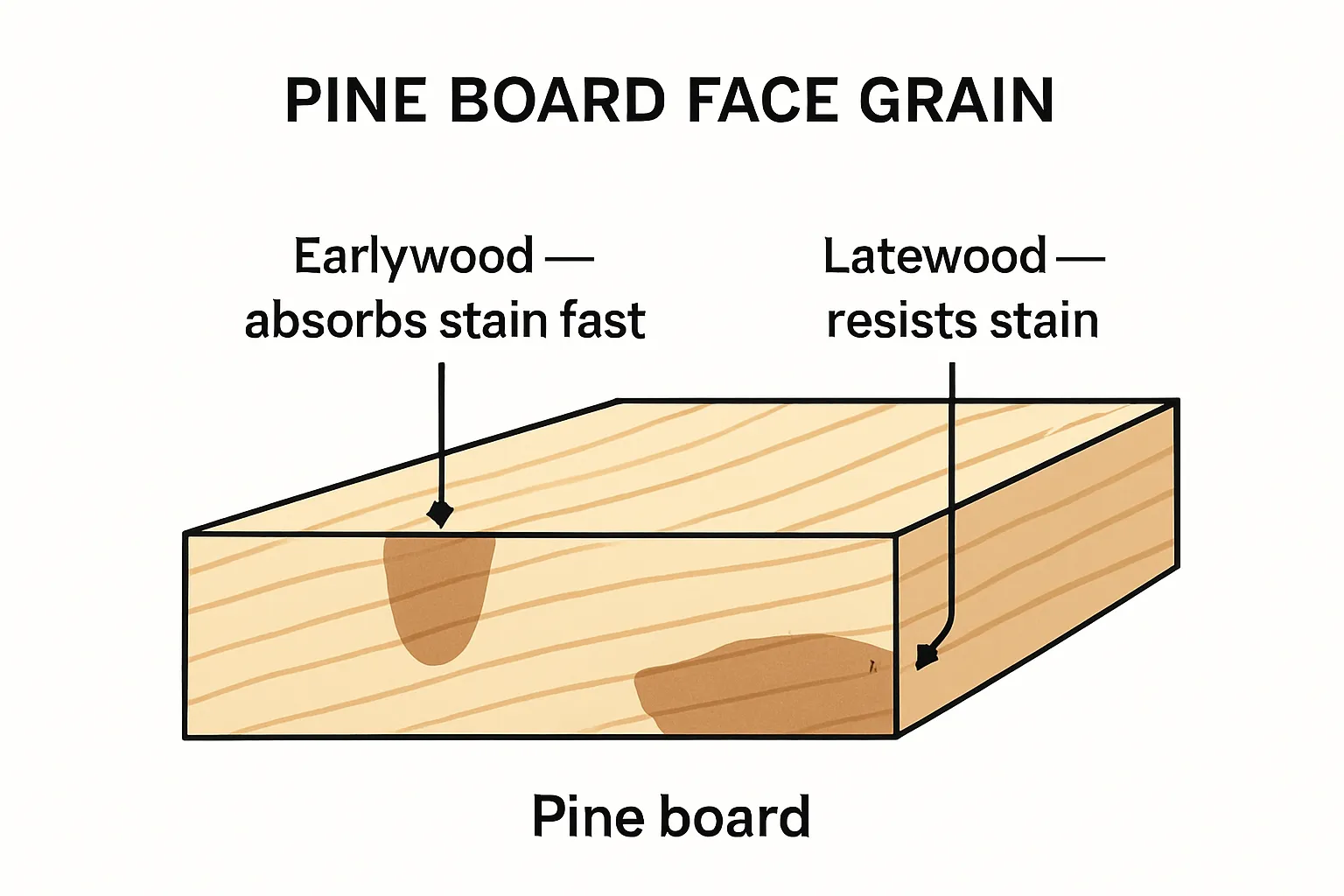
Wood stain looks different on pine than the sample photo because that photo is almost always shot on a hardwood like oak or maple, and pine’s grain structure absorbs stain in a completely different pattern. Pine alternates between soft, porous earlywood and dense, tight latewood every few millimeters, so a single board can pull in stain at two different rates side by side.
A mechanical study of Scots pine published in the journal BioResources measured latewood bending strength at roughly 94 MPa against 37 MPa for earlywood in the same board — about 2.5 times higher. That density gap is exactly why liquid stain moves through the two zones so unevenly: the same structural difference that makes latewood stronger also makes it far more resistant to soaking up color. Our breakdown of why wood stain turns yellow covers this mechanism in more depth, including how it differs from tannin bleed-through on oak.
Knots complicate the picture further. The resin inside a pine knot partially seals the wood cells, so stain penetrates a knot far less than it penetrates the clear wood around it — a wood conditioner reduces blotching in the field around a knot but rarely fixes the knot itself.
And if the whole board already went blotchy or darker than you wanted, a chemical stripper can take pine back to bare wood for a restart — see our guide to wood stain removers for which type works on pigment stains.
Why Do Stain Colors Turn More Orange or Yellow on Pine Specifically?
Stain colors turn more orange or yellow on pine because most wood stains are translucent, and pine’s own base color is a warm yellow-tan that shows through the pigment instead of being fully covered by it. The same translucent brown stain that reads neutral on pale, low-tannin maple picks up pine’s underlying warmth and shifts orange.
Oil-based stains make this more visible than water-based stains, because the linseed or tung oil carrier itself ambers slightly as it cures, stacking a second warm layer on top of pine’s natural tone. A water-based stain in the same shade sits closer to the can’s true color on pine, since it carries no oil undertone of its own — though it also raises the wood grain more and needs a light sanding between coats.
How Do Popular Stain Colors Actually Look on Pine?
Minwax tested six of its own stain colors across five wood species, including pine, and published the side-by-side results on its own blog — one of the few manufacturer tests that documents the exact shift described above. The table below combines that data with the color behavior most consistently reported by pine-specific finishing tests and long-running woodworking forum threads.
| Stain Color | How It Looks on Oak or Maple (the can photo) | How It Looks on Raw, Unconditioned Pine | How It Looks on Conditioned Pine |
|---|---|---|---|
| Golden Oak | Warm honey-gold, clean and even | Muddy, overly yellow — pine’s own tone stacks on top of an already-yellow stain | Still warm but more even; the yellow cast doesn’t disappear |
| Dark Walnut | Deep reddish-brown | Shifts toward a flat, pinky-gray instead of true reddish-brown | Closer to the can’s brown, though still cooler than on oak |
| Provincial | Balanced medium brown with grayish undertone | Pulls orange in the soft earlywood, especially around knots | Noticeably more even brown with far less orange breakthrough |
| Special Walnut | Warm medium brown, no red | One of the more forgiving colors on pine — stays brown rather than shifting orange | Even color with good grain definition |
| Early American | Reddish medium-brown | Red tone holds up better than most colors on pine, but earlywood patches still run darker | Even reddish-brown with minimal blotching |
| Weathered Oak / Classic Gray | Cool, driftwood gray | Turns muddy or slightly green-gray as pine’s yellow undertone fights the cool pigment | Grayer and cleaner, but rarely as cool as it looks on oak |
| Pickled Oak / Natural | Very light, barely-there tint | Performs best of all the tested shades on pine — light stains let pine’s own honey tone read as the finish | Slightly more even, though the difference is smaller on light colors |
The pattern across every row is the same: light stains and stains with warm undertones already close to pine’s own color hold up best, while dark, cool, or gray-toned stains fight pine’s natural yellow and shift the most between the can and the actual board.
Does Pine Need Wood Conditioner Before Staining?
Yes, pine needs a pre-stain wood conditioner before an oil-based or gel stain, because the conditioner partially seals the soft earlywood so it can no longer absorb stain many times faster than the surrounding latewood. Minwax’s own product instructions call for applying stain within 2 hours of conditioning — wait longer and the wood starts closing back up, which undoes most of the benefit.
For the full picture on why pine blotches in the first place and how sanding grit affects it, see can you stain pine.
Woodworking educator Marc Spagnuolo tested a pre-color conditioner against dewaxed shellac on pine with a deep gel stain and found the conditioner let color penetrate normally while still controlling blotching, where shellac blocked the blotching but also blocked most of the stain absorption along with it. That’s the tradeoff conditioner is built to avoid: even color without losing depth. Our full breakdown of when conditioner is and isn’t necessary covers water-based stains and other species in more detail, and this homemade conditioner recipe is a lower-cost alternative to a can of Minwax’s.
How Do You Get the Stain Color You Actually Want on Pine?
- Test on a real offcut from the same board, not a random scrap. Pine’s color and grain density vary board to board, so a test on a different piece of pine can still mislead you.
- Sand to 220 grit and stop there. Sanding pine finer than 220 burnishes the surface and closes the pores that stain needs to penetrate, leaving the color noticeably lighter and patchier.
- Seal resin-heavy knots separately first with a dewaxed shellac sanding sealer. Conditioner alone doesn’t stop pitch from blocking stain in and around a knot.
- Apply wood conditioner, then wait at least 15 minutes but no more than 2 hours before staining, per the can’s own instructions.
- Pick a stain one shade cooler or lighter than the look you actually want. Pine pushes almost every color warmer, so matching the can’s exact swatch usually overshoots.
Frequently Asked Questions
Why does wood stain look orange on pine?
Wood stain looks orange on pine because the translucent pigment lets pine’s own warm yellow-tan color show through, and because pine’s soft earlywood absorbs extra stain in patches, deepening that warm tone unevenly rather than as a flat color.
Can gel stain fix blotchy pine better than liquid stain?
Yes. Gel stain sits on top of the wood instead of soaking in, so it controls blotching on pine better than a liquid oil-based stain, though it still benefits from a wood conditioner underneath for the most even result around knots.
Can you make pine look like oak with stain?
Stain can get pine closer to oak’s color, but it can’t replicate oak’s open, straight grain pattern, so the result reads as “oak-colored pine” up close rather than true oak. Our guide to staining pine to look like oak covers the closest technique.
What’s the most forgiving stain color for pine?
Light stains and warm medium-brown colors like Special Walnut are the most forgiving on pine, because they’re already close to pine’s natural yellow-tan tone. Dark, cool, or gray-toned colors show the widest gap between the can and the finished board.
Is pine’s stain problem the same as it turning yellow over time?
No. The color shift covered here happens the moment stain is applied, from grain density and undertone. A finish yellowing months or years later is a separate issue caused by tannins or an ambering topcoat — our guide to wood stain turning yellow covers that cause and fix.
Already dealing with blotches instead of just an off color? our guide to fixing blotchy wood stain walks through repairing a board that’s already been stained, and our complete step-by-step staining guide covers the full process from bare wood to topcoat.
Sponsored / affiliate links. As an Amazon Associate I earn from qualifying purchases. I may earn additional commission from eligible campaigns.