How Much Does a Quart of Wood Stain Cover?
A quart of wood stain covers 100 to 275 square feet with one coat, depending on the brand and formula — Minwax Wood Finish covers about 150 square feet, Varathane Premium Wood Stain covers 115 to 200, and General Finishes water-based stain covers 100 to 150. That range is wide enough that “a quart should be enough” is not a safe assumption once a project passes about 100 square feet. This guide gives the real per-brand numbers from manufacturer data sheets, maps them to common project sizes, and shows exactly when a quart runs short. If you’re staining an exterior deck rather than furniture, use our deck stain calculator instead, since outdoor coverage rates differ from the interior figures below.
Quick Answer
A quart of wood stain covers 100 to 275 square feet for one coat, brand-dependent: Minwax Wood Finish rates 150 sq ft, Varathane Premium Wood Stain rates 115–200 sq ft, and General Finishes water-based stain rates 100–150 sq ft. A quart comfortably handles most furniture and a dining table; a full set of kitchen cabinets or a floor needs a gallon.
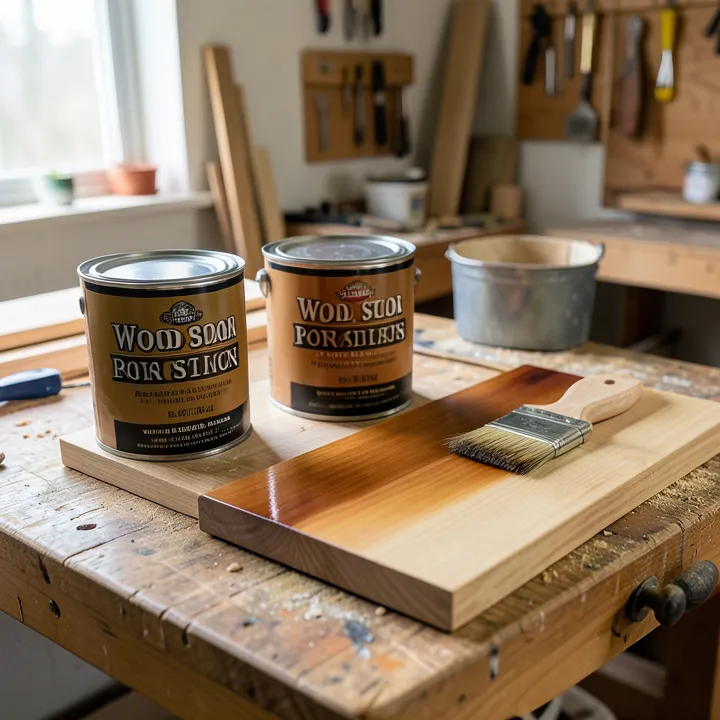
How Many Square Feet Does a Quart of Wood Stain Cover?
Best Quart-Size Value Pick
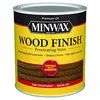
Minwax Wood Finish, Mocha (1 Quart) – $12.97
The thin, oil-based penetrating formula this guide’s coverage chart rates at about 150 sq ft per quart — the middle of the range and the lowest-cost option per square foot covered.
- Best for: Furniture, cabinets, doors, and trim on bare interior wood
- Why we picked it: Reliable 150 sq ft/quart rating and the lowest price of the four brands in this guide’s chart
- Main drawback: Interior use only, and needs a wood conditioner on blotch-prone softwoods
Compare more quart-size stain options from this guide’s chart
 Best for Porous Wood Varathane Premium Wood Stain, American Walnut (1 Qt) – $13.00
|
 Low-Odor Option General Finishes Water-Based Wood Stain, Walnut (1 Qt) – $43.21
|
 Highest Coverage General Finishes Oil-Base Gel Stain, Java (1 Qt) – $56.89
|
As an Amazon Associate we earn from qualifying purchases. Prices current as of 2026 and subject to change.
A quart of wood stain covers 100 to 275 square feet with a single coat, and the exact number depends entirely on the specific product, not stain in general. That is a wider spread than most articles admit, and the reason is simple: “wood stain” is not one product. Thin, oil-based penetrating stains like Minwax Wood Finish soak into the grain and go further per quart. Thicker gel stains and heavier water-based formulas sit closer to the surface and cover less per can.
Porosity and applicator loss widen the range further. Rust-Oleum’s technical data sheet for Varathane Premium Wood Stain lists “practical coverage” of 115 to 200 square feet per quart specifically because it already builds in a 15% material loss for wipe-off and application waste, and states coverage “varies with type and porosity of wood.” A single vague number on a paint store shelf tag is a rounded average, not a guarantee for your specific board.
Wood Stain Quart Coverage Chart by Brand
Coverage per quart ranges from 100 to 275 square feet across the four most common wood stain formulas sold in quart size. These figures come directly from each manufacturer’s technical or product data sheet, not averaged estimates, so use the row that matches the product you actually own.
| Stain (Quart Size) | Formula Type | Coverage per Quart | Applicator |
|---|---|---|---|
| Minwax Wood Finish | Oil-based, penetrating (thin liquid) | ~150 sq ft | Brush or rag |
| Varathane Premium Wood Stain | Oil-based, urethane-modified alkyd | 115–200 sq ft | Brush, rag, or pad |
| General Finishes Water-Based Wood Stain | Water-based, penetrating | 100–150 sq ft | Brush, roller, spray, or pad |
| General Finishes Oil-Based Gel Stain | Gel (sits on surface, doesn’t penetrate) | 150–200 sq ft | Cloth or applicator pad |
Coverage figures from the Minwax Wood Finish product data sheet, Rust-Oleum’s Varathane Premium Wood Stain technical data sheet (VAR-03), and General Finishes product specifications, all rated for one coat on smooth, prepared wood.
Notice the pattern: thinner, oil-based penetrating stains (Minwax) and mid-viscosity oil formulas (Varathane) land in the middle of the range, while the thick gel stain and the water-based formula sit at opposite ends for different reasons — gel stain covers more because a thin film still hides the wood since it doesn’t need to soak in, while water-based stain covers less because it carries less pigment-loaded solids per coat. If you’re still deciding which formula to buy in the first place rather than just how much of it, our gel stain vs. oil stain comparison covers that decision in full, and our full wood finishing guide walks through every finish type before you narrow down to stain specifically.
Once you’ve settled on a formula, color is the next decision — see the Minwax color chart or the Varathane color chart for the full shade lineup in each of these two brands before you buy.
Is a Quart of Wood Stain Enough for Your Project?
A single quart is enough for nearly any furniture project and most single doors, but it runs short on a full set of kitchen cabinets or a room-sized floor. Match your project’s approximate surface area — every face and edge that gets stained, not just the top — against the chart above.
| Project | Approx. Surface Area | One Quart, 1 Coat? | One Quart, 2 Coats? |
|---|---|---|---|
| Small box, frame, or birdhouse | 5–10 sq ft | Yes, easily — enough for 10+ small items | Yes |
| Dining chair (all surfaces) | 8–12 sq ft | Yes, enough for a full set of 6–8 chairs | Yes, for most brands |
| Nightstand or small side table | 15–20 sq ft | Yes, with plenty left over | Yes |
| Coffee table | 20–30 sq ft | Yes | Yes, on higher-coverage brands |
| Interior door, both faces + edges | 40–45 sq ft | Yes | Only on Varathane Premium or gel stain |
| 6–8 seat dining table (top, apron, legs) | 35–45 sq ft | Yes | Only on higher-coverage brands |
| Dresser or bookshelf (all faces) | 40–60 sq ft | Yes, on most brands | Only on gel or Varathane Premium |
| Kitchen cabinet doors + drawer fronts (10×10 kitchen) | 150–200 sq ft | Only on high-coverage brands, tight | No — buy a gallon |
| Hardwood floor, one room (~144 sq ft) | ~144 sq ft | Only on Varathane Premium or gel stain | No — buy a gallon |
A standard 6 to 8-seat dining table totals roughly 35 to 45 square feet once the tabletop, apron, and all four legs are added together — well inside a single quart’s range even at the low end of 100 square feet. The point where a quart stops being enough is consistent across every brand in the chart: full cabinet sets and floors, not furniture.
Does Wood Porosity Change How Far a Quart Goes?
Yes — open-grain, porous woods absorb more stain per square foot than tight-grain woods, pushing actual coverage toward the low end of a product’s rated range. Oak, ash, and mahogany have large, open pores that pull stain deep into the grain. Maple, birch, and cherry have tight, closed grain that absorbs far less per coat.
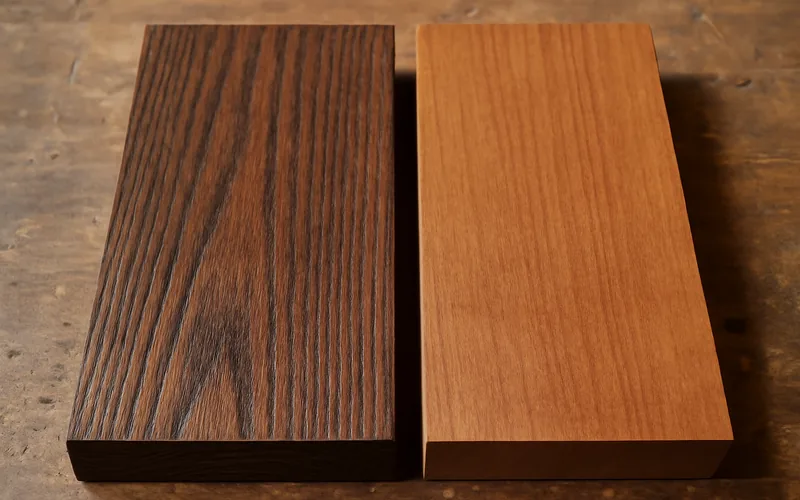
- High-porosity woods (use more stain, lower coverage): oak, ash, mahogany, walnut — large open pores pull stain deep into the grain.
- Medium-porosity woods: pine, fir, poplar — softwoods that absorb unevenly, which is also why they blotch without a pre-stain conditioner.
- Low-porosity woods (use less stain, higher coverage): maple, birch, cherry — tight, closed grain that mostly colors the surface rather than soaking in deep.
- End grain: absorbs 3–4 times more stain than face grain on any species, since it exposes the open ends of the wood’s cellular structure directly to the liquid.
Weathered, rough-sawn, or previously-sanded-through wood also drinks more stain than smooth, prepared wood, which is a separate factor from species. If your project is old, rough, or exterior-grade lumber rather than smooth furniture-grade stock, plan for the low end of whatever coverage range applies to your stain.
How Many Coats Does a Quart of Stain Cover?
A second coat uses less stain than the first, but a quart’s rated coverage is a one-coat number — two coats roughly cuts the usable area in half, not to zero. The first coat fills open pores; the second coat sits on wood that is already partially sealed by the first, so it goes on thinner and covers a bit more than a strict 50/50 split, but budgeting for half the one-coat area is the safe assumption.
Minwax’s own application instructions allow a second coat after 4 to 6 hours specifically to deepen color, and note that darker results come from letting stain penetrate longer rather than automatically defaulting to two full coats. Most interior furniture projects only need one coat; a second coat is a deliberate choice for a darker, richer color, not a default step.
Should You Buy a Quart or a Gallon of Wood Stain?
Buy a quart for any single furniture piece under roughly 150 square feet of surface; buy a gallon once a project’s surface area gets past that, or when the same color will be needed again later. A gallon holds four quarts of product but typically costs less than two quarts bought separately, so the crossover point is both a coverage question and a cost question.
- Buy a quart if: the project is a single furniture piece, a door, or a small set of matching items totaling under about 150 square feet, and you don’t expect to need the same color again soon.
- Buy a gallon if: the project is cabinet doors, flooring, a large built-in, or multiple furniture pieces that together exceed 150 square feet — or if you want a full can left over for future touch-ups in the same batch and color lot.
- Split the difference: if a project sits right at the edge (roughly 120–180 sq ft) and needs two coats, a gallon avoids the real risk of running out mid-project and having to color-match a second can.
Running out mid-coat is the actual cost of guessing wrong, not just the price difference — a second can from a different production batch can shift shade slightly even with the same label color, which shows as a visible seam on a large, uninterrupted surface like a tabletop or cabinet run.
How Do You Calculate How Much Wood Stain You Need?
Divide your project’s total surface area in square feet by your stain’s rated coverage per quart, then round up. The formula is the same one paint and stain manufacturers print on their own coverage calculators, just applied per quart instead of per gallon.
- Measure every surface that gets stained: length x width for the top, then repeat for the underside, edges, legs, and any visible back panel — not just the top face. A tabletop alone undercounts a real project by half or more.
- Add the areas together: sum every surface into one total square footage figure for the whole piece.
- Divide by your stain’s coverage rate: use the low end of your product’s range from the chart above if the wood is porous, rough, or you’re staining end grain.
- Multiply by 1.5, not 2, for a second coat: a second coat uses roughly half the volume of the first, so total need is about 1.5x a single coat’s volume, not double.
- Round up to the next full quart or gallon: paint and stain are sold in fixed sizes, and running short mid-project risks a batch color mismatch.
A folded cotton rag applied liberally and then wiped off, as Varathane and Minwax both instruct in their application directions, typically leaves 10 to 15% of a quart unusable as residue in the can and on the rag by the time the job looks done — the “practical coverage” figures in the chart above already build that loss in, so don’t subtract it a second time. For lumber and board-foot math on the same project, our full directory of woodworking calculators covers everything from board feet to screw counts in one place.
What Happens to Leftover Stain in an Opened Quart?
An opened quart of oil-based stain typically stays usable for 1 to 3 years if resealed tightly; opened water-based stain lasts closer to 1 year. Both figures assume the lid goes back on tight immediately after use and the can is stored somewhere cool and dry, not a hot garage or shed.
Buying a quart instead of a gallon “just in case” has a real cost beyond the sticker price: a half-used gallon sitting for two or three years is far more likely to separate, thicken, or skin over before you need it again than a quart used up close to project size. Press plastic wrap against the surface before sealing the lid to cut air contact, and always stir thoroughly before reuse — separated pigment sitting at the bottom of a can that hasn’t been touched in months is the most common reason “old stain” looks wrong on the wood.
Frequently Asked Questions
Is a quart of stain enough for a dining table?
Yes. A 6 to 8-seat dining table totals roughly 35 to 45 square feet across the top, apron, and legs, which fits comfortably inside a single quart’s 100 to 275 square foot range for any of the four brands in this guide’s chart, even for two coats on higher-coverage formulas.
Is a quart of stain enough for kitchen cabinets?
Rarely for a full kitchen. An average 10-by-10 kitchen’s cabinet doors and drawer fronts total 150 to 200 square feet, which is tight or insufficient even at one coat on most quart-size formulas, and clearly insufficient for two coats. Buy a gallon for a full cabinet refinish.
Should I buy a quart or a gallon of wood stain?
Buy a quart for a single furniture piece, door, or small matching set under about 150 square feet total. Buy a gallon once a project exceeds that, needs two coats near the upper edge of a quart’s range, or when the same color batch will be needed again for future pieces.
Does gel stain cover the same area as regular liquid stain?
No, gel stain covers slightly more — typically 150 to 200 square feet per quart versus about 150 for a thin oil-based stain like Minwax Wood Finish, because gel stain forms a thin film on the surface instead of soaking into the wood’s pores.
Does an opened can of wood stain go bad?
Yes, eventually. Opened oil-based stain typically lasts 1 to 3 years if resealed tightly and stored in a cool, dry space; opened water-based stain lasts closer to 1 year. Separation, a stringy texture, or a sour, rancid smell on oil-based stain are the signs it should be discarded.
Does wood porosity really change how much stain I need?
Yes. Open-grain woods like oak, ash, and mahogany absorb noticeably more stain per square foot than tight-grain woods like maple, birch, and cherry, which pushes real-world coverage toward the low end of whatever range your specific stain is rated for.
Match your project’s real surface area — not just the top face — against the coverage chart for the specific stain you’re buying, budget for the low end of the range on porous or rough wood, and a single quart will handle nearly anything short of a full cabinet set or a floor.
Sponsored / affiliate links. As an Amazon Associate I earn from qualifying purchases. I may earn additional commission from eligible campaigns.