How to Remove Super Glue From Wood Without Acetone (Safely)
Acetone dissolves cyanoacrylate (super glue) fast, but on finished wood it trades one problem for another: acetone melts through lacquer, shellac, and many polyurethane finishes just as effectively as it melts the glue, often leaving a cloudy or gummy patch that’s harder to fix than the original spot. Straight vinegar has the same problem — it’s acidic enough to dull a stained or waxed finish.
The methods below — oil, warm soapy water, a salt paste, careful sanding — work slower than acetone, but none of them touch the finish underneath the glue. (Need to get super glue off skin or glass instead? This guide covers all three surfaces, including the household items that work on each.)
Understanding Super Glue And Wood Interaction
Wood-Safe Adhesive Remover
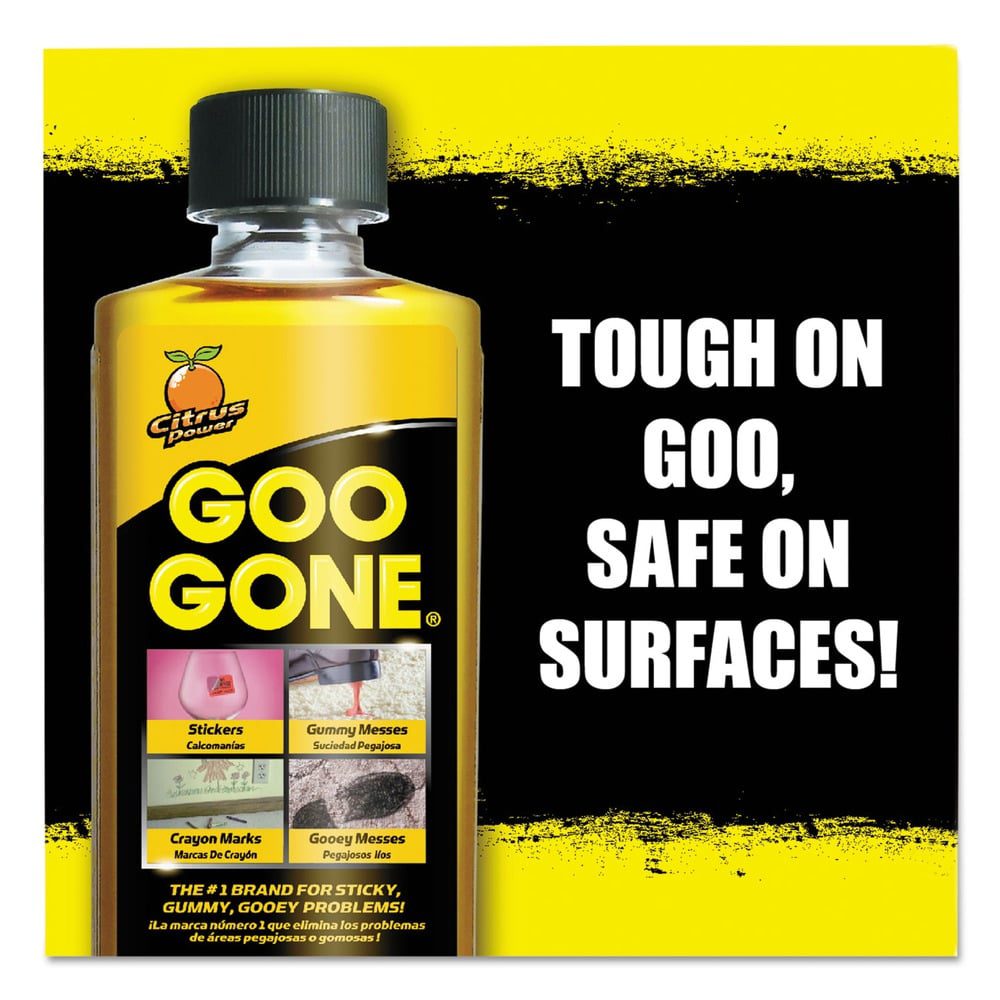 |
Goo Gone Original Adhesive Remover – $6 Dissolves dried super glue on finished or unfinished wood without acetone.
|
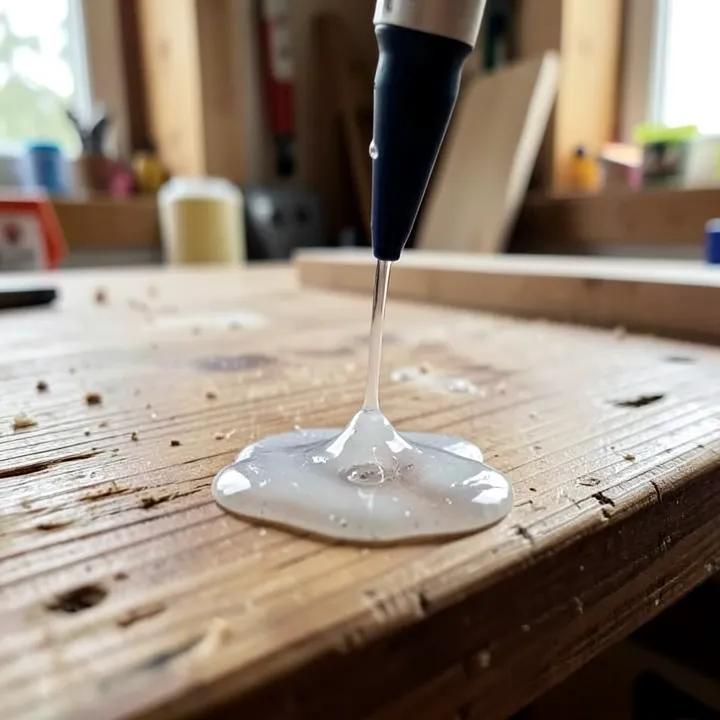
Super glue bonds quickly and creates a hard layer on wood, which is what makes it tough to remove. Work gently to avoid scratches — a metal tool can gouge the surface, so stick to soft cloths and plastic scrapers. Warm, soapy water softens fresh glue and is always the safest first attempt.
Skip vinegar and lemon juice on finished wood, despite what many “natural remedy” lists suggest — both are acidic enough to dull a stained, waxed, or oiled finish, the same problem as straight acetone. Oil (olive, vegetable, or mineral) is the better natural option: it softens the glue’s bond without attacking the finish underneath.
Preparation Before Removal
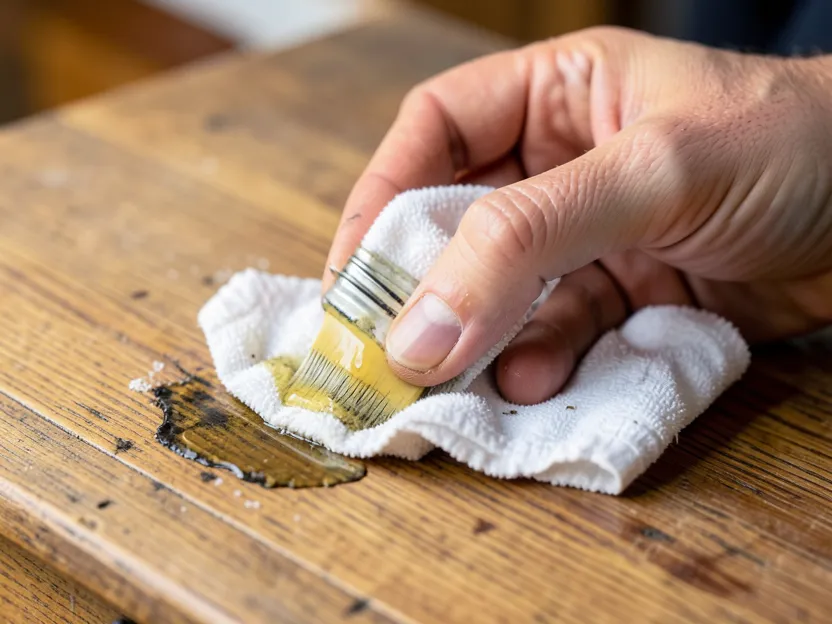
Before touching any glue spot, gather a soft microfiber cloth, a bowl of warm water with a few drops of mild dish soap, a plastic scraper or an old expired gift card (never a metal putty knife, which gouges a finish faster than the glue itself would), and either cooking oil or table salt depending on which method the spot calls for.
Work in a ventilated room, especially if a stubborn spot pushes you toward a stronger solvent, and keep kids and pets clear of the area until everything is wiped down and dry. Whichever method you end up using, test it first on a hidden spot — the underside of a shelf or the back edge of a tabletop — and give it a couple of minutes before judging it safe, since some finishes react slower than the glue itself softens.
Natural Methods For Glue Removal
Warm water helps soften the glue. Mix dish soap with warm water, soak a cloth in the solution, and press it onto the glue spot for a few minutes before rubbing gently. This works best on fresh glue that hasn’t fully cured.
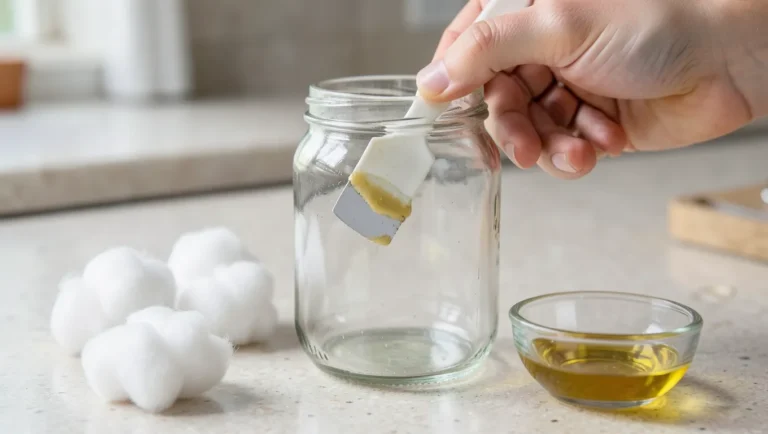
For dried glue, rub olive, vegetable, or mineral oil into the spot and let it sit for at least 10–15 minutes — the oil penetrates the cyanoacrylate bond without touching the finish. Wipe away with a soft cloth, repeating if needed.
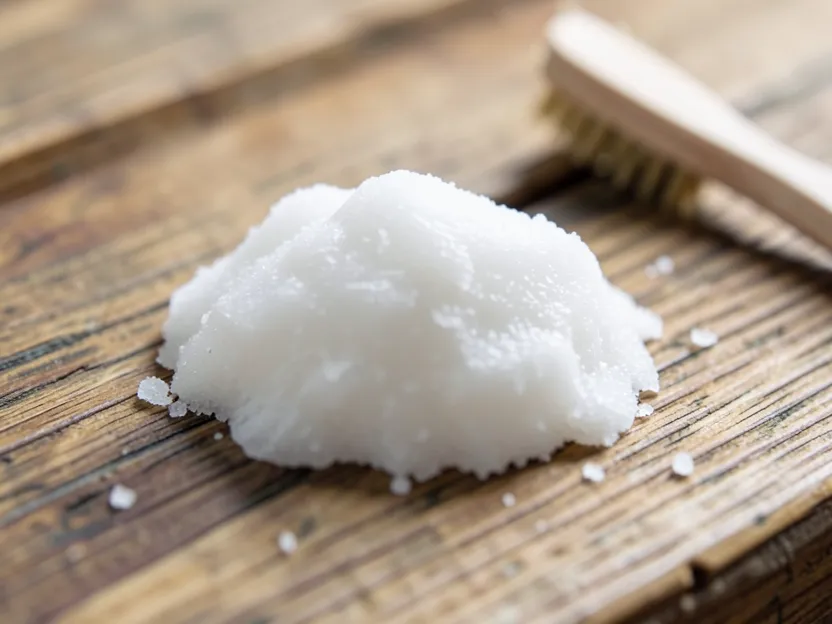
A salt paste (salt mixed with a little warm water) works well on stubborn spots: apply the paste, let it sit for a few minutes, then scrub gently with a soft toothbrush. Avoid vinegar or lemon juice here — both are acidic enough to dull a finish, the same issue as acetone.
Mechanical Methods For Glue Removal
A plastic scraper or the edge of an old credit card is the safest mechanical option because it can’t dig into the finish the way a metal blade will. Hold it at a low, almost-flat angle and work under the edge of the glue drip rather than pushing straight down into it — cyanoacrylate cures brittle, so a shallow, glancing pass tends to pop a dried bead loose instead of grinding it into the grain.
For glue bonded into the wood’s pores rather than sitting as a raised drip, 400- to 600-grit sandpaper used in light, even strokes can level it flush with the surrounding finish. Stop the moment the glue disappears — sanding through the finish itself just trades one repair for another — and wipe the area with a dry cloth between passes so you can actually see how much glue remains instead of guessing through a layer of dust.
Avoiding Damage To Wood
The biggest risk in any of these methods isn’t the glue removal itself, it’s a solvent or abrasive quietly stripping the finish underneath while your attention is on the glue. That’s why the hidden-spot test matters: a finish that looks fine after 30 seconds of oil contact can still show a faint ring an hour later, once the oil has had time to work into a hairline crack in an older coat of varnish. If a test spot shows any dulling, clouding, or softening, switch to a gentler method rather than pushing forward — oil is gentler than a salt paste, which is gentler than sanding, so there’s almost always a step down available.
Maintaining Wood Finish
Once the glue is gone, the surrounding finish often looks slightly duller than the rest of the piece, simply from the mechanical action of scraping or light sanding. A small amount of furniture polish or paste wax buffed in with a soft cloth usually blends the sheen back together; for a stained or oiled finish rather than a hard lacquer, a matching furniture oil restores the look better than a generic polish. Let any product fully absorb before using the surface normally, and avoid setting anything wet or hot on the spot for a day or two while the finish re-settles.
Post-removal Care
Cleaning Residual Glue
After the bulk of the glue is off, a thin, nearly invisible film can remain, especially after a method like oil that softens the bond rather than lifting it outright. Wipe the spot with a cloth dampened in warm, soapy water, then dry it immediately — don’t let the wood sit wet, since standing moisture is its own finish hazard. If a fingertip still catches on a slightly tacky or rough patch, a second short round with the salt paste or a few more minutes of oil usually finishes the job; a similar warm-soap approach works on fabric if any glue transferred to clothing during the spill.
Polishing And Restoration
Once the surface is clean and fully dry, a light coat of furniture polish or paste wax restores whatever sheen the removal process took off. Apply it with a clean, soft cloth in the direction of the grain, let it sit the few minutes the label recommends, then buff it out with a second dry cloth. This step is optional if the spot already blends in, but it’s worth doing on visible furniture, since even a gentle removal method leaves a very slightly different texture than the surrounding, undisturbed finish.
Preventing Future Glue Accidents
A cheap drop cloth, an old towel, or even a sheet of wax paper laid down before opening a bottle of super glue takes ten seconds and prevents the entire cleanup process above. Applying glue with a toothpick or a small stir stick instead of squeezing straight from the bottle also cuts down on drips dramatically, since most accidental spills come from an over-squeezed bottle rather than the joint actually being glued.
Keep a damp, not wet, cloth within reach while you work so any drip gets caught in the first few seconds, before the cyanoacrylate has time to set. It typically skins over in 10-30 seconds and fully cures within a few minutes, so that early window is the only time a simple wipe will do the whole job on its own.
Frequently Asked Questions
How do you get dried super glue off wood without acetone?
Scrape gently with a plastic scraper first to remove any loose material, then rub in olive, vegetable, or mineral oil and let it sit for 10-15 minutes. Wipe away with a soft cloth, repeating as needed. Always test on a hidden area first, since even oil can slightly darken some finishes.
Does acetone dissolve hardened super glue?
Yes, acetone dissolves hardened super glue quickly – but on finished wood it also dissolves lacquer, shellac, and many polyurethane finishes, often leaving a cloudy or gummy patch. Save acetone for bare, unfinished wood you don’t mind stripping, and use oil or a salt paste on anything with a finish.
Can vinegar remove super glue from wood?
Vinegar can loosen super glue, but it’s acidic enough to dull a stained, waxed, or oiled wood finish – the same problem as acetone. Use it only on bare, unfinished wood, and use oil or a salt-and-water paste instead on anything with a finish.
Does rubbing alcohol loosen super glue on wood?
Rubbing alcohol can soften super glue somewhat, but it’s a weaker solvent for cyanoacrylate than oil-based methods and can still affect some finishes. Oil or a salt paste remain the safer first choice for finished wood.
Conclusion
Getting super glue off wood without acetone comes down to picking the method that matches how stubborn the spot is: warm soapy water and a plastic scraper for a fresh drip, oil or a salt paste for glue that’s already cured, and fine sandpaper only as a last resort for a spot the other methods won’t budge. Skip vinegar and lemon juice on any finished surface despite how often they show up on “natural remedy” lists — both are acidic enough to dull a stained or waxed finish, which defeats the whole point of avoiding acetone in the first place.
Test on a hidden spot first, work patiently rather than scrubbing hard, and finish with a light polish once the glue is gone so the repaired area blends back into the rest of the piece. Handled this way, even a bad glue spill doesn’t have to leave a lasting mark on the wood.
Sponsored / affiliate links. As an Amazon Associate I earn from qualifying purchases. I may earn additional commission from eligible campaigns.