How to Remove Wood Stains: The Right Fix by Stain Type
The right fix for a wood stain depends on whether it sits in the finish or has soaked into the wood itself. A cloudy white ring lifts in minutes with gentle heat or a mild abrasive because it’s just trapped moisture sitting in the topcoat. A dark stain, an old grease mark, or a chemical spill that’s been sitting for days has usually gone past the finish and into the wood fibers — no amount of rubbing pulls that back out, and it needs oxalic acid bleach or light sanding instead.
Most stain-removal guides treat every mark the same way and tell you to just “try vinegar” or “try mayonnaise.” That’s why so many of those fixes fail on the wrong kind of stain. Below is the actual mechanism behind water, oil, heat, and chemical stains on wood, so you can match the fix to the specific problem instead of guessing.
Diagnose the Stain Before You Treat It
Best Fix for Dark, Set-In Wood Stains
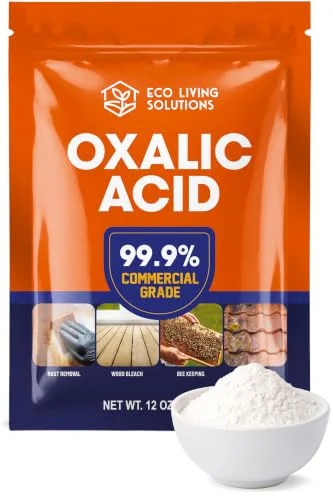 |
ECO Living Solutions Oxalic Acid Wood Stain Remover (12 oz) – $9.99 This 99.9% pure oxalic acid powder is the same active ingredient this guide recommends below for stains that have soaked past the finish and into the wood grain.
|
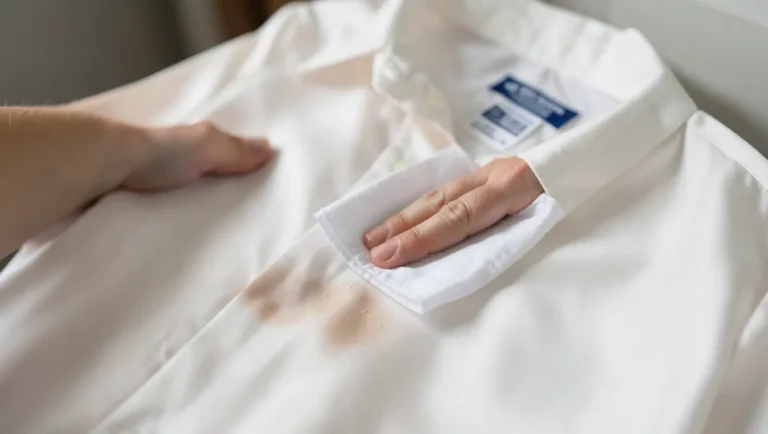
Press a fingernail lightly into the mark. If it’s smooth and the stain has a slightly hazy, almost frosted look, it’s sitting in the clear finish above the wood — that’s a surface stain, and it usually responds to heat or a mild abrasive in under an hour. If the mark is dark, has a texture you can feel, or shows up on bare/unfinished wood, it has soaked into the fibers themselves. That’s a penetrated stain, and it needs a chemical fix like oxalic acid or actual sanding, because nothing you rub on top of the finish reaches it.
Color is a decent clue but not a reliable one on its own: a fresh water ring is usually white and a set-in one is usually dark, but oil, heat, and chemical marks don’t follow that same rule, which is why the finger-and-texture test matters more than color when you’re deciding which method to try first.
White Water Rings and Cloudy Marks
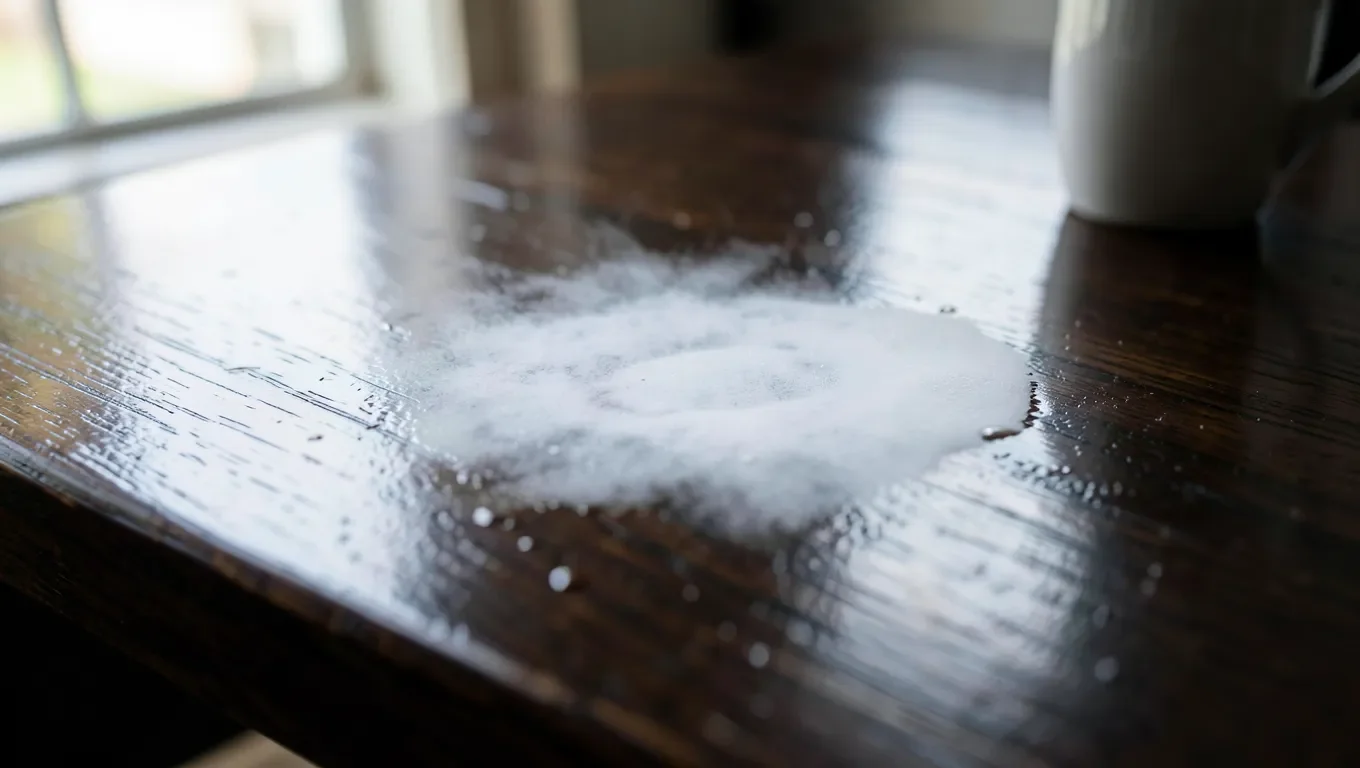
A white ring under a coffee mug or a sweating glass is moisture that got trapped in the finish before it could evaporate — it never touched the actual wood. Two things clear it fast: gentle heat, or a very mild abrasive worked in with a little oil.
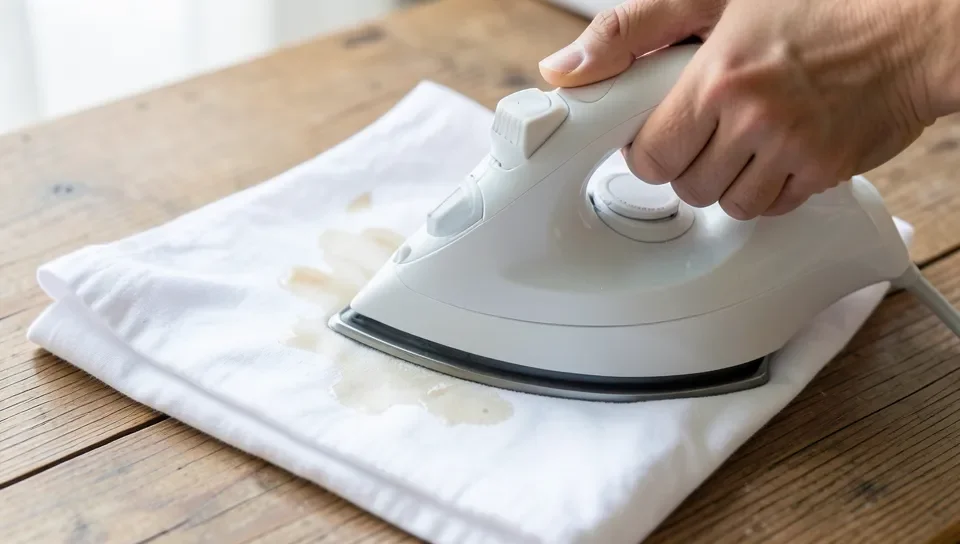
Lay a plain cotton cloth (no terry loops, which can catch on the finish) over the ring and run a warm — not hot — iron over it for a few seconds at a time, checking often. The heat evaporates the trapped moisture back out through the finish. A hair dryer on high heat held a few inches away works the same way, just slower. If heat alone doesn’t finish the job, rub a small dab of mayonnaise or petroleum jelly into the ring with a soft cloth and let it sit 20–30 minutes: the oil content re-saturates the clouded finish so it goes translucent again. Non-gel white toothpaste (the mild-abrasive kind, not a whitening gel) mixed with a little baking soda and buffed gently in a circular motion also works for a ring that’s a few weeks old.
For a longer side-by-side of every method that works on this specific mark, our full guide to removing water stains from wood ranks nine tested fixes from gentlest to strongest. If the mark is specifically a hazy white spot or blotch rather than a full ring, see our dedicated guide to white stains, marks, and spots for the exact cause-by-cause breakdown.
Dark, Set-In Water Stains
A dark or black water stain means moisture sat long enough to soak past the finish and react with tannins in the wood itself — usually from a plant pot, a leaking vase, or a spill that wasn’t caught for days. None of the surface fixes above will touch this, because the discoloration isn’t in the finish anymore. This is a job for oxalic acid wood bleach (see the product above) or, on bare/unfinished wood, fine-grit sanding down past the stained fibers.
If this is happening on a specific piece — a furniture surface, an unfinished tabletop, or you just want the fastest ring-specific method — our guides on water stains on wood furniture, water stains on unfinished wood, and getting water rings out of wood each walk through the surface-specific steps in more detail than fits here.
Oil and Grease Stains
Oil doesn’t respond to the heat trick the way water does — heat can actually drive an oil stain deeper into the finish instead of lifting it out. Oil and grease marks (cooking oil, hand cream, a leaky bottle of finish or lubricant) need something that can absorb or emulsify the oil instead.
For a fresh spill, mix warm water with a few drops of dish soap in roughly a 2:1 water-to-soap ratio, dip a soft cloth in the suds, and work it gently in circles with the wood grain, not against it. Dish soap is formulated to break down grease specifically, which is why it outperforms an all-purpose cleaner here. For an older, set-in grease mark, make a poultice instead: mix cornstarch or baking soda with just enough water to form a thick paste, pack it directly over the stain, and let it sit overnight under a piece of plastic wrap so it doesn’t dry out too fast. The powder draws the oil up out of the finish as it dries. Brush off the dried residue in the morning and repeat if any shadow remains — a deep grease stain sometimes needs two or three rounds before it’s fully gone.
Heat Stains From Hot Dishes and Mugs
A heat stain (sometimes called a heat ring or heat bloom) looks almost identical to a white water stain and is caused by the same basic mechanism — except the trigger is a hot pan, mug, or dish rather than moisture. The finish’s outer layer gets disturbed by the heat, which is what creates the cloudy look.
Because it’s the same finish-layer problem as a white water ring, the fix is the same: a warm iron over a dry cloth, held a few seconds at a time and checked often so you don’t overheat the finish, usually clears it. If the ring persists after a few passes, follow up with the mayonnaise-and-wait method described above rather than increasing the iron’s heat — more heat on a stain that hasn’t responded after several tries usually means the moisture is deeper than a heat stain typically goes, and it’s worth re-checking whether it’s actually a set-in water stain instead.
Chemical Stains From Ink, Paint, and Solvent Spills
Chemical stains — ink, paint, marker, or a spilled solvent — are the one category where trying the wrong thing first can genuinely damage the finish, so test in an inconspicuous spot before treating the visible stain. Dampen a cotton swab with mineral spirits and dab (don’t scrub) at a hidden edge first; if the finish softens or the color lifts unevenly, stop and switch to a gentler approach, since mineral spirits can dull or strip some finishes. If the spot test holds up, work the mineral spirits into the stain with a soft cloth in small sections, wiping away residue with a clean, dry cloth as you go. For dried latex paint specifically, a plastic scraper (never metal, which will scratch the finish) can lift the bulk of it before any solvent is needed at all.
Mineral spirits themselves need to be fully wiped away and the area ventilated afterward — residue left on the wood can interfere with any new finish you apply later. Our guide to neutralizing mineral spirits covers the full cleanup and disposal steps.
When Sanding or Oxalic Acid Bleach Is the Right Call
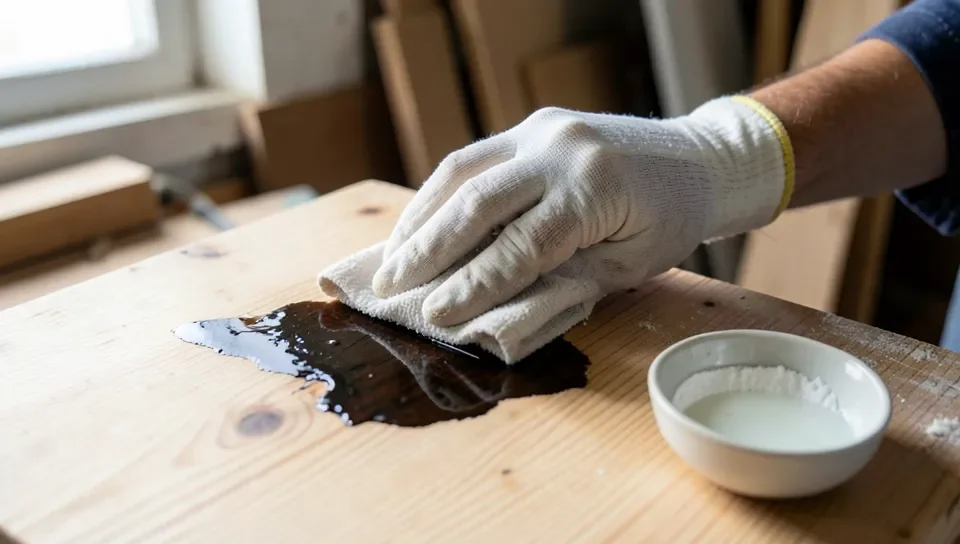
Reach for oxalic acid once you’ve confirmed (with the fingernail test above) that a stain has actually penetrated the wood: dark water stains, rust marks from old hardware, or graying on outdoor furniture and decking. Mix roughly 1 ounce of oxalic acid crystals or powder per quart of warm water, brush it over the entire surface (not just the stain, so the color stays even), and let it dry back to a white crystalline residue — that’s normal, not a failed treatment. Rinse thoroughly with a hose or well-soaked cloth to neutralize any remaining acid, let the wood dry fully, then sand lightly before refinishing.
Sanding alone is the right call when the stain is shallow enough that a light pass with 220-grit paper reaches bare, unstained wood underneath, or when you’re already planning to refinish the piece anyway. It’s the wrong call on veneer or thin plywood facing, where sanding through the thin top layer ruins the piece rather than fixing it — oxalic acid is the safer option there since it doesn’t remove any wood. For a full breakdown of oxalic acid versus other bleach types and exact mixing ratios, see our complete guide to bleaching wood.
Preventing the Next Stain
A few habits stop most of these stains before they start: use coasters and trivets on any finished surface, wipe up spills within a few minutes rather than letting them sit, and keep a coat of paste wax or finish topped up on pieces that see regular use, since a fresh finish layer is what actually stops moisture and oil from reaching the wood in the first place. For outdoor furniture and decking, a yearly check for graying or rust marks around hardware catches a stain while it’s still a quick oxalic acid fix instead of a full sanding job.
Frequently Asked Questions
What’s the difference between a white water stain and a dark water stain on wood?
A white or cloudy water stain is moisture trapped in the finish layer sitting on top of the wood — it hasn’t touched the wood itself, so it usually clears with gentle heat or a mild abrasive. A dark or black water stain means the moisture soaked past the finish and reacted with tannins in the wood fibers, which needs oxalic acid bleach or sanding instead, since nothing applied to the surface reaches that deep.
Does mayonnaise really remove water stains from wood?
Yes, for white surface rings specifically. Mayonnaise’s oil content re-saturates a finish that’s gone cloudy from trapped moisture, making the ring blend back in. Apply a layer, cover with a paper towel, let it sit 20–30 minutes to a couple of hours, then wipe clean. It does not work on dark, set-in stains that have soaked into the wood itself.
Will sanding always fix a wood stain?
No. Sanding only works when the stain is shallow enough that a light pass reaches bare, unstained wood underneath, and it’s the wrong choice on thin veneer or plywood facing, where sanding through the top layer ruins the piece. Oxalic acid bleach is the safer option for a deep or set-in stain, especially on veneer, because it lifts the discoloration chemically without removing any wood.
How do you remove oil or grease stains from wood?
For a fresh oil or grease spill, work a mix of warm water and a few drops of dish soap into the stain with a soft cloth, going with the wood grain. For an older, set-in grease mark, pack a cornstarch or baking soda paste directly over the stain, let it sit overnight under plastic wrap so it can draw the oil out as it dries, then brush off the residue. Repeat if any shadow remains.
Is it safe to use oxalic acid on wood?
Yes, when handled correctly. Oxalic acid is a mild acid that’s gentler on wood than chlorine bleach because it doesn’t oxidize the surrounding wood color, but it still requires gloves, eye protection, and good ventilation. Always mix it in a plastic, glass, or stainless container (never aluminum, which reacts with it), and rinse the wood thoroughly afterward to neutralize any residue before refinishing.
Sponsored / affiliate links. As an Amazon Associate I earn from qualifying purchases. I may earn additional commission from eligible campaigns.