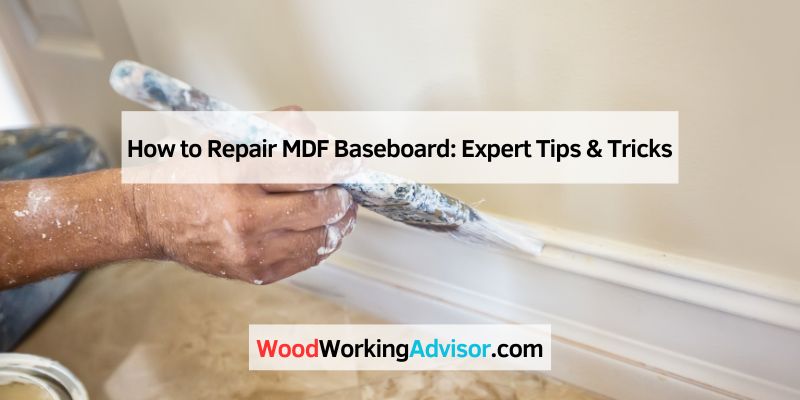
How to Repair MDF Baseboard: Expert Tips & Tricks
Is your MDF baseboard looking a little worse for wear? Whether it’s scratches, dents, or water damage, these imperfections can make your home feel less inviting.
But before you consider replacing them, you might be surprised to learn how simple it can be to repair MDF baseboards yourself. Imagine transforming your space with just a few tools and some elbow grease. You can restore the beauty of your home and save money in the process.
This step-by-step guide will reveal everything you need to know about repairing MDF baseboards. You’ll gain practical tips, tricks, and the confidence to tackle this project head-on. Ready to bring your baseboards back to life? Let’s get started!
Materials And Tools Needed
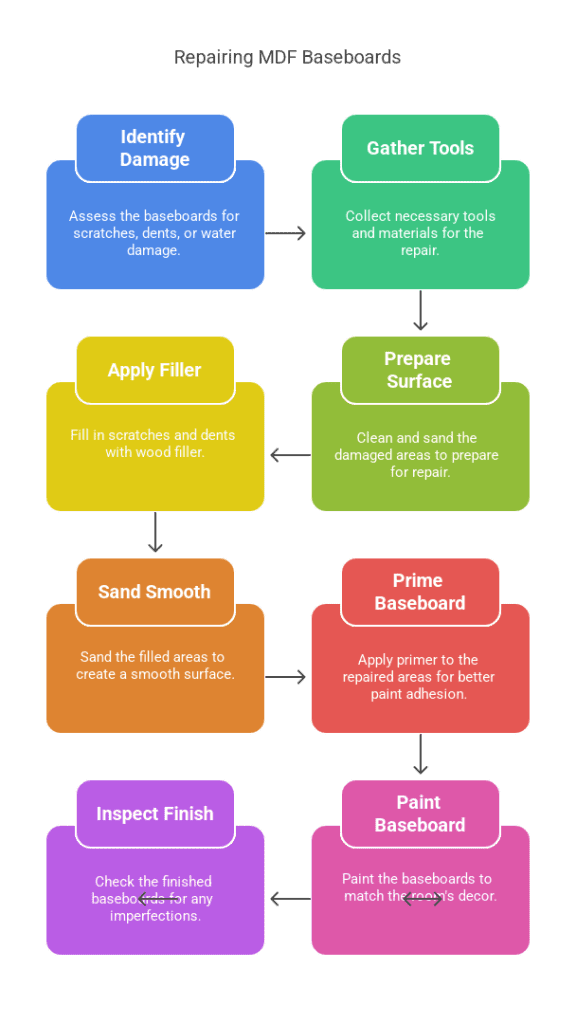
To repair your MDF baseboard, you need some important tools. Sanding paper helps in smoothing the surface. A putty knife is essential for applying the filler. You will also need wood filler to fill any gaps or holes. Use primer to prepare the baseboard for painting. Don’t forget a good paintbrush for the final touch. Ensure you have a mask to protect yourself from dust. Gloves will keep your hands clean and safe.
A ruler helps in measuring accurately. Cloth is needed to clean the area before starting. Screwdriver might be needed to remove any screws. Make sure you have a bucket for mixing materials. These tools are easy to find and use. With these, your baseboard will look new.
Assessing The Damage
Look at the baseboard closely. Check for cracks or chips. Feel for any soft spots that might be rotten. Sometimes, the damage is on the surface. Other times, it goes deeper. Use a flashlight to see better. Tap the board gently. Listen for any hollow sounds. This can show hidden damage. Make sure to check the corners too. Corners can be more fragile. Write down what you find. This will help you later. Knowing the damage is key to fixing it. Be thorough and take your time.
Preparing The Area
Start by clearing the baseboard area of dust and debris. Ensure the surface is smooth and clean. Use a damp cloth to wipe it down, making the repair process easier.
Clearing The Workspace
Keep the workspace clean for easy movement. Remove clutter like furniture and items. This prevents accidents. A clear space helps you focus better. Organize tools neatly. It saves time during repairs. Good lighting is important. It helps you see details clearly. Use a bright lamp or open curtains. Make sure the area is spacious. You should have room to move.
Protecting Surrounding Surfaces
Surfaces around the baseboard need protection. Use drop cloths to cover floors. This keeps them safe from scratches or spills. Tape edges with painter’s tape. It avoids paint marks on walls. Cover furniture nearby with sheets. Dust and debris can damage it. Protecting areas keeps them clean. It saves you from extra cleaning later. Be careful with paint or tools.
Fixing Minor Scratches And Dents
To repair small dents, use wood filler. It fills gaps and scratches. Apply the filler with a putty knife. Make sure the surface is smooth. Let the filler dry completely. This might take some hours. After drying, it hardens the surface. It makes the board look new. Choose a filler that matches the board color. This makes the repair less visible.
Sanding helps smooth out rough spots. Use fine-grit sandpaper. Gently rub it over the filled area. Do not press too hard. This can damage the board. Sand in a circular motion. It helps even out the surface. Check the board regularly. Stop when it’s smooth to touch. Clean the dust with a soft cloth. Now the board is ready for painting.
Repairing Larger Cracks
Epoxy filler is great for big cracks. First, clean the crack well. Dirt can make the filler weak. Then, mix the epoxy. Follow the package steps. Use a putty knife to fill the crack. Press in the filler. Make it smooth. Let it dry. Drying takes time. Wait as needed. Once dry, sand the surface. Sanding makes it smooth. Now, the baseboard looks new again.
Wood glue is strong for repairs. Clean the crack first. Dirt stops glue from sticking. Squeeze glue into the crack. Use a clamp to hold it tight. Keep it clamped until dry. Drying might take hours. Remove the clamp once dry. Check the baseboard. If it feels strong, the job is done.
Replacing Damaged Sections
First, remove the damaged part of the baseboard. Use a saw to cut it out. Measure the gap left behind. This step is very important. Use a tape measure for accuracy. Make sure the new piece fits snugly. Cut the new piece to the right size. Double-check your work. Measurements must be exact.
Now, place the new piece into the gap. Nails or adhesive can hold it in place. If using nails, hammer gently. Ensure the piece doesn’t move. Adhesive is a sticky glue. Apply it to the edges of the new piece. Press the piece firmly. Wait for the adhesive to dry. Check for any gaps or loose ends.
Finishing Touches
Choose a paint or stain that matches your room. Use a brush or roller for even coverage. Apply one coat and let it dry. Add a second coat for a smooth finish. Staining shows the wood’s natural beauty. Painting gives a solid color. Both protect the baseboard.
Seal the baseboard with a clear coat. This makes it last longer. Choose a water-based or oil-based sealer. Water-based dries fast and is easy to clean. Oil-based is stronger but takes longer to dry. Use a brush for smooth application. Let it dry fully before touching.

Credit: www.reddit.com
Maintenance Tips
Keep your MDF baseboards clean and free from dust. Use a soft cloth to wipe surfaces gently. Avoid water; it can damage the material. Check for scratches or dents regularly. Touch-up paint helps cover small marks.
Inspect joints for gaps. Seal them with caulk. This keeps moisture out. Repaint the baseboards every few years. Fresh paint protects the MDF. Do not use harsh chemicals. They can harm the finish.
Handle with care when moving furniture. Avoid bumps and knocks. Regular attention helps maintain their look. Prevent moisture exposure. MDF can swell if wet. Use these tips for long-lasting baseboards.
Frequently Asked Questions
Is MDF Repairable?
Yes, MDF can be repaired. Use wood filler for minor scratches and dents. Sand and repaint for major damage. Always ensure the area is clean before starting repairs. Proper maintenance extends MDF’s lifespan. Choose high-quality products for effective results. Regular checks help identify issues early.
Can Wood Filler Be Used On MDF?
Yes, wood filler can be used on MDF. It effectively fills gaps, holes, and imperfections. Choose a high-quality filler for best results. Sand the area after application for a smooth finish. Ensure proper drying and curing time for durability. Wood filler enhances MDF’s surface for painting or finishing.
How To Fix MDF Swelling?
Sand the swollen area gently to remove moisture. Apply wood filler to even out the surface. Seal with a water-resistant primer and paint to protect against future swelling.
How To Reinforce MDF Board?
Reinforce MDF board by adding support beams or metal brackets. Use wood glue or screws for extra stability. Seal with primer or paint to enhance durability. Avoid excessive moisture exposure to prevent damage.
Conclusion
Repairing MDF baseboards can seem challenging but is manageable. Gather your tools first. Follow each step with care. Sanding smooths the surface. Fill gaps with wood filler. Let it dry completely. Paint it to match your decor. You can fix minor damage on your own.
Save time and cost by doing it yourself. Practice patience and precision. Enjoy a refreshed look in your home. Remember, small repairs can make a big difference. Your baseboards will look new again. Keep practicing these skills. They can help with future home projects.