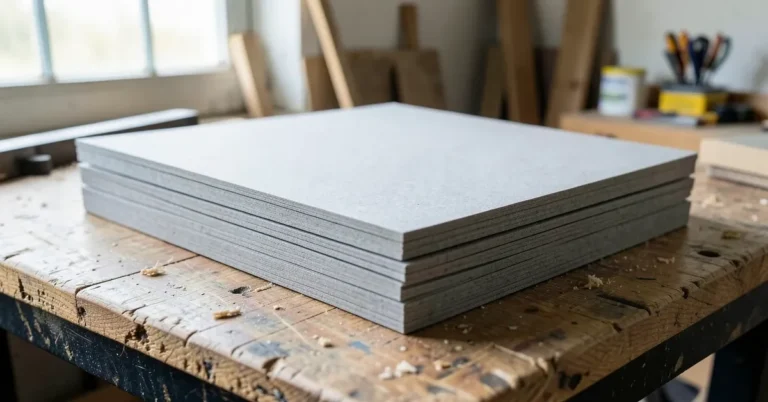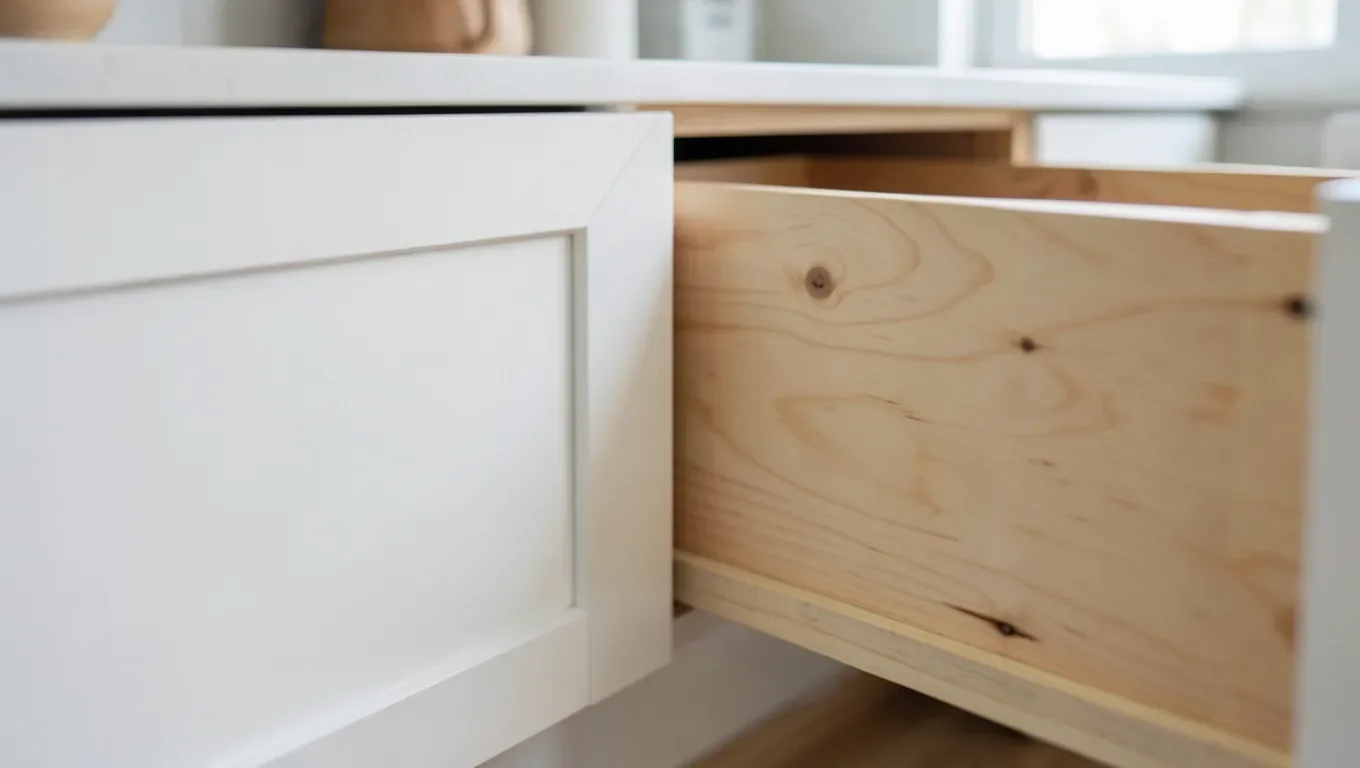
MDF vs Plywood for Kitchen Cabinets: Why Cabinet Shops Use Both
For kitchen cabinets, the honest answer is that plywood and MDF each win in different parts of the same cabinet. Cabinet-grade plywood is the better material for the boxes, shelves, and anything that bears weight or gets screwed together repeatedly, while MDF is the better material for painted doors and drawer fronts, where its smooth surface and crisp routed profiles matter more than moisture resistance or screw-holding strength.
That split isn’t a compromise – it’s how a lot of working cabinet shops actually build. Below is why each material earns its spot, the real screw-holding numbers most comparison articles skip, and exactly how to seal MDF edges so moisture near the sink and dishwasher doesn’t become a problem later.
The Short Answer: Plywood for Boxes, MDF for Doors
Cabinet boxes (carcasses) get screwed together, hold the weight of dishes and cookware, and sit closest to real moisture exposure at the sink base and under the dishwasher – that’s a job for cabinet-grade birch or maple plywood. Doors and drawer fronts don’t bear structural load, get handled and repainted more over the cabinet’s life, and benefit most from a perfectly smooth, grain-free surface – that’s where MDF’s strengths actually apply and its weaknesses barely matter. Before we get into why, here’s a primer worth having on hand either way – it’s the product that makes MDF’s biggest weakness a non-issue.
Best MDF Edge-Sealing Primer Pick
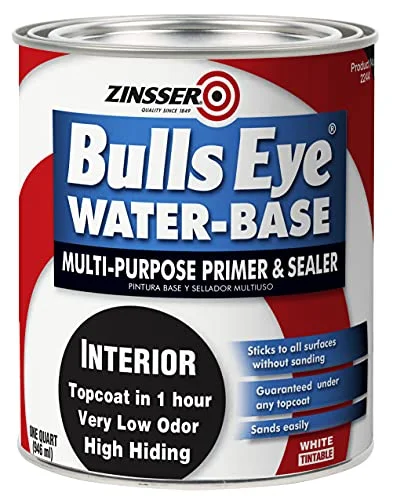 |
Zinsser Bulls Eye Water-Base Primer & Sealer, Quart – $10.49 A stain-blocking, all-surface primer-sealer that soaks into and seals raw cut MDF edges before painting, which is exactly where MDF’s moisture weakness shows up first on a cabinet.
|
With that out of the way, here’s the actual reasoning behind the split.
Moisture Resistance: Where Kitchens Are Different From Every Other Room
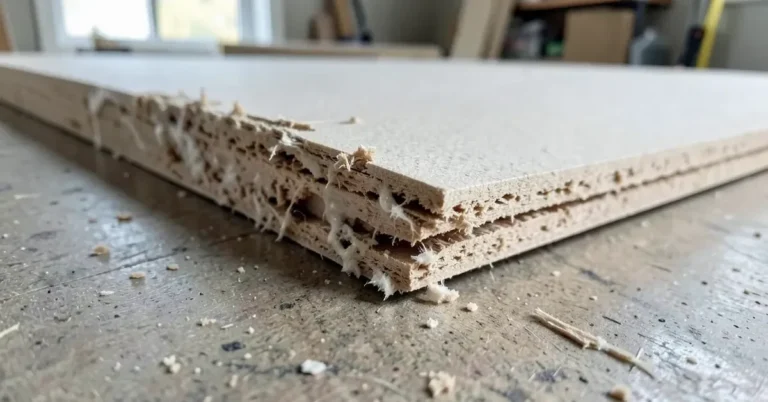
MDF is wood fiber pressed with resin into a dense, uniform panel – there’s no grain and no voids, but there’s also no natural water resistance. Sustained moisture exposure, not a quick wipe-down, is what actually damages it: MDF that stays wet swells along its edges, and once that swelling happens it doesn’t shrink back the way solid wood does. In a kitchen, that risk concentrates in exactly two spots – the sink base cabinet, where a slow leak under the basin can sit unnoticed for weeks, and any panel next to the dishwasher, which vents warm, humid air every cycle.
Cabinet-grade plywood handles that same exposure noticeably better. Its cross-laminated veneer layers don’t wick moisture along an edge the way MDF’s fibers do, so a plywood sink-base cabinet that gets damp occasionally is far less likely to swell or delaminate than an MDF one in the same spot. This is the single biggest reason cabinet shops default to plywood for the box itself and save MDF for parts that stay away from direct water.
Screw-Holding Strength: The Number Most Comparisons Leave Out
Most articles say plywood “holds screws better” without saying by how much. Independent testing on composite panel fasteners consistently shows MDF’s edge screw-holding – a screw driven straight into the cut edge of the panel, which is exactly how cabinet hinges, drawer slides, and face-frame screws are usually installed – runs at roughly half the pull-out resistance of the same screw driven into plywood’s edge. MDF holds up reasonably well when a screw goes into its flat face, but edge fixings are its real structural weak point, and repeated removal and reinstallation (swapping hinges, adjusting a drawer slide) wears out that hole fast.
Plywood’s layered veneer construction is why it holds up better here – each cross-grain layer gives a screw thread something different to bite into, rather than pulling straight through a single uniform fiber mat. That’s a real, physical reason to put the box – where hinges, slides, and shelf pins all thread into edges repeatedly over the cabinet’s life – in plywood rather than MDF.
Paint Finish and Detail: Why MDF Wins on Doors
This is where MDF stops being the compromise material and starts being the better choice. Because it has no grain and no internal voids, MDF paints to a flat, uniform finish straight out of the can – no grain telegraphing through a painted surface, no filling and sanding needed first. It also machines cleanly with a router, which is exactly why almost every painted shaker-style cabinet door on the market, including plenty from big-name cabinet manufacturers, is MDF rather than plywood: the crisp recessed panel profile routs cleanly into MDF and holds its detail, where plywood’s layered structure is more prone to chipping or tear-out on a fine detailed edge.
Plywood can absolutely be painted too, but cabinet-grade birch or maple plywood still shows some grain and small voids at the edges that need filler and extra sanding to disappear completely under paint. If you want a stained, natural-wood-grain door instead of a painted one, that’s the one place plywood (or solid hardwood) is the better call – MDF has no grain to show off, so staining it isn’t really an option.
Cost and Weight
MDF is the cheaper material sheet-for-sheet and is also considerably heavier for its thickness, which matters when you’re hanging upper cabinets – a full MDF door adds noticeably more strain on hinges than the same size door in plywood. Cabinet-grade plywood costs more, especially in birch or maple face veneer, but the weight savings and structural strength are exactly why it’s worth paying for on the box, where the material is doing real structural work, rather than on a door, where it mostly isn’t. If you know your box will be plywood, see our guide to calculating how many sheets of plywood you actually need for a full kitchen run.
How to Seal MDF Edges So Moisture Isn’t a Problem
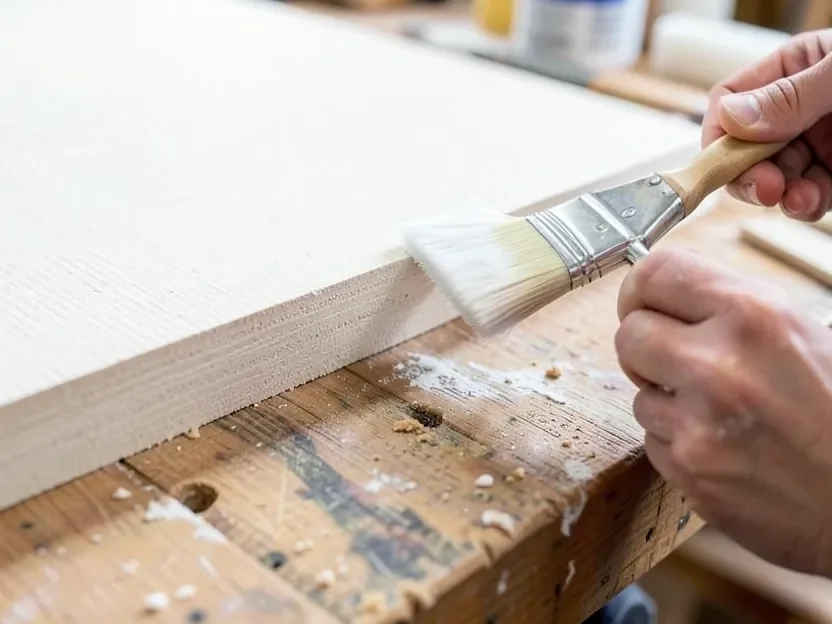
If you’re using MDF anywhere in a kitchen – doors, a valance, trim near the sink – the moisture risk is almost entirely preventable with proper edge sealing, and it’s worth doing on all six sides, not just the visible face:
- Prime every cut edge, not just the front and back faces – factory faces usually already have some protective coating, but a cut edge from resizing a panel is raw and fully absorbent until it’s sealed.
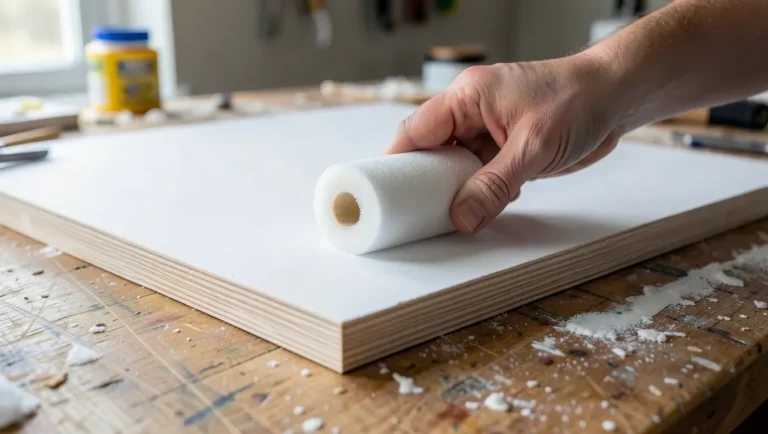
- Use a stain-blocking, all-surface primer-sealer (like the pick above) rather than paint alone as the first coat – it soaks into the porous cut edge instead of sitting on top of it the way a straight topcoat paint does.
- Let the primer fully cure before sanding and topcoating – sanding a still-soft primer just reopens the porous surface underneath.
- Pay extra attention to any MDF panel installed directly beside the dishwasher or under the sink – those are the two spots where sustained humidity or a slow leak is most likely to find an unsealed edge.
Properly sealed and painted on every edge, MDF holds up fine as cabinet doors in a normal kitchen for years. The failures you hear about almost always trace back to a raw, unsealed edge sitting against sustained moisture – not MDF simply being unfit for a kitchen.
If your doors are pre-finished with a melamine or laminate face rather than painted, the same principle applies, just with edge banding instead of primer. See our guide to laminated MDF finish types and edge-banding options for how to pick and apply the right edge tape.
The Hybrid Build Cabinet Shops Actually Use
Put the moisture, screw-holding, and finish points together and the hybrid approach isn’t a marketing compromise – it’s just matching each material to the job it’s structurally suited for. The box holds weight, gets screwed into repeatedly over its life, and sits closest to real water exposure, so it goes in plywood. The door doesn’t bear load, gets repainted more often than the box ever gets rebuilt, and benefits most from a flawless paint finish and crisp routed profile, so it goes in MDF. Building the whole cabinet in one material or the other means accepting a real weakness somewhere – either MDF’s edge screw-holding and moisture sensitivity on a load-bearing box, or plywood’s visible grain and voids under a painted door finish.
If you’re weighing plywood against a different engineered panel for the same kitchen project, our MDF vs OSB board comparison covers how OSB’s structural strength and cost stack up against MDF for the jobs where OSB is actually a realistic option. And if you’ve already decided on MDF doors, our guide to painting MDF cabinet doors walks through priming and topcoating in more detail than the summary above.
Frequently Asked Questions
Is MDF or plywood better for kitchen cabinets?
Plywood is the better choice for the cabinet boxes themselves, since it resists moisture and holds screws far better – roughly double the edge pull-out strength of MDF in testing. MDF is the better choice for painted doors and drawer fronts, where its smooth, grain-free surface and clean routed detail matter more than structural strength.
Will MDF cabinet doors hold up near a kitchen sink or dishwasher?
Yes, as long as every cut edge is primed with a stain-blocking sealer-primer and fully painted before installation. MDF failures near water almost always come from a raw, unsealed edge left exposed – not from properly sealed MDF being unsuited to a kitchen.
Why do cabinet shops use plywood for boxes and MDF for doors?
The box bears weight, gets screwed into repeatedly, and sits closest to real moisture – jobs plywood handles better. The door doesn’t bear structural load and benefits most from a perfectly smooth paint finish and crisp routed profile – which is where MDF’s lack of grain and voids becomes an advantage instead of a weakness.
Is MDF heavier than plywood?
Yes, MDF is noticeably heavier than plywood at the same thickness. That extra weight is worth accounting for on upper cabinet doors, where a full MDF door puts more ongoing strain on hinges than the same size door built in plywood.
The Bottom Line
Don’t pick one material for the whole cabinet. Build the box in cabinet-grade plywood for the moisture resistance and screw-holding strength it needs near the sink and dishwasher, and use MDF for painted doors and drawer fronts where a flawless finish and crisp routed profile matter more than structural strength. Seal every cut MDF edge before painting, and the moisture concern that scares people off MDF in kitchens mostly disappears.
Sponsored / affiliate links. As an Amazon Associate I earn from qualifying purchases. I may earn additional commission from eligible campaigns.