How to Seal MDF: Sealers, Edges & Coverage per Sheet (2026)
Seal MDF with a shellac-base or oil-based primer, and do the cut edges first, because bare edges soak up the most. Water-based primer straight onto raw MDF can raise the fibers. Sealing evens out paint and slows moisture, but it does not make MDF waterproof. Below: what the Zinsser and Kilz data sheets say, how much to buy for a 4×8 sheet, and the edge and moisture rules.
How to Seal MDF: Match the Sealer to the Job
Best Spray Pick for MDF Edges |
|
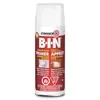 |
Zinsser B-I-N Shellac-Base Primer, 13 oz Spray – $21.99 The maker’s spray sheet lists it for porous wood and hardboard and gives a 30-minute paint-over time, which suits the cut-edge step covered below. It is a small-parts and edges can, not a whole-sheet sealer.
|
As an Amazon Associate we earn from qualifying purchases.
There is no single best sealer for MDF. The right one depends on what goes on top and where the piece will live.
| Your project | Sealer to use | Coats | Watch out for |
|---|---|---|---|
| Painted cabinet door, shelf or trim | Shellac-base primer (B-I-N) or oil-based primer (Kilz Original) | 1 on faces, a second on edges if they still soak it up | Water-based primer applied straight onto bare edges |
| Clear finish, no paint | Clear shellac or a sanding sealer, then a clear topcoat | 1 sealing coat, sanded lightly | MDF has no grain, so the result looks flat; test a scrap |
| Workbench top or garage shelf | Primer, then 2 coats of paint or polyurethane on all six sides | 1 primer + 2 topcoats | Sealing slows water down; it does not stop it |
| Kitchen or bath cabinet part | Moisture-resistant MDF with a full primer-and-paint system | 1 primer + 2 topcoats | Cut edges and screw holes near sinks or standing water |
What the Zinsser and Kilz Data Sheets Say About MDF
Most MDF advice online repeats itself. The maker sheets are more specific, so here are the numbers side by side from the Zinsser B-I-N Shellac-Base data sheet (revised 2019), the Zinsser B-I-N spray sheet (revised 2022) and the Kilz Original interior oil-based sheet (2011 edition).
| Spec on the sheet | B-I-N shellac-base (liquid) | B-I-N shellac-base (spray) | Kilz Original (oil-based) |
|---|---|---|---|
| Touch dry | 20 min | 15 min | 30 min |
| Recoat | 45 min | 30 min | 1 hour |
| Full cure | 1-3 days | not stated | not stated |
| Label coverage | about 500 sq ft per gallon | 10-12 sq ft per can | 300-400 sq ft per gallon |
| VOC | max 550 g/L | see SDS | 443 g/L (No. 1000) or 344 g/L (No. 1003) |
| Flash point | 54°F (12°C) | see SDS | 75°F (No. 1000) or 102°F (No. 1003) |
| Thinning | do not thin | not applicable | do not thin |
| Cleanup | denatured alcohol or ammoniated detergent | mineral spirits | mineral spirits |
| Substrates named | wood (pine, fir, cedar, redwood, plywood), no MDF | porous wood and hardboard | wood and paneling, no MDF |
The last row is the part most guides skip: none of these sheets names MDF. The spray sheet does list hardboard and porous wood, and the liquid sheet says B-I-N fills and binds wood fibers, so using it on MDF is a reasonable reading of the label, not a tested claim from the maker. Check the current can before you buy, since formulas change.
B-I-N Shellac-Base: touch dry in 20 minutes, recoat in 45 minutes, full cure in 1 to 3 days – Source: Zinsser technical data sheet BIN-03
For a wider comparison of shellac products, see our shellac-based primer roundup.
Step-by-Step: How to Seal MDF Before Painting
- Cut and drill first. Every fresh cut exposes unsealed fiber, so shape the part completely before any sealer goes on.
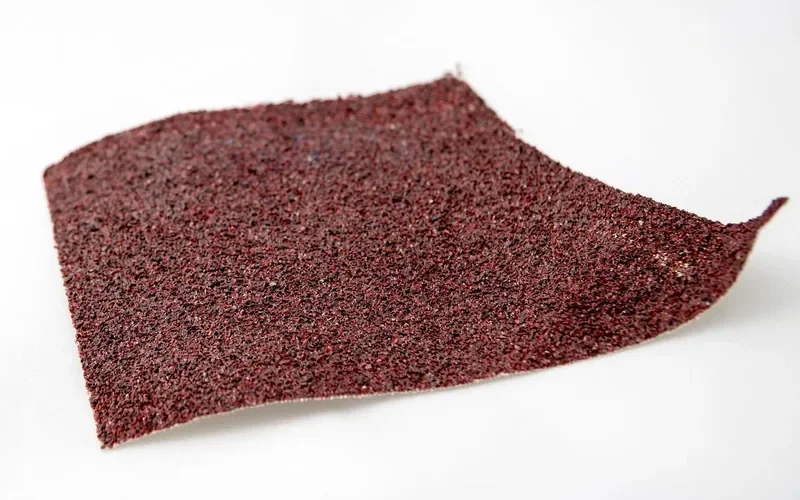
- Sand lightly. A pass with 220-grit is enough on the factory face; heavy sanding can cut through the dense skin into the softer core. Sand the cut edges with 220-grit too.
- Remove the dust. Vacuum, then wipe with a tack cloth or barely damp microfiber and let it dry. Both Zinsser sheets require a clean, dry surface, and the B-I-N sheet caps substrate moisture at 12 percent.
- Prime the edges first with one wet coat, working it into the end fiber, then do the faces so any drips land on surface you are about to cover anyway.
- Wait the label time. B-I-N allows a recoat after 45 minutes and Kilz Original after 1 hour at room temperature and 50 percent humidity; cooler or damper air takes longer.
- Sand again, lightly. Once dry, a quick pass with 220 to 320 grit knocks down any raised fiber. A WoodWeb contributor suggests 320 after B-I-N on edges. Add a second coat to edges that still look thirsty; the B-I-N sheet allows a second coat on very porous surfaces.
- Topcoat in thin coats. Two thin coats of paint look better than one heavy one. Our guide to painting MDF board covers brushes, rollers and grits, and the sanding between primer coats page has the grit-by-grit detail.
How to Seal MDF Edges
Cut edges are where MDF fails first. The core fiber is exposed there, so it takes up primer and paint faster than the factory face and swells into a rough, fuzzy line if the first coat is water-based.
Finishing professionals split on the fix. In a WoodWeb finishing thread on sealing cut MDF edges, contributors recommended Zinsser B-I-N shellac primer, thinned white glue as an edge size, or skipping the problem with paintable edge banding. One suggested sequence was 220-grit, one wet coat of B-I-N, then 320-grit.
If you want the head-to-head on glue, primer and banding, our MDF edge-sealing comparison goes through each method. The short version here: shellac primer is the fastest option, because the label recoat is 45 minutes.
How to Seal MDF from Moisture
Sealing and waterproofing are different jobs. The Zinsser B-I-N liquid sheet states it is not recommended for floors, decks or any surface subject to immersion or prolonged contact with water, and the Kilz Original sheet says it is not recommended on flooring. A primer coat is the base of a moisture defense, not the whole defense.
- Seal all six sides. Water enters through any unsealed face, and the underside and cut edges are the ones people skip.
- Add topcoats. Primer plus two coats of paint or polyurethane gives a harder film than primer alone.
- Pick the right board. Moisture-resistant MDF is made for kitchens and baths, but it still swells if it sits in water.
- Keep it off wet surfaces. Raise shelf and cabinet bases off the floor so the bottom edge never sits in water.
If the piece will take real water exposure, plywood is usually the better board. Our MDF pros and cons page explains where MDF suits a project and where it does not.
How Much Sealer Do You Need for a 4×8 Sheet of MDF?
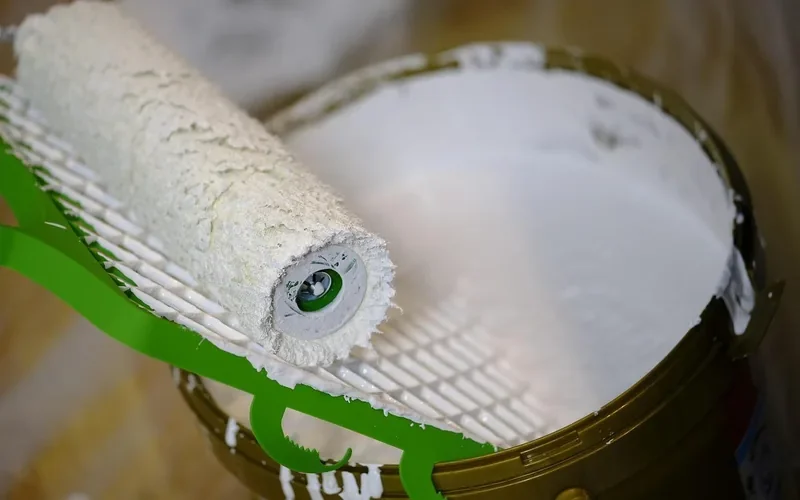
A 3/4-inch sheet has 64 sq ft of face area (both sides) plus about 1.5 sq ft of edge, so roughly 65.5 sq ft per coat. Using each sheet’s own label coverage, the quantities work out like this. MDF edges soak up more than the label assumes, so treat these as minimums.
| Product (label coverage) | 1 coat | 2 coats |
|---|---|---|
| B-I-N liquid (about 500 sq ft per gallon) | about 17 fl oz | about 34 fl oz, a little over a quart |
| Kilz Original (300-400 sq ft per gallon) | 21 to 28 fl oz | 42 to 56 fl oz, so buy a gallon |
| B-I-N spray (10-12 sq ft per can) | 5.5 to 6.6 cans | 11 to 13 cans, not practical |
| B-I-N spray, edges only (1.5 sq ft per sheet) | about 0.15 can, so 6 to 8 sheets per can | about 3 to 4 sheets per can |
This is why the spray can suits edges and small parts and a brushed or rolled liquid suits full sheets. Quantities are my arithmetic from the label coverage figures, not a manufacturer table.
Drying, Cure Time and Safety
- Conditions. The B-I-N sheet says apply between 0 and 90°F with relative humidity under 70 percent, and not within 15°F of the dew point.
- Fire risk. B-I-N has a flash point of 54°F (12°C), so keep it away from pilot lights and sparks. The Kilz Original sheet says its vapors may cause a flash fire and that soiled rags should be soaked in a closed, water-filled metal container to avoid spontaneous combustion.
- Ventilation. The Kilz sheet requires cross-ventilation, and the B-I-N sheet calls for a NIOSH-approved respirator when spraying.
- Dust. Wear a dust mask or respirator when sanding MDF, because the dust is very fine.
- Do not thin. Both liquid sheets say do not thin, so stir and apply as supplied.
Common Mistakes When Sealing MDF
- Sealing the faces and forgetting the cut edges, which then drink the paint and show through the topcoat.
- Using one thick coat instead of thin ones, which leaves runs and slows drying past the label times.
- Putting water-based primer straight onto bare edges, the usual cause of raised, fuzzy fiber.
- Skipping the light sanding after the first coat, so raised fiber gets painted in.
- Thinning B-I-N or Kilz Original to stretch it, when both sheets say do not thin.
Frequently Asked Questions
What is the best thing to seal MDF with?
A shellac-base primer such as Zinsser B-I-N or an oil-based primer such as Kilz Original. Both sheets give a recoat time of 45 minutes to 1 hour, and both dry into a film that paint sticks to. Neither data sheet names MDF, so test a scrap edge first.
Does MDF need to be sealed?
Yes, if it will be painted or exposed to any moisture. Raw MDF soaks up paint unevenly, and its cut edges absorb the most, which shows as rough, blotchy edges. One coat of primer on the faces and an extra coat on the edges fixes both problems.
How do you seal MDF to make it waterproof?
You cannot make MDF fully waterproof. Zinsser’s B-I-N sheet says not to use it on surfaces subject to immersion or prolonged contact with water. For damp spots, use moisture-resistant MDF, seal all six sides with primer plus two coats of paint or polyurethane, and keep it off wet floors.
What happens if you do not seal MDF?
Paint soaks in unevenly, edges turn fuzzy and absorb extra coats, and any water that reaches the unsealed fiber can swell the board. The damage usually starts at cut edges and screw holes, the places with exposed core fiber.
Can you seal MDF with PVA glue?
For edges, yes. Thinned white glue is a common edge-sizing method, and a WoodWeb finishing thread lists it next to shellac primer. It only sizes the fiber, so still prime and paint over it. Our MDF edge-sealing guide compares it with primer and edge banding.
Will sanding sealer work to seal MDF before staining?
Sanding sealer works as a sealing coat under a clear finish, but MDF has no grain, so stain will not look like wood and can come out flat or blotchy. Test on a scrap piece first. For a uniform look, paint is the more predictable finish on MDF.
Bottom line: prime the edges first with shellac-base or oil-based primer, sand lightly, add a second coat where the fiber still drinks, then topcoat. Treat sealing as paint prep and a moisture slow-down, not a waterproofing step.
Sponsored / affiliate links. As an Amazon Associate I earn from qualifying purchases. I may earn additional commission from eligible campaigns.