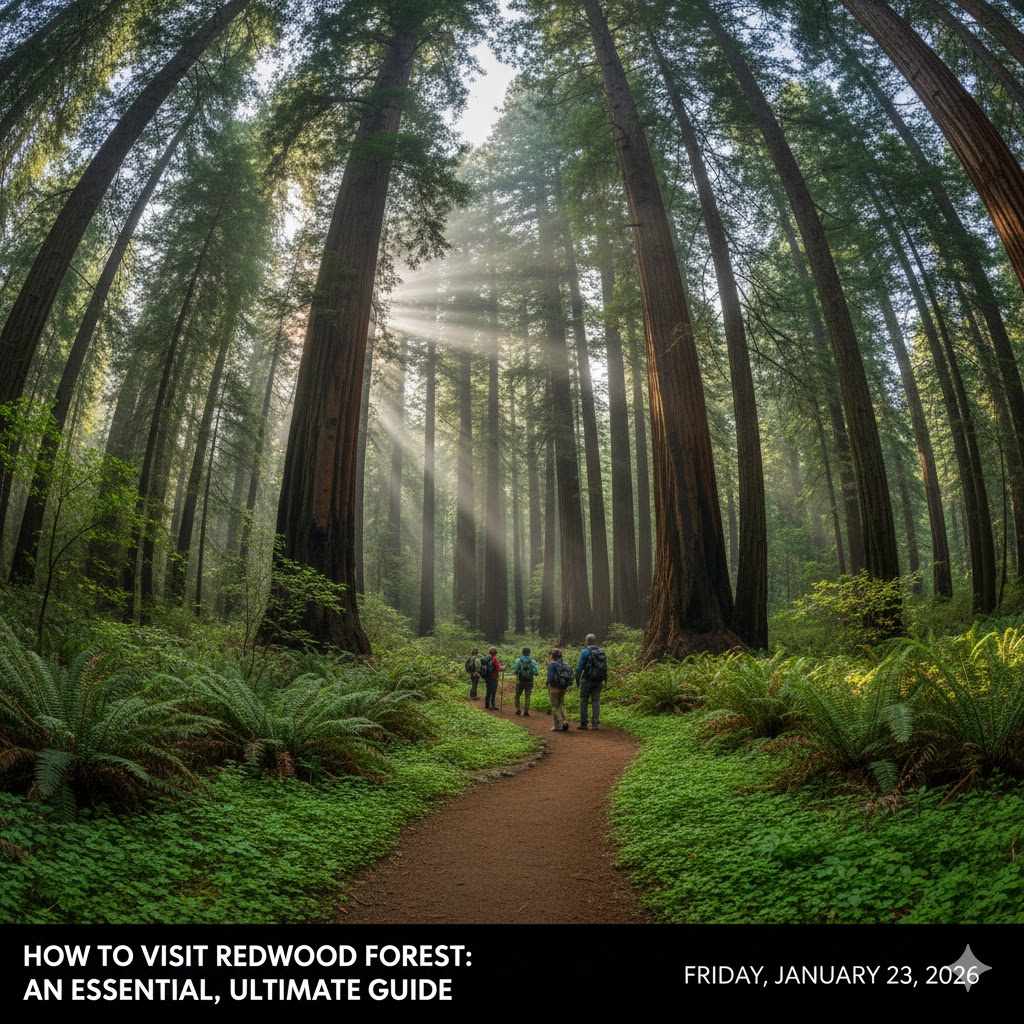
How To Visit Redwood Forest: An Essential, Ultimate Guide
To visit the redwood forest, decide which park you want to see—Redwood National and State Parks in the north are vast, while groves like Muir Woods are closer to cities. Plan for layered clothing and rain gear, as the weather is often cool and damp. A car is essential for exploring scenic drives and reaching trailheads.
Standing next to a coast redwood is a humbling experience. These gentle giants are the tallest living things on Earth, and walking among them feels like stepping into another world. But planning a trip can feel overwhelming. Where do you even start? It’s a common feeling, but don’t worry. This guide is here to help.
I’ve always believed that a good plan is the foundation of any great project, whether you’re in the workshop or out in nature. We’ll break down how to visit the redwood forest into simple, easy-to-follow steps. From choosing the right park to knowing what to pack, you’ll have all the tools you need for an unforgettable adventure. Let’s get started.
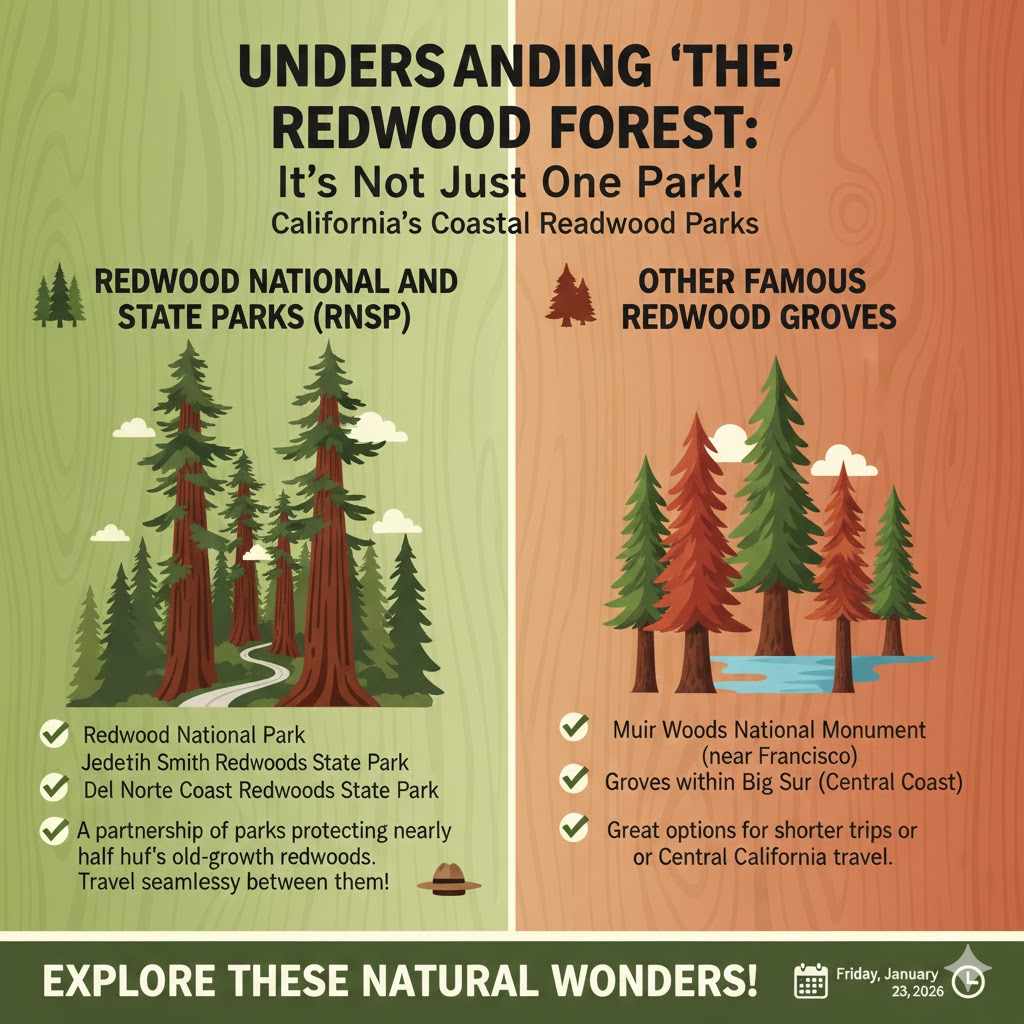
Understanding “The” Redwood Forest: It’s Not Just One Park!
First things first, let’s clear up a common point of confusion. When people say “the redwood forest,” they could be talking about several different places along the California coast. The biggest and most famous area is a unique partnership of parks in Northern California.
This collaboration is called Redwood National and State Parks (RNSP). It includes:
- Redwood National Park
- Jedediah Smith Redwoods State Park
- Del Norte Coast Redwoods State Park
- Prairie Creek Redwoods State Park
Together, they protect almost half of the world’s remaining old-growth coast redwoods. The best part? You can travel between them seamlessly, often without even knowing you’ve left one and entered another. There are no grand entrance gates to the national park itself, making it very accessible.
Other famous redwood groves exist further south, like Muir Woods National Monument near San Francisco and groves within Big Sur. These are fantastic options if you have less time or are staying closer to Central California.
When is the Best Time to Visit?
Honestly, there is no bad time to see the redwoods. Each season offers a unique experience. However, your trip will be different depending on when you go. The coastal climate is mild year-round, but it can be damp and cool even in summer.
Here’s a simple breakdown to help you decide:
| Season | Average Weather | Crowds | What to Expect |
|---|---|---|---|
| Summer (June-August) | Mild to warm (50-75°F). Coastal fog is common, especially in the mornings. Less rain. | High | Ideal for hiking and camping. All roads, trails, and visitor centers are open. Book accommodations and permits far in advance. |
| Fall (September-October) | Cool and pleasant (45-65°F). Less fog than summer and fewer crowds. Rain starts to return. | Moderate | A “secret season” favorite. Beautiful light filters through the trees. Perfect for photography and peaceful hikes. |
| Winter (November-February) | Cool and rainy (40-55°F). The wettest season. Occasional storms can cause road closures. | Low | Lush, green, and quiet. Waterfalls are at their peak. You’ll feel like you have the forest to yourself. Just be prepared for rain! |
| Spring (March-May) | Mild and cool (45-60°F). Rain showers become less frequent. Wildflowers, like rhododendrons, begin to bloom. | Moderate | The forest comes alive after the winter rains. A great time for spotting wildlife and enjoying the vibrant scenery without the summer rush. |
Planning Your Trip: Step-by-Step
A successful trip starts with a good plan. Let’s walk through the essential steps to make your visit smooth and enjoyable. Think of it like a project checklist for your adventure.
Step 1: Decide Which Area to Visit
Your first big decision is choosing your home base. Where you go depends on how much time you have and what kind of experience you’re looking for. The Redwood Highway (US-101) connects all these areas, making it easy to travel between them.
| Region | Best For | Highlights | Location |
|---|---|---|---|
| Northern Parks (RNSP) | Immersive, multi-day trips, serious hikers, seeing the tallest trees. | Tall Trees Grove, Stout Grove, Fern Canyon, Lady Bird Johnson Grove. | Far Northern California, near the Oregon border. |
| Avenue of the Giants | Scenic driving, accessible groves, a classic road trip experience. | A 31-mile drive with numerous easy trails and quirky roadside stops. | Just south of RNSP, part of Humboldt Redwoods State Park. |
| Muir Woods | Day trips from San Francisco, visitors with limited time, accessible paved trails. | Cathedral Grove, Bohemian Grove, easy-to-walk loops. | Just north of San Francisco. Reservations are required! |
| Big Sur | Coastal views combined with redwoods, scenic highway driving. | Pfeiffer Big Sur State Park, Julia Pfeiffer Burns State Park. | Central California Coast, south of Monterey. |
Step 2: How Long Do You Need?
The time you have will shape your itinerary. Even a short visit can be magical, but more time allows you to explore deeper.
- 1 Day: If you only have a day, focus on one key area. A drive through the Avenue of the Giants with a stop for a short hike is perfect. Or, if you’re in the Bay Area, a pre-booked visit to Muir Woods is a fantastic choice.
- 3 Days (A Weekend): This is enough time to get a good feel for Redwood National and State Parks. You could base yourself in a central town like Klamath or Trinidad and explore the major highlights: drive the Newton B. Drury Parkway, hike Stout Grove, and see the herds of Roosevelt elk.
- A Full Week: With a week, you can do it all. Spend several days exploring all the different parks within RNSP, drive the entire Avenue of the Giants, and maybe even take a side trip to the coast. You can tackle longer hikes and find quieter, less-visited groves.
Step 3: Getting There and Getting Around
The main redwood parks are in a remote part of California. A car is absolutely essential for exploring the region. Public transportation is very limited.
- Flying In: The closest regional airports to RNSP are Crescent City, CA (CEC) and Eureka/Arcata, CA (ACV). For more flight options, you could fly into Medford, OR (MFR), which is about a 2-hour drive away, or larger hubs like Sacramento (SMF) or San Francisco (SFO), both of which are a 5-6 hour drive.
- Renting a Car: You can rent a car from any of these airports. A standard car is fine for most roads, including the Avenue of the Giants. However, if you plan to visit places like Fern Canyon, a high-clearance or 4WD vehicle is highly recommended, as you may have to drive through creek beds.
- Driving: The main artery through the region is U.S. Highway 101, also known as the Redwood Highway. It’s a beautiful drive that takes you directly through the heart of the parks. Be sure to fuel up in larger towns, as gas stations can be sparse in between.
Step 4: Finding a Place to Stay
Accommodations in and around the parks can fill up fast, especially in summer. It’s wise to book your lodging well in advance.
- Camping: There are four developed campgrounds within the RNSP system. You can book sites up to six months in advance through the California State Parks reservation system. For more information, visit the official National Park Service camping page.
- Hotels and Motels: Small towns along the US-101 offer a range of lodging options. Main hubs include Crescent City (in the north), Klamath (central), Orick (central, but very small), and the charming coastal towns of Trinidad and Arcata (in the south).
- Vacation Rentals: Websites like Airbnb and VRBO have cabins and homes for rent, which can be a great option for families or groups who want more space and a kitchen.
Must-See Sights and Must-Do Activities
Once you’re there, the adventure begins! Here are some of the can’t-miss experiences, perfect for first-time visitors.
Top Hikes for Beginners
Most trails in the redwoods are gentle and well-maintained. You don’t need to be an expert hiker to enjoy the best of the forest.
- Lady Bird Johnson Grove Trail: A beautiful 1.5-mile loop in Redwood National Park. It’s relatively flat and located at a higher elevation, offering a different feel with old-growth redwoods, Douglas firs, and tanoaks.
- Stout Memorial Grove Trail: Located in Jedediah Smith Redwoods State Park, this easy 0.6-mile loop is one of the most magnificent groves in the world. The trail runs alongside the turquoise Smith River, creating a stunning scene.
- Trillium Falls Trail: A lovely 2.6-mile loop in Prairie Creek Redwoods State Park. It features giant redwoods, a picturesque little waterfall, and a good chance of spotting Roosevelt elk near the trailhead.
Scenic Drives
Sometimes the best way to see the forest is from behind the wheel, stopping whenever a view catches your eye.
- Avenue of the Giants: This is the ultimate redwood drive. It’s a 31-mile alternative to Highway 101 that winds through the heart of Humboldt Redwoods State Park. There are dozens of places to pull over, hike, and picnic.
- Newton B. Drury Parkway: A 10-mile scenic drive through an amazing old-growth forest in Prairie Creek Redwoods State Park. It’s quieter than the main highway and offers access to many trailheads, including the Big Tree Wayside.
- Howland Hill Road: A mostly unpaved road through Jedediah Smith Redwoods State Park that puts you right up close with the giants. It’s a slow, narrow drive but is suitable for standard passenger cars in good weather.
For the More Adventurous
If you’re looking for a unique experience, a little extra planning can lead to big rewards.
- Tall Trees Grove: Home to some of the world’s tallest trees, this protected grove requires a free permit that you must apply for online in advance. The drive includes a locked gate and a gravel road. Spaces are limited, so plan ahead! You can check for permit availability at the official NPS permit site.
- Fern Canyon: A truly magical place where you hike up a creek bed with 50-foot-high canyon walls covered in ferns. It famously appeared in the movie Jurassic Park 2. Check road conditions before you go, as the creek crossings can require a high-clearance vehicle. A permit is now also required for access from May to September.
What to Pack: Your Essential Checklist
Packing for the redwoods is all about layers. The weather can change quickly from sunny to foggy and damp. Proper preparation ensures you’ll be comfortable no matter what.
- Layered Clothing: T-shirts, long-sleeved shirts, a fleece or warm mid-layer, and a waterproof rain jacket are essential, even in summer.
- Sturdy Footwear: Waterproof hiking boots or comfortable walking shoes with good traction are a must. Trails can be damp and slippery.
- Water and Snacks: Services are limited inside the parks. Always carry more water and food than you think you’ll need.
- Navigation Tools: Cell service is unreliable or non-existent in most of the park. Bring a physical map (you can get one at any visitor center) or download maps to your phone beforehand.
- Camera and Portable Charger: You’ll be taking a lot of photos! A power bank is a great idea to keep your phone charged for photos and navigation.
- Sun Protection: Sunscreen, a hat, and sunglasses are still important, as the sun can be strong when you’re out of the tree cover.
- Insect Repellent: Mosquitos and other bugs can be present, especially near water in the warmer months.
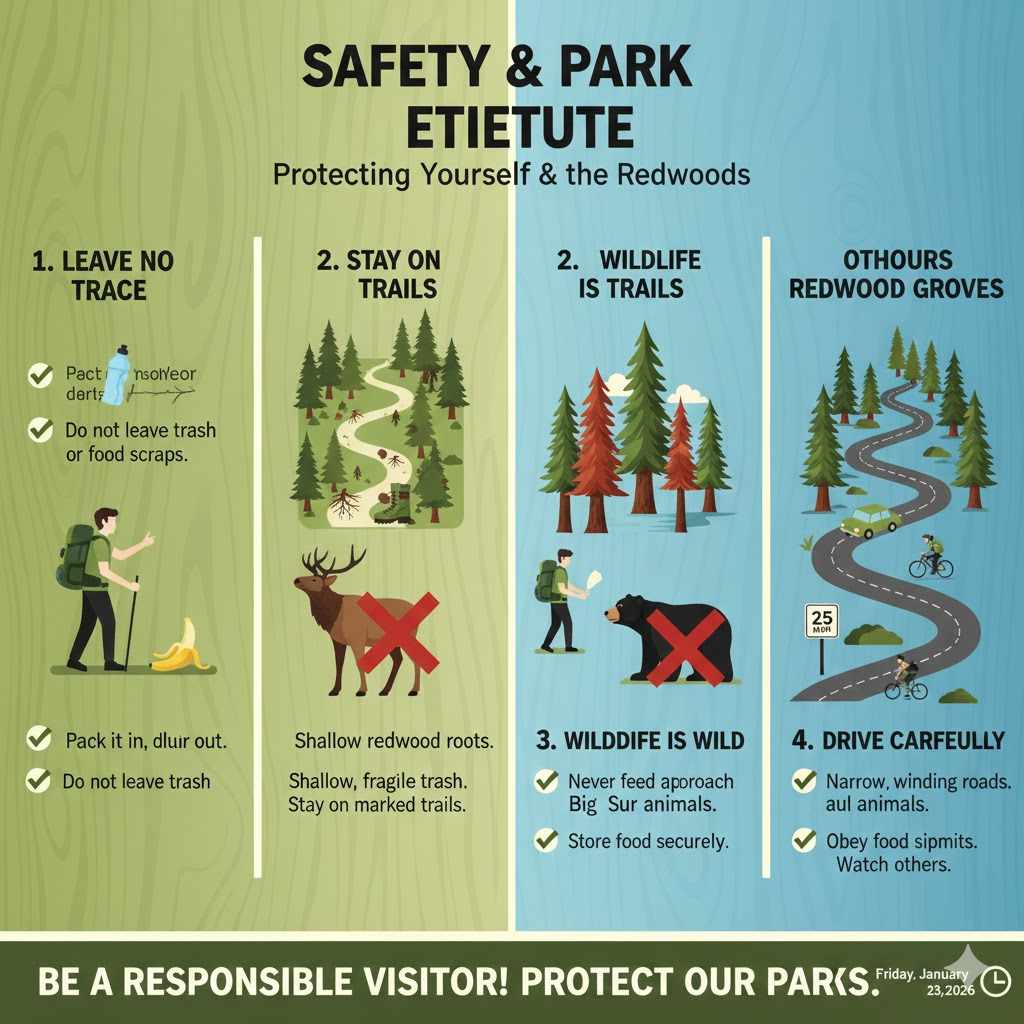
Safety and Park Etiquette
Visiting these ancient forests is a privilege. Following a few simple rules helps protect them for generations to come and keeps you safe during your visit.
- Leave No Trace: Pack out everything you pack in. Do not leave trash or food scraps behind.
- Stay on the Trails: Redwood roots are very shallow and fragile. Stepping off the trail can damage them and the delicate plants that grow on the forest floor.
- Wildlife is Wild: Never feed or approach wildlife. Roosevelt elk and black bears live in the parks. Keep a safe distance and store your food securely. For more tips, check the NPS safety guidelines.
- Drive Carefully: Roads can be narrow, winding, and shared with cyclists and pedestrians. Obey speed limits and be aware of large RVs.
- Check Conditions: Always check for current trail or road closures at a visitor center or on the park website before heading out.
Frequently Asked Questions
Do I need a park pass to visit Redwood National Park?
No, there is no entrance fee or pass required to enter Redwood National Park or to drive through on the main highways. However, the three state parks within the RNSP system (Jedediah Smith, Del Norte Coast, and Prairie Creek) charge day-use fees for developed campground areas and some specific trailheads.
Is there a fee to drive the Avenue of the Giants?
No, the Avenue of the Giants is a free scenic alternative to Highway 101. It is a public road, and there are no fees required to drive it or to stop at the majority of the pullouts and trailheads along the way.
Can I see the redwoods in just one day?
Yes, absolutely! While you can’t see everything, a day trip is very rewarding. If coming from the San Francisco area, a pre-booked trip to Muir Woods is your best bet. If you are road-tripping along the coast, dedicate a day to driving the Avenue of the Giants or exploring a single park area like Prairie Creek Redwoods.
Is it safe to visit the redwoods?
Yes, it is very safe. The main risks are related to nature. Be aware of changing weather, stay on marked trails to avoid getting lost, and drive cautiously. It’s also important to store food properly to avoid attracting wildlife like bears to your car or campsite.
What’s the difference between a redwood and a sequoia?
This is a great question! They are two different species of giant trees. Coast Redwoods (found in Redwood National Park) are the tallest trees in the world and grow only along the foggy coast of Northern California. Giant Sequoias (found in the Sierra Nevada mountains, like in Yosemite) are the world’s largest trees by volume—they are not as tall, but they are much wider.
Is Muir Woods the same as Redwood National Park?
No, they are two separate parks located about 300 miles apart. Muir Woods is a small, protected grove very close to San Francisco, ideal for a quick visit. Redwood National and State Parks is a huge, remote collection of parks in far Northern California that contains the vast majority of the world’s remaining old-growth redwoods.
Your Redwood Adventure Awaits
Planning a trip to see the redwoods doesn’t have to be complicated. Like any project, breaking it down into small, manageable steps is the key to success. By choosing the right park for your timeframe, packing smart, and knowing what to expect, you are setting yourself up for an incredible journey.
There is nothing quite like the feeling of peace and awe that comes from standing in a silent forest of giants. It’s a powerful reminder of nature’s beauty and resilience. Now you have the roadmap to experience it for yourself. Go make some memories!