Is Makita Track Compatible With Festool? (Real Fit Data)
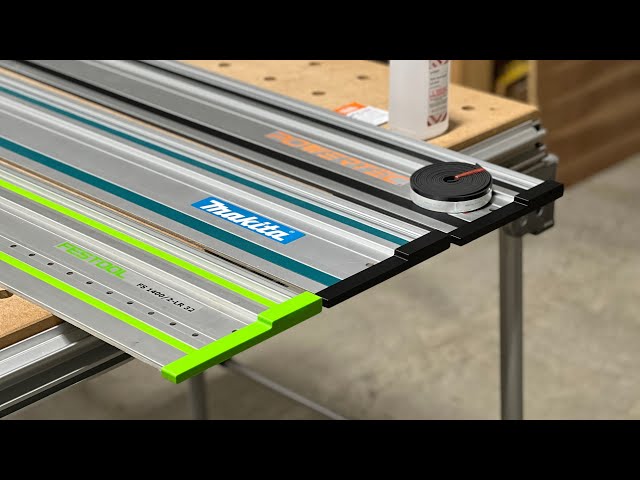
A Makita guide rail will physically accept a Festool track saw, and a Festool rail will accept a Makita saw – but the fit is not identical. Makita’s guide ridge runs about 0.01 inch (roughly 0.25mm) narrower than Festool’s, so a Festool saw can develop slight side-to-side wobble on a Makita rail. Getting a tight, splinter-free cut across brands means knowing which combinations run snug, which run loose, and the two-minute shim fix that closes the gap.
Is Makita Track Compatible With Festool? (Real Fit Data)
CROSS-BRAND PICK
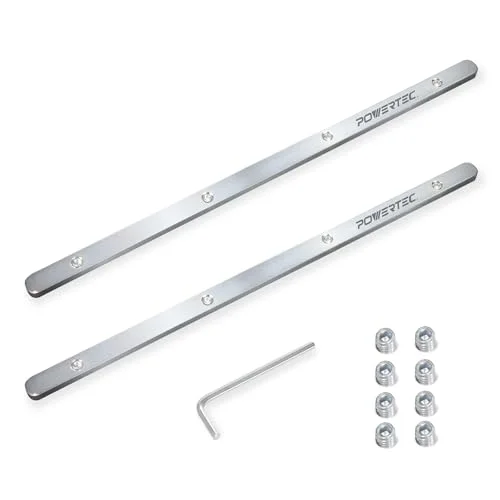 |
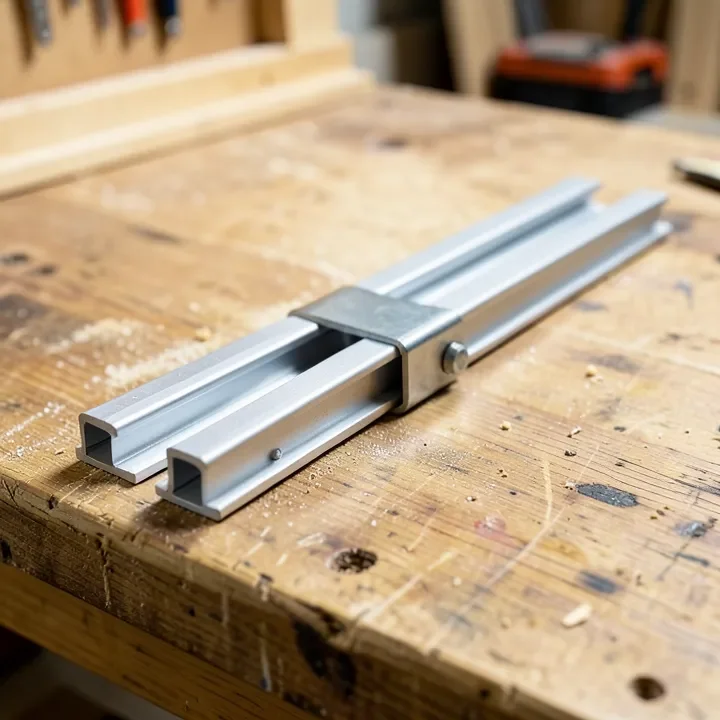
POWERTEC 71358 Track Saw Guide Rail Connector Set – $13.89 Built specifically to join guide rails across brands – works with Festool, Makita (39″, 55″, 118″ rails), DeWalt, and Triton without needing either brand’s proprietary connector.
|
Yes, in both directions – a Festool saw will clamp onto a Makita rail, and a Makita saw will clamp onto a Festool rail. The catch is fit tolerance, not compatibility in principle. Woodworkers who have measured both rails side by side (Festool Owners Group forum members among them) report Makita’s guide ridge is about 0.01 inch narrower than Festool’s. That’s small enough that most cuts still come out straight, but it’s enough clearance for a Festool saw’s base to rock slightly on a Makita rail, especially on bevel cuts where the saw’s weight shifts sideways.
What Is the Makita Track System?
Makita’s guide rail system ships in three lengths – 39″ (part 199140-0), 55″ (194368-5), and 118″ (194367-7) – and is designed around Makita’s own plunge saws, including the SP6000J. The rail uses a raised guide ridge that the saw’s base clamps onto, plus a rubberized splinter guard along the cut line that trims down on the first pass to match the exact kerf of whichever blade is installed.
What Is the Festool Track System?
Festool’s rail (used with the TS55 and TSC saws, among others) uses the same basic ridge-and-clamp concept but was designed first and has become the de facto reference dimension – most third-party guide rails, including Makita’s, are built to be close to Festool spec rather than the other way around. Festool rails also connect end-to-end with a separate connector bar for longer cuts, the same way Makita’s do.
Why Festool Saws Wobble on Makita Rails (and How to Fix It)
- Symptom: a faint side-to-side play when you push the saw down the Makita rail, most noticeable at the start and end of a cut.
- Cause: the 0.01″ gap between Festool’s base clamp and Makita’s narrower ridge.
- Quick fix: run one or two thin strips of masking tape or blue painter’s tape along the top of the Makita guide ridge, then re-test the saw’s fit. This is the fix most frequently cited by long-time track-saw users and it closes the gap without modifying either tool.
- Permanent fix: if you regularly cross brands, a universal connector/rail system rated for both (see below) removes the guesswork instead of shimming every time.
Makita vs Festool Rail Compatibility at a Glance
| Combination | Fits? | Fit quality |
|---|---|---|
| Festool saw on Makita rail | Yes | Slight wobble possible – tape shim fixes it |
| Makita saw on Festool rail | Yes | Snug, minimal play (Festool is the wider reference size) |
| Makita rail + Festool rail joined end-to-end | Not directly | Needs a universal connector, not the stock connector from either brand |
| Third-party track saw (e.g. DeWalt) on either rail | Varies by model | Check the specific saw’s base clamp width before buying |
Which Accessories Actually Cross Over?
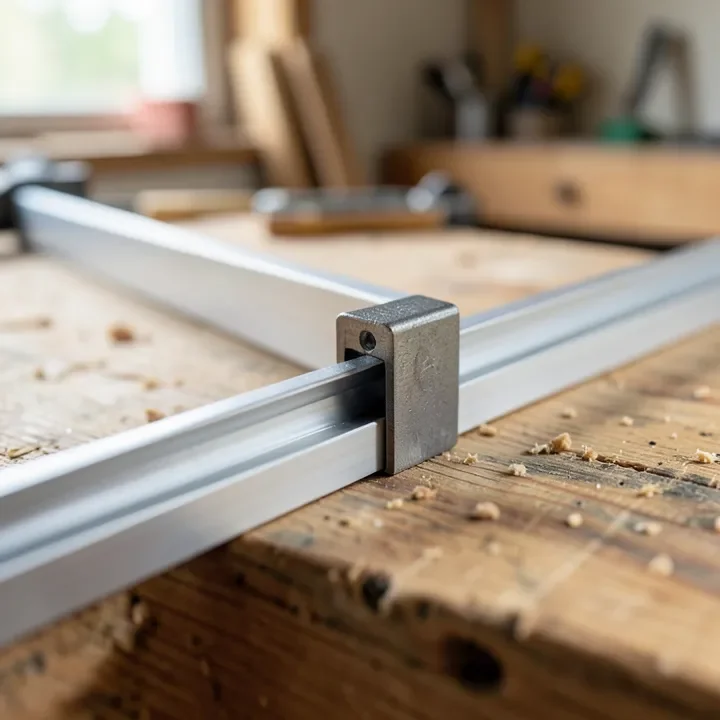
Not every accessory swaps cleanly just because the rails do. Splinter guard replacement strips are close enough in width to interchange in most cases. Rail connectors are the biggest exception – Makita’s stock connector is sized for Makita’s ridge and won’t seat correctly on a Festool rail, and vice versa. Clamps and stops built specifically for one brand’s rail profile are the least likely to cross over cleanly; a universal or POWERTEC-style clamp built to fit both is the safer bet if you own saws from both brands.
Common Mistakes When Mixing Brands
- Assuming a rail connector from one brand will join a rail from the other – measure or buy a universal connector instead.
- Ignoring wobble on bevel cuts – it shows up more on angled cuts than straight 90° rips, so test both before cutting expensive material.
- Ripping the splinter guard on a mismatched rail without checking blade offset first, which wastes the guard strip.
- Buying a full second rail system when a $10–15 connector or clamp would solve the actual problem.
If your buying decision is less about “can these physically connect” and more about which system to invest in going forward, our Makita vs Festool guide rail price and performance comparison breaks down the cost-per-length and accuracy differences between the two systems.
Frequently Asked Questions
Can I use a Festool saw on a Makita track?
Yes. The saw clamps on and cuts normally, but expect slightly more play than on a genuine Festool rail because Makita’s guide ridge runs about 0.01 inch narrower.
Are Makita and Festool tracks interchangeable?
The rails themselves are interchangeable for cutting purposes, but the connectors used to join two rails end-to-end are not – each brand’s stock connector is sized for its own rail only.
Do Makita clamps fit Festool tracks?
Not reliably. Clamps are cut to match one brand’s rail profile, so a Makita clamp can sit loose or fail to seat fully on a Festool rail. A universal clamp rated for both brands avoids the mismatch.
Why does my Festool saw wobble on a Makita rail?
Makita’s guide ridge is roughly 0.01 inch narrower than Festool’s, leaving a small amount of side-to-side clearance. A thin strip of masking tape along the ridge closes the gap.
Conclusion
Makita and Festool track saws are cross-compatible in practice, not just in theory – you can run either saw on either brand’s rail. The only real issue is the roughly 0.01-inch tolerance gap that lets a Festool saw wobble slightly on a Makita rail, and it has a two-minute tape fix. If you’re building a mixed-brand setup permanently rather than borrowing a rail for one job, a universal connector or clamp rated for both systems is the more reliable long-term answer than shimming every time.
Sponsored / affiliate links. As an Amazon Associate I earn from qualifying purchases. I may earn additional commission from eligible campaigns.