Is Teak A Hardwood? Proven Essential Guide
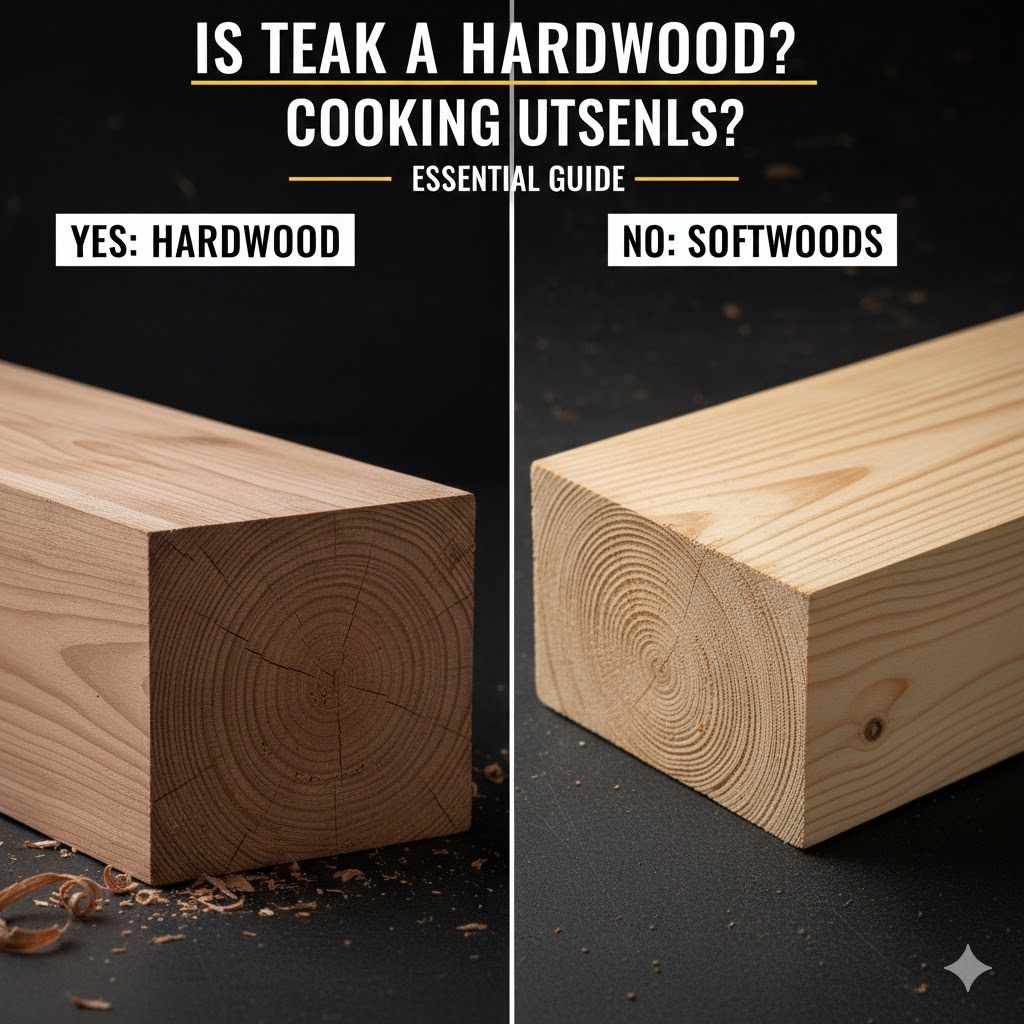
Teak is absolutely a hardwood. It is one of the most dense, durable, and water-resistant natural woods available, classifying it firmly in the hardwood category due to its botanical origins and density.
Welcome to the workshop! If you’re getting into furniture building, refinishing outdoor decks, or just trying to pick the right material for your next home project, you’ve probably bumped into the word “Teak.” You hear so many terms—hardwood, softwood, tropical wood—and it can make choosing simple lumber feel complicated. Does Teak fit the bill for the tough job you have planned? Don’t worry, friend. I’m Md Meraj, and we’re going to clear up the confusion right now.
The biggest mystery for new woodworkers is usually defining hardwood versus softwood. Is Teak just one of those fancy woods, or is it actually built tough? Knowing the answer saves you money and guarantees your project lasts for years. We will explore exactly what makes Teak a heavyweight champion in the wood world, how to spot it, and why it’s worth the investment for long-lasting durability.
Let’s put your mind at ease and dive straight into the proof about this amazing tropical wood.
Understanding the Basics: Hardwood vs. Softwood
Before we confirm Teak’s status, we need a quick lesson in wood identification. Many beginners think “hardwood” just means “heavy” or “hard to cut.” While often true, the real difference comes from how the tree grows, not just the wood’s feel in your hand.
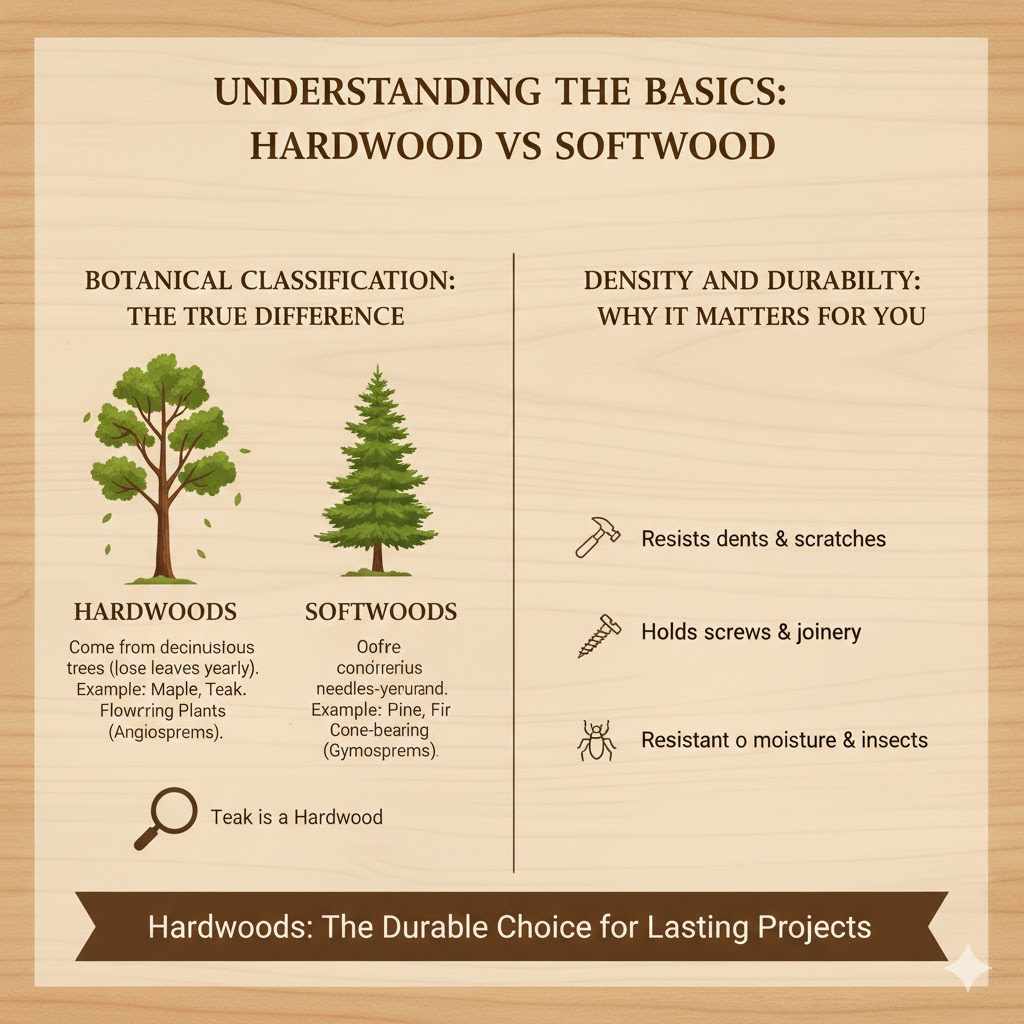
Botanical Classification: The True Difference
When scientists and foresters classify wood, they look at the seed structure. This classification is the proven scientific method, not just a marketing term.
- Hardwoods: These come from deciduous trees—trees that lose their leaves yearly. Think of Oak, Maple, Cherry, and yes, Teak. Botanically, these trees are flowering plants (Angiosperms).
- Softwoods: These come from coniferous (cone-bearing) trees that usually keep their needles year-round. Think Pine, Cedar, or Fir. These trees are Gymnosperms.
So, regardless of how soft Pine feels compared to dense Oak, if it drops its leaves seasonally, it’s a hardwood by definition. Teak trees fit perfectly into this hardwood group.
Density and Durability: Why the Classification Matters for You
While botany gives us the technical answer to “is teak a hardwood?”, the practical reason we care is durability. Hardwoods are generally denser, which gives them significant advantages in real-world applications, especially for furniture exposed to wear and tear.
When you work on a project, density affects:
- How well it resists dents and scratches (essential for tabletops).
- How well it holds screws and joinery.
- Its resistance to moisture and insects (crucial for outdoor use).
The Definitive Answer: Teak is Scientifically a Hardwood
Yes, the question “is teak a hardwood?” has a clear answer based on its origin. Teak (Tectona grandis) grows as a massive, slow-growing tropical tree, meaning it fits the botanical definition of a hardwood.
However, Teak earns its legendary reputation because it’s also one of the densest and most naturally oily hardwoods available. This combination makes it almost unmatched for outdoor use.
What Gives Teak Its Power? Natural Oils
If you’ve ever picked up a piece of raw Teak, you might notice it feels slightly slick or oily to the touch—that’s a huge clue to its incredible durability. This natural oil content is the secret sauce that separates Teak from many other common hardwoods like Ash or Poplar.
These natural oils (primarily tectoquinone) provide several amazing benefits:
- Water Resistance: The oil repels water, meaning Teak barely absorbs moisture, preventing swelling, cracking, or rotting, even when constantly soaked.
- Insect Resistance: Termites and wood-boring beetles dislike the taste and texture of the natural oils, giving Teak superior protection compared to non-oily woods.
- Stability: Because it manages moisture so well, Teak shrinks and swells less than woods like Maple or Oak when humidity changes. This means your outdoor chairs won’t fall apart after one rainy season!
If you are building outdoor furniture, knowing the importance of these natural resistances is key. For more detailed information on wood density standards, you can always reference reliable resources like those provided by forestry research organizations on wood properties.
Comparing Teak to Other Popular Woods
To truly appreciate why Teak is such a premium hardwood, let’s see how it stacks up against other woods you might use around your house or workshop. We’ll focus on two things important to us DIYers: hardness and moisture resistance.
We measure wood hardness using the Janka Hardness Scale. A higher Janka rating means the wood is harder to dent or scratch.
Janka Hardness Comparison Table
This table shows Teak right in the middle of the pack for hardness, but its oil content pushes its real-world durability far above standard North American hardwoods:
| Wood Type | Classification | Janka Hardness (lbs) | Best Common Use |
|---|---|---|---|
| Teak | Hardwood | 1000 – 1155 | Outdoor Furniture, Boat Decks |
| Red Oak | Hardwood | 1290 | Flooring, Cabinets |
| Maple (Hard) | Hardwood | 1450 | Cutting Boards, Countertops |
| Pine (Southern Yellow) | Softwood | 690 | Framing, Cheap Construction |
What does this tell us? While Oak or Maple are technically harder (higher Janka score), Teak’s inherent density and oil content make it inherently more resistant to water damage than those interior hardwoods. For an outdoor dining set, Teak wins every time because it battles the weather, whereas Red Oak would quickly rot.
The Softwood Factor
Take Pine, for example. It’s a softwood. It’s cheap, easy to cut, and great for temporary bracing or shelving. But expose that Pine deck to rain and sun for a few seasons, and you’ll see splintering, rot, and softness where the lumber used to be solid. Teak simply doesn’t suffer the same fate, making the hardwood classification truly matter for longevity.
Working With Teak: Tips for the Beginner Woodworker
Now that you know Teak is a super-durable hardwood, you might be wondering if it’s difficult to work with. Remember, as a beginner, approach every new material with respect, and you’ll get fantastic results. Teak offers some unique challenges because of its high oil content.
Essential Tool Preparation for Teak
The oils that protect Teak from water can also interfere with gluing and finishing. Preparation is key here!
- Cleaning the Surface: Before gluing or applying any finish, you must degrease the surface. Wipe down the joints or surfaces you plan to bond or seal with a solvent like denatured alcohol or acetone. This removes the surface oils that would otherwise prevent glue or stain from properly penetrating the wood fibers.
- Sharp Blades are Your Friend: Because Teak is dense, dull tools will tear the wood rather than cut it cleanly. You’ll get fuzzy edges, and your joints won’t line up. Always use fresh, sharp saw blades and plane irons.
- Adjusting Cutting Speed: When running Teak through a planer or jointer, take lighter passes than you might with Pine or Maple. A slow feed rate helps prevent tear-out on these dense fibers.
The Finishing Dilemma: To Seal or Not To Seal?
This is the million-dollar question for Teak owners. As a hardwood, it accepts stains, but most people embrace its natural aging process.
Scenario A: Maintaining the Golden-Brown Color (More Work)
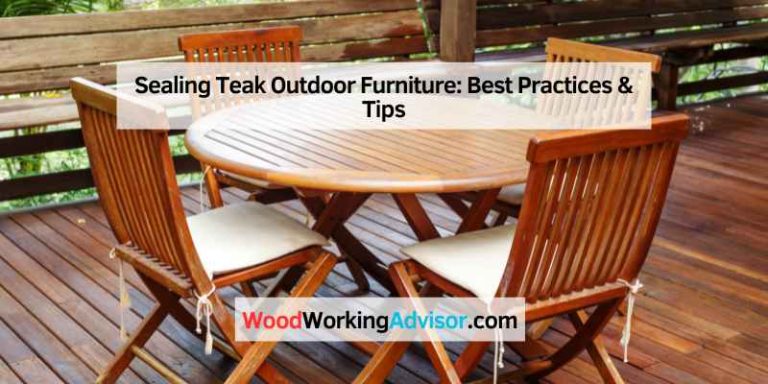
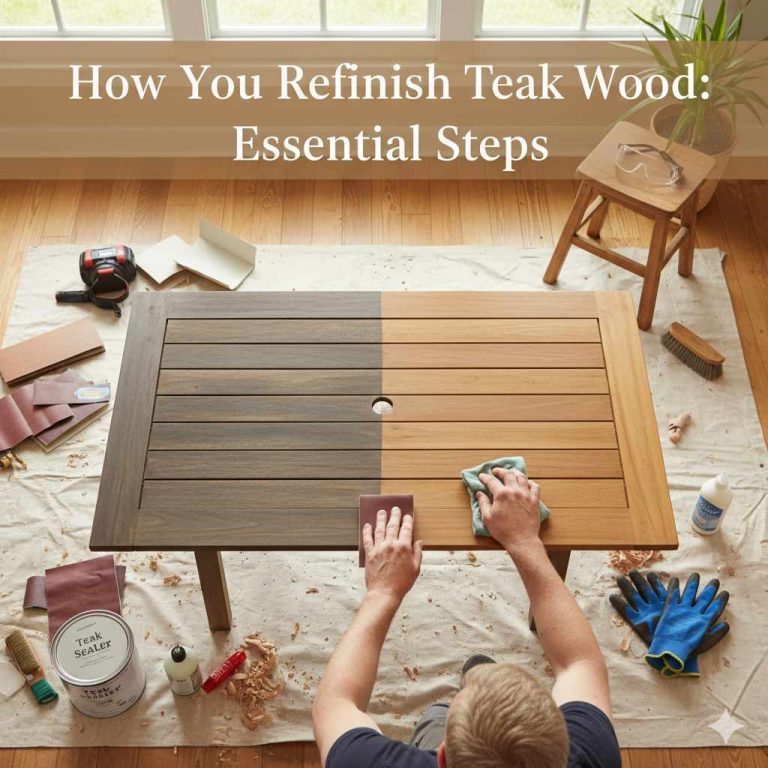
If you want your Teak patio furniture to stay that warm, honey-brown color, you must routinely seal it—usually twice a year—with a specialized Teak sealer or oil. This prevents UV rays from turning it gray.
Scenario B: Embracing the Silver Patina (Low Maintenance)
If you don’t mind a beautiful, silvery-gray weathered look, you can leave the Teak completely unfinished. Thanks to its incredible oil content, it will resist rot and look sophisticated for decades without any upkeep. This is why so many high-end exterior docks and railings use Teak—zero maintenance!
Why Teak is Expensive (and Why It’s Worth It)
Teak is seldom the cheapest option, and for beginners, that price tag can be scary. Understanding why it costs more helps you justify the investment for durable projects.
Here’s a quick breakdown of the cost factors related to this premium hardwood:
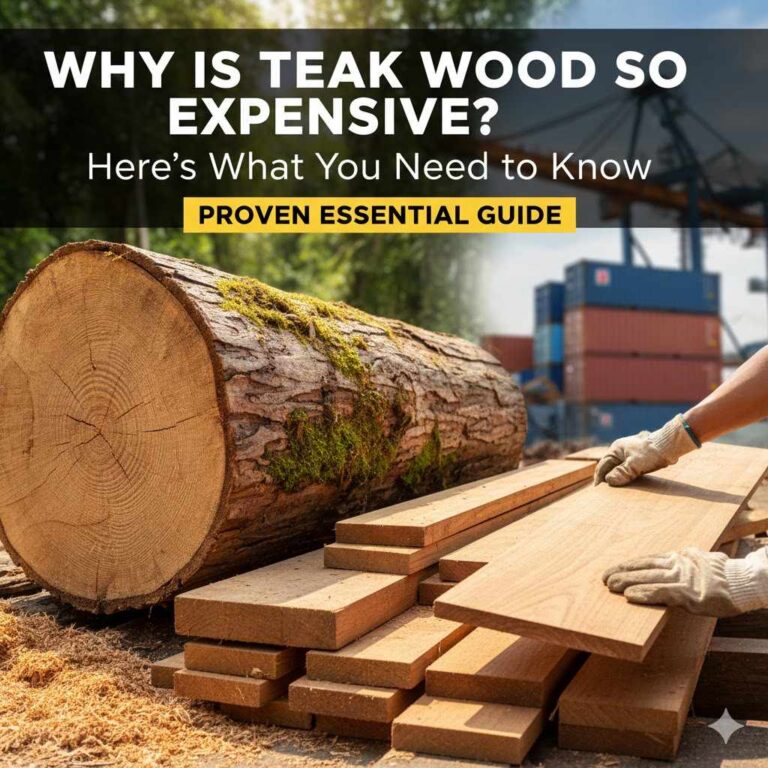
- Slow Growth: Genuine Teak grows very slowly, sometimes taking 50 to 100 years to mature enough for harvesting, which limits supply.
- Sustainability and Certification: Much of the world’s legally harvested Teak today is sustainably managed, adding cost compared to illegally logged tropical lumber. Look for Forest Stewardship Council (FSC) certification when possible.
- Transport and Sourcing: As a tropical hardwood, transportation costs are naturally higher than for domestic lumber like Oak or Maple.
Think of buying Teak for outdoor applications like buying a high-quality tool. A cheap shovel rusts in a year; a well-made steel one lasts a lifetime. Teak is the lifetime investment for exterior wood projects.
Real-World Application: Where Teak Shines
Since we know “is teak a hardwood” and understand its properties, where should you, the home crafter, use it to see the best results?
Best Beginner Projects for Teak Lumber
Keep the size manageable to reduce the material cost while still enjoying the benefits.
- Small Accent Tables: Perfect for a poolside drink stand or small end table. It handles splashing water with ease.
- Garden Bench Slats: If you build a frame from treated Pine or Cedar, use Teak planks just for the seating area to get that luxurious, durable top surface.
- High-Moisture Trim: Use small strips as trim around shower areas (if you know how to seal it well) or around outdoor windows where moisture buildup is common.
- Serving Trays: Even small items benefit from the oil content, making them great for holding wet glasses or serving food outdoors.
Where Teak is Absolutely Necessary
In these scenarios, only a highly stable, rot-resistant hardwood will suffice, and Teak is often the gold standard:
| Application | Reason Teak is Needed |
|---|---|
| Boat Building/Marine Uses | Extreme, constant exposure to saltwater and moisture. |
| High-End Outdoor Decking | Withstands foot traffic, UV exposure, and sitting water without structural degradation. |
| Greenhouse Benches | Constant high humidity and direct watering do not cause swelling or rot. |
When you see Teak used in these demanding roles, it confirms its place as a top-tier material, far exceeding what standard interior hardwoods can handle. You are working with one of nature’s best engineered woods!
Is All Teak Created Equal? Plantation vs. Old-Growth
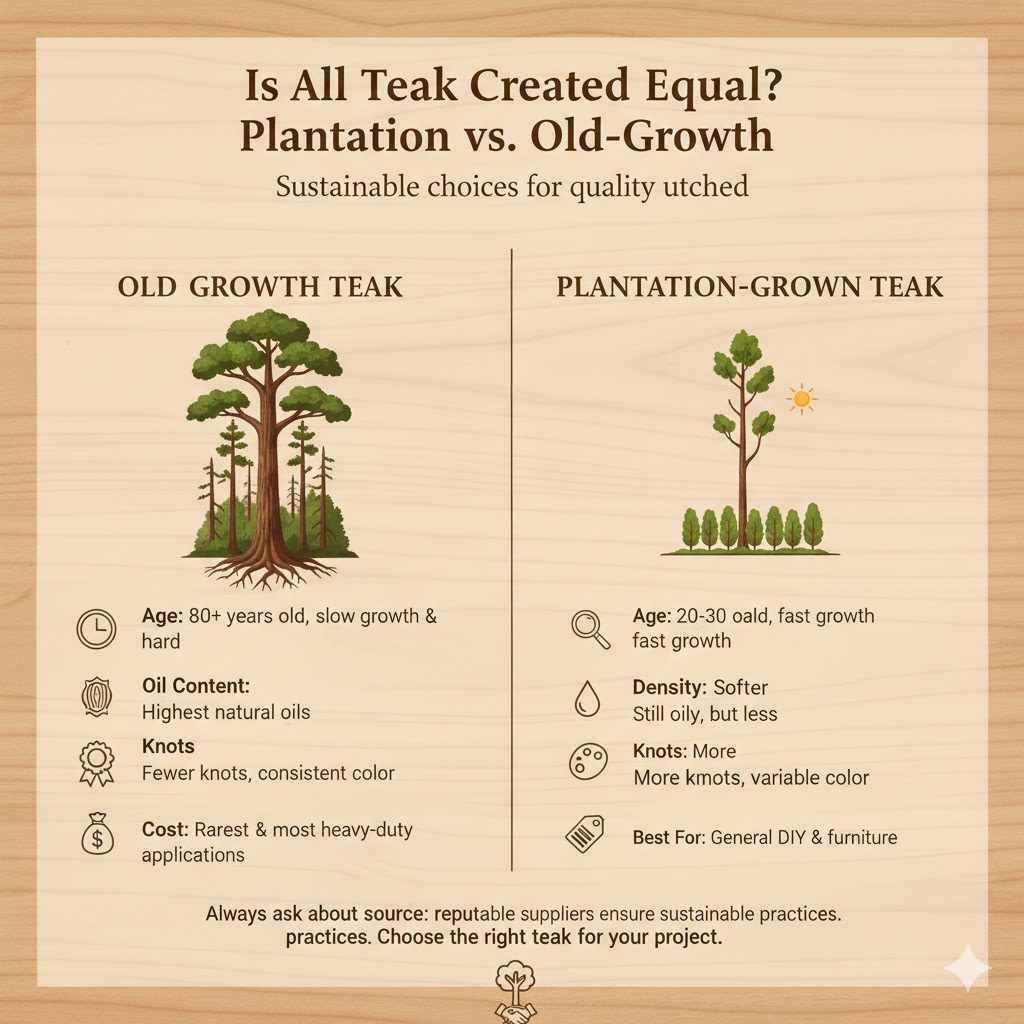
As demand rises, we see two main types of Teak on the market today, and the source does affect the final performance, even if they are all technically hardwoods.
Old-Growth Teak
This comes from genuinely old forests (often 80+ years old). Because the trees grew slowly in challenging conditions, the wood is exceptionally dense, has fewer knots, and the best oil content. This is the absolute highest quality, but it’s rare and carries the highest price tag.
Plantation-Grown Teak
This is fast-grown Teak, often harvested around 20-30 years. It is still a hardwood and still naturally oily, but it is softer, less dense, and the color can sometimes be less consistent than old-growth. For 99% of DIY projects—especially that patio table—plantation Teak is a wonderful, workable, and durable option.
When buying, always ask your supplier about the source. Sustainable management practices are crucial, and reputable suppliers will provide clear details about the age and origin of their lumber.
Frequently Asked Questions About Teak Wood
Q1: If Teak is a hardwood, is it harder to cut than Pine (a softwood)?
A: Yes, generally it is harder to cut because Teak is denser. You must use sharp tools and sometimes a slightly slower feed rate to prevent burning or tearing, even though Pine is classified as a softwood.
Q2: Does Teak always need an outdoor finish?
A: No. While you can apply sealants to keep its golden color, Teak naturally ages to a soft silver-gray patina when left unfinished outside. This patina is completely natural and doesn’t hurt the wood’s structural integrity because of the oils.
Q3: Is Teak too heavy for simple furniture builds?
A: Teak is relatively dense, so it is heavier than something like Cedar, but it’s not excessively heavy like dense Oak or Brazilian Walnut. It’s manageable for sturdy outdoor furniture without being cumbersome to move occasionally.
Q4: How do I clean Teak furniture safely?
A: For routine cleaning, use mild soap and water with a soft brush. Avoid harsh chemicals or bleach. If you need deep cleaning or want to remove mildew spots, a gentle scrub with diluted vinegar and lots of rinsing is usually all you need.
Q5: Can I use standard wood glue on Teak?
A: You can, but you must prepare the surface first. The natural oils repel standard glue. Wipe down all glued surfaces with acetone or mineral spirits to remove the surface oil residue, and then use a high-quality polyurethane exterior wood glue.
Q6: Is Teak dangerous to work with for beginners?
A: Like any hardwood, Teak requires standard safety precautions: wear safety glasses, hearing protection, and a dust mask (especially when sanding, as fine dust from dense wood can irritate the lungs). It is not known to be overly allergenic or chemically hazardous, making it a safe material if you respect the machinery.
Conclusion: Confidence in Your Wood Choice
You now have all the proof you need. To recap our journey: Teak is absolutely a hardwood based on its botanical classification. More importantly for your DIY success, it’s a powerhouse hardwood famous for its unparalleled natural oils that provide lifelong resistance to weather and insects.
Don’t let its cost intimidate you. Think about the time, effort, and eventual frustration you avoid by investing in a material that won’t crack, warp, or rot just because it rained a little. Whether you aim for the rich golden finish or the distinguished silver patina, knowing that you are working with a dense, durable, high-performing hardwood like Teak gives you the confidence to tackle those outdoor and moisture-prone projects.
Go ahead and select that piece of Teak lumber. Measure twice, cut once, enjoy the smooth, familiar feel of quality material in your hands, and craft something truly lasting. You’ve got this!