Boat Decking Materials Compared: Teak, Synthetic Teak & EVA Foam
Real teak is still the benchmark for boat decking — naturally grippy underfoot, but $75 to $150 per square foot installed and due for oil yearly. Get it wrong and you’ll overpay for teak on a boat you’re selling in five years, or bolt down foam that fades in one hard summer. This guide compares teak, synthetic teak, and EVA foam by cost, weight, and lifespan, plus what a re-deck costs by boat length.
Affiliate disclosure: this post contains Amazon affiliate links. We may earn a commission on qualifying purchases at no extra cost to you.
Quick Answer
EVA foam decking (SeaDek-style) is the best all-around boat decking material for most owners: $8–$25 per square foot installed, about 0.3 lb per square foot, and non-slip even soaked. Choose real teak ($75–$150/sq ft) for resale value and classic looks, or hard synthetic teak ($30–$70/sq ft) as a lighter, lower-maintenance middle ground.
What Are the Main Boat Decking Materials?
Best EVA Foam Boat Decking Pick
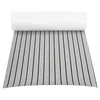
Brilluxa Faux Teak EVA Foam Marine Flooring Sheet
A self-adhesive, laser-cut-ready EVA foam sheet for cockpit soles, swim platforms, and cooler tops — the same approach as SeaDek-style factory decking.
- Best for: A full DIY re-deck on a small-to-mid center console or swim platform
- Why we picked it: Widest coverage sheet in this comparison, so fewer seams on a full cockpit sole
- Main drawback: Custom-cutting large sheets to a curved deck template takes patience and a sharp blade
Compare more EVA foam decking options
 Option 1 Budget Faux Teak EVA Foam Sheet (95″ x 35.5″)
|
 Option 2 Sootvp Self-Adhesive Anti-Slip Teak Mat
|
 Option 3 240x60cm EVA Foam Faux Teak Sheet
|
As an Amazon Associate we earn from qualifying purchases.
Boat decking is the wear-surface material fastened or bonded over the plywood or fiberglass substrate on the cockpit sole, side decks, and swim platform. Three materials dominate the market today, and each one solves a different problem.
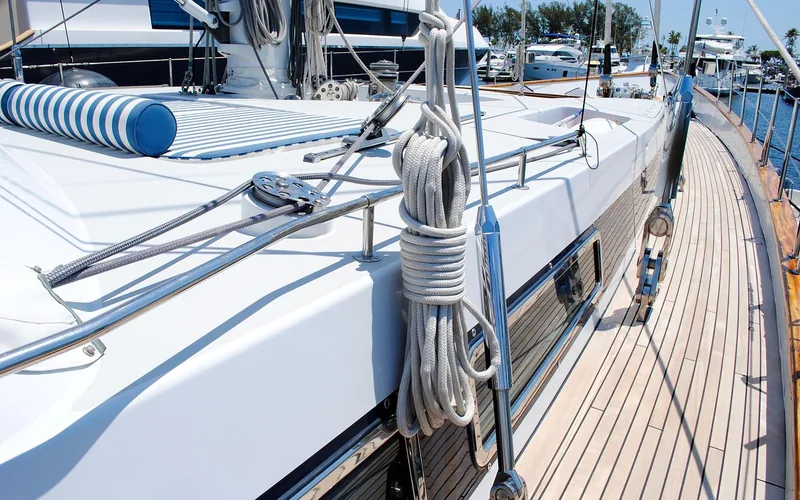
Real teak is a tropical hardwood decking material that stays grippy even when wet because of its natural oil and silica content. It’s fastened as individual planks with black polysulfide caulking between the seams, then sanded flush — the same joinery approach used on any teak project exposed to water.
Synthetic teak (brands like Flexiteek, PlasDeck, and Tek-Dek) is a PVC or composite decking material milled to look like caulked teak planks. It’s glued down as pre-cut sheets rather than fastened plank by plank, which is why installed labor costs run lower than real teak.
EVA foam decking — the SeaDek-style marine mat you’ll see on most new center consoles — is a closed-cell foam sheet with an adhesive backing, laser-cut to fit the deck and usually embossed with a faux-teak or diamond-pattern texture for traction.
Boat Decking Materials Compared: Price, Weight & Lifespan
Price ranges below are for material and professional installation together, based on typical U.S. marine flooring quotes. Get quotes from a local installer before budgeting — brand, boat shape, and region shift these numbers.
| Material | Installed Cost | Weight | Typical Lifespan | Maintenance |
|---|---|---|---|---|
| Real Teak (Grade A) | $75–$150+/sq ft | 2–4 lb/sq ft | 15–40 years | Oil or clean yearly; re-caulk seams every several years |
| Synthetic Teak (Flexiteek, PlasDeck) | $30–$70/sq ft | Lighter than teak, heavier than EVA foam | Roughly 4x an EVA foam mat’s lifespan | Wash with soap and water; no oiling or caulking |
| EVA Foam (SeaDek-style) | $8–$25/sq ft | ~0.3 lb/sq ft | 5–8 years in strong sun | Rinse with mild soap; replace when it fades or peels |
Weight matters more than most first-time boat owners expect: a 150-square-foot teak deck can add 300–600 lbs to a boat, which shows up in fuel burn and how the boat sits at the dock. EVA foam adds closer to 45 lbs for the same area.
How Much Does Boat Decking Cost by Boat Length?
Per-square-foot pricing is hard to plan around without knowing your actual deck area. Here’s what a full re-deck typically runs once you multiply price by size — treat these as planning ballparks, not quotes.
| Boat Length | Approx. Deck Area | Real Teak | Synthetic Teak | EVA Foam |
|---|---|---|---|---|
| ~20 ft | 40–60 sq ft | $3,000–$9,000 | $1,200–$4,200 | $320–$1,500 |
| ~30 ft | 100–150 sq ft | $7,500–$22,500 | $3,000–$10,500 | $800–$3,750 |
| ~40 ft | 200–300 sq ft | $15,000–$45,000 | $6,000–$21,000 | $1,600–$7,500 |
These figures only cover the walking surface. Add roughly 10–20% if the substrate underneath (plywood or fiberglass core) also needs repair before the new decking goes down — a common surprise on older boats. According to Motor Boat & Yachting, real teak supply has also tightened in recent years as sustainable old-growth stock shrinks, which is part of why synthetic and foam alternatives have gained share on new-build boats.
How to Install EVA Foam Boat Decking Yourself
EVA foam is the one boat decking material a reasonably careful DIYer can install in a weekend. Real teak and hard synthetic teak both need professional templating and, for teak, actual carpentry — skip straight to a marine flooring installer for those two.
- Clean and dry the deck: Strip wax, oil, and old adhesive residue, then let the surface dry completely — adhesive won’t bond to a damp or oily deck.
- Make a paper or cardboard template: Trace every deck section, including hatches, cleats, and drain scuppers, so the foam is cut before you ever touch adhesive.
- Cut the sheet to the template: Use a sharp utility blade and cut from the underside so any small errors don’t show on the top face.
- Dry-fit before peeling any backing: Lay every piece in place first and check seams, cleat cutouts, and drain access.
- Peel and press from one edge: Remove the adhesive backing a few inches at a time, pressing out air bubbles as you go rather than dropping the whole sheet at once.
- Roll the full surface: Use a hard rubber roller or a rolling pin to set the adhesive evenly, working from the center outward.
Maintaining Boat Decking So It Lasts
Every material on this page fails the same way if you skip maintenance: the surface stops shedding water, then whatever is underneath it starts to rot or delaminate. For general outdoor wood upkeep beyond decking, see our full wood care & maintenance guide.
Real teak should be cleaned with a soft brush and a teak-specific cleaner, never a pressure washer — pressure washing strips the soft spring-growth wood between the grain lines and leaves the surface ridged. Oil or leave it to gray naturally, and plan to re-caulk seams every several years as the polysulfide shrinks and cracks. Our guide on how to clean teak wood covers the cleaner and sanding-grit specifics.
Synthetic teak only needs soap and water — avoid solvent-based cleaners, which can craze or discolor PVC-based products over time.
EVA foam wants a rinse with mild soap and fresh water after saltwater exposure. UV is what actually kills it, so a marine UV protectant spray applied a few times a season is the single best way to stretch a 5-year mat closer to 8.
Which Boat Decking Material Should You Choose?
Choose real teak if resale value and a classic look matter most and you’re keeping the boat long-term — it’s the only material here that can outlast the boat itself with care. Choose synthetic teak if you want the teak look with a fraction of the maintenance and don’t mind a bigger upfront bill than foam. Choose EVA foam if weight, cost, or a DIY weekend install matter most — it’s the right call for most fishing boats, pontoons, and center consoles that see hard daily use.
Whichever surface material you pick, it’s only as good as what’s underneath it. If the plywood or fiberglass core beneath the decking is soft or delaminating, replacing the surface alone won’t fix the problem — see our comparison of sailboat-grade hardwood vs. balsa core inserts for that structural layer.
“After years of working teak into cutting boards, workbenches, and outdoor furniture, the thing that stands out about it on a boat deck isn’t the caulked seams sailors talk about — it’s that the wood’s own oil and silica content keep it from getting slick even soaked through. Synthetic and foam decking makers spend real R&D money chasing that same grip in a manufactured sheet.”
— Md Meraj, Woodworking Advisor
Frequently Asked Questions
What is the best material for a boat deck?
For most boats, EVA foam (SeaDek-style) is the best all-around choice: light, non-slip, and the cheapest to install. Choose real teak instead if resale value and classic looks matter more than cost, or synthetic teak for the teak look with less upkeep than real wood.
How long does teak decking last on a boat?
Real teak decking typically lasts 15 to 40 years with regular cleaning and periodic re-caulking of the seams. Boats kept in covered slips or moderate climates tend toward the high end; teak left in constant direct sun and saltwater spray wears faster.
Is synthetic teak better than real teak?
Not universally better — it’s a different trade-off. Synthetic teak costs less installed, needs no oiling or re-caulking, and won’t gray unevenly, but real teak generally holds resale value better and ages with a patina buyers associate with higher-end boats.
Can you put teak decking on a fiberglass boat?
Yes. Real teak, synthetic teak, and EVA foam are all routinely installed over a fiberglass deck — teak planks are typically bedded and fastened into the fiberglass, while synthetic teak and EVA foam are glued directly to a clean, dry gelcoat surface.
How much does it cost to redo a boat’s teak decking?
A full teak re-deck typically runs $75 to $150 or more per square foot installed, which works out to roughly $7,500 to $22,500 for a 30-foot boat’s 100 to 150 square feet of deck. Get a firm on-site quote, since boat shape and existing substrate condition change the labor time significantly.
Is EVA foam decking worth it?
For most owners, yes. EVA foam costs a fraction of teak or synthetic teak, weighs almost nothing, and is genuinely non-slip when wet. The trade-off is a shorter lifespan — plan on replacing it every 5 to 8 years in strong sun versus decades for teak.
Conclusion
There’s no single best boat decking material — only the right trade-off for how you use the boat. Weigh cost, weight, and how much upkeep you’re actually willing to do against how long you plan to own the boat, then pick real teak, synthetic teak, or EVA foam accordingly.
Sponsored / affiliate links. As an Amazon Associate I earn from qualifying purchases. I may earn additional commission from eligible campaigns.