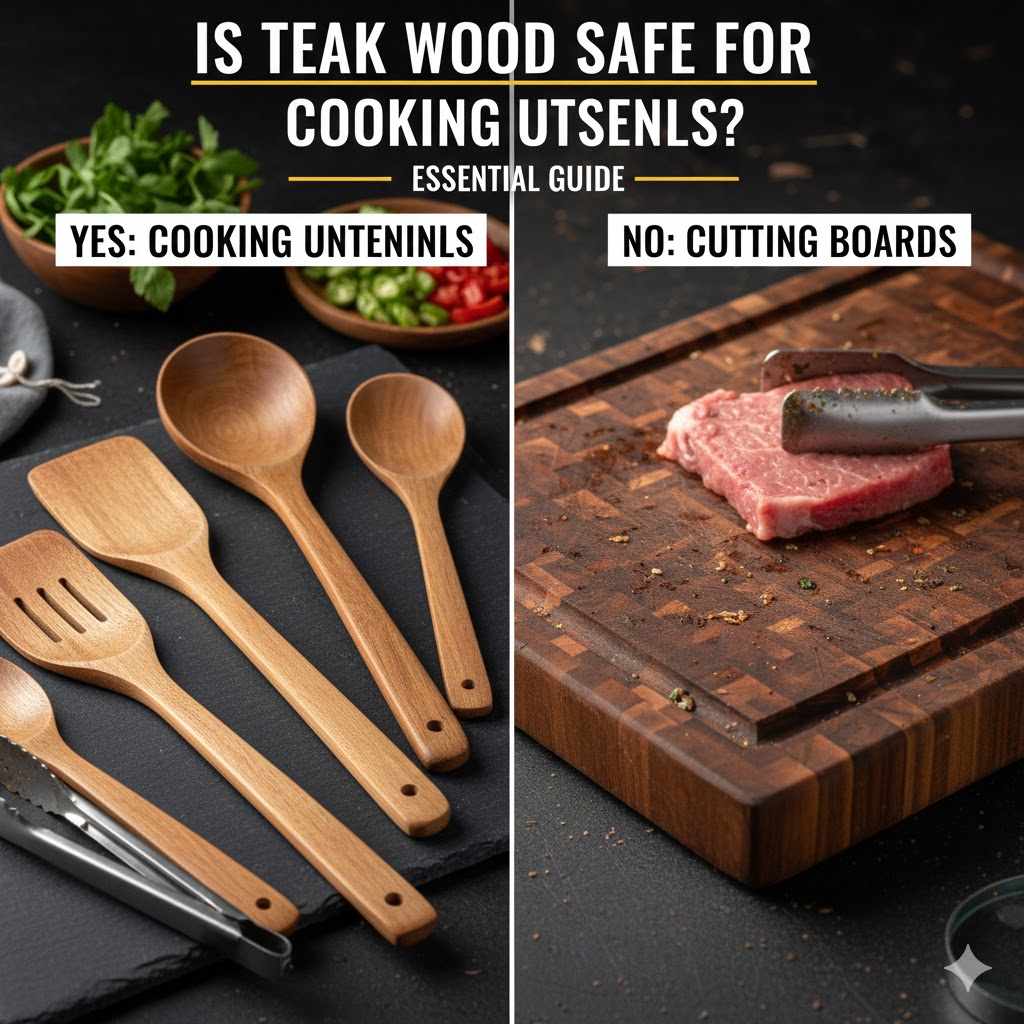
Is Teak Wood Safe For Cooking Utensils? Essential Guide
Quick Summary: Yes, teak wood is generally safe and excellent for cooking utensils. Its natural oils make it highly water-resistant and hygienic, provided the wood is untreated, properly sealed with food-safe mineral oil, and never exposed to harsh chemicals.
Welcome to the workshop! If you’re new to woodworking or just upgrading your kitchen, you’ve probably wondered about using natural materials. Choosing the right wood for kitchen tools can feel complicated. You want something beautiful that lasts, but safety comes first. Is teak wood safe for cooking utensils? The answer is a resounding yes!
This fantastic hardwood is trusted around the globe for durability. Don’t worry if you feel unsure; we will walk through exactly why teak is a top choice for your kitchen tools, how to pick the best pieces, and the simple steps to keep them in great shape. You’ve got this!
Is Teak Wood Safe For Cooking Utensils? The Essential Guide
When we bring wood into the kitchen, safety is our number one concern. We need materials that don’t harbor germs, don’t break down when wet, and won’t leak harmful chemicals into our favorite meals. As your woodworking mentor, I want to give you the facts so you can craft or buy with complete confidence. Teak has been used in everything from boat building (where it sees tons of moisture) to fine furniture for centuries, making it a strong candidate for spatulas and spoons.
This guide will dive deep into the science behind teak, look at potential safety concerns, and give you the know-how to ensure any teak utensils you own or make are perfectly safe for your family.
The Science Behind Teak: Why It Excels in the Kitchen
Teak (Tectona grandis) isn’t just popular because it looks rich and luxurious. Its actual cellular structure makes it a champion in high-moisture, high-use environments—exactly what a busy kitchen demands. Understanding these natural qualities will show you why many top chefs prefer it over cheaper woods.
Natural Oils: The Secret Weapon
The magic of teak lies in its high content of natural oils and silica. These oils are like built-in waterproofing agents. They make the wood incredibly resistant to moisture absorption.
- Water Resistance: Unlike maple or pine, teak barely swells or shrinks when wet, which prevents cracking—a huge benefit for spoons constantly soaked in soups or sauces.
- Fungus and Rot Defense: These natural oils also act as a repellent against molds, fungi, and even termites (though you probably won’t have termites attacking your ladle!). This inherent defense makes teak inherently more hygienic than many other porous woods.
- Durability: The wood is hard, dense, and sturdy. It resists denting and scratching from normal kitchen use far better than softer woods.
Why High Density Matters for Food Safety
When we talk about wood safety, we worry about tiny pores soaking up liquids, which can lead to bacterial growth. Teak is a very dense hardwood. Its tight grain structure means fewer open pores on the surface.
According to testing related to wood hardness and kitchen applications, denser woods like teak hold up better to repeated washing and cleaning cycles than softer woods. This superior structural integrity means less surface area for bacteria to hide.

Addressing Safety Concerns: Chemicals and Allergies
While the wood itself is safe, we must discuss the context: how it is sourced and how it is finished. This is where most beginner confusion or potential risk comes in.
1. Untreated vs. Treated Teak
This is the single most important safety distinction when considering teak for culinary use. You must use teak that has not been chemically treated.
Chemical treatments used for outdoor lumber or construction wood are toxic. These chemicals are designed to resist outdoor weathering but are definitely not something you want near your dinner.
- Safe Teak: Furniture grade, responsibly harvested, or kitchen-specific teak, which is dried and usually only finished with food-grade oils (like mineral oil).
- Unsafe Teak: Any lumber marked for pressure-treating, staining for decking, or chemically preserved for outdoor use. Always ask the supplier where the wood came from and what treatments, if any, it has received.
If you are buying a finished utensil, ensure the seller confirms it is “food-safe.” If you are carving it yourself, always use raw, kiln-dried (or naturally air-dried) teak lumber.
2. Mineral Oil vs. Other Finishes
For DIY utensil making, how you seal the wood is critical. You should never use standard varnish, polyurethane, or stains not rated for food contact. They can chip, peel, or leach chemicals.
The gold standard for finishing wood that touches food (like cutting boards or spoons) is pure, food-grade mineral oil, often found near the hardware section or sometimes labeled as cutting board oil. For extra protection, you can mix mineral oil with beeswax, creating a conditioning paste.
For more information on what constitutes a food-safe finish, organizations like the Food and Drug Administration (FDA) provide guidelines regarding materials that contact food surfaces. While they don’t specifically dictate wood species, they emphasize non-leaching, cleanable surfaces. [You can often find general guidelines regarding food contact surfaces through reputable government health and safety sites.]
3. Allergies (The Small Caveat)
While rare, some people have contact allergies to various hardwoods. Teak allergies, though uncommon, can sometimes manifest as contact dermatitis (a rash). This usually happens with heavy sanding dust during manufacture, not regular use. If you know you have sensitivity to other exotic woods, test a new utensil briefly before committing to long-term use.
Teak Utensil Safety Comparison Table
How does teak stack up against other common cooking woods? This quick table helps put its safety and performance into perspective for you, the aspiring craftsman.
| Wood Type | Natural Water Resistance | Durability (Hardness) | Food Safety Profile (Untreated) | Best For |
|---|---|---|---|---|
| Teak | Excellent (High Natural Oil) | High | Excellent | Long-term utensils, frequently wet use |
| Maple (Hard Maple) | Good | Very High | Excellent | Cutting boards, rolling pins |
| Bamboo (Technically a grass) | Good | Medium-High (Often laminated) | Good (Check glue type) | Light stirring, serving |
| Pine (Softwood) | Poor | Low | Fair (Prone to absorbing moisture) | Not recommended for heavy cooking use |
DIY Safety: Making Your Own Teak Cooking Tools
If you are planning to carve your own teak spatula or stirring spoon, follow these steps closely. Craftsmanship goes hand-in-hand with safety here!
Tools and Materials Checklist (For the Beginner Carver)
Remember, we prioritize safety in the shop above all else. Always wear appropriate safety gear.
- Food-Safe Teak Blank: Ensure it’s kiln-dried or well-seasoned, and definitely NOT chemically pressure-treated.
- Woodworking Tools: Bandsaw or jigsaw (for rough shaping), rasps, carving knives, and sandpaper.
- Safety Gear: Safety glasses and a dust mask (teak dust can irritate the lungs).
- Finishing Supplies: Food-grade Mineral Oil and soft, clean cloths for application.
Step-by-Step Guide to Sealing Your New Teak Utensil
This finishing process is what transforms raw, safe wood into a safe, functional kitchen tool. Skipping the oil is not an option, even for water-resistant teak!
- Sanding Smooth: Sand your completely finished shape until it is incredibly smooth—go up to 400 or 600 grit. No fuzzies mean fewer places for food to cling. Wipe away all dust thoroughly.
- The First Oil Bath (The Saturate Stage): Apply a liberal, thick coat of food-grade mineral oil to the entire utensil. Let it soak in for at least 30 minutes. For a brand-new piece, you might need two or three generous coats to fully saturate the dry wood fibers.
- Wipe Off Excess: After the soaking time, wipe off every bit of wet oil residue with a clean, dry cloth. The wood should look smooth and slightly deepened in color, not slick or greasy.
- Optional Curing (Beeswax): If you want extra protection against water spots, apply a paste wax made from melting beeswax and mixing it into warm mineral oil (use a 1:4 ratio of wax to oil). Rub this paste into the wood and let it cure for a few hours.
- Final Buff: Buff the utensil lightly with a fresh, clean cloth. Your utensil is now sealed, safe, and ready for the stove!
Proper Care and Maintenance: Keeping Teak Utensils Hygienic
The lifespan and safety of your teak tools depend heavily on how you care for them post-purchase or post-carving. Unlike metal or plastic, wood needs gentle attention.
What NEVER to Do With Teak Utensils
This is the ‘don’t break it’ list. These simple prohibitions ensure your tool stays food-safe and lasts years.
- Never Put Them in the Dishwasher: The harsh detergents and high heat cycles strip away the wood’s natural oils and cause rapid cracking and warping.
- Never Soak Them Long-Term: While they can handle washing, do not leave them sitting in a sink full of soapy water overnight. Wipe clean and dry them shortly after use.
- Never Use Harsh Cleaners: Avoid bleach, abrasive scrubbers, or ammonia-based cleaners. Stick to hot, soapy water.
- Never Use Non-Food-Safe Oils: Do not use olive oil, canola oil, or vegetable oil to treat teak. These oils go rancid over time, creating off-flavors and potential health concerns within the wood fibers.
The Re-Oiling Routine
Because you wash your utensils, some of that protective mineral oil layer will eventually wear away, especially on the working ends. Re-oiling keeps the surface non-porous and vibrant.
Ask yourself these questions to decide when to re-oil:
- Does the wood look dull or dry?
- Does water bead up when splashed on the surface, or does it immediately soak in? (If it soaks in, it’s time for oil!)
- Is the utensil several months old and frequently used?
When re-oiling, simply repeat Step 2 and 3 from the sealing guide above. A quick application once every few months (or when it looks dry) is usually plenty for sturdy teak tools.
Addressing Concerns About Stains and Porosity
Beginners often worry that vibrant sauces, like tomato paste or curry, will permanently stain their light-colored wood, making it look dirty or unhygienic.
It is true that highly pigmented foods can temporarily stain the surface of any wood, including teak. However, because teak’s density resists deep penetration, these stains are usually surface-level.
If a stain is persistent, you can try this gentle wood cleaning method:
- Make a thick paste using baking soda and water.
- Gently rub the paste onto the stained area using a soft cloth, moving with the grain.
- Rinse thoroughly with warm water.
- Immediately dry completely, then re-apply a thin coat of mineral oil to that spot.
This gentle abrasion cleans the stain without damaging the underlying, oiled surface. This ability to be lightly cleaned and re-finished is a major reason why wood—when cared for properly—is a wonderfully long-lasting, sustainable material in the kitchen, often lasting longer than many plastic counterparts.
Sourcing Teak Safely: Ethical and Sustainable Choices
As your mentor, I believe that good craftsmanship extends beyond the workbench to include responsible material sourcing. If you are buying pre-made utensils or lumber for carving, think about where your teak comes from.
The Problem with Old-Growth Teak
Historically, the best teak came from slow-growing, old-growth natural forests. Harvesting these trees is environmentally destructive and generally unsustainable now. Most modern, responsibly sourced teak comes from plantations.
Looking for Plantation-Grown and FSC Certified Wood
When buying lumber, look for certifications that indicate responsible forestry practices:
- FSC Certification: The Forest Stewardship Council (FSC) certifies that the wood was harvested in a way that protects biodiversity and avoids social/environmental harm. This is always the best route if you are carving.
- Sustainable Harvesting: Plantation teak is often faster-growing, providing a renewable source. While it may have a slightly different oil content than ancient teak, modern plantation teak is perfectly adequate and much more ethical for utensil making.
When purchasing finished utensils, check the brand description. Reputable manufacturers will usually advertise if their teak is “sustainably sourced” or “FSC certified.” If they don’t mention it, it might be an indication they sourced it in the cheapest, least traceable way possible.
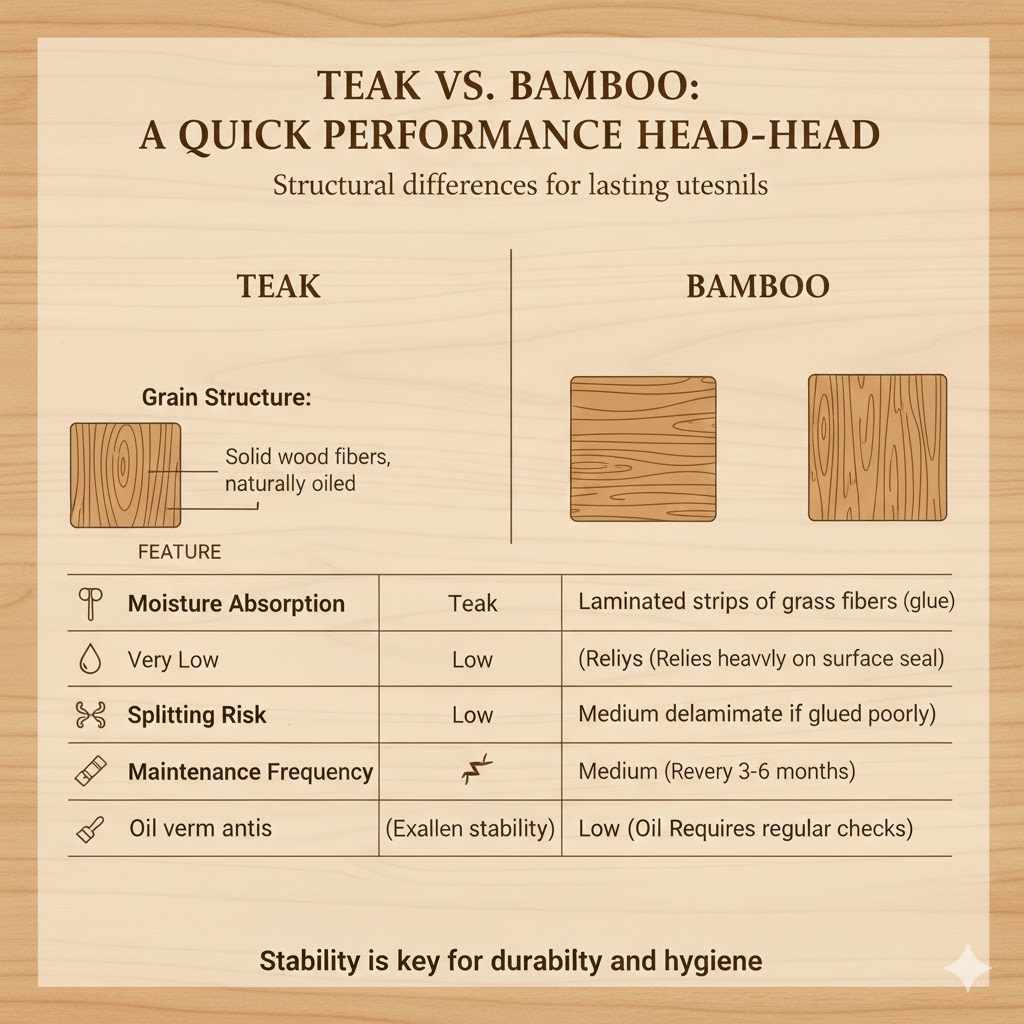
Teak vs. Bamboo: A Quick Performance Head-to-Head
Many beginners default to bamboo because it’s cheap and renewable. However, for cooking utensils that see heavy use, teak almost always wins, mostly due to structural differences.
| Feature | Teak | Bamboo |
|---|---|---|
| Grain Structure | Solid wood fibers, naturally oiled | Laminated strips of grass fibers (glue dependent) |
| Moisture Absorption | Very Low | Medium (Relies heavily on surface seal) |
| Splitting Risk | Low (Excellent stability) | Medium (Can delaminate if glued poorly) |
| Maintenance Frequency | Low (Oil every 3-6 months) | Medium (Requires regular checks) |
The key takeaway here is stability. Since bamboo utensils are often made of many glued pieces, if water penetrates the glue line, the tool can split apart. Teak, being a solid piece of wood (even if it’s an end-grain block), is inherently more stable against liquid stress.
Frequently Asked Questions (FAQ) About Teak Cooking Utensils
Q1: Can I safely use my new teak wooden spoon to stir tomato sauce?
Yes, absolutely. Teak is non-reactive. Tomato sauce is acidic, but as long as the wood is properly sealed with mineral oil, the acid will not pull any chemicals out of the wood, and the wood won’t impart any taste to the sauce.
Q2: Do I need to oil my teak utensil before the first use?
If you bought it new from a reputable kitchen supplier, it should already be sealed. However, if you carved it yourself, or if the purchased spoon looks dry, yes, saturate it with food-grade mineral oil first. This initial conditioning is vital for food safety and longevity.
Q3: If my teak spoon starts to look grey or dry, is it ruined?
Not at all! That just means the surface oils have worn off. You can easily restore it. Just clean it well, dry it, and rub in more food-grade mineral oil until it looks rich again. This is normal maintenance, not damage.
Q4: Can I use teak for ice cream scoops or tools used with frozen items?
Yes. Teak handles extreme temperature fluctuations well because of its natural resistance to expansion and contraction from moisture changes. Just remember to oil it well afterwards, as the cold might temporarily dry the surface slightly.
Q5: Is there any risk of teak leeching oils into my food while cooking?
When correctly finished with food-safe mineral oil (not natural wood sap or commercial sealants), the risk is negligible. The natural oils in cured teak are highly stable and chemically inert once dried. You might occasionally notice a very faint woody scent during very high-heat cooking, but no harmful leaching.
Q6: How long should a properly maintained teak utensil last?
With good care—avoiding the dishwasher and re-oiling occasionally—a quality teak utensil can easily last 10, 20, or even 50 years, becoming an heirloom piece, unlike plastic utensils which degrade much faster.
Conclusion: Confidence in Your Craft and Kitchen
It’s wonderful that you’re asking these essential questions. Whether you are buying a beautifully crafted set or stepping into the workshop to try carving your own tools, understanding the material is the key to successful projects. I hope this guide has reassured you: Teak wood is one of the safest, most durable, and frankly, one of the best choices available for cooking utensils.
Its inherent water resistance, density, and natural oils provide a resilient barrier against moisture and germs—qualities that plastics and lesser woods often can’t match. Remember the golden rule: If it’s marked for outdoor construction, keep it away from the stove. If it’s raw, food-grade lumber, treat it well with mineral oil, and it will reward you with years of safe, beautiful service. Embrace the natural beauty and time-tested reliability of teak; your kitchen deserves tools that last!