Teak vs Walnut Cutting Board: Real Janka Numbers & Care
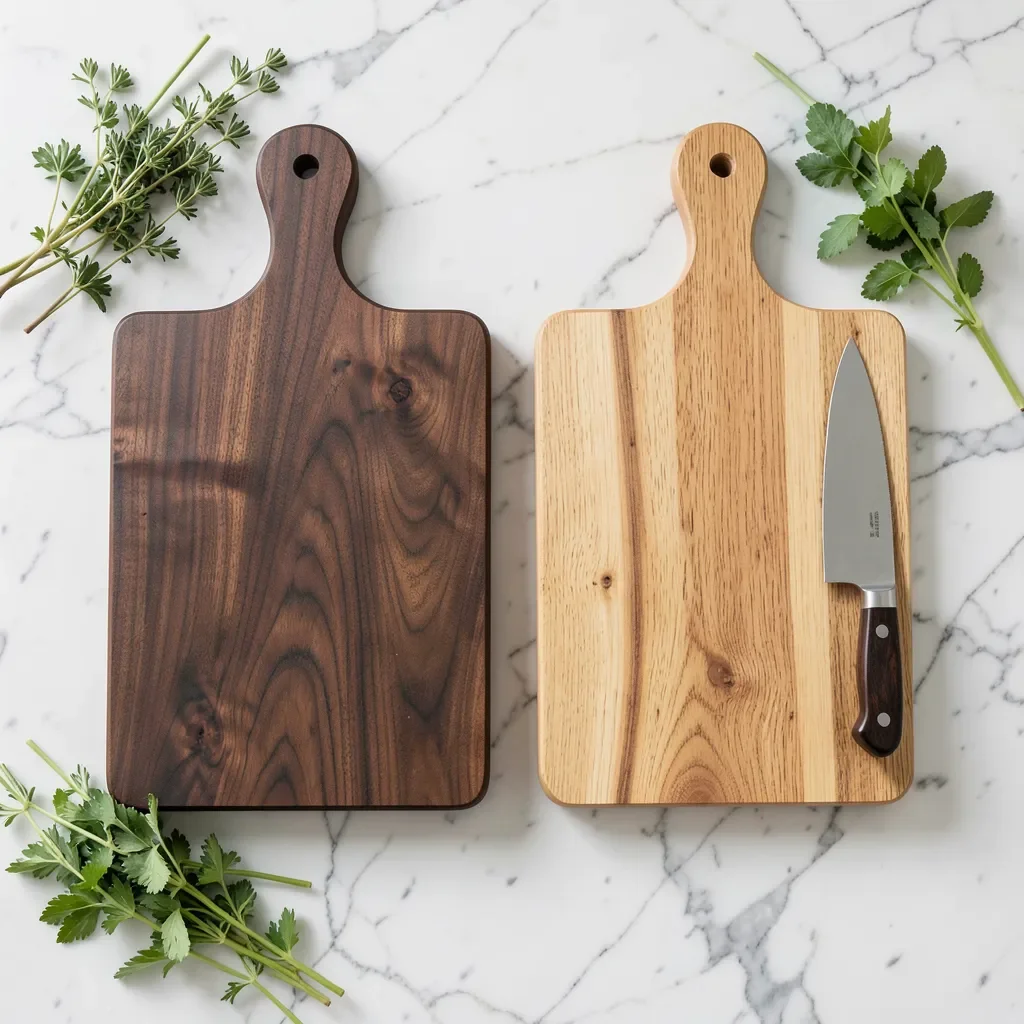
Teak (1,155 lbf Janka) is harder and more water-resistant than walnut (1,010 lbf), but teak’s silica content — not its hardness — is what dulls knife edges faster over time. Walnut stays gentler on blades and ages into a richer color, but it lacks teak’s natural oils and needs more frequent conditioning. This guide covers the real hardness numbers, the silica mechanism most comparisons skip, and which wood fits a high-volume kitchen versus a showpiece board.
What Makes a Great Kitchen Companion?
Best Walnut Cutting Board Pick
 |
American Black Walnut End Grain Cutting Board (16″ x 10″) – $69.99 A genuine end-grain walnut board — the blade-friendly wood this guide recommends if keeping a sharp edge matters more to you than teak’s lower-maintenance oil routine.
|
A cutting board earns its place on the counter by balancing three things: it has to be hard enough to resist knife scarring, soft enough to not dull the blade doing the scarring, and non-porous enough to stay food-safe between washes. Teak and walnut split these tradeoffs differently, which is why the “better” wood depends on how you actually cook, not on a single spec.
Most people are worried about germs, so it’s worth stating: wood is not automatically less sanitary than plastic. Food Research Institute testing at the University of Wisconsin-Madison found that bacteria deliberately applied to wood surfaces died off within a few minutes, while bacteria on plastic boards survived and multiplied overnight at room temperature — wood’s capillary action wicks liquid (and bacteria) down and away from the surface. See our deep dive on the wood-vs-plastic bacteria study for the full breakdown. Both teak and walnut benefit from this effect equally; the real differences between them show up in hardness, oil content, and how each reacts to a knife edge.
Hardness: The Real Janka Numbers
Teak measures roughly 1,155 lbf on the Janka hardness scale; walnut measures roughly 1,010 lbf. That 145-lbf gap makes teak modestly more resistant to denting and knife-groove scarring, but it is not a dramatic difference — both woods sit in the same general range as other common cutting-board hardwoods like cherry and hard maple’s softer cousins.
What actually separates the two in daily use is silica, not hardness. Teak contains natural silica deposits in its grain — the same mineral content that makes it prized for outdoor furniture and boat decks, because it resists rot and insects. That silica is abrasive to steel. A teak board will take the edge off a knife faster than a walnut board of similar hardness, simply because you’re dragging the blade across microscopic mineral grit with every cut. Walnut contains no comparable silica, which is the actual reason cooks describe it as “gentler” on blades — not because it’s dramatically softer.
Water Resistance and Maintenance
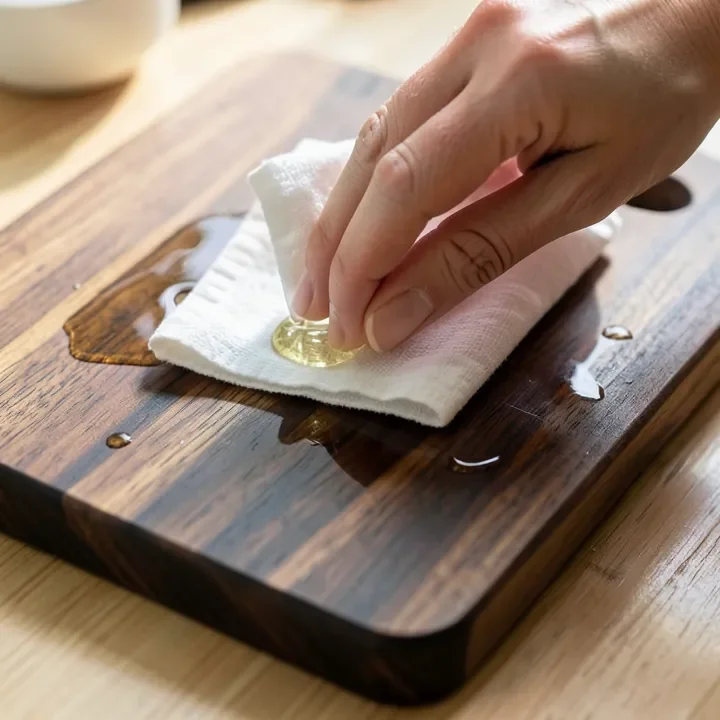
Teak’s natural oil content (the same oils that give it that golden color) makes it genuinely low-maintenance: the wood repels water on contact, which cuts down on warping and makes it more forgiving if you occasionally leave it wet in the sink. Walnut has far less natural oil, so it needs a real maintenance routine — food-safe mineral oil roughly once a month, more often in a dry climate — or the end grain will start to look chalky and eventually crack.
Neither wood should go in the dishwasher or soak in standing water; both should be washed with warm soapy water, dried immediately, and stored on edge or on a rack so air reaches both sides. The maintenance difference is real but often overstated — a walnut board oiled monthly lasts just as long as a teak board that’s barely maintained at all.
Teak vs Walnut Cutting Board: A Direct Comparison
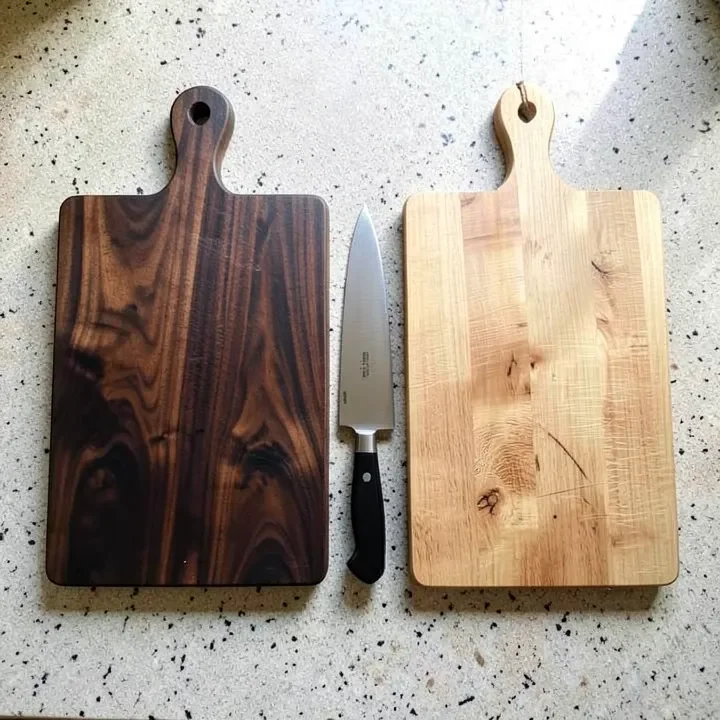
Comparing these two wood choices comes down to what you’re optimizing for: teak wins on durability, water resistance, and low upkeep; walnut wins on knife-friendliness and looks. Here’s the side-by-side:
| Feature | Teak | Walnut |
|---|---|---|
| Janka Hardness | ~1,155 lbf | ~1,010 lbf |
| Water Resistance | High (natural oils) | Moderate (needs regular oiling) |
| Effect on Knife Edges | Dulls faster (silica content) | Gentler (no silica) |
| Appearance | Warm, golden-brown, darkens with light | Rich chocolate-brown, ages into deeper tones |
| Maintenance | Low — occasional oiling | Moderate — monthly oiling recommended |
| Typical Price | Generally higher | Generally moderate |
If you’re deciding between these two woods for furniture or outdoor projects rather than a cutting board specifically, see our broader teak vs walnut comparison — the durability and cost tradeoffs shift once water exposure and food safety aren’t the deciding factors.
Performance in the Kitchen
For actual chopping and slicing, the silica difference described above is what you’ll feel over months of use: a walnut board keeps a fresh edge noticeably longer between honings, while a teak board will need touch-ups more often even though it resists surface damage (scratches, dents) better. If you sharpen your own knives and don’t mind the extra maintenance, that tradeoff may not bother you; if you’d rather sharpen less often, walnut is the more forgiving daily-use surface.
Aesthetic Appeal and Long-Term Aging
Teak starts as a warm golden-brown and deepens with UV exposure — a board kept near a bright window will visibly darken over a year or two. Walnut starts dark chocolate-brown and actually lightens slightly with age and light exposure, developing a richer, more even patina. Both are genuinely attractive; the choice is closer to a design decision (light vs. dark wood tones in your kitchen) than a performance one.
Making the Right Choice for Your Kitchen
Pick Teak If…
- You cook often and want a board that tolerates being left wet occasionally without warping.
- You want the lowest-maintenance option — occasional oiling instead of a monthly routine.
- You’re okay honing your knife edge more often in exchange for a more durable surface.
For a closer look at teak on its own — including the FSC sourcing question and how much the silica-dulling effect actually matters in daily use — see our full guide on whether teak is a good wood for cutting boards.
Pick Walnut If…
- Keeping a sharp edge between sharpenings matters more to you than surface durability.
- You want a darker board and don’t mind a monthly oiling habit to prevent drying and cracking.
- The board will be a visible kitchen centerpiece as much as a work surface.
If you’re weighing walnut specifically against another common cutting-board wood, see our walnut vs acacia cutting board guide and our full walnut suitability breakdown for more angles on the same decision.
Frequently Asked Questions
Is teak better than walnut for cutting boards?
Teak is better for durability and water resistance thanks to its natural oils, and it needs less maintenance overall. Walnut is better for keeping knife edges sharp longer, since it lacks the silica content that makes teak abrasive to steel. Neither is objectively “better” — the right pick depends on whether you prioritize low upkeep or blade longevity.
How do I clean a teak cutting board?
Wash with warm, soapy water after each use and dry immediately — never let it soak. Apply food-safe mineral oil every few weeks, or sooner if the surface starts looking dry or feels rough.
What’s the best way to maintain a walnut cutting board?
Wash the walnut cutting board with warm, soapy water, dry it promptly, and apply food-safe mineral oil roughly once a month. Walnut has less natural oil than teak, so skipping this routine is what causes cracking and a dried-out appearance.
Can I put a wooden cutting board in the dishwasher?
No. The heat and prolonged water exposure in a dishwasher cause warping and cracking in both teak and walnut. Hand-wash and dry immediately instead.
How often should I oil my cutting board?
Oil teak occasionally — roughly every one to two months, since its natural oils do most of the work. Oil walnut about once a month, or whenever the surface starts to look dry or feel rough to the touch, since it has far less natural oil to begin with.
Final Thoughts
Teak and walnut both make excellent cutting boards, and the “right” choice comes down to which tradeoff you’d rather live with: teak’s durability and low maintenance in exchange for slightly faster knife dulling, or walnut’s blade-friendliness in exchange for a real oiling routine. Either way, both woods benefit from wood’s natural bacteria-fighting properties over plastic — a fact most cutting-board comparisons never mention.
Sponsored / affiliate links. As an Amazon Associate I earn from qualifying purchases. I may earn additional commission from eligible campaigns.