Is Wood Ash Good For Roses? Essential Truths Revealed
Wood ash can benefit roses by enriching the soil with essential minerals like potash and balancing pH levels if applied carefully. However, overuse can harm new growth, so moderation and proper application are crucial for successful rose care.
Do you have leftover white ash from cleaning out your fireplace or fire pit? Many home gardeners wonder if that leftover灰, a byproduct of fire, belongs right next to their prize-winning roses. It’s a classic budget approach—using what you have to nourish what you grow. Yet, garden advice on this topic can often sound confusing or even conflicting. Worry not! As someone who loves maximizing efficiency, blending a little responsible crafting cleanup with great gardening payoff, I will show you exactly how to use, or more safely avoid using, wood ash in your rose beds. We will cut through the myths and get you straightforward, safe steps forward.
Why Gardeners Ask About Wood Ash and Roses
Tending to robust, blooming roses requires mindful soil management. Roses thrive in slightly acidic conditions, usually around pH 6.0 to 7.0. Gardeners often look for natural, budget-friendly ways to enrich their soil naturally.
Wood ashes fit this bill perfectly! They contain beneficial nutrients locked away in firewood leftovers. But just like adding too much resin to a woodworking project ruins the grain, adding too much ash can upset your rose bush’s system.
Used correctly, as a light seasonal dusting, refined wood ash acts like a gentle powerhouse, providing key elements roses just love. Used incorrectly, however, it causes an imbalance that sets your garden effort backward dramatically.
The Essential Role of Embers: Nutrients in Wood Ash
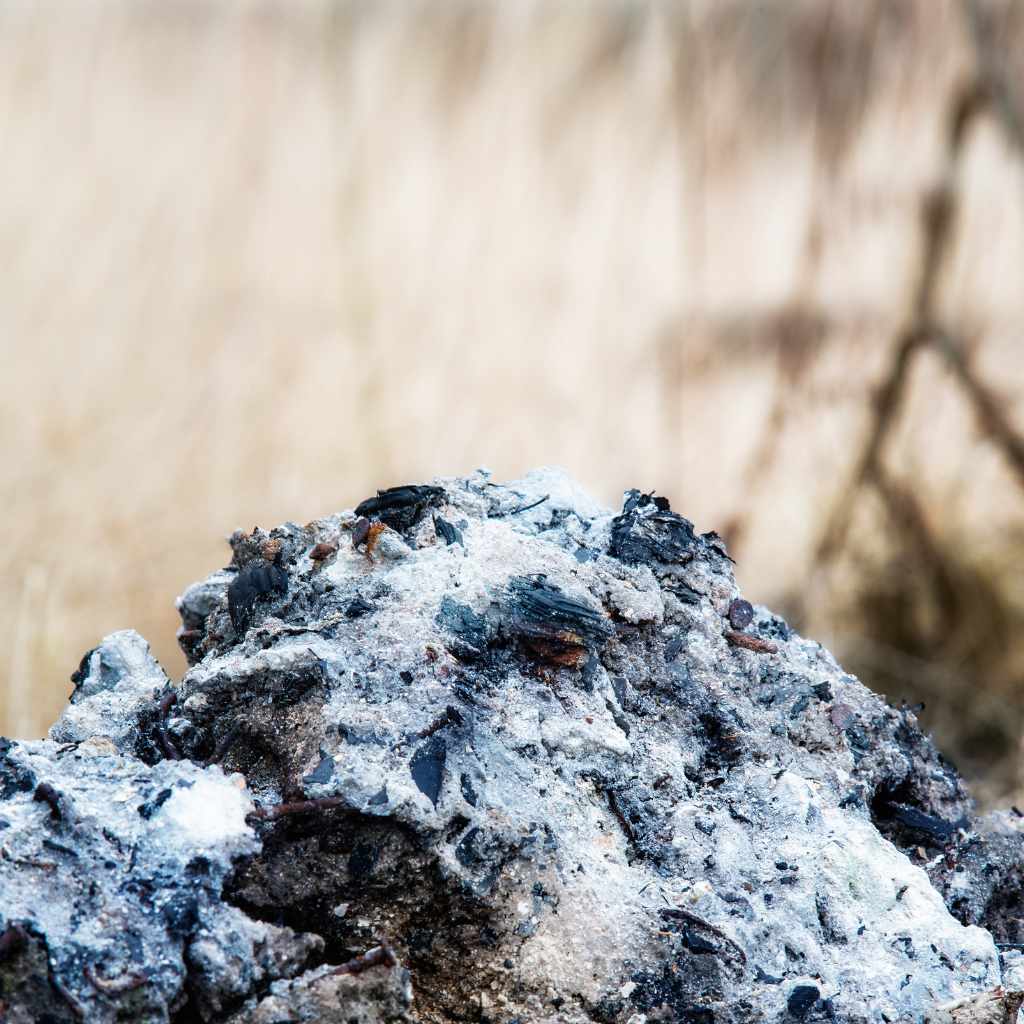
When clean, hard wood burns completely, what remains—the fine, white, fluffy powder—is rich in elemental materials. Recognizing what’s inside helps us understand its potential upside for your beautiful rose bushes.
The Big Three: Minerals in Ash
The chemical composition of wood ash varies depending on the timber burned (ash from maple is different from ash following pine), but there are consistent core contents beneficial to plants:
- Potassium (Potash): Very high concentrations. Potassium is critical for overall plant health, strengthening stems and supporting blooming power—essential for healthy roses resisting common garden wear and tear.
- Calcium: Wood ash is high in lime (calcium carbonate). This is the primary reason gardeners use it; calcium improves poor soil structure and helps neutralize soil acidity.
- Magnesium: Important for photosynthesis, ensuring your rose leaves are deeply green and working efficiently to feed the plant new growth and flowers.
You miss almost all macro-nutrients like Nitrogen (N) and Phosphorus (P) with potash, which primarily fuel vegetative growth for bedding plants, this is another reason dilution and caution are crucial. We seek to supplement potassium and $text{pH}$ balance, not replace balanced fertilizer entirely.
Understanding Soil pH in the Rose Garden
Soil pH (potential of Hydrogen) dictates how easily your plants can pull necessary nutrients out of the soil water. Think of it like a chemical lock. Roses typically frown upon soil that gets too acidic—where the lock snaps shut, and the plant can’t absorb nutrients—or soil that gets too sweet (acid-avovides a condition often called lockjaw for nutrients).
Ash and $text{pH}$: A Balancing Act
Wood ash is highly alkaline. Soil alkalinity scale runs 0 to ${14.0}$. Most natural soils lean slightly acidic (around low ${7}$ to ${{6.0s})$). A value below ${7}$ indicates acidity, while a value above ${7}$ indicates alkalinity (base dominance).
Because ash neutralizes sharpness in soil, its use raises the $mathrm{pH}$ reading (i.e., it makes your dirt “sweeter”). This adjustment can be fantastic if your Texas or Florida soil is stubbornly acidic, helping rescue poor nutrient uptake from too weak an acid condition for proper rose growth, as noted by experts observing agricultural changes related to lime and alkalinity, for effective fertilization on farms.
| pH Level | Interpretation for Roses | Treatment Scenario For Ash Use |
|---|---|---|
| 5.0 – below (Very Acidic) | Nutrient lockout occurring; soil definitely needs boosting. | Cautious Ash Application (Test first!). |
| 6.0 – 7.0 (Ideal Sweet Spot!) | Roses grow vigorously and nutrients are widely absorbed. | Avoid; neutral maintenance is best. Light dusting annually only if lacking blooms. |
| 7.6 – above (Too Alkaline/”Sweet”) | Toxicity concerns or severe iron deficiency often apparent through chlorosis. | Stop all ash application immediately. |

The Big Danger: Don’t Overdo It!
Even the most helpful tool can become destructive medicine in big doses. This is where many promising rose projects turn sour (or too sweet!). Roses demand a balanced diet of soil $text{pH}$. They truly prefer being slightly acidic. Piling on what seems a mild, free mulch ends up driving the $text{pH}$ too high, too fast.
The Risk of Nutrient Burn
Rose roots are naturally delicate networks seeking moisture, not blasting pads absorbing quick nutrient spikes. Too much direct salt, calcium, or potash concentrated at the root surface results in instant transplant-shock-like conditions described frequently to county Extension Services.
What does this lookifying burning look like? Often you’ll spot:
- Leaf edges that look scorched, dry, or crinkled irrespective of excellent watering.
- A sudden slowing of feeder-root viability below ground surface.
- Failure of new shoots to develop after fertilizing/applying.
Safe First Rule: Soil Testing is Your Workshop Measurement
Before spreading a pinch of ash, you must measure alkaline risk. Think of this like measuring twice before a perfect cut on a finely jointed piece—measurement equals flawless results later! You shouldn’t guess.
Reliable home pH test kits or sending samples to your local university’s agricultural extension link (often affiliated with state-run science or university websites; search “[Your State] soil Testing service”), offers specific, usable numbers for your garden area. This knowledge removes the guesswork entirely, meaning zero harm to your delicate rose heritage.
How to Apply Wood Ash Safely to Your Roses (The Workshop Plan)
If testing confirms your soil needs increasing $text{pH}$ alkalinity OR you know it is significantly acidic (below 6.0), you can move forward with an application plan. Precision and timing are just as key here as patience in assembling a drawer slide perfectly level!
This process relies heavily on three core concepts recommended for minimal environmental stress on the plant: dilution, dispersal, and timing based on dormant periods. For safety, assume 1/5 ${th}$ acre treatment rates as the maximum annual recommendation often used loosely. Ensure we never violate guidelines published by general sustainable gardening practices found by researching trusted .edu based plant health modules which outline best mineral modification guidelines based on site specifics.
Step 1: Source Only the Right Ash (Safety Check)
Only use ash produced from burning pure, untreated hardwoods commonly found in fireplaces, not scrap wood piles! Industrial waste, treated lumbers, or construction debris scraps can leech harsh chemical residues detrimental to roses.
Crucially: Burned pressed wood products, such as those often used in manufactured fire logs, must be COMPLETELY avoided. Avoid fireplace chimney creofsoot residue also; it belongs on aggregate mixtures, NOT garden beds.
Step 2: Determine Dosage (The Light Sprinkle)
If your soil test reads mildly acidic ($pH$ 5.8 to 6.5):
Use a ratio near 1 cup of air-sifted wood ash per 80 to ${100}$ square area OR used very sparingly: One tablespoon mixed thoroughly into a large bucket of existing garden compost before spreading that blend overall, used once per blooming cycle, safely maximum limit per season based on region.
Always use much less than this in smaller container rosses.
My Mentor Tip: Keep It Fine!
Push the ash through an old flour sifter ($50$-mesh screen is perfect) when you apply it. Fine particulates distribute gently and evenly. Lumps of grey matter won’t dissolve well together, risking localized burning, a common issue known technically as granule overdose within granular application management systems.
Step 3: Proper Application Technique (The Scatter-and-Blend Method)
We need that alkalinity gently incorporated throughout the zone near surface roots but nowhere near leaf stems:
- Measure the precise amount determined in Step $2$.
- Take your dusty material and distribute it ONLY underneath—never immediately against—the plant’s main base line or its above-ground suckers or graft union $mathbf{(which;is;often;high}$—overdoing this aspect of basic maintenance damages hardiness against winter, so be hyper-careful near the junction between root stock and budded variety $!)$. Avoid heavy build-up over any one plant’s drip line $mathbf{ (Drip line= Outer boundary zone above ground furthest point plant generally covers at root horizon)$.}$
- The ashes must be lightly worked (${half-inch}$ maximum depth) into existing garden soil where moisture resides—do $mathbf{NOT}$ cause soil collapse/compaction against the stem. Water it in immediately but carefully with a gentle deluge from a watering can (a hose without high-pressure use!).
- Avoid any application within ${8}$ inches of the main cane/stem or drip line of any transplanted miniature annual specimen; roses have surface feeders to keep shallow and happy on the very upper plane layer $mathbf {(topsoil level) _which;is;most;sensitive _before,}$ $!!a ;fully mature shrub mathrm{ $}.$}$
Handling Application Timing – Not Always Needed Every Season
Unlike regular fertilizers, think $mathrm{pH}$ adjustments like structural repairs on furniture (slow and strategic). Roses generally prefer applications spaced months apart unless severe $mathrm{pH}$ drift is specifically noted or after harsh pruning cycles necessitate vigor assistance for the upcoming cycle.
The best time to safely consider wood ash is:
- Very Late Winter / Very Early Spring: While dormant, before bud-break (March ${1}$ or state-appropriate timing regionally). This allows gentle, slow $mathrm{pH}$ diffusion before tender root hairs awaken fully to new feeding stimuli for the main growth surge ahead.
- If soil analysis shows persistent low readings after checking for chlorosis indicating iron lack caused by too sweet a profile: One dusting, no sooner than $6$ months after the previous controlled use.
| Growing Season Event | Is Wood Ash Recommended? | Season Concern Addressed |
|---|---|---|
| Spring Budding | Yes, if soil is tested & below ${pH} 6.2 only. | Slow winter $mathrmpH$ rebalance. |
| Active Summer Growth / Blooms Active | Definitely $mathbf{No}$. High burn risk. | Root Stress $mathbf{&}$ Nutrient burn / $mathrmpH$ sudden shift. |
| Late Summer / Early Fall Feeding | $mathbf{No}$. Need to halt tender late growth encouraging maturity until freeze. | Prevents vulnerability before winter hardening. |
| Dormancy | Rarely. Soil is frozen/rock $mathrmpH$ balance is relatively stable. | Structural maintenance is usually settled or relies on amendments slowly. Not topical $mathbf{ash}$ need period. |
Alternative Advantages and When to Just Use Store-Bought
While frugality feels satisfying (taking leftovers from making wood into useful energy and repurposing residue into an organic feeder $—text{satisfies;DIY;ethos!)}$, it contrasts sharply with the measured control offered by modern products recommended by plant resource guidelines. Roses thrive under consistency.
Comparing Ash to Specific Commercial Replacements
| Nutrient Goal | Traditional Ash Use Potential | Recommended Alternative | Why Alternative Often Beats Ash |
| Boosting Potash (K) | Good natural source, dosage hard to confirm. | Sulfate of Potash (Granular, ${o-} $ ${o-} ${60})$ | Clear $mathrm{K}$ percentage, no major $mathrmpH}$ flip effect involved in dosage mechanism for growth purposes. |
| Correcting Acidity ($land mathrmpH$) | Excellent liming action (high Calc. Carbonate$). | Dolomitic or Agricultural Lime (Calcite)$ | Adds $mathrm{Mg}$ or fixes acidity without massive, uncontrolled additions to $mathrm{K}$. Slow dissolution prevents shock. |
| General Organic Nutrition | Minor boost to small minerals available. | General Well-Balanced {$ ${10-10-10}$ ($or $ `${15-5-10}$} $Rose Feed)}$ | Delivers necessary $mathrm{N}$ and $mathrm{P}$ plus regulated $mathrm{K}$, resulting in whole nutritional completion plan which replaces scattered elemental boosting via ash addition. |
Source Verification Tip: Always cross-reference any suspected lime content in your soil relative to recommendations detailed through various land-grant extension offices; look up data specific enough via official government or major agricultural reports such as USDA gardening bulletins often referenced nationally for sound backyard structure maintenance guide compliance. <a (Reference for basic soil improvement facts—confirm resource source relevant to your US region via your state’ $backslash$$text{s}$ agricultural service).
Dangers Besides $mathrm{pH}$: Contamination and Fire History
The $mathrm{FAQ}$ section shows the questions buyers commonly miss: did the fire really burn only soft, naked wood?
- Chemical Residence: If you had seasoned any hardwood previously chemically sealed, primed, or merely sanded surfaces indoors from construction cleanup, those hidden toxins (paints chips, glue residues) incinerate into poisonous residue clinging to ash residue—a top poisoning mechanic for both plants and pets licking soil residue up; absolute $mathbf{NO}$ use there.
- Fire Location Matters: Did you burn yard cuttings with invasive weeds on top perhaps using chemical agents earlier $mathbf{ (sprayed with broadleaf killer a month prior?) }$-these chemical loads could become concentrated in the fine ash particles being tossed onto receptive open beds.
- Container Gardens Cannot Handle Ash Gracefully: The small buffer area limits root mobility, exacerbating quick nutrient overdose. Unless you run a special analysis routinely, $mathbf{container-grown}$
roses should use only tested water-soluble rose food, completely separating them from ash benefits associated with open landscaping needs.

FAQ: Quick Answers For The Beginner Gardener
Q1: What is the Biggest Mistake Using Wood Ash With Roses?
A1: Adding too much, resulting in sharp jumps in soil $mathrmpH$, alkalinity or causing salt content concentrations that actually burn essential fine roots from dehydrating them.
Q2: Can I use ash quickly upon my wilting rose bush immediately instead of waiting for tests?
A2: No! If wilting severely due to the wrong chemical balance, ash will only worsen the crisis by shifting $mathrm{pH}$ even further away from rescue comfort zones. Test first!
Q3: Is old stored fireplace ash better than ash created from recently used quick clean burnout?
A3: Sifted, dry, aged ash stored under cover is best for dosing precision availability, but chemical change relies solely on wood source type; only the quality of the fuel dictates elemental composition, dryness allows gentle scooping/use control over residue clumps.
Q4: Do I need an annual application of wood ash applied yearly for best roses output?
A4: Only absolutely necessary if testing detects consistent over-acidity ($text{below $6.0$}$), particularly dense soil types, or heavy rainfall washout $(leaching)$, common areas. Most gardens stay $mathrm{pH}$ managed with one sparing dose every ${2}$-${3}$ years!
Q5: Will ash repel slugs or pests like wood shavings sometimes repel other insects used for garden edging?
A5: Very fine dusts retain slight barrier reputation against soft-bodied crawlers temporarily thanks to their rough edges causing slow mechanical abrasion initially, however, that initial benefit lasts < $2$ to $3 $ $text{ Days $mid $ if not reapplied $underline{(which you should *not}$ $text{ ) !}text{!})$.}$ Use trusted pellet alternatives that feature tested slow dissolution, or better insecticidal-specific copper barriers where chemical reliance is limited like metal rims for defined defense against the creeping night intruders within home yard landscape.
Q6: My neighbors pile ashes down yearly from big seasonal burns; should I match that amount they toss down onto theirs?
A6: $mathbf{Absolutely;not}$! Every lawn is hydraulically unique regarding soil $mathrm{pH}$, existing content, nutrient status, and microbial activity. What works great for their unique soil may rapidly destroy roses in yours. Never apply based only on neighbor observation; rely on your personal soil survey testing before implementing any application $mathbf (refer ; to ; Step1 ; to ; confirm ; material) .}$
Finalizing the Smart Wood Ash Method for Your Roses
Caring for things you love creating—whether fine woodworking projects or beautiful bouquets of blooms—demands thoughtful execution. Applying wood ash near roses sits right at that tricky intersection of cost-saving nature recycling and technical garden chemistry. Think critically about efficiency and targeted repair over blanket feeding. When in your soil analysis toolkit you have that concrete, measureable data confirming active high acidity ($mathrm{pH}$ low), then introducing trace adjustments using responsibly sourced wood ash offers a gentle push back to optimal equilibrium for fantastic potash benefits.
Approach this process conservatively, remembering that healthy rose soil is a stable environment cultivated patiently, much like maturing quality tool aging. Test consistently. Apply rarely if acidic conditions require modification. When treating any potential gardening mystery, step back, double-check your material sourcing (only pure hardwood residue, screened!), and remember how strong a mild chemical action feels $4-$ ${5}$ dollar worth of powdered supplement can easily destroy half ($50%$ of one year’s growth!). Stick to the careful calibration; your vigorous shrubbery in July will certainly thank you loudly! Achieving a rewarding, low-maintenance growth pace means controlling inputs proactively. Feel great about using those remnants from your past fires knowing you are truly supporting great horticultural results!