Laminate Countertop Installation Cost: DIY vs. Pro (2026)
Professional laminate countertop installation costs $841–$1,748 (average $1,251), while a DIY install runs closer to $24 per square foot in materials. But the number most cost calculators quote leaves out two expenses that show up on almost every real job: removing the old countertop and repairing the substrate underneath it.
This guide breaks down what laminate countertop installation actually costs in 2026, when DIY genuinely saves money versus when it backfires, and the specific mistake — a rushed inside-corner seam — that ruins more DIY laminate jobs than any other. If you’ve already decided to do it yourself and just need the exact cutting-and-gluing steps, our full DIY laminate countertop guide covers that in more depth than we will here.
What Laminate Countertop Installation Costs In 2026
Best Adhesive For Laminate Installs
 |
DAP Weldwood Original Contact Cement, 1 Pint The same contact cement most fabricators use to permanently bond laminate sheets to a countertop substrate — the single step where most DIY installs go wrong.
|
Here’s how professional and DIY pricing actually compares once labor and materials are broken out:
| Installation Method | Typical Cost | What’s Included |
|---|---|---|
| Professional (flat rate) | $400 – $800 | Labor only, standard kitchen |
| Professional (materials + labor) | $841 – $1,748 (avg. $1,251) | Full installed job, $35–$75 per sq ft |
| DIY (materials only) | ~$24 per sq ft | Laminate sheets, adhesive, edge banding |
| DIY prefab kit | $200 – $600 | Precut countertop section, ready to install |
Doing it yourself typically saves $350 to $1,050 in labor on a standard-size kitchen. That gap is real, but it assumes the job goes right the first time — a botched seam or a miscut sheet can erase the savings fast.
The Hidden Costs Most Calculators Skip
Almost every laminate cost guide quotes a per-square-foot price and stops there. In practice, two extra line items show up on most real installs and rarely make it into the estimate:
- Old countertop removal and disposal: $50–$200, depending on whether the surface is glued down or screwed in and whether your area charges a landfill/haul-away fee.
- Substrate or plywood repair: $100–$300 if the particleboard or plywood base underneath the old countertop is water-damaged or delaminated — extremely common around sinks, and laminate will not bond properly to a soft or swollen substrate.
- Sink and faucet cutouts: usually included in a professional flat rate, but budget extra time (not always extra money) if you’re cutting these yourself.
- Edge banding: a few dollars per linear foot if it isn’t already bundled with a prefab kit.
If your existing countertop was ever exposed to standing water — around the sink or dishwasher especially — check the substrate before you budget anything else. A soft spot under the old laminate means substrate replacement isn’t optional.
DIY Vs. Professional Installation: Which Should You Choose
DIY installation saves money and gives you full control over the design, but it takes real time and a specific set of tools. Professional installation costs more but comes with a warranty and — critically — a fabricator’s ability to cut a tight inside-corner seam, which is the step that trips up the most DIYers.
| Factor | DIY | Professional |
|---|---|---|
| Cost | Lower (materials only) | Higher (labor + materials) |
| Time | A full weekend or more, first time | Usually 1 day |
| Inside-corner seams | Hardest part to get tight without a fabricator’s miter tools | Handled with professional seam-cutting equipment |
| Warranty | None beyond the product warranty | Workmanship warranty included |
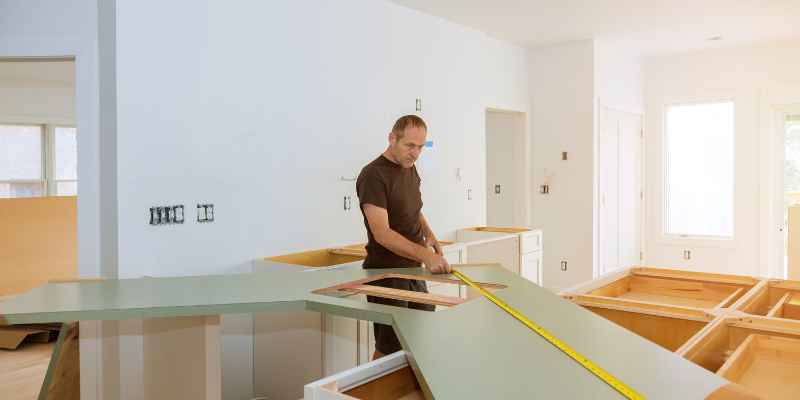
If your layout is a single straight run with no inside corners, DIY is usually straightforward. If it involves an L-shaped or U-shaped counter with tight inside seams, weigh the labor savings against the real risk of a visible gap line — that’s the one flaw a DIY laminate job can’t easily hide.
Popular Laminate Designs
Laminate now mimics granite, marble, wood, and concrete convincingly enough that most visitors won’t guess it isn’t stone. Light colors pair well with dark cabinets and vice versa; textured (not just printed) finishes tend to hide seams and scratches better than a glossy solid color.
| Color | Style | Best Matches |
|---|---|---|
| White | Classic | Dark wood, gray |
| Black | Elegant | Light wood, cream |
| Gray | Modern | White, blue |
| Bright colors | Fun | Neutral tones |
The Installation Process At A Glance
Whether you hire a pro or do it yourself, laminate installation follows the same basic sequence. Tools needed: jigsaw, router with a flush-trim bit, contact cement, a J-roller, and edge banding.
- Remove the old countertop and inspect the substrate for water damage.
- Measure the space accurately and cut the laminate sheets slightly oversized.
- Apply contact cement to both the substrate and the back of the laminate, and let it dry to the touch before joining them.
- Press the laminate onto the substrate and roll it firmly with a J-roller to remove air bubbles.
- Trim the excess edges with a router and flush-trim bit.
- Apply edge banding for a finished look.
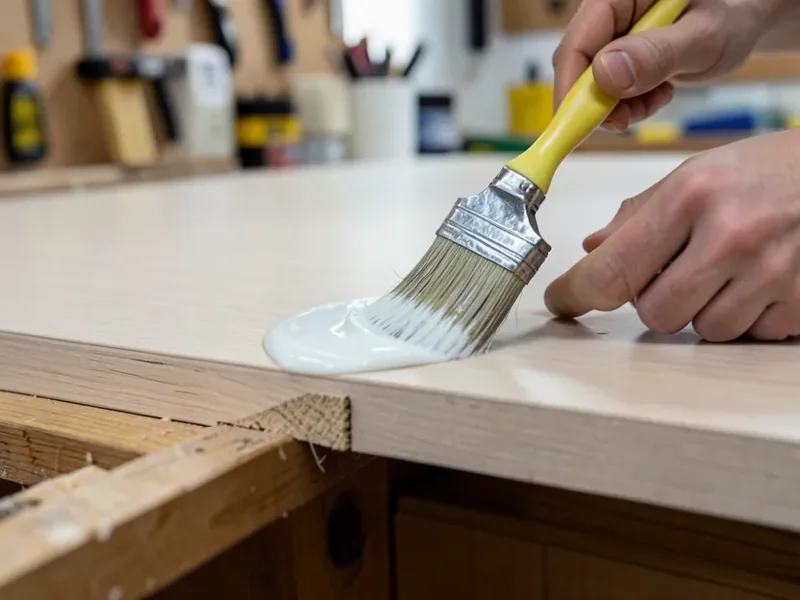
For the full step-by-step breakdown — including how to handle inside corners, sink cutouts, and edge finishing — see our complete DIY laminate countertop installation guide.
Common Mistakes To Avoid
The most common error isn’t cutting the laminate wrong — it’s rushing the inside-corner seam, which is exactly where a fabricator’s miter-cutting tools earn their keep. Other frequent mistakes: not double-checking measurements before cutting, using a general-purpose adhesive instead of contact cement rated for laminate, and skipping the substrate check when replacing an old countertop near a sink.
On the care side, avoid harsh chemical cleaners, always use cutting boards and trivets, and never drag heavy cookware across the surface — laminate resists scratches and stains well, but it isn’t immune to either.
Maintenance And Care
Clean laminate countertops with a soft cloth and warm, soapy water, then rinse and dry. Always use cutting boards — never cut directly on the surface — and use trivets or hot pads, since laminate has limited heat resistance and can scorch or bubble under direct contact with hot cookware.
Frequently Asked Questions
How Much Does It Cost To Install Laminate Countertops?
Professional installation averages $1,251 (typically $841–$1,748) including materials and labor, or $35–$75 per square foot. DIY installation runs closer to $24 per square foot in materials, saving $350–$1,050 in labor on a standard kitchen — though that estimate usually leaves out old countertop removal ($50–$200) and substrate repair ($100–$300) if the base underneath is damaged.
What Are The Benefits Of Laminate Countertops?
Laminate countertops are affordable, versatile, and available in a wide range of colors and designs. They’re easy to clean and maintain, and modern laminate resists stains and scratches better than older generations of the material, making it a practical choice for kitchens and bathrooms on a budget.
Can Laminate Countertops Be Repaired?
Yes. Minor scratches and chips can often be fixed with a laminate repair kit or a colored wax pencil. Larger damage, like a burn or a delaminated edge, usually means replacing that section rather than patching it. Regular cleaning and using cutting boards and trivets go a long way toward avoiding repairs altogether.
Are Laminate Countertops Heat Resistant?
Only to a limited degree. Laminate can handle brief, incidental warmth, but placing a hot pot or pan directly on the surface can scorch or bubble it. Always use a trivet or hot pad, especially near the stove, where this is the single most common cause of visible laminate damage.
Conclusion
Laminate remains one of the few countertop materials where a careful DIYer can save real money — often $350 to $1,050 on a standard kitchen — without sacrificing much in the way of looks. Just budget for the costs the calculators skip (old countertop removal and substrate repair), and if your layout has a tight inside corner, be honest about whether you can cut that seam as cleanly as a fabricator before you commit to doing it yourself.
Sponsored / affiliate links. As an Amazon Associate I earn from qualifying purchases. I may earn additional commission from eligible campaigns.