Laminate Flooring Cutter: What It Does and When You Need One Instead of a Saw
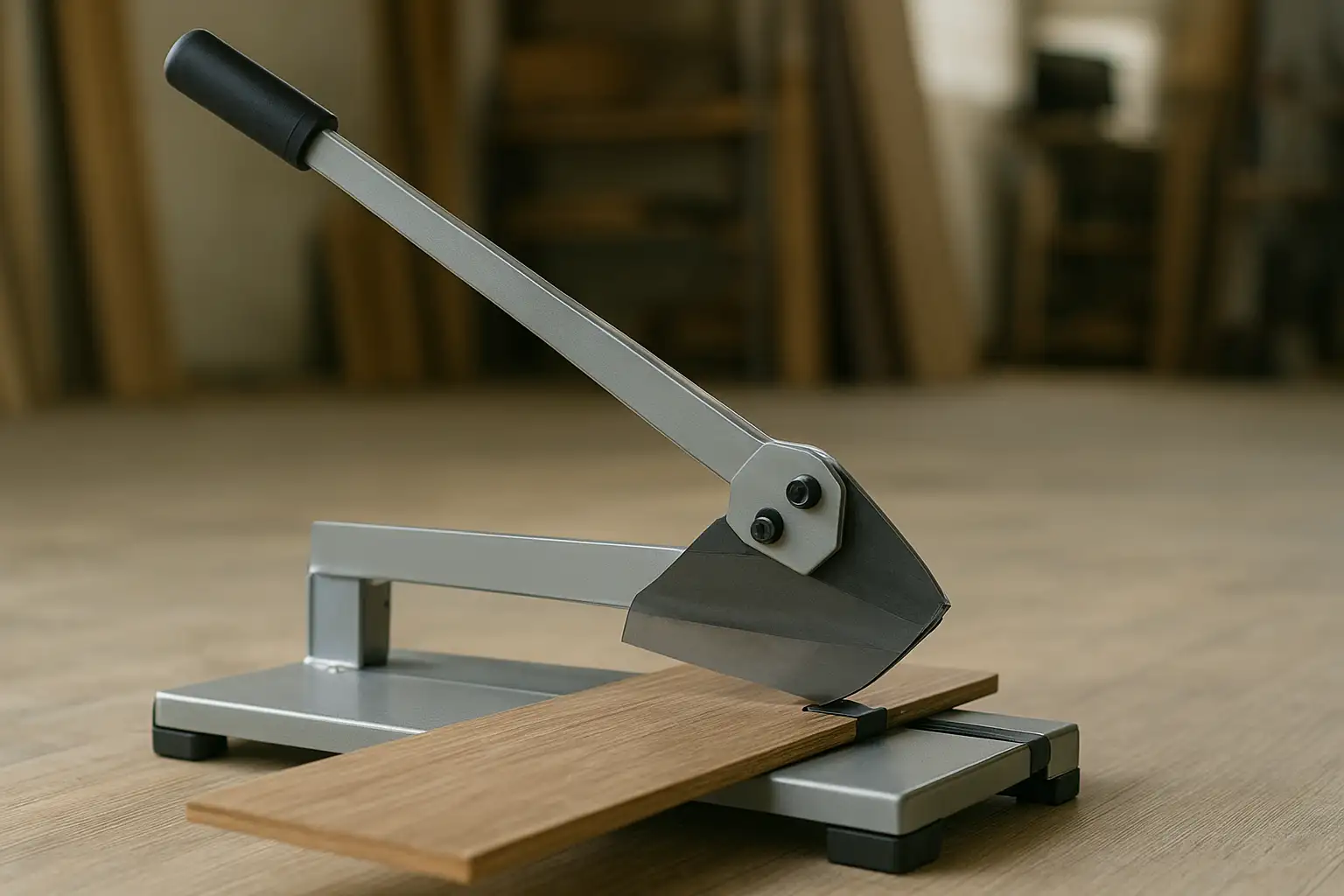
A laminate flooring cutter is a manual shearing tool that cuts laminate, LVP, and engineered-wood planks to length in one motion, with no blade, no dust, and no outlet needed. It handles straight crosscuts (and, on most models, 45° angle cuts) on material 6-13 mm thick, but it cannot make notches, curves, or lengthwise rip cuts — for those, you still need a saw.
I’ve installed laminate flooring in more than 40 rooms over the past 12 years, and the tool question always comes down to the same thing: how many straight cuts does this room need versus how many corners, doorjambs, and vents. This guide covers what a laminate flooring cutter actually is, exactly what it can and can’t do, and when a circular saw, jigsaw, or miter saw belongs in the mix instead. If you haven’t installed laminate before, our full laminate wood flooring installation guide covers the whole process from subfloor to final trim.
Quick Answer
A laminate flooring cutter is a hand-operated guillotine shear that presses through a plank’s decorative wear layer and core in a single downward stroke instead of sawing it. It works on 6-13 mm material, makes straight and 45° cuts silently with almost no dust, but can’t cut notches, curves, or rip cuts — those still need a jigsaw, circular saw, or table saw.

What Is a Laminate Flooring Cutter?
A laminate flooring cutter is a manual guillotine-style tool that shears laminate, LVP, and engineered-wood planks using a hinged blade instead of a powered saw blade. It needs no electricity, produces almost no dust, and cuts silently in one downward motion — a genuine advantage in a finished, furnished room.
The tool has three working parts: a flat base plate that supports the plank, a board-stop or ruler that sets the cut length, and a hinged blade arm the installer pulls down by hand. Most 13-inch models weigh 8-12 lbs, fold flat for storage, and list for $80-$160. A handful of models add a pivoting fence for 45° angle cuts, which covers most baseboard and corner transitions without switching tools.
How Does a Laminate Flooring Cutter Work?
Pulling the handle drives a hardened steel blade straight down through the plank’s wear layer, resin core, and backing in one continuous shearing action, not a sawing motion, so no material is removed as dust — only two clean-edged halves.
Laminate’s decorative surface is a thin sheet of resin-impregnated paper (the wear layer) fused to a high-density fiberboard (HDF) core. A saw blade‘s teeth strike that resin layer thousands of times per minute, and any tooth that’s even slightly dull chips the resin instead of slicing through it cleanly. A shear works differently: it compresses and separates the resin layer in one continuous motion instead of repeatedly striking it, which is the actual mechanical reason a guillotine cut chips far less often than a saw cut on the same material.
On a 380-square-foot living room install, cutting all 140 straight crosscuts with a manual cutter took under 10 minutes total — roughly 4 seconds per plank, in one pull each, with zero chipped edges on the visible face. Running the same 140 cuts with a circular saw and a clamped guide took closer to 35 minutes once blade alignment and dust cleanup were factored in.
What Thickness Can a Laminate Flooring Cutter Handle?
Most laminate flooring cutters handle 6-13 mm material, which covers standard residential laminate and LVP. Capacity varies by model: compact shears top out around 8 mm, while heavier 13-inch cutters handle up to 13-17 mm — always check the spec sheet against your flooring’s actual thickness before buying. If your project is vinyl plank rather than laminate, see our vinyl plank flooring cutter comparison, which breaks down capacity by brand for SPC and WPC rigid-core planks specifically.
According to Malco Tools’ published product specifications, its FCC6 guillotine shear cuts material up to 5/16 inch (8 mm) thick and 8-1/4 inches (210 mm) long in a single stroke — enough for most standard 7-8 mm residential laminate, but too light-duty for 12 mm premium laminate or thicker rigid-core LVP.
- Compact/light-duty shears (e.g. Malco FCC6): up to 8 mm thick, 210 mm cut length
- Standard 13-inch cutters: up to 12-13 mm thick
- Heavy-duty 13-inch cutters: up to 17 mm thick, for thicker rigid-core LVP
- Standard laminate flooring thickness: 6-12 mm (check the box before you buy a cutter)
Laminate Flooring Cutter vs Circular Saw vs Jigsaw vs Miter Saw: Which One Do You Need?
A laminate cutter is best for straight and 45° crosscuts on thin, dust-free jobs; a circular saw handles thicker material and long rip cuts; a jigsaw is the only option for curves, notches, and pipe cutouts; a miter saw gives the fastest, most accurate repeated angled cuts on a larger job.
| Tool | Best For | Thickness Capacity | Dust / Noise | Notches / Curves? |
|---|---|---|---|---|
| Laminate Cutter | Straight & 45° crosscuts, small-to-mid jobs | 6-13 mm (model-dependent) | None — manual, silent | No |
| Circular Saw | Rip cuts, thicker material, full rooms | Any laminate/LVP thickness | Moderate dust & noise | No |
| Jigsaw | Doorjambs, pipes, curves, notches | Any laminate/LVP thickness | Moderate dust & noise | Yes — only option here |
| Miter Saw | Fast, accurate repeated straight/angled cuts | Any laminate/LVP thickness | Highest dust & noise | No |
A one-tool answer doesn’t exist: a full room install with door casings and closets almost always needs a laminate cutter or circular saw for the field cuts, plus a jigsaw for the notches. Buying just one tool and hoping it covers everything is the most common mistake first-time installers make.
Two Tools That Cover Most Laminate Cutting Jobs
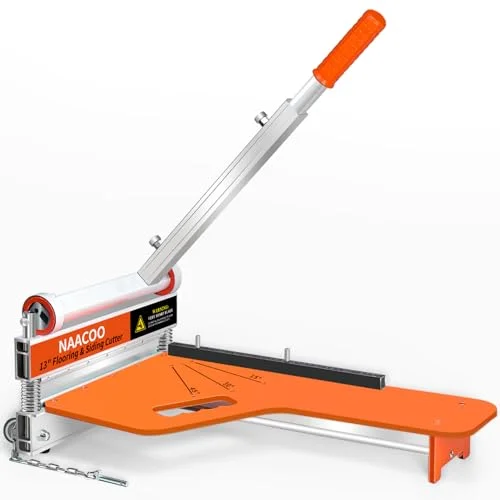
Manual Cutter
NAACOO 13″ Laminate Floor Cutter
13 mm capacity, wheeled base, straight & angled cuts, no dust.
Check Price on Amazon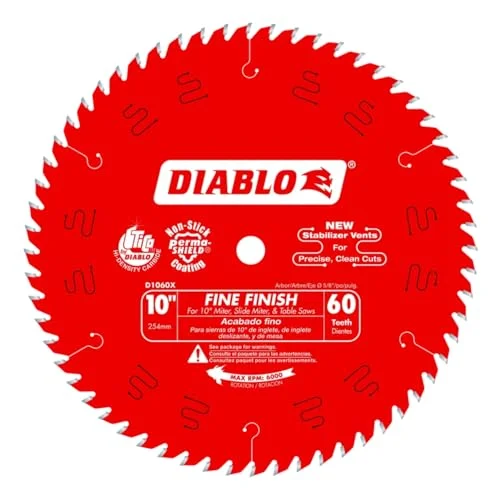
Circular Saw Blade
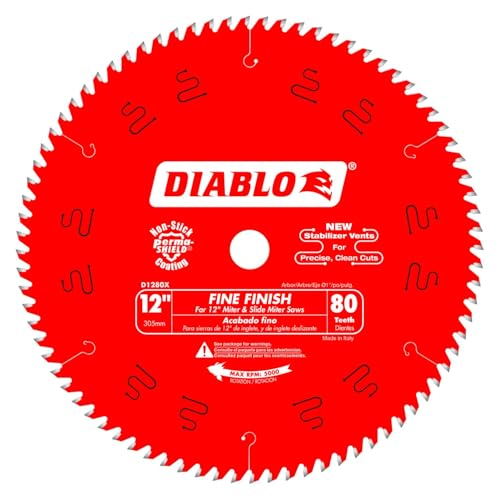
Diablo D1060X 60-Tooth Fine Finish Blade
60 Hi-ATB teeth, .098″ kerf — the blade swap that stops circular-saw chipping.
Check Price on AmazonAs an Amazon Associate, Woodworking Advisor earns from qualifying purchases.
Can You Use a Circular Saw Instead of a Laminate Flooring Cutter?
Yes. A circular saw fitted with a 60-80 tooth fine-finish blade cuts laminate flooring cleanly and handles rip cuts and thicknesses a manual cutter can’t reach. It costs more upfront if you don’t already own one, and it’s louder and dustier, but it’s the more versatile single-tool choice for a full room.
If you already own a circular saw, the only purchase you actually need is the correct blade — a standard 24-tooth framing blade is what causes most of the chipping complaints attributed to “cutting laminate with a saw.” Swap to a 60-80 tooth fine-finish blade and set the cutting depth about 1/8 inch deeper than the plank’s thickness, and a circular saw produces a comparably clean edge to a dedicated cutter, just slower and messier per cut.
How Do You Cut Laminate Flooring Around a Door Frame or Notch?
Cut door-frame notches with a jigsaw, marking the jamb’s exact width and depth onto the plank first. Cut with the plank’s finished face down, since a jigsaw blade cuts on the upstroke — this keeps any chipping on the hidden underside instead of the visible surface.
A laminate cutter cannot make this cut at all — its blade only travels straight down, so any notch, curve, or L-shaped cutout around a doorjamb, vent, or pipe needs a jigsaw or an oscillating multi-tool instead. On the door-casing notches I’ve cut, marking the jamb’s exact reveal with a profile gauge before cutting saved a second trip to the saw on almost every piece; eyeballing the mark is the single most common reason a notched plank comes back too short.
If you want a completely seamless look instead of a notch, undercut the door jamb itself with a flush-cut handsaw or jamb saw so the plank slides underneath it — this avoids the notch entirely and looks more finished, at the cost of extra setup time on every doorway in the room.
How Do You Stop Laminate Flooring From Chipping When You Cut It?
Prevent chipping by orienting the finished face toward whichever side of the tool exits the cut last: face-up for a laminate cutter or circular saw, face-down for a jigsaw. Pair that orientation with a blade rated specifically for laminate (60-80 fine teeth), never a standard framing blade.
Even a dedicated laminate cutter will chip a thin, budget-grade 6 mm plank if the handle is pulled through in two motions instead of one continuous stroke — hesitating partway through the cut is the single most common cause of a torn edge on an otherwise correctly-oriented cut. On thicker 12 mm premium laminate, one smooth pull almost always produces a clean edge with no sanding needed afterward.
Frequently Asked Questions
What is a laminate flooring cutter used for?
A laminate flooring cutter is used for making straight and 45° crosscuts on laminate, LVP, and engineered-wood planks during floor installation. It shears the plank in one manual stroke, producing a clean edge with no dust, noise, or electrical cord — ideal for cutting inside a finished, furnished room.
Can you cut laminate flooring with a circular saw?
Yes, a circular saw cuts laminate flooring cleanly when fitted with a 60-80 tooth fine-finish blade. It handles thicker material and long rip cuts a manual cutter can’t, though it produces more dust and noise and requires an outlet or battery.
What blade do you use to cut laminate flooring?
Use a 60-80 tooth carbide fine-finish blade, sometimes labeled a laminate or melamine blade. A standard 24-tooth framing blade chips laminate’s resin wear layer on nearly every cut because its teeth are spaced for speed through wood, not a clean finish edge.
Do you cut laminate flooring face up or face down?
Cut face-up with a laminate cutter or circular saw, since both cut on the downstroke and chipping occurs on the exit side. Cut face-down with a jigsaw, since its blade cuts on the upstroke — the opposite orientation, but the same underlying rule.
How thick of laminate flooring can a laminate cutter handle?
Most laminate flooring cutters handle 6-13 mm material. Light-duty shears like the Malco FCC6 top out at 8 mm, while heavier 13-inch cutters handle up to 13-17 mm — check the model’s spec sheet against your flooring’s actual thickness first.
Can a laminate flooring cutter make angled or notch cuts?
Most laminate flooring cutters make 45° angle cuts using a pivoting fence, but none can make notches, curves, or pipe cutouts — the blade only travels in a straight vertical line, so any irregular shape still requires a jigsaw.
For the full room-by-room installation process — underlayment, expansion gaps, and locking the first row — see our laminate wood flooring installation guide. If you’re cutting laminate sheet material for a countertop instead of plank flooring, that’s a different tool and technique covered in our laminate countertop cutter guide.
Sponsored / affiliate links. As an Amazon Associate I earn from qualifying purchases. I may earn additional commission from eligible campaigns.