Laminate Flooring Underlay: What to Use, How Thick, and Why It Matters
Most laminate flooring manufacturers require underlay under their warranty terms — skipping it is not a shortcut, it is a warranty risk. Laminate flooring underlay is a thin padded layer, usually 2–3mm high-density foam, installed between the subfloor and the floating laminate planks to cushion impact, dampen sound, and in some cases add a moisture barrier. The one exception: laminate with a factory-attached pad needs no separate layer at all. This guide covers which material to buy, how thick it needs to be for your subfloor, and when a moisture barrier is non-negotiable.
Quick Answer
Use 2–3mm high-density foam underlay for a standard wood subfloor. Switch to a combination foam-and-film underlay with a 6-mil moisture barrier over concrete or below-grade rooms. Never exceed about 3mm under underfloor heating, and skip underlay entirely if your laminate already has an attached pad.
What Is Laminate Flooring Underlay?
Best All-Around Underlayment Pick
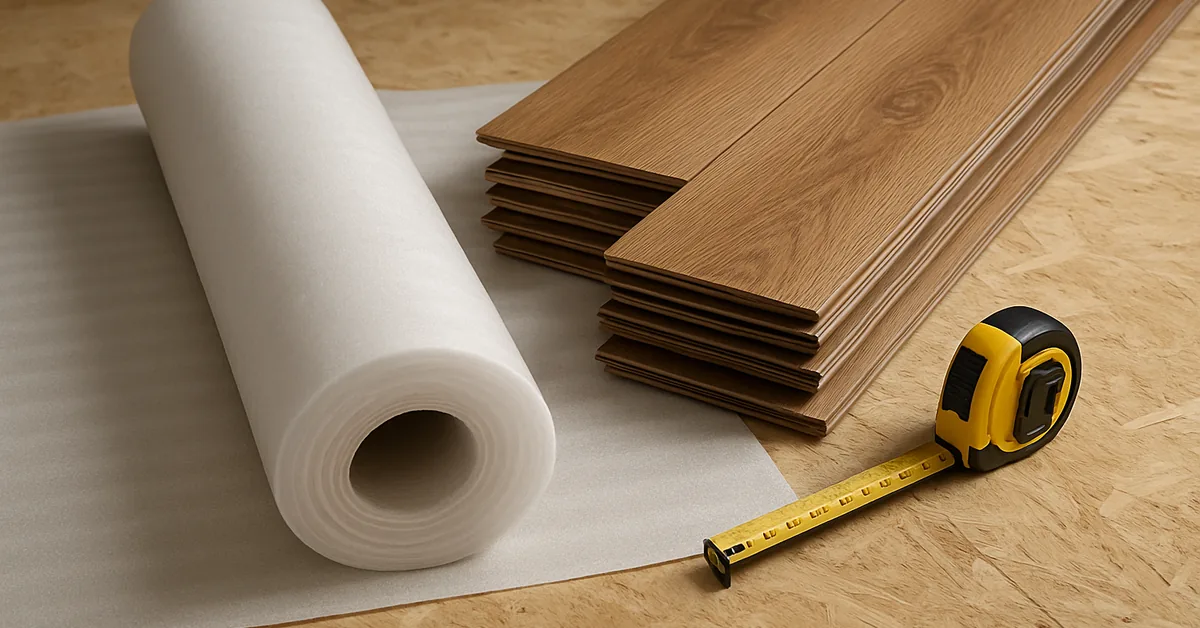
Laminate flooring underlay is a thin padded layer — foam, cork, felt, or rubber — installed between the subfloor and floating laminate planks. It cushions foot impact, dampens sound transmission, and can add a moisture barrier, depending on the material chosen.
Do You Need Underlay for Laminate Flooring?
Yes — most laminate flooring requires underlay per the manufacturer’s own installation instructions, and skipping it can void the product warranty. The North American Laminate Flooring Association (NALFA) certification standard for laminate installation assumes a compliant underlayment is part of a correct install, not an optional add-on.
The one real exception: laminate planks sold with a factory-attached pad on the underside need no separate underlayment. Adding a second layer on top of attached-pad laminate over-cushions the floor, which can prevent the click-lock joints from seating correctly.
What Are the Types of Laminate Underlayment?
Four underlayment materials cover nearly every laminate installation: foam, cork, felt, and rubber, plus combination products that pair foam with a built-in moisture film.
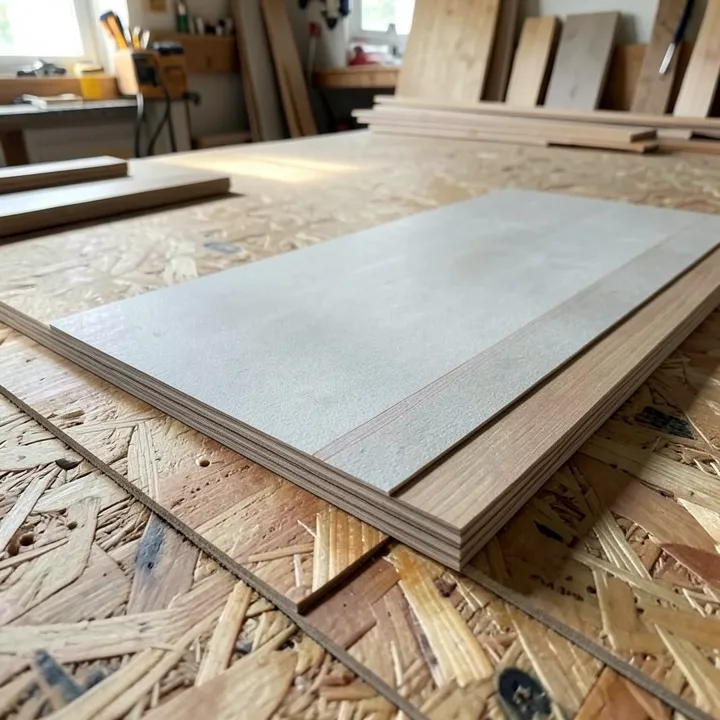
Foam Underlayment
Closed-cell or open-cell polyethylene/polypropylene foam, typically 2–3mm thick. It is the cheapest and most common option, and the default recommendation for a standard wood subfloor with no special sound or moisture requirements.
Cork Underlayment
A natural material, usually 3–6mm thick, with the best sound-dampening performance of the four options and the longest service life. It costs more than foam, which is why it is typically reserved for upstairs rooms or condo/HOA installations with strict sound-transmission (IIC) requirements.
Felt/Fiber Underlayment
Made from recycled fiber, felt underlayment gives moderate sound dampening and thermal insulation at a mid-range price between foam and cork.
Rubber Underlayment
Typically 3–6mm thick, rubber gives the best impact and sound resistance of any option, at the highest price point — the premium choice when noise control is the priority.
Combination (Foam-and-Film) Underlayment
Standard foam with a built-in 6-mil vapor barrier film laminated to one side. This is the correct choice for concrete or below-grade subfloors, where moisture protection matters as much as cushioning.
| Material | Thickness | Moisture rating | Sound performance | Cost | Best for |
|---|---|---|---|---|---|
| Foam | 2–3mm | None (unless combo) | Basic | Lowest | Standard wood subfloor |
| Cork | 3–6mm | Low | Best | High | Sound-sensitive rooms, condos |
| Felt/fiber | 2–4mm | Low | Moderate | Mid | General insulation + sound |
| Rubber | 3–6mm | Low | Best | Highest | Maximum noise control |
| Foam + film (combo) | 2–3mm | High (6-mil film) | Basic | Mid | Concrete or below-grade |
Which Underlayment Is Best for Laminate Flooring?
High-density foam is the right default for a standard room on a wood subfloor — it meets manufacturer requirements at the lowest cost. Switch to cork or rubber when sound matters, such as an upstairs room or a condo with HOA noise rules, and switch to a foam-and-film combination product any time the subfloor is concrete or below grade.
Compare more underlayment options
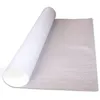 Option 1 PolyFoam Multipurpose Foam Underlayment – $19.99
| 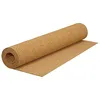 Option 2 QEP Natural Cork Underlayment Roll – $223.07
| 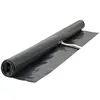 Option 3 ROBERTS Moisture Barricade Underlayment Film – $21.99
|
As an Amazon Associate we earn from qualifying purchases.
How Thick Should Laminate Flooring Underlay Be?
Underlayment thickness depends on the subfloor and whether underfloor heating is present — using the wrong thickness for the situation causes real installation problems, not just a minor performance loss.
Standard Wood Subfloor
2–3mm is the manufacturer-standard range for laminate over plywood or OSB. Going much above 5mm risks the plank’s click-lock joint failing to fully engage, which shows up later as separating seams.
Concrete or Below-Grade Subfloor
3–4mm with an integrated or separate 6-mil polyethylene vapor barrier. The thickness matters less here than the moisture barrier itself — skipping the film is the bigger risk on concrete.
Under Underfloor or Radiant Heating
Keep underlayment at 3mm or thinner with an R-value of 0.4 or lower. Underlayment above roughly R-1.0 blocks enough heat transfer to make the radiant system noticeably less effective, and manufacturer specs vary on the exact ceiling — check the flooring brand’s own installation sheet before buying, since figures range as low as 1.5–2mm on some product lines.
Do You Need a Moisture Barrier Under Laminate on Concrete?
Yes — a polyethylene vapor barrier (6-mil minimum for normal rooms, 12–20 mil for high-moisture or below-grade spaces) prevents vapor from swelling the laminate’s core layer. That swelling compresses the click-lock joints and shows up later as raised, peaked seams. For the full concrete-specific install sequence, see our guide to installing wood flooring over concrete.
Can You Use Carpet Underlay for Laminate Flooring?
No — carpet underlay runs around 10mm thick, more than double laminate’s 3–5mm maximum. That extra thickness prevents the click-lock system from seating correctly and leaves the floor feeling spongy underfoot.
Is Laminate Underlayment Compatible with Underfloor Heating?
Yes, with constraints: use thin underlayment (3mm or less) with a low R-value (0.4 or lower), and keep the floor surface temperature under the flooring manufacturer’s cap — typically 80–85°F — to avoid warping or cupping the laminate core. For the full radiant-heat installation sequence, see our guide to installing radiant heat under wood flooring.
Does Laminate With Attached Underlayment Still Need a Separate Pad?
No. Laminate sold with a factory-attached pad is already engineered for the correct amount of cushioning; adding a second underlayment layer on top over-cushions the floor and can prevent the click-lock joints from seating fully.
How Much Does Laminate Flooring Underlayment Cost?
Underlayment typically runs $0.30–$0.80 per square foot installed, unless the price for attached-pad laminate is already built in. According to D&G Flooring’s laminate cost data, rolls are also sold by the 100-square-foot package, typically $30–$50 per roll, with a separate moisture-barrier roll running about $35 when it is not already combined into the underlayment.
How Do You Install Laminate Flooring Underlay?
Underlayment installation is straightforward when the seams and edges are handled correctly — most mistakes happen at the seams, not in the material choice.
- Measure the room: calculate square footage and add roughly 5–10% overage for cuts and waste.
- Prep the subfloor: clean debris and confirm the surface is flat and dry before rolling anything out.
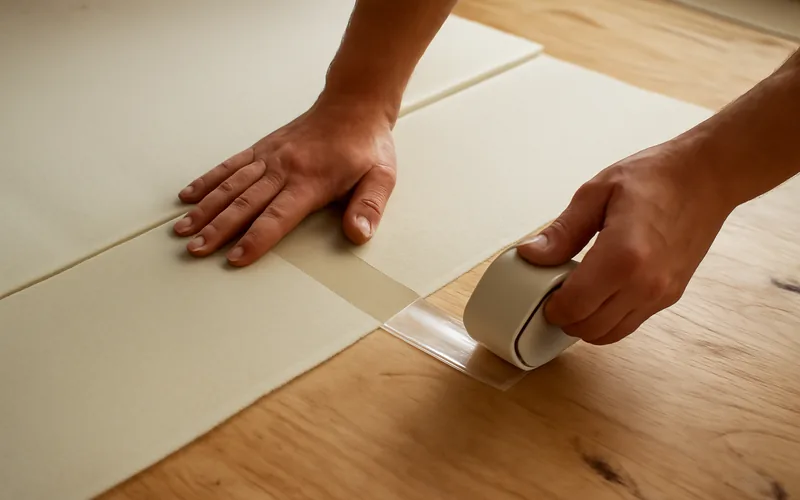
- Roll out the underlayment: butt seams edge to edge — never overlap them, which creates a ridge that telegraphs through the finished laminate.
- Tape the seams: secure every seam with tape so the underlayment doesn’t shift during laminate installation.
- Leave an expansion gap: keep roughly a 10mm gap at walls and any vertical obstruction before laying laminate on top.
What is laminate underlay made of?
Laminate underlay is made from one of four materials: closed-cell or open-cell foam (polyethylene or polypropylene), natural cork, recycled felt/fiber, or rubber — sometimes paired with a laminated polyethylene moisture-barrier film.
How much does underlayment cost per square metre?
At roughly $0.30–$0.80 per square foot, that converts to approximately $3.20–$8.60 per square metre, before installation labor.
Match the underlayment to the subfloor first, the sound requirement second: foam for a standard wood subfloor, a foam-and-film combo the moment concrete or below-grade is involved, and cork or rubber only when noise control specifically justifies the extra cost. For everyday care once the floor is down, see our guide to cleaning laminate wood floors, or compare laminate against every other flooring type in our wood flooring guide.
Sponsored / affiliate links. As an Amazon Associate I earn from qualifying purchases. I may earn additional commission from eligible campaigns.