Mahogany Wood Look Tile: Porcelain vs. Vinyl Plank Compared
Mahogany wood-look flooring comes in two genuinely different products that get lumped together in searches: porcelain wood-look plank tile (a permanent, professionally installed ceramic product) and peel-and-stick vinyl plank (a budget, DIY-friendly adhesive-backed product). They look similar in photos but differ enormously in cost, installation method, durability, and permanence — picking the wrong one for your situation is the most common mistake in this category.
Porcelain Tile vs. Vinyl Plank: The Real Differences
The DIY-Friendly Option
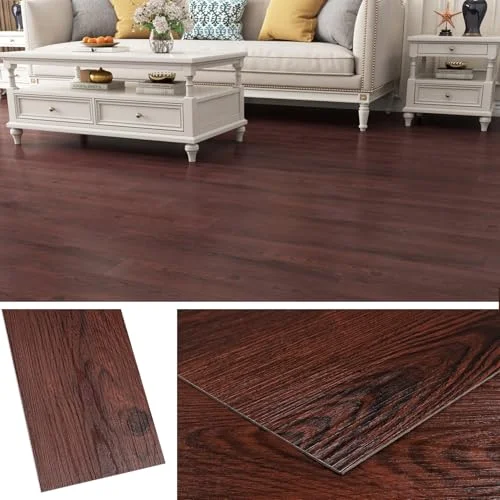 |
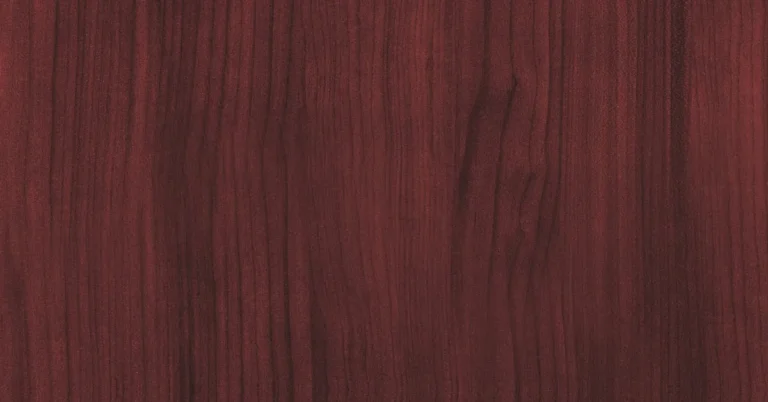
Mahogany Peel & Stick Vinyl Plank (18-pack) – $49.99 Self-adhesive planks over a clean, flat existing floor — no thinset, no grout, no tile-cutting tools required.
|
| Porcelain Wood-Look Tile | Peel-and-Stick Vinyl Plank | |
|---|---|---|
| Installation | Professional, thinset + grout | DIY, self-adhesive |
| Cost per sq ft (material) | $3-10+ | $1-3 |
| Durability | Very high, scratch/heat resistant | Moderate, can dent or peel over time |
| Water resistance | Fully waterproof | Water-resistant, seams can be a weak point |
| Permanence | Permanent, hard to remove | Removable, renter-friendly |
| Resale value impact | Adds real value | Minimal to none |
PEI Rating: The Number That Actually Matters for Tile Durability
Porcelain tile is rated on the PEI (Porcelain Enamel Institute) scale from 0 to 5 for abrasion resistance — PEI 0-1 is for walls and light-traffic areas only, PEI 3 handles typical residential foot traffic, and PEI 4-5 is built for heavy residential and light commercial use. For a mahogany-look tile floor in a living room or hallway, PEI 3 or higher is the number to check before buying; a lower-rated tile marketed for its wood-look appearance without a stated PEI rating is worth a direct question to the retailer before committing to a full room.
Rectified vs. Non-Rectified Edges
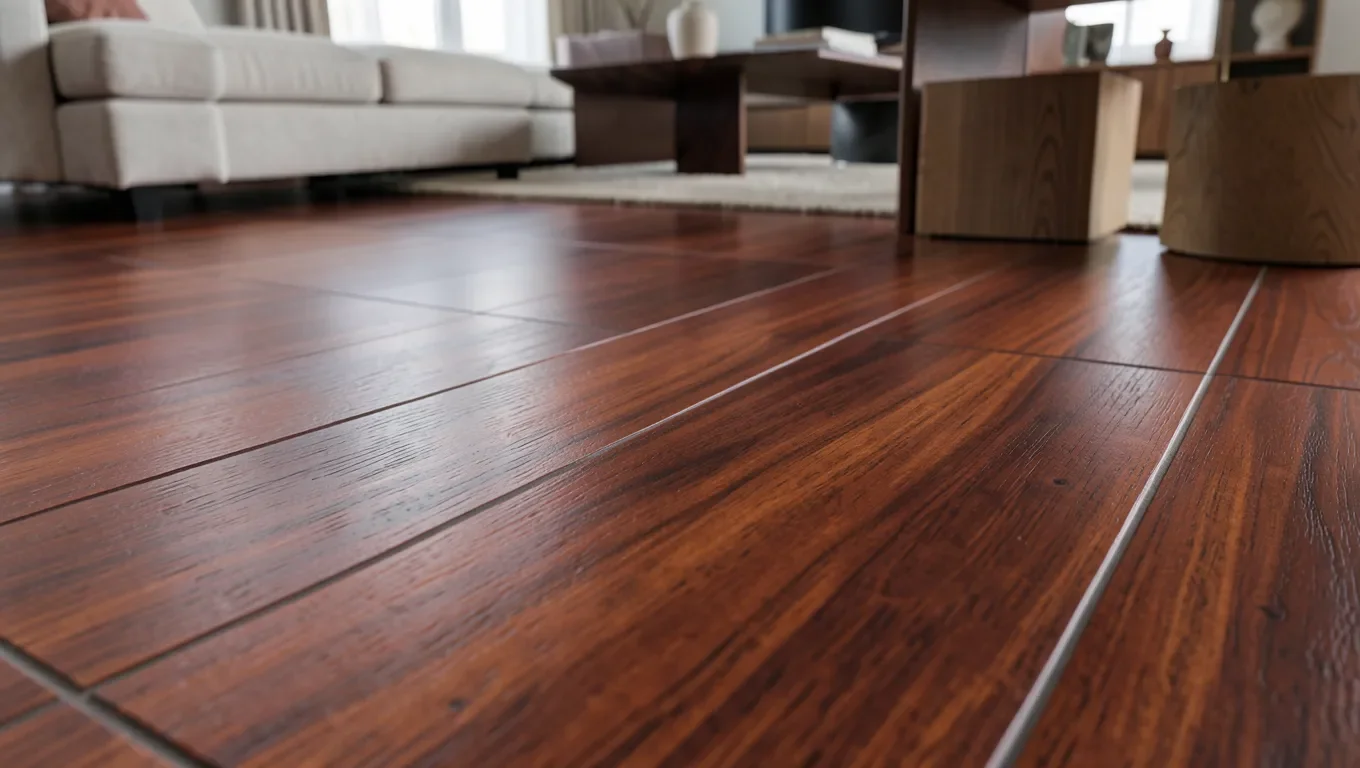
Rectified tiles are precision-cut after firing for perfectly straight, uniform edges, which allows a much narrower grout line (sometimes as thin as 1/16″) that reads more convincingly as continuous wood planking. Non-rectified tiles have a slight factory edge variation and need a wider grout line to compensate, which is more visually honest about being tile but less convincing as a wood-look product. If matching the seamless look of real hardwood flooring is the specific goal, rectified tile with a minimal grout line gets meaningfully closer to that effect than a non-rectified product.
What Makes the Wood Look Convincing (or Not)
Modern porcelain wood-look tile uses high-definition digital printing combined with a textured, embossed surface that’s registered to match the printed grain pattern — the texture you feel under your hand actually lines up with the wood grain lines you see, which is what separates a convincing modern product from older, flatter wood-look tile that looked obviously fake up close. Cheaper vinyl plank products sometimes use a repeating pattern across a limited number of unique plank designs, which becomes visually obvious once several repeats are visible across a larger room — check how many unique plank patterns a product includes before covering a large area, since a design that repeats every 4-5 planks reads as artificial much faster than one with 8-10+ unique variations.
Grout Color Affects the Illusion More Than People Expect
For porcelain tile, grout color is doing real visual work: a grout shade close to the tile’s dominant wood tone reads as a subtle plank seam, closer to real hardwood’s appearance, while a strongly contrasting grout color (white grout with dark mahogany tile, for example) emphasizes the grid pattern and makes the tile identity more obvious rather than less. If the goal is maximizing the wood illusion, choose a grout color sampled close to the tile itself rather than defaulting to a standard white or gray that happens to be on hand.
Where Each Option Actually Makes Sense
- Bathrooms and kitchens: porcelain tile’s full waterproofing is the safer long-term choice over vinyl plank’s water-resistant-but-not-waterproof seams
- Rental units: peel-and-stick vinyl plank, specifically because it’s removable without damaging the underlying floor when the lease ends
- High-traffic entryways: porcelain’s superior scratch and abrasion resistance (check that PEI rating) outlasts vinyl under heavy foot traffic and grit
- Budget-limited full-room remodels: vinyl plank stretches a flooring budget significantly further per square foot than porcelain
Cost vs. Real Mahogany Flooring
Real mahogany flooring, especially genuine Honduran mahogany, costs dramatically more than either wood-look option once material and installation are both factored in — and real wood flooring isn’t waterproof or scratch-proof the way a good porcelain tile is. This is the actual value proposition of wood-look tile: it approximates the appearance of an expensive, harder-to-maintain material at a fraction of the cost, with better real-world durability in kitchens, bathrooms, and entryways where solid mahogany flooring would need far more careful maintenance to avoid water and scratch damage.
Ongoing Maintenance Differences
Porcelain tile itself needs almost no maintenance beyond regular cleaning, but the grout lines do — unsealed or poorly sealed grout absorbs stains and grime over time, so resealing grout periodically (checking annually, resealing as needed) keeps the floor looking clean and keeps water from wicking underneath at the seams. Vinyl plank needs no grout maintenance at all since there isn’t any, but its seams between planks are a point where water can work underneath if it sits too long, and a damaged or peeling edge is harder to spot-repair invisibly than a cracked tile can sometimes be. Neither product should be cleaned with harsh abrasive scrubbers or wax-based floor products — a pH-neutral cleaner made for the specific material is the safer standard recommendation for both.
Installation Realities
Porcelain plank tile installation is a genuine skilled trade job for most homeowners — cutting long, narrow plank-format tile without chipping takes practice, and layout planning matters more with plank shapes than square tiles since a wandering line is far more visible over a long run. Peel-and-stick vinyl plank is the realistic DIY option: it goes down over a clean, flat, structurally sound existing floor with a utility knife and a straightedge, no specialized tools or trade skill required, which is exactly why it’s the better fit for a rental, a budget refresh, or a first-time DIY flooring project.
Radiant Floor Heating Compatibility
Porcelain tile is one of the best flooring materials for use over radiant (underfloor) heating — it conducts and holds heat efficiently, and has no meaningful temperature ceiling that would damage the material. Vinyl plank has real temperature limits; most manufacturers cap safe operating temperature well below what porcelain tolerates, and exceeding that limit over time can cause the adhesive backing to soften, the planks to shift, or the material to discolor. If a radiant heating system is already installed or planned, that alone is often reason enough to choose porcelain tile over vinyl plank for this specific application, regardless of which option otherwise fits the budget better.
Frequently Asked Questions
Is wood-look tile the same as vinyl plank flooring?
No. Wood-look tile is porcelain or ceramic, installed with thinset and grout. Vinyl plank is a plastic-based product, often self-adhesive, that installs without thinset or grout. They look similar but differ significantly in cost, durability, and installation.
What PEI rating should I get for wood-look floor tile?
PEI 3 or higher for typical residential foot traffic. PEI 0-1 is only suitable for walls or very light-traffic areas.
Is mahogany-look tile cheaper than real mahogany flooring?
Yes, significantly, especially compared to genuine Honduran mahogany. Wood-look tile also offers better water and scratch resistance than real wood flooring in most cases.
Can vinyl plank flooring be used over radiant floor heating?
Only within the manufacturer’s stated temperature limit, which is generally lower than what porcelain tile safely tolerates. For a room with radiant heating, porcelain tile is usually the more reliable choice.
Conclusion
Choose porcelain wood-look tile for a permanent upgrade that adds resale value, handles heavy traffic and moisture, and works over radiant heating, with a PEI 3+ rating and rectified edges if a seamless wood look matters. Choose peel-and-stick vinyl plank for a renter-friendly, genuinely DIY-installable budget option where permanence and maximum durability aren’t the priority.
Sponsored / affiliate links. As an Amazon Associate I earn from qualifying purchases. I may earn additional commission from eligible campaigns.
 265mm Pull Bar for Laminate Plank, Vinyl Plank Flooring and Wood Flooring Installation Tool(10.4in (10.4inch, 1)
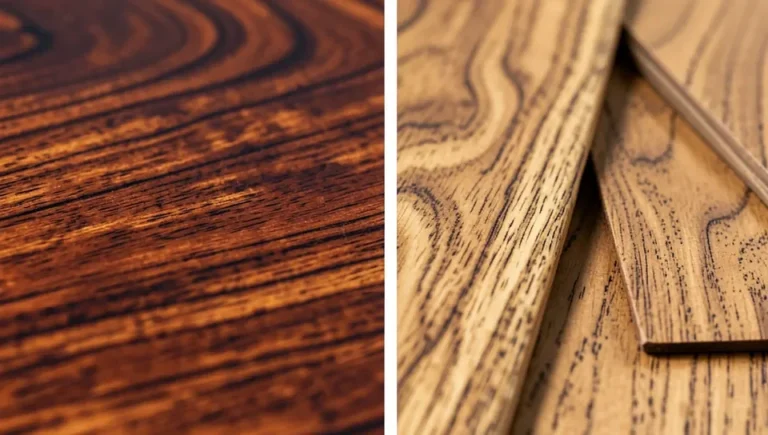
 The Hardwood Edge Mahogany Hardwood Planks - 2-Pack Mahogany Wood for Unfinished Wood Crafts - 1/8’’ (3mm) 100% Pure Hardwood - Laser Engraving Blanks - Exotic Mahogany Planks for Crafts and Gifts