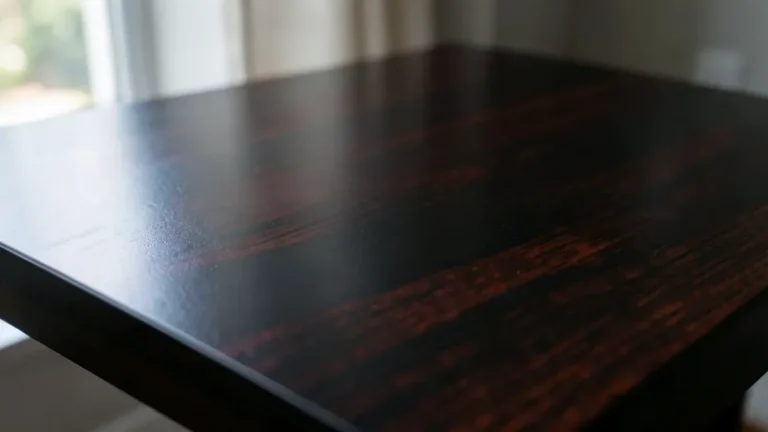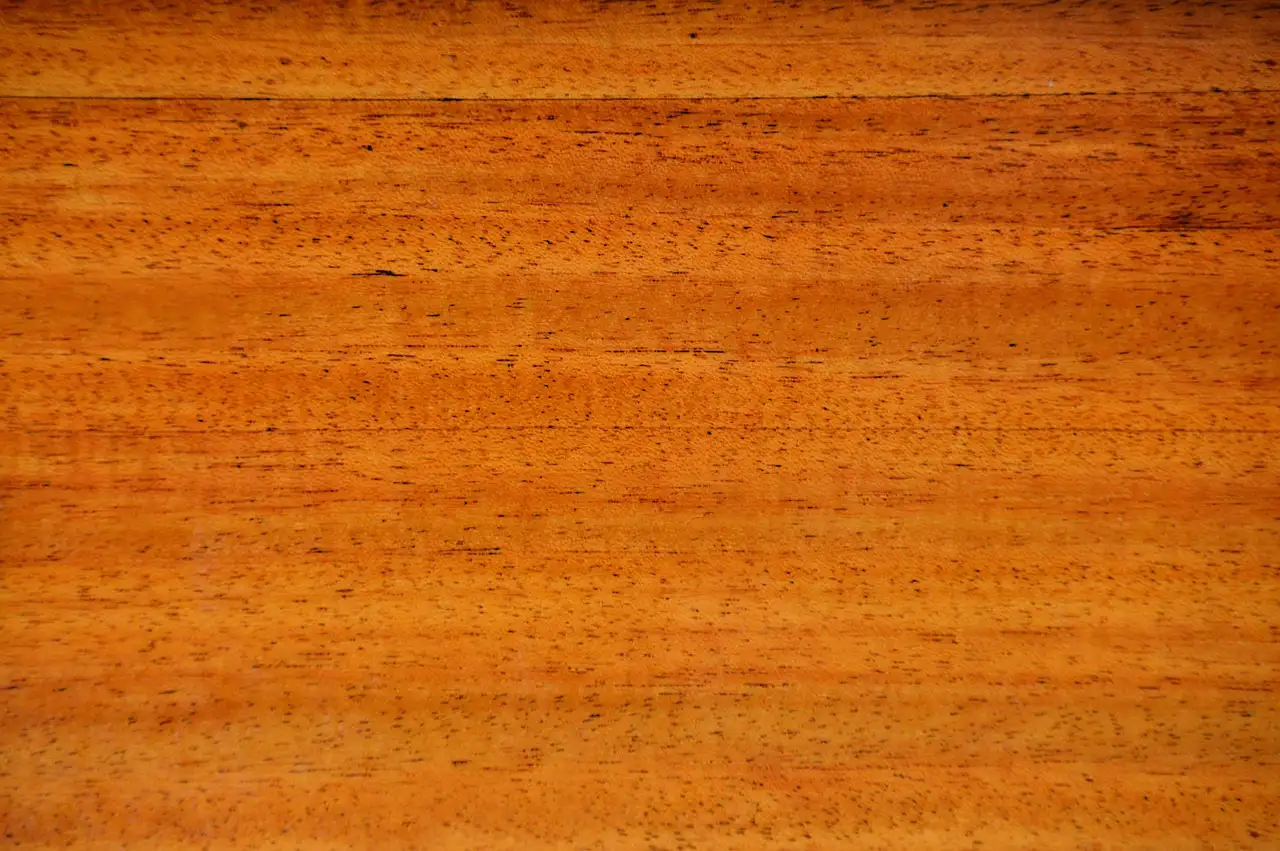
Sapele Wood Review: A Mahogany Alternative?
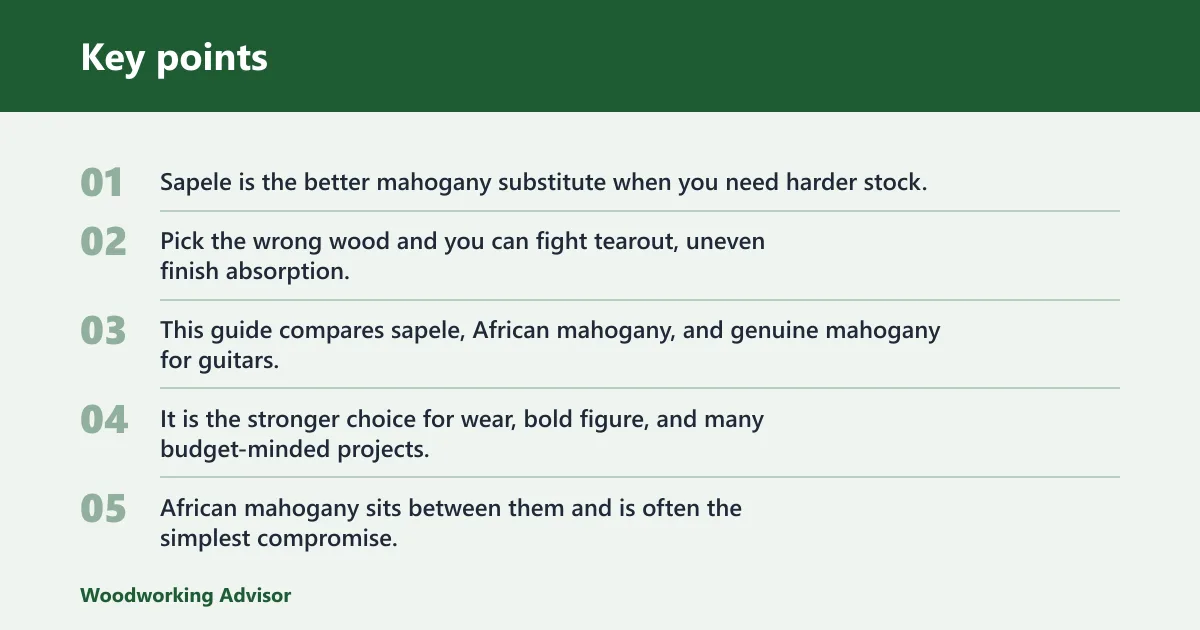
Sapele is the better mahogany substitute when you need harder stock, better dent resistance, and ribbon-striped figure; choose true mahogany instead if easier machining and higher dimensional stability matter more. Pick the wrong wood and you can fight tearout, uneven finish absorption, or movement that complicates joinery. This guide compares sapele, African mahogany, and genuine mahogany for guitars, furniture, and general woodworking.
Sapele is not a blanket upgrade. It is the stronger choice for wear, bold figure, and many budget-minded projects, but genuine mahogany still belongs where predictable machining and classic behavior matter most. African mahogany sits between them and is often the simplest compromise.
Sapele vs mahogany: the core trade-off

Where sapele wins and where mahogany still fits
Use sapele when you want a harder hardwood, a more pronounced decorative look, and better dent resistance on parts that will see regular handling. Use African mahogany when you want a similar appearance with less cutting resistance. Use genuine mahogany when you want the traditional furniture or guitar feel and can pay for it.
Say your client wants cabinet doors for a kitchen that will get daily handling. Sapele makes sense if you want the doors to shrug off dents and read as a figured brown wood. If the same project calls for fast machining, lower tearout risk, and easier cleanup at the stile-and-rail joints, African mahogany or genuine mahogany is usually the safer choice.
What is sapele wood?
Sapele is Entandrophragma cylindricum, a hardwood from West and Central Africa in the Meliaceae family. It is a common mahogany substitute in lumber, veneer, furniture parts, and musical instruments, but it is not true mahogany. Its higher hardness and interlocked grain give it a different working profile from both African mahogany and genuine mahogany.
How it differs from African mahogany and genuine mahogany
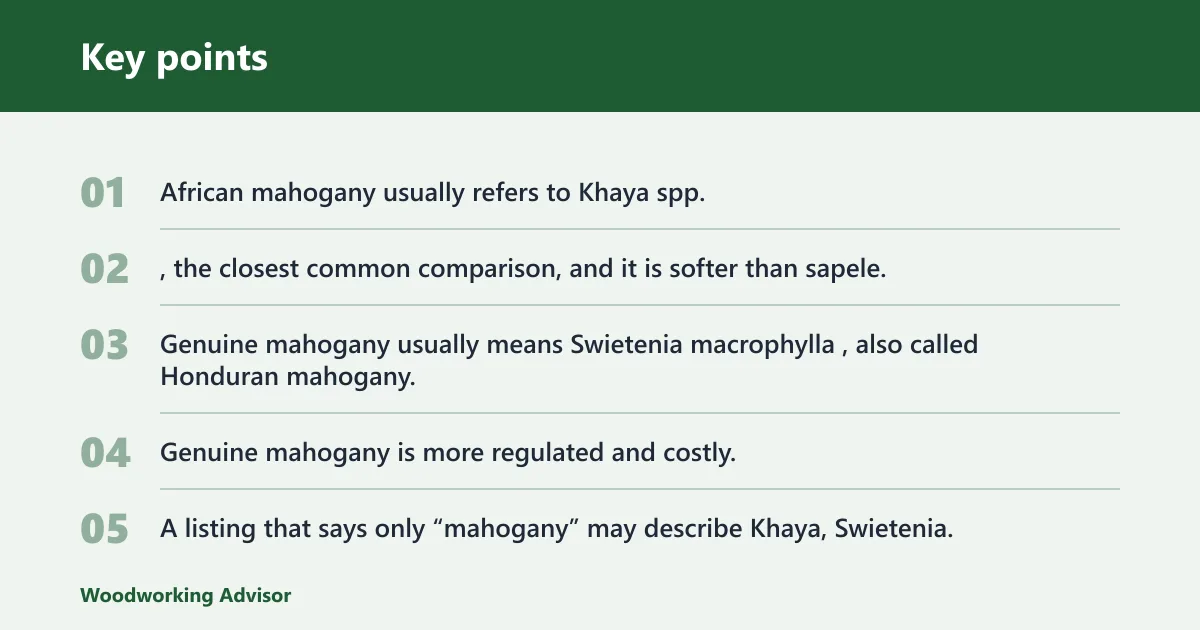
African mahogany usually refers to Khaya spp., the closest common comparison, and it is softer than sapele. Genuine mahogany usually means Swietenia macrophylla, also called Honduran mahogany, the traditional reference point for furniture and tonewood. Genuine mahogany is more regulated and costly, and “mahogany” on a 2026 marketplace page may mean any of these woods unless the species is stated. (Wikipedia)
That label matters. A listing that says only “mahogany” may describe Khaya, Swietenia, or a substitute such as sapele. For buying, the species name tells you how the board will cut, dent, and age.
How does sapele look compared with mahogany?
Sapele usually reads as golden to dark reddish brown, and it darkens with age. Compared with many mahoganies, it often looks a little deeper and more dramatic under finish. On quartersawn stock, the classic ribbon stripe can be the main reason to choose it.
Freshly milled sapele can look lighter and more golden than the final finished piece. With exposure to light, it shifts toward a darker reddish brown, so a sample board should be judged after finish, not before. That matters for cabinet matching and for guitar sets where color consistency across parts matters.
Quarter-sawn ribbon stripe and other figured forms
Quartersawn sapele can show a bold ribbon stripe caused by interlocked grain. That figure is the classic look many buyers want. Less common figured boards include pommele, quilted, mottled, beeswing, and fiddleback. These can command a higher premium, especially in matched sets or clear decorative panels.
Suppose you are building a 30-inch-wide entry panel in a hand-rubbed finish. A plain board will read calm and understated, while a quartersawn ribbon-striped board will draw the eye immediately. The figured board is worth the upcharge when the panel is the visual center of the room, not when it will be hidden in a carcass side.
Sapele mahogany comparison matrix
This matrix compares the practical choice, not just the wood name. “Hardness” here means dent resistance by Janka rating, “tearout risk” reflects the effect of interlocked grain in planing and routing, and “price tier” is the normal market band for standard lumber stock.
| Wood | Hardness | Tearout risk | Outdoor suitability | Typical price tier | Best use case |
|---|---|---|---|---|---|
| Sapele (Entandrophragma cylindricum) | 1,360 lbf to 1,410 lbf Janka | Higher; interlocked grain can tear out in planing and routing | Moderate to very durable heartwood; suitable for sheltered exterior use and finished exposed parts | Moderately priced in regular lumber; figured stock can be expensive | Furniture carcasses that need wear resistance, cabinet doors with strong figure, guitar backs and sides, exterior trim under a maintained finish, hand-rubbed decorative panels |
| African mahogany (Khaya spp.) | About 800-900 lbf Janka | Lower than sapele; usually easier to machine cleanly | Fair to moderate; generally less dense than sapele | Usually moderate, often close to sapele in standard stock | Casework, doors, and guitars when easier machining matters more than higher dent resistance |
| Genuine mahogany (Swietenia macrophylla) | Usually below sapele; commonly chosen for balanced workability rather than dent resistance | Low to moderate; generally the easiest of the three for predictable cutting | Moderate; depends on finish and exposure details | Higher; more regulated and costly | Fine furniture, classic guitar work, and projects where stable, traditional machining behavior matters most |
Furniture carcasses
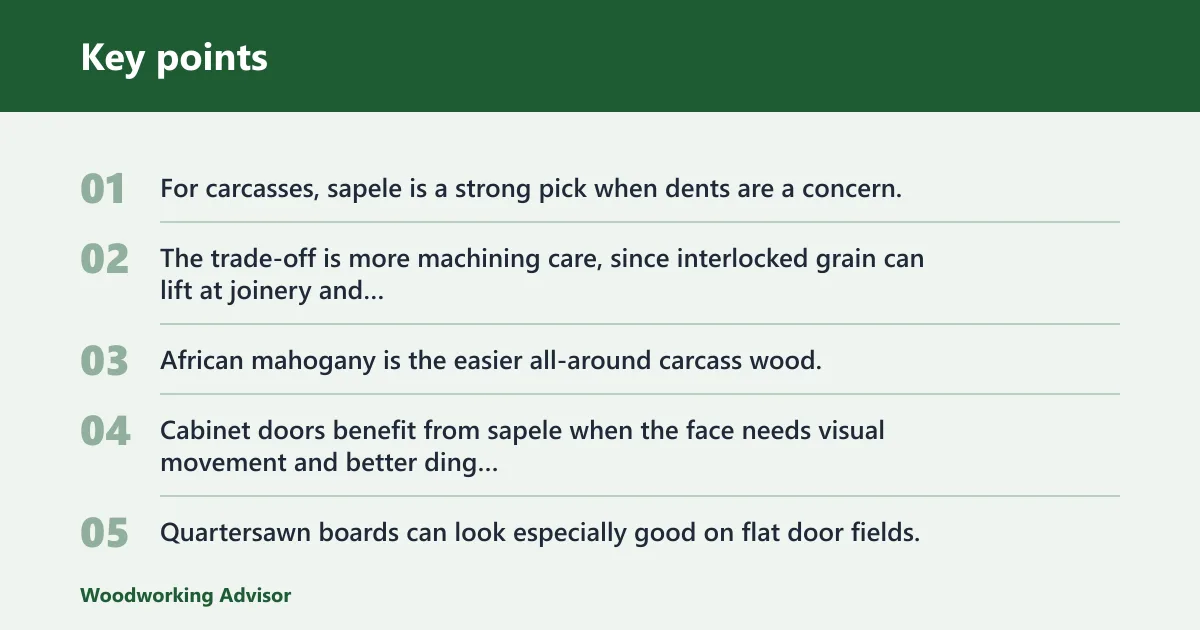
For carcasses, sapele is a strong pick when dents are a concern, especially on exposed rails, drawer fronts, and edge details. The trade-off is more machining care, since interlocked grain can lift at joinery and along routed profiles. African mahogany is the easier all-around carcass wood; genuine mahogany is the traditional premium option.
Cabinet doors
Cabinet doors benefit from sapele when the face needs visual movement and better ding resistance. Quartersawn boards can look especially good on flat door fields. The downside is that stile and rail parts may need lighter final passes to keep the edges clean, particularly across changing grain direction.
Guitar backs and sides
Sapele works well for backs and sides, and it is listed by lumber dealers for those parts. It gives builders a harder, denser option than African mahogany, with a strong visual read under finish. For tops, it is not the usual comparison; for backs and sides, the choice is usually about stiffness, weight, and appearance rather than a universal tonal rule.
Exterior trim
Sapele can be used outdoors, but the finish system matters more than the species name. In sheltered exterior trim, it is a sensible choice if all end grain is sealed and the coating is maintained. For fully exposed trim, a more conservative approach is needed, because weathering and coating failure drive service life.
Hand-rubbed decorative panels
This is where sapele can shine. Quartersawn ribbon stripe, strong color under finish, and figured boards such as pommele or quilted stock make it a good choice when the panel is meant to be seen and touched. The board is worth the premium when the project rewards pattern more than easy machining.
Why does sapele machine differently?
Sapele machines differently because its grain is interlocked and sometimes wavy, which increases tearout risk during planing and routing. It also has a slight blunting effect on cutters, so sharp tooling and careful setup matter. For clean results, use light final passes and expect more tool wear than with easier mahoganies.
Interlocked grain and tearout
Interlocked grain changes direction within the board, so a cutter can lift fibers instead of slicing them cleanly. That shows up as fuzz, splintering, or torn edges on planed faces and routed profiles. The problem is not constant, but it is common enough that you should plan for it before machining long parts.
Silica, cutter wear, and carbide tooling
Sapele has a slight blunting effect on cutters, which is one reason carbide blades and bits are a good idea. That does not mean every cut is difficult, but it does mean more frequent edge inspection and a lower threshold for swapping dull cutters. A sharp carbide setup reduces scorch, chatter, and surface breakdown.
Sanding, routing, and final-pass strategy
For best results, take shallow cuts, use climb-cutting only when appropriate and controlled, and leave a little material for a final clean-up pass. On raised panels and edges, a light final pass can reduce tearout more effectively than forcing a full-depth cut. Sanding should refine the surface, not rescue a rough routing pass.
- Joint and plane with very sharp knives or carbide inserts.
- Take lighter cuts than you would on straight-grained stock.
- Route profiles in multiple passes instead of one deep cut.
- Inspect cutter edges often, especially on long production runs.
- Leave a small allowance for a final finishing pass.
Is sapele good for outdoor use?
Sapele can work outdoors because its heartwood ranges from moderately durable to very durable, but exposure details decide the result. It is a better candidate for sheltered exterior parts than for fully exposed, water-catching assemblies. Finish upkeep is still required, and any open end grain needs careful sealing.
Sheltered exterior projects
For covered porch trim, soffit details, or protected entry components, sapele is a reasonable choice if the finish system is maintained. It can perform well where rain impact is limited and sunlight is indirect. In those conditions, its durability can be an advantage over softer mahoganies.
Exposed trim and maintenance intervals
Fully exposed trim is a different case. Sun, standing water, and joint failure shorten service life regardless of species. Plan on a sealed end grain, a high-quality exterior coating, and scheduled maintenance. If the part cannot be inspected and renewed, a more conservative species or construction detail may be safer.
Where mahogany may still be the safer choice
Choose genuine mahogany when the exterior piece must be machined easily into complex profiles and the exposure is modest. Choose African mahogany when you want a similar look with easier machining and lower risk of cutter deflection. For the most demanding outdoor exposure, design and finish matter more than species name alone.
Choose sapele if… / Choose mahogany if…
Choose sapele if you want more dent resistance, strong figure, and good value in standard lumber stock. Choose African mahogany if you want easier machining and a softer, more forgiving cut. Choose genuine mahogany if you want the classic benchmark for furniture and guitars and are willing to pay more for it.
Choose sapele if…
- You want a harder board for tabletops, doors, and handled parts.
- You want quartersawn ribbon stripe or another figured look.
- You can handle tearout risk with sharp tools and lighter passes.
- You are comparing standard lumber value, veneer, or instrument parts.
Choose African mahogany if…
- You want a mahogany-family look with easier machining.
- You are building cabinet parts that need less cutter wear.
- You want a softer option for guitar work or casework.
- You do not need sapele’s higher dent resistance.
Choose genuine mahogany if…
- You want the traditional furniture and guitar reference point.
- You value predictable machining and stable handling above hardness.
- You are willing to pay more for a more regulated species.
- You want the classic benchmark that many buyers still expect by name.
A common first-timer mistake is buying sapele for a small cabinet job because the color looks close enough to mahogany, then finding that the grain tears out at the hinge mortises and panel edges. The fix is not to avoid the species; it is to match the wood to the part, the tooling, and the amount of cleanup the schedule allows.
Frequently asked questions
Is sapele a mahogany?
No. Sapele is a common mahogany substitute, but it is not genuine mahogany. It comes from Entandrophragma cylindricum, while true mahogany refers to Swietenia macrophylla. In practice, sapele fills a similar visual role, but it machines and dents differently.
What is the difference between sapele and mahogany?
The biggest difference is hardness and workability. Sapele is harder, with a Janka rating around 1,360 lbf, while African mahogany is much softer and genuine mahogany is usually easier to machine. Sapele also has more interlocked grain, so it asks for more care at the planer and router. (Wood-database)
Sapele wood vs african mahogany
Sapele is the harder, denser option, while African mahogany is usually easier to cut and shape. If dent resistance and figure matter most, sapele leads. If you want a friendlier machine wood for casework or guitars, African mahogany is often the easier choice.
Sapele wood vs mahogany guitar
For guitars, sapele can be a solid choice for backs and sides when you want a mahogany-family look with more hardness and a slightly different visual character. Genuine mahogany remains the classic reference for easy working and familiar behavior. The better choice depends on build style, weight target, and the amount of finish work you want to do.
Does sapele darken over time?
Yes. Sapele starts as a golden to dark reddish brown and darkens with age. The change is usually more noticeable under finish and with light exposure. That makes sample matching important, especially on projects where new boards must match older installed parts.
Is sapele wood good for outdoor use?
Yes, with limits. Its heartwood is described as moderately durable to very durable, so it can work for sheltered exterior use and some finished exposed parts. It is not a reason to skip finish maintenance. If the joinery will face direct weather and neglected coatings, choose the whole assembly carefully, not just the species.
Where to buy sapele wood
Look for lumber yards and veneer suppliers that identify the species as Entandrophragma cylindricum rather than just “mahogany.” Standard stock is usually moderately priced, while figured boards cost more. For guitar parts, sellers often list backs, sides, and neck stock separately from general lumber.
Sapele vs mahogany guitar
Sapele is often chosen for guitar backs, sides, and necks when builders want a mahogany-family look with more hardness and a slightly different visual character. Genuine mahogany remains the classic benchmark. If easy shaping and familiar behavior matter most, mahogany wins; if wear resistance and stronger figure matter more, sapele has the edge.
Sponsored / affiliate links. As an Amazon Associate I earn from qualifying purchases. I may earn additional commission from eligible campaigns.