Hardwood vs. Laminate Flooring: Real Cost & Durability Guide
Hardwood costs $9 to $20 per square foot installed and can be sanded and refinished four to six times over its life, since a standard 3/4-inch solid plank has enough wood above the tongue-and-groove to lose roughly 1/16 inch per sanding. Laminate costs $2 to $8 per square foot, goes down faster, and shrugs off scratches and spills better day to day – but once its printed wear layer is worn through or gouged, that plank gets replaced, not refinished. That’s the real trade-off underneath every “which is better” article on this topic: pay more upfront for a floor you can renew for decades, or pay less for a floor that’s easier to live with but has a fixed lifespan.
Hardwood vs. Laminate: The Quick Comparison
Before the room-by-room breakdown, here’s what actually separates the two materials once you get past “one’s real wood and one isn’t.” If you’re installing over a floating subfloor either way, a proper underlayment matters more than most guides mention – it’s what keeps laminate from sounding hollow and gives hardwood a moisture buffer against the subfloor.
Underlayment Pick For Either Floor
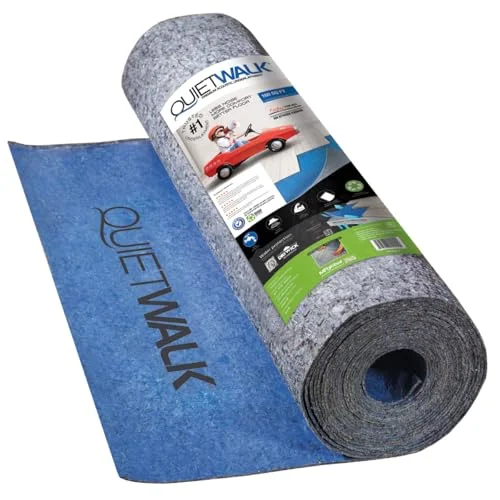 |
QuietWalk 360 sq ft 3mm Flooring Underlayment – $151.99 Works under both floating laminate and floating engineered hardwood, which matters if you’re comparing the two for the same room and want one underlayment either way.
|
| Factor | Hardwood | Laminate |
|---|---|---|
| Installed cost | $9-$20 per sq ft | $2-$8 per sq ft |
| Material | Solid wood, milled from a single board | HDF composite core with a printed wood-image layer |
| Can it be refinished | Yes, typically 4-6 times | No – damaged planks are replaced |
| Typical lifespan | 30-100 years with refinishing | 10-30 years |
| Water resistance | Poor – can cup, warp, or stain | Varies by AC rating and core type (see below) |
| Installation | Nailed/glued, usually a pro job | Click-lock floating floor, DIY-friendly |
What Hardwood Flooring Actually Is
Solid hardwood is milled from a single piece of lumber – oak, maple, hickory, and walnut are the common species – typically 3/4 inch thick with a tongue-and-groove edge on each plank. Because the color and grain run all the way through the board, not just on the surface, a hardwood floor can be sanded down and refinished multiple times before you run out of usable wood above the tongue. Each sanding pass removes roughly 1/16 inch, so a 3/4-inch plank realistically supports four to six refinishings over its life if it’s not sanded too aggressively each time. That’s the single biggest functional advantage hardwood has over laminate: damage that would force you to replace a laminate plank can often just be sanded out.
The trade-off is that solid wood moves with humidity. It expands in summer and contracts in winter, and it’s genuinely vulnerable to standing water – a spill left overnight can cup or stain a board in a way no amount of refinishing fully erases. It also needs to be nailed or glued down in most installations, which is why hardwood installation is usually a paid job rather than a weekend DIY project.
What Laminate Flooring Actually Is (and the AC Rating Most Guides Skip)
Laminate isn’t wood at all. It’s a high-density fiberboard (HDF) core topped with a high-resolution photograph of a wood grain pattern, sealed under a clear wear layer made of melamine resin and aluminum oxide. That wear layer, not the picture underneath it, is what actually takes the abuse from foot traffic, pet claws, and furniture legs. Once it’s scratched through, the photo layer underneath is exposed and there’s no way to sand or refinish it back – the plank has to be pulled and replaced.
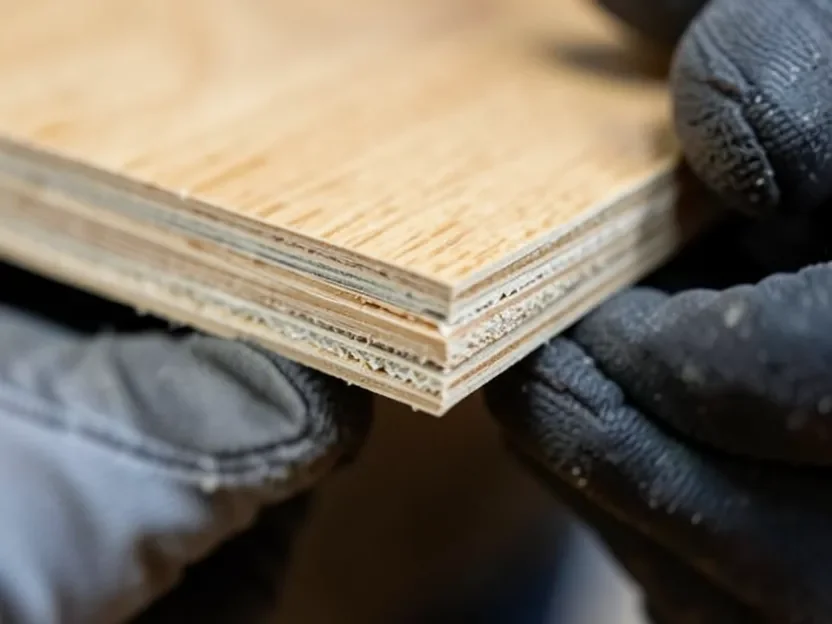
Here’s the part most comparison articles leave out: not all laminate wear layers are built the same, and there’s an actual industry rating for it. Laminate is graded on the AC (Abrasion Class) scale from AC1 to AC5, and the scale is cumulative – an AC3 floor has already passed the tougher tests required for AC1 and AC2. AC1-AC2 is entry-level, fine for a rarely-used guest room but not a hallway. AC3 is the common residential-grade rating and the one you want for any high-traffic room. AC4 and AC5 are rated for light commercial and heavy commercial traffic respectively, and using one of those in a house is overkill but not a mistake. If a laminate listing doesn’t mention its AC rating at all, that’s usually a sign it’s a cheaper AC1-AC2 product being marketed as general “residential” laminate.
Water resistance follows a similar “it depends on the specific product” pattern. Classic laminate with an HDF core will still swell and delaminate if it sits in standing water, same as any wood-fiber product. Newer rigid-core laminate lines – built with a WPC (wood-plastic composite) or SPC (stone-plastic composite) core instead of plain HDF – hold up to moisture much better and some are marketed as waterproof. But “waterproof” only applies to that specific rigid-core product, not to laminate flooring as a category, so it’s worth checking the actual core type and manufacturer’s water rating before assuming any laminate you buy can handle a bathroom or mudroom.
Durability and Lifespan: Refinishing vs. Replacing
A well-maintained hardwood floor can last 30 to 100 years because refinishing resets the surface instead of ending the floor’s life. Laminate typically lasts 10 to 30 years depending on the AC rating and how much traffic it sees, and when it’s done, it’s done – you’re replacing planks or the whole floor, not sanding it back to new. For a starter home you might sell in five years, that gap barely matters. For a forever home, it’s the single biggest number in this whole comparison.
Maintenance and Cleaning
Laminate is genuinely low-maintenance: regular sweeping or vacuuming plus an occasional damp (not wet) mop is enough, and you don’t have to worry about the wrong cleaner stripping a finish. Hardwood needs wood-safe cleaners, prompt cleanup of any spill, and periodic re-coating of the surface finish (separate from full refinishing) to keep the wear layer protecting the wood underneath. Neither floor should ever be cleaned with a steam mop – the heat and moisture are hard on both the laminate’s HDF core and hardwood’s finish.
Which One Should You Choose, By Room
- Kitchens and mudrooms: Laminate with a rigid WPC/SPC core and a documented water rating handles spills better than hardwood, which can cup from repeated moisture exposure at the sink and entry.
- Living rooms and bedrooms: Hardwood generally wins here if the budget allows – lower moisture risk, and refinishing lets you change the stain color years later without replacing anything.
- Rental properties: Laminate’s lower material cost and easy plank replacement make sense when you’re budgeting for tenant wear rather than long-term resale value.
- A home you plan to sell: Hardwood generally has a stronger effect on resale value and buyer perception than laminate, even though both outperform carpet.
Frequently Asked Questions
Is laminate flooring waterproof?
Not by default. Classic HDF-core laminate will swell if it’s soaked. Some newer rigid-core (WPC/SPC) laminate lines are rated waterproof, but that’s a property of that specific product line, not of laminate flooring as a category – check the manufacturer’s water rating before assuming.
How many times can hardwood floors be refinished?
A standard 3/4-inch solid hardwood plank can typically be sanded and refinished four to six times, since each sanding removes roughly 1/16 inch of wood above the tongue. Thinner engineered hardwood supports fewer refinishings, sometimes just once or twice, depending on the wear-layer thickness.
What does the AC rating on laminate flooring mean?
AC (Abrasion Class) rates a laminate floor’s wear-layer durability from AC1 (light, low-traffic use) to AC5 (heavy commercial traffic). The scale is cumulative, so AC3 – the common residential grade for high-traffic rooms – has already passed the AC1 and AC2 tests. A listing with no AC rating shown is usually a lower-grade AC1-AC2 product.
Does hardwood or laminate add more resale value?
Hardwood generally has a stronger positive effect on resale value and buyer perception than laminate. Both outperform carpet, but hardwood’s refinishing ability and status as a “real wood” material carry more weight with buyers and appraisers.
Can you install laminate flooring over an existing hardwood floor?
Yes, as long as the hardwood underneath is flat, structurally sound, and not actively cupping or warping. A floating laminate floor doesn’t attach to the subfloor, so a thin foam or fiber underlayment between the two is normally all that’s needed – there’s no need to remove the existing hardwood first.
Final Verdict
If you can afford the higher upfront cost and the room isn’t exposed to regular moisture, hardwood is the better long-term investment – refinishing it every decade or two is cheaper over 30+ years than replacing laminate two or three times over. If budget, water exposure, or a faster DIY install matter more right now, a residential-grade (AC3 or higher) laminate, ideally a rigid-core line with a real water rating, is a genuinely reasonable choice rather than a compromise. The honest answer to “which is better” is that they’re built to solve different problems, not that one is objectively superior to the other. For the full picture across every wood-look material, not just these two, our wood flooring guide compares solid hardwood, engineered wood, laminate, and LVP side by side.
Sponsored / affiliate links. As an Amazon Associate I earn from qualifying purchases. I may earn additional commission from eligible campaigns.