Maple vs Birch Wood Bat Choice Explained
Picking the right wood bat can feel tricky, especially when you first start playing. You hear lots of talk about different woods, and it’s easy to get confused. Many beginners wonder about Maple vs Birch: Which Is Better for Wood Bats? This guide makes it simple.
We will walk through everything step by step, so you know exactly what to look for. Get ready to find the perfect bat for your game.
Understanding Wood Bat Materials
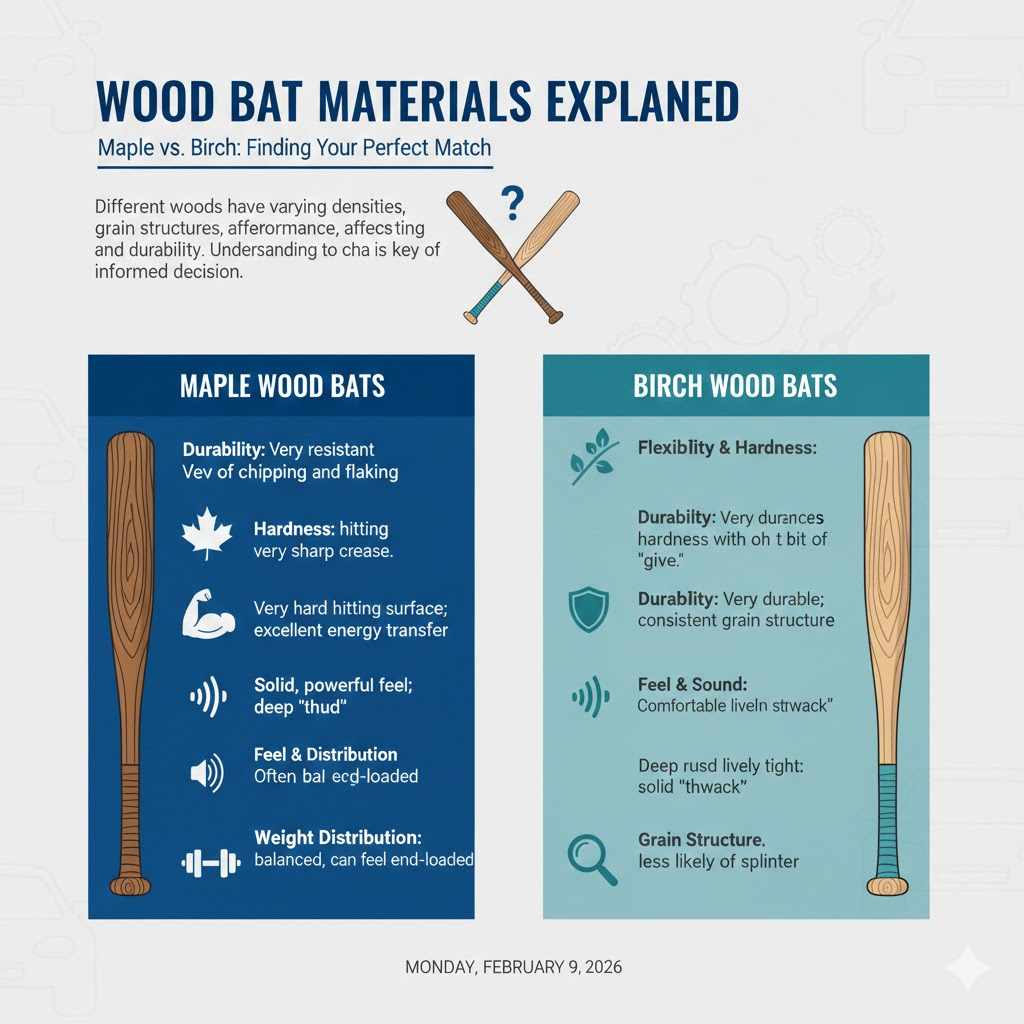
Wood bats are crafted from various tree species, each offering unique characteristics that affect performance and durability. The choice of wood is a primary factor in a bat’s feel, sound, and how it holds up over time. For baseball and softball players, understanding these differences is key to making an informed decision.
Different woods have varying densities, grain structures, and natural strengths. This impacts how a bat swings, how much power it can generate, and its resistance to breaking.
Players often gravitate towards specific woods based on personal preference, playing style, or even tradition. Some may prefer the dense, forgiving feel of certain hardwoods, while others might seek a lighter swing weight for faster bat speed. The subtle differences in grain patterns and wood density can also influence the sound a bat makes when it hits a ball.
This auditory feedback is an important part of the game for many athletes.
Maple Wood Bats
Maple has become one of the most popular choices for wood bats in recent years, and for good reason. This hardwood offers a fantastic combination of strength, density, and a hard hitting surface. Maple’s tight grain structure makes it very durable and resistant to chipping and flaking.
This is a significant advantage over some other wood types.
Maple bats are known for their ability to withstand repeated impacts without significant damage. They tend to feel very solid when you connect with the ball. This feeling is often described as a powerful “thud” rather than a sharp “crack.” The inherent density of maple also means bats made from it often have a heavier feel, which some players prefer for its ability to drive through the ball.
However, this density can also make them less forgiving on mishandled swings.
One of the key properties of maple is its hardness. It is harder than many other wood bat materials, which translates to a more durable barrel. This means a maple bat can often last longer than bats made from softer woods, especially if treated well.
The surface of a maple bat is also very smooth, which contributes to its reduced tendency to flake or splinter. This smooth finish is a result of the wood’s tight cellular structure. Maple bats are a top choice for many professionals and amateurs alike due to these robust characteristics.
- Durability: Maple’s tight grain makes it very resistant to chipping and flaking. This means your bat is less likely to show wear and tear from hard hits. It can handle many swings and still perform well.
This makes it a long-lasting option for serious players.
- Hardness: The wood is naturally very hard. This hardness provides a firm hitting surface, allowing for excellent energy transfer to the ball. When you hit the sweet spot, the ball really flies.
The firm surface helps prevent the barrel from deforming on impact.
- Feel and Sound: Maple bats offer a solid, powerful feel. The sound is often a deep thud, which many players enjoy. It signals a solid connection.
This unique feel contributes to a player’s confidence at the plate. Some players find this feedback very satisfying.
- Weight Distribution: Maple bats often have a balanced feel but can sometimes feel a bit end-loaded due to their density. This can be a preference for hitters looking for extra power. Bat makers can adjust the weight distribution to suit different player needs.
Birch Wood Bats
Birch wood bats are gaining popularity as a strong alternative to traditional maple and ash. Birch offers a unique blend of flexibility and hardness, making it a versatile choice. It sits somewhere between the hardness of maple and the slight give of ash, providing a different feel for hitters.
One of the standout features of birch is its durability. Birch bats often start harder than ash but can develop a slight flexibility over time. This makes them forgiving on mishandled hits, reducing the chance of immediate breakage.
Birch wood also tends to have a more consistent grain structure than ash, which can contribute to its overall strength and reliability. This consistency is a big plus for players who want a bat they can count on.
Birch bats are known for their excellent performance characteristics. They offer a good balance of power and bat speed. The wood’s structure allows for good energy transfer, meaning solid hits are rewarded.
Many players find that birch bats provide a comfortable feel and a satisfying sound upon contact. The natural beauty of birch wood also adds to its appeal, with many bats showcasing attractive grain patterns. The manufacturing process for birch bats is similar to maple and ash, focusing on selecting quality logs and precise shaping.
- Flexibility and Hardness: Birch offers a nice balance. It starts hard like maple but has a bit more give. This flexibility can make it more forgiving on off-center hits.
It helps prevent the bat from breaking as easily as some other woods.
- Durability: Birch is very durable. Its grain is often more consistent than ash. This consistency helps it withstand the rigors of a game.
It can often outlast bats made from softer woods when used regularly.
- Feel and Sound: Birch bats provide a comfortable feel. The sound is often described as a solid “thwack.” It’s a satisfying sound that lets you know you’ve squared the ball up. The feel is lively and responsive.
- Grain Structure: Birch has a dense and tight grain. This tight grain contributes to its strength and reduces the likelihood of splintering. The consistent grain also means predictable performance from bat to bat.
Bat makers can rely on its uniformity.
Maple vs Birch Which Is Better for Wood Bats
Deciding between maple and birch wood bats often comes down to personal preference and playing style. Both woods are excellent choices and are used by players at all levels. However, they offer slightly different experiences at the plate.
Understanding these distinctions can help you select the bat that best suits your needs. It’s a common question for players aiming to improve their game with the right equipment.
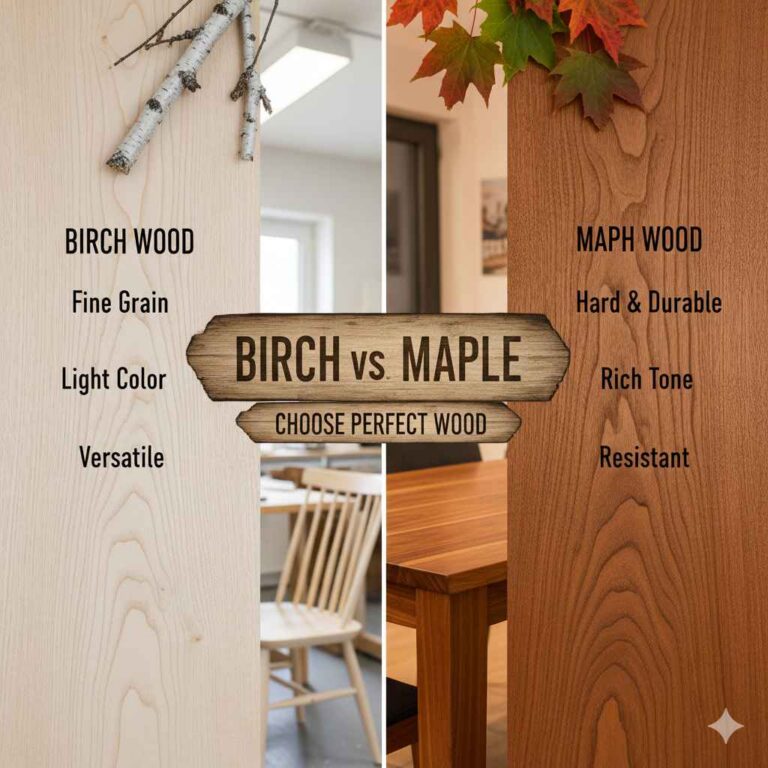
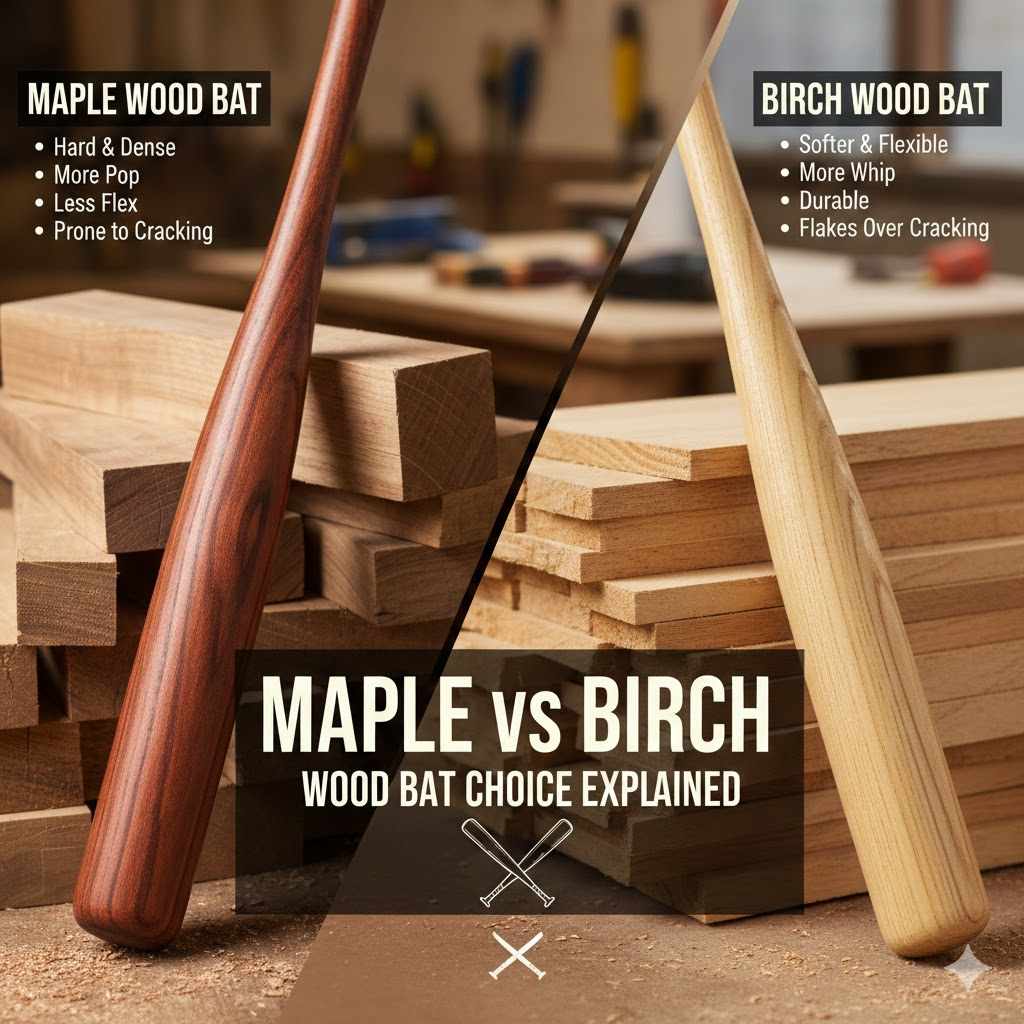
The core difference often boils down to hardness and flexibility. Maple is generally harder and more rigid. Birch offers a bit more flexibility, which can be beneficial for some hitters.
Neither is definitively “better”; they are simply different. Your personal swing mechanics, the type of pitches you face, and how you practice can all influence which wood might be more advantageous for you. Exploring these differences is essential for making the most informed choice.
We will now explore each type in more detail.
Hardness and Durability Comparison
When comparing maple and birch, hardness is a key factor. Maple wood is known for its exceptional hardness. This extreme hardness creates a very firm hitting surface.
This means less energy is lost when the ball makes contact with the bat. Essentially, a well-hit ball with a maple bat will travel further.
However, this extreme hardness can also make maple bats less forgiving. If you hit the ball off the end of the barrel or too close to the handle, the bat can be more prone to breaking. This is because the wood has less natural flex to absorb the impact of a mishandled swing.
Maple bats tend to break more cleanly, often in half, without much splintering.
Birch wood, on the other hand, offers a different balance. It is hard, but generally not as hard as maple. Birch has a unique property where it starts out quite hard but can develop a slight flexibility with use.
This means that as you use a birch bat, it can become more forgiving over time. This flexibility helps to absorb some of the shock from off-center hits, making birch bats less likely to break suddenly.
The durability of birch bats often comes from their ability to flex rather than break. While maple might break more cleanly, birch bats are known to last longer for players who don’t always hit the sweet spot perfectly. Birch wood’s grain structure is also very consistent, which adds to its overall strength and resilience.
This makes them a reliable choice for consistent performance.
| Wood Type | Hardness | Durability | Forgiveness | Breakage Type |
|---|---|---|---|---|
| Maple | Very High | High (less prone to chipping) | Lower | Clean break, less splintering |
| Birch | High | Very High (develops flexibility) | Higher | Less likely to break suddenly, may show more wear |
The table above shows a clear distinction in how these woods perform regarding hardness, durability, forgiveness, and breakage. Maple’s extreme hardness gives it an edge in raw power transfer, but at the cost of forgiveness. Birch offers a more balanced approach, providing significant durability and forgiveness that can lead to a longer bat life for many players.
The choice between them often depends on a player’s ability to consistently find the sweet spot. For power hitters with excellent bat control, maple might be preferred. For players who value a more forgiving bat that can withstand a wider range of contact points, birch is an excellent option.
Performance Characteristics
When it comes to performance, both maple and birch bats deliver excellent results, but they do so with a slightly different feel. Maple is celebrated for its stiff nature. This stiffness means that when you make solid contact, the energy transfer to the ball is incredibly efficient.
There’s very little flex in the barrel upon impact, leading to maximum velocity for the ball off the bat. This is a significant reason why many power hitters prefer maple.
The sound produced by a maple bat is also a signature characteristic. It’s typically a deep, resonant “thud.” This sound is often associated with pure power and a solid connection. Many players find this auditory feedback reassuring and believe it helps them gauge their hits.
The consistent density of maple also means that performance is very predictable swing after swing, assuming consistent contact.
Birch bats, while also offering great performance, have a slightly different feel due to their inherent flexibility. As birch bats are used, they tend to “break in,” meaning they develop a slight flex. This flex can be beneficial, as it allows the bat to “whip” through the zone with more speed.
It also means that the energy transfer, while still very good, might not be as instantaneous as with a perfectly stiff maple bat. However, this flex also contributes to a more forgiving feel.
The sound of a birch bat is often described as a sharp “thwack” or “crack.” This sound is different from maple’s thud but is equally satisfying to many hitters. It signals a good hit and is a clear indicator of ball-on-bat connection. For players who value bat speed and a responsive feel, birch can be an outstanding choice.
It offers a dynamic performance that can complement a variety of hitting styles.
Here’s a quick comparison of their performance traits:
- Maple Bat Performance: Excels in raw power transfer due to its extreme stiffness. This leads to maximum ball speed off the bat when contact is made on the sweet spot. The feel is solid and direct, with minimal flex, providing a very satisfying “pop.” This makes it a favorite for players who prioritize hitting the ball as hard and far as possible.
- Birch Bat Performance: Offers a great blend of power and speed. The wood’s natural flexibility allows for a whip-like action through the swing zone, potentially increasing bat speed. While not as stiff as maple, birch provides excellent energy transfer and a responsive feel.
Many players find birch bats to be very lively and engaging to hit with.
- Sound Comparison: Maple typically produces a deep, powerful “thud” sound. This sound is often perceived as the sound of pure power. Birch, on the other hand, often generates a sharper, crisper “thwack” or “crack” sound.
Both sounds are distinct and highly regarded by players for different reasons.
- Feel at the Plate: Maple provides a very solid and direct feel. It feels locked in and stable on contact. Birch offers a feel that is often described as more lively and responsive.
Some players feel they can get more bat speed through the zone with birch due to this responsiveness. The choice of feel is very personal.
Choosing the Right Bat For You
Selecting between a maple and a birch wood bat really depends on what you, as a player, are looking for. There isn’t a single “better” wood, only the one that is better for your specific needs and preferences. Think about how you play, what you want from your bat, and what you can realistically expect from your performance.
If you are a hitter who consistently finds the sweet spot and prioritizes maximum power and distance, a maple bat might be your best bet. Maple’s hardness ensures that every bit of your swing energy is transferred directly to the ball. If you are known for your raw power and can make solid contact on most swings, maple will likely enhance that strength.
The direct feel and loud “thud” are often favored by these types of players.
On the other hand, if you value a bat that is more forgiving and can potentially last longer, especially if you don’t always hit the ball perfectly on the sweet spot, then a birch bat is an excellent choice. Birch’s ability to flex can help absorb mishits, reducing the chance of breakage. Players who aim for faster bat speeds and enjoy a more lively, responsive feel often find birch to be superior.
It offers a great balance of power and bat control.
Consider these questions when making your choice:
- What is your typical hitting contact? Do you often hit the ball right on the sweet spot, or do you sometimes hit it a bit off-center? If you often hit off-center, birch’s forgiveness might be more beneficial.
- What kind of sound do you prefer? Do you like the deep “thud” of maple, or the sharper “thwack” of birch? The sound can affect your confidence and feel at the plate.
- What is your primary goal at the plate? Are you focused on maximizing raw power, or do you prioritize bat speed and a more versatile feel? Maple is often for raw power, while birch can offer a good mix.
- How important is bat longevity to you? If you want a bat that might withstand minor mistakes better, birch often provides that resilience. Maple is very durable but can be more brittle on off-center impacts.
Many players find success with both types of wood. Some even switch between them depending on their current form or the league rules. The best approach is often to try out bats made from both maple and birch if possible.
Feeling the difference in your hands during practice swings and at-bats is invaluable. What feels right for one player might not feel right for another, and that’s perfectly okay. The goal is to find the bat that makes you feel most confident and effective at the plate.
Real-Life Examples and Scenarios
Let’s look at a couple of scenarios to illustrate how maple and birch bats might perform for different players.
Scenario 1: The Power Hitter. Alex is a slugger known for his ability to hit towering home runs. He has excellent hand-eye coordination and consistently makes solid contact with the ball.
Alex prefers bats that feel stiff and deliver maximum power. He has used maple bats for years and loves the distinct “thud” he hears when he squares up a pitch. He finds that maple bats allow him to drive the ball with exceptional force, sending it further than with other wood types.Even though he knows maple can be less forgiving, his consistent contact makes breakage less of a concern for him. He recently switched to a maple bat with a slightly larger barrel and found his already impressive exit velocities increased.
Scenario 2: The Contact Hitter. Maria is a line-drive hitter who focuses on making consistent contact and getting on base. She’s fast on the basepaths and hits for a high average.
While she can hit for power, her primary goal is solid contact. Maria has found that birch bats suit her game better. She appreciates the slightly more forgiving nature of birch, as she sometimes hits the ball a bit out of the sweet spot.The birch bat feels lively in her hands, and she feels she can generate good bat speed with it. She also likes that her birch bat has shown very little wear even after a full season of use, whereas her previous ash bats would show more signs of damage.
These scenarios highlight how player style and preference play a crucial role. Alex thrives with the raw power and stiffness of maple. Maria benefits from the balance of forgiveness and responsiveness offered by birch.
Both are effective, but they cater to different needs. The key takeaway is that understanding your own game is the first step to choosing the right wood.
Maintenance and Care
To get the most out of your wood bat, whether it’s maple or birch, proper care is essential. Both types of wood require attention to keep them in top condition and maximize their lifespan. Neglecting your bat can lead to premature breakage, regardless of the wood type.
One of the most important aspects of bat care is protection from moisture and extreme temperatures. Wood absorbs moisture, which can weaken its structure and make it more prone to breaking. Always store your bats in a cool, dry place, away from direct sunlight or humid environments.
Avoid leaving them in the trunk of your car during hot weather, as this can cause the wood to expand and contract, leading to damage.
When you get a new wood bat, it’s a good practice to apply a light coat of wood wax or a specialized bat conditioner. This helps to seal the wood’s pores and protect it from moisture. Reapply this conditioner periodically, especially if you play in humid conditions or notice the bat looking dry.
Always use a clean cloth for application and allow it to dry completely before use.
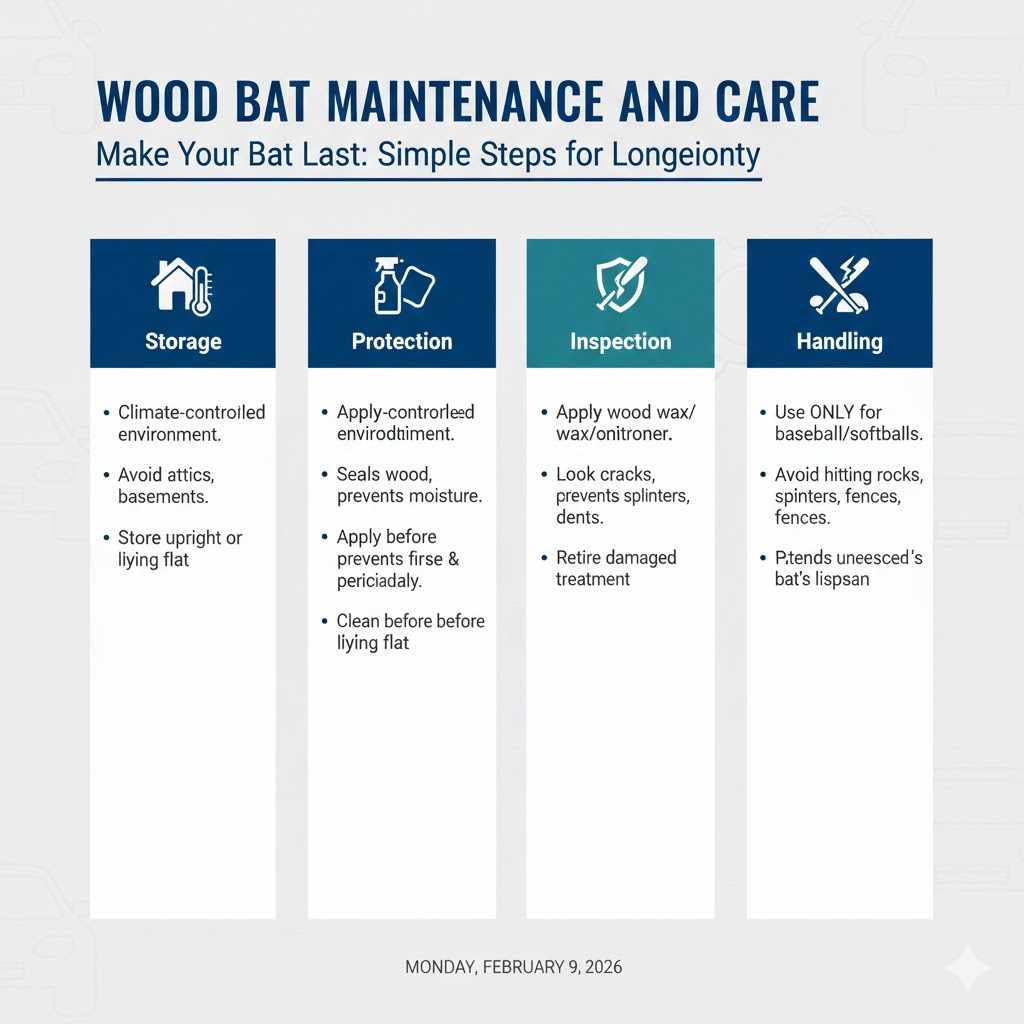
- Storage: Always store your wood bats in a climate-controlled environment. Avoid attics, basements, or garages that experience extreme temperature fluctuations. A sports bag or a dedicated bat rack in a cool, dry room is ideal.
Keeping bats upright or lying flat without pressure on the barrel helps maintain their shape.
- Protection: Apply a thin layer of wood wax or bat conditioner to the entire bat, especially the barrel and handle, before its first use and periodically thereafter. This creates a protective barrier against moisture and helps preserve the wood’s integrity. Ensure the bat is clean before applying any treatment.
- Inspection: Regularly inspect your bat for any signs of damage, such as cracks, splinters, or excessive dents. Even minor damage can weaken the bat. If you notice any issues, it’s best to retire the bat to prevent it from breaking during a swing, which could cause injury.
- Handling: Avoid using your wood bat for purposes other than hitting baseballs or softballs. Do not use it to hit rocks, fences, or other hard objects. Such actions can cause unnecessary damage and shorten the bat’s lifespan significantly.
Frequently Asked Questions
Question: Is maple or birch better for a beginner?
Answer: For beginners, birch is often recommended. It is more forgiving on mishits, which means it’s less likely to break. This can save money and frustration while you’re still developing your swing.
Maple is harder but less forgiving.
Question: Can birch bats break easily?
Answer: Birch bats are very durable. While no wood bat is indestructible, birch has a good balance of hardness and flexibility that makes it quite resilient. They are generally less prone to sudden breakage than maple, especially on off-center hits.
Question: Does the color of the wood matter for performance?
Answer: The color of the wood itself typically does not affect performance. Manufacturers choose high-quality wood regardless of its natural color. The grain density and overall integrity of the wood are what matter most for how a bat performs.
Question: How long do wood bats typically last?
Answer: The lifespan of a wood bat varies greatly depending on the wood type, how it’s used, and how well it’s cared for. A well-maintained maple or birch bat used for consistent, solid contact might last an entire season or longer. However, a bat that takes many mishits or is not stored properly could break within weeks.
Question: Should I choose a wood bat based on its weight?
Answer: Yes, bat weight is a crucial factor. Both maple and birch bats come in various weights and length-to-weight ratios. You should choose a weight that allows you to swing the bat with speed and control.
A bat that is too heavy will slow down your swing, while one that is too light might not provide enough power.
Final Thoughts
Choosing between maple and birch wood bats comes down to your personal play style and preferences. Maple offers maximum hardness and power, ideal for consistent, solid contact. Birch provides excellent durability and forgiveness, making it a great all-around choice for many players.
Both are high-quality options, so consider your own game to find the best fit for you.