Baltic Birch vs Maple Plywood: Strength, Cost & Best Uses
Baltic birch plywood is a void-free, all-birch panel built from 9 to 15 thin plies, prized for strong screw-holding edges and dimensional stability. Maple plywood is a hardwood veneer bonded over a thicker-ply core, prized for its smooth, scratch-resistant face. Pick Baltic birch for drawer boxes, jigs, and anything with an exposed edge; pick maple for cabinet doors, tabletops, and painted or clear-coated furniture faces.
What Baltic Birch Actually Is (And Why It Costs More)
Best For Trying Baltic Birch On A Small Project
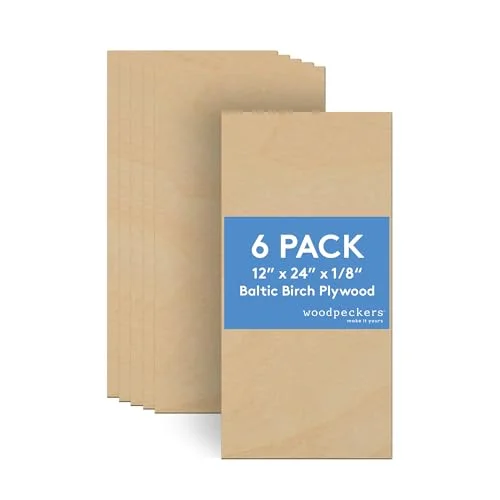 |
Woodpeckers 3mm Baltic Birch Plywood, 12″ x 24″, 6-Pack – $34.67 A real, void-free Baltic birch panel sized for jigs, drawer bottoms, and laser/CNC work — the same B/BB grade construction discussed below, without buying a full 5×5 sheet first.
|
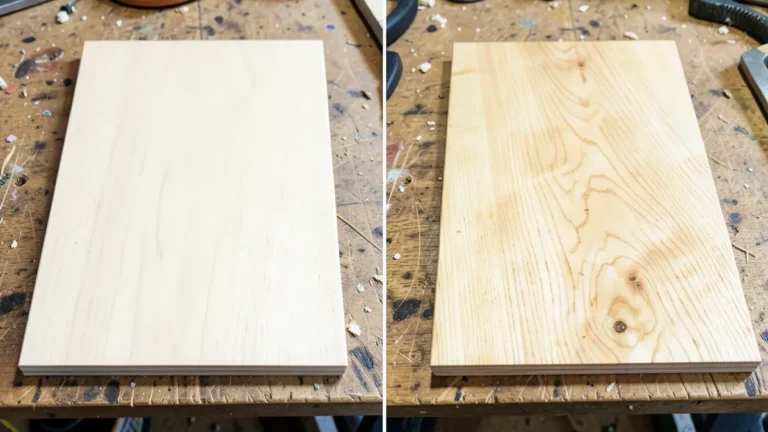
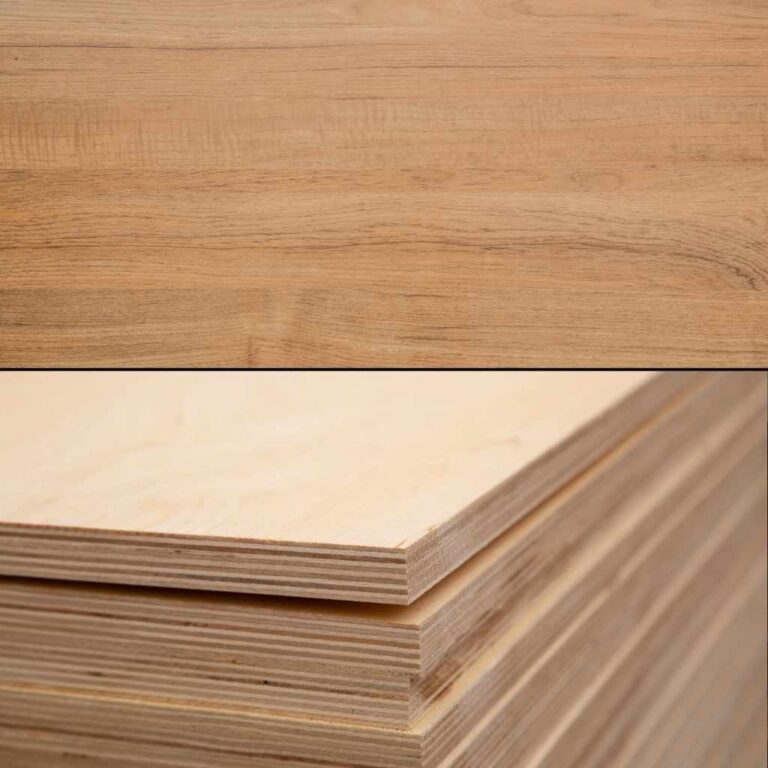
Baltic birch comes from birch trees grown around the Baltic Sea — Finland, Russia, Latvia, and Estonia — where a short, cold growing season produces tight growth rings and dense fiber. Real Baltic birch is built entirely from birch veneer, ply after ply, usually 9 to 15 layers in a 3/4″ sheet versus the 5 to 7 layers in a typical domestic hardwood plywood. Every layer is the same species and thickness, which is what makes the edge look almost like a topographic map when you cut into it — no gaps, no filler, no soft core.
That construction is also why it costs more. A 5×5 sheet of true Baltic birch commonly runs somewhere in the $80–$120 range depending on thickness and region, versus roughly $55–$85 for a similar-size sheet of maple-faced plywood. You’re paying for void-free plies and a manufacturing process that can’t be shortcut with cheaper core material.
What Maple Plywood Actually Is
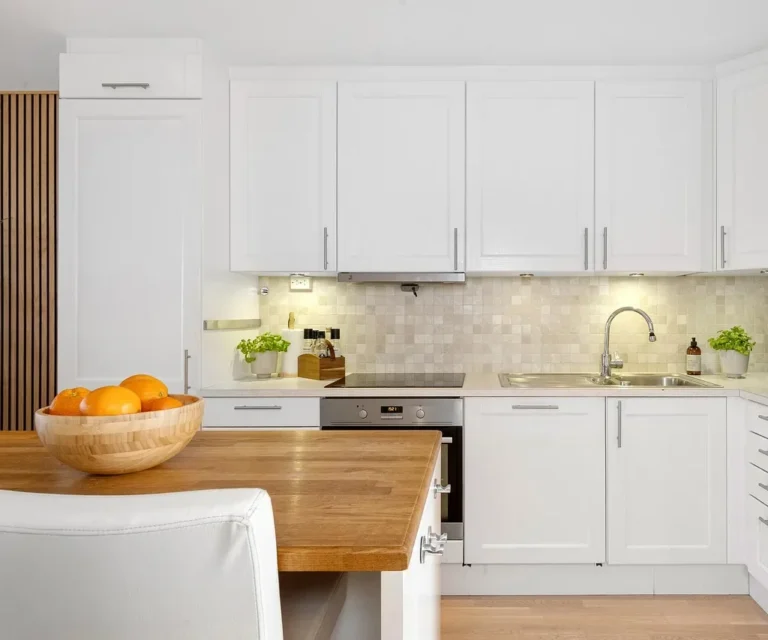
Maple plywood is a face-and-back veneer of hard maple glued over a core that is not maple — usually poplar, birch-combi, or occasionally MDF or particleboard on the cheapest sheets. You’re buying maple for its surface, not its structure. The face veneer is thin, smooth, and takes stain, paint, and clear finish evenly, which is exactly why maple plywood dominates kitchen cabinet doors, closet shelving, and furniture faces that get painted or left natural.
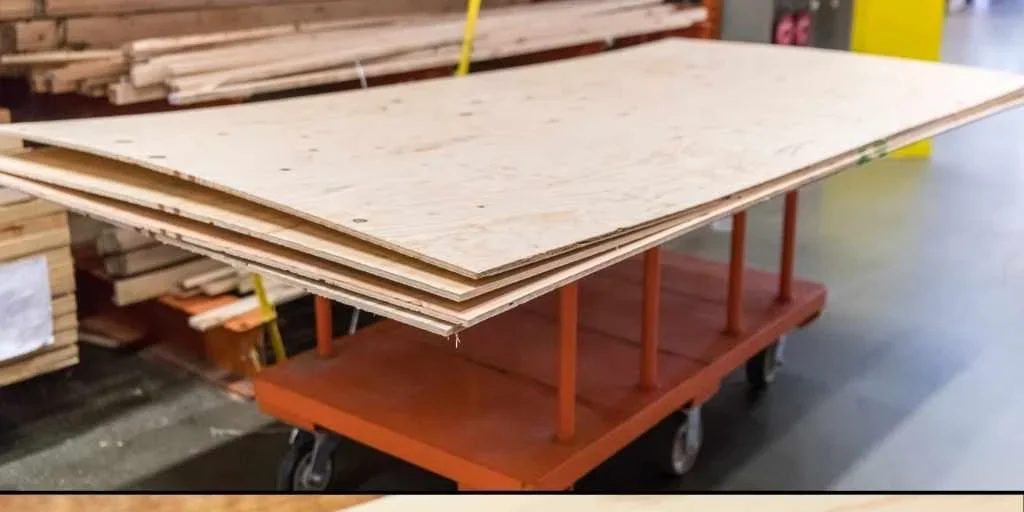
Because the core isn’t maple, two sheets labeled “maple plywood” from two different mills can behave very differently. A cabinet-grade sheet with a void-free poplar or combi core will machine and hold screws almost as well as Baltic birch. A big-box sheet with visible voids and a soft particleboard core will chip out on router cuts and won’t hold a screw at the edge nearly as well. Always ask what core is under the maple face before you buy.
Hardness, Strength, and Screw-Holding: The Real Numbers
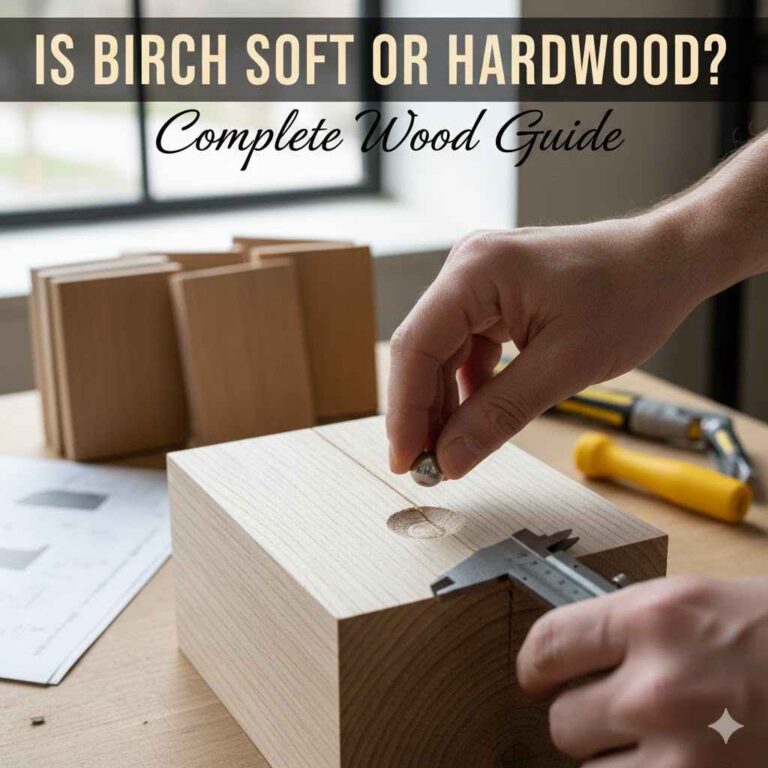
On paper, maple’s face veneer is the harder wood: hard maple sits around 1,450 on the Janka hardness scale versus roughly 1,260 for birch. That 200-point gap matters for surface scratch resistance — a maple tabletop will shrug off more dings than a birch one.
But surface hardness isn’t the whole story for plywood. Baltic birch’s advantage is in the core, not the face. Because every ply is birch, void-free, and the same thickness, screws and hardware bite into solid wood no matter where you drive them into the edge. Maple plywood with a softer core can strip a screw at the edge if you happen to hit a void or a soft poplar layer. That’s why cabinet shops use Baltic birch for drawer boxes and jig fixtures that take repeated screwing and unscrewing, even though the face itself isn’t the hardest option available.
| Property | Baltic Birch Plywood | Maple Plywood |
|---|---|---|
| Face hardness (Janka) | ~1,260 lbf (birch) | ~1,450 lbf (hard maple) |
| Typical ply count (3/4″) | 9–15 plies, all birch | 5–7 plies, poplar/combi core |
| Core voids | None (true BB grade) | Possible, varies by mill |
| Edge appearance | Striped, decorative on its own | Needs edge banding to look finished |
| Typical 5×5 sheet cost | ~$80–$120 | ~$55–$85 |
| Weight (3/4″ sheet) | Heavier, denser layup | Lighter, especially over MDF core |
Appearance and Finishing
Baltic birch’s edge is part of its appeal — the tight, even stripes of exposed plies look intentional, which is why so many mid-century-style shelving and furniture builds leave the edges raw instead of banding them. Maple’s edge, by contrast, usually shows a visible core color break where the veneer meets the poplar or combi layer beneath it, so most builders cover maple plywood edges with maple edge banding or solid maple edging rather than leaving them bare.
Both take stain reasonably well, but birch tends to blotch more than maple unless you use a pre-stain conditioner first — birch’s tight, closed grain absorbs stain unevenly without one. Maple’s face veneer is more forgiving with stain and takes paint especially well, which is part of why it’s the default choice for painted shaker-style cabinet doors.
How to Tell If You’re Actually Getting True Baltic Birch
“Baltic birch” gets used loosely at some lumberyards to describe any void-free birch plywood, even when it wasn’t actually milled near the Baltic Sea. Real Baltic birch typically ships with a grade stamp on the edge or face — look for a B/BB or BB/CP grading mark, which tells you the face and back veneer quality. If a sheet is labeled “birch plywood” with no grade stamp and a visibly lower price than other Baltic birch in the same store, it’s worth counting the plies on the edge before you buy: fewer than 9 plies in a 3/4″ sheet, or any visible gaps when you look down the cut edge, means you’re looking at a generic birch-faced sheet, not the real thing. The generic version will still work for plenty of projects, but don’t pay Baltic birch prices for it.
The same caution applies in reverse with maple. A sheet stamped “maple plywood” only guarantees the face veneer species, not the core. Ask the supplier directly what’s under the maple face, or check the edge for a consistent core color; a poplar core looks pale and uniform, while a combi or MDF core will look noticeably different from the maple face itself.
Which One Should You Actually Buy?
Reach for Baltic birch when the project needs an exposed edge, repeated screwing/unscrewing, or dimensional stability under humidity swings — drawer boxes, router jigs, shop fixtures, speaker cabinets, and skateboard-style furniture builds. Reach for maple plywood when the project is a finished surface that will be painted, clear-coated, or seen from the face rather than the edge — cabinet doors, closet systems, and tabletops that need scratch resistance more than edge strength.
If you’re building cabinet boxes, a common approach is actually to combine both: Baltic birch for the interior box and drawer construction, maple plywood for the visible doors and face frames. You get the edge strength where it’s hidden and the finish quality where it’s seen.
Frequently Asked Questions
Is Baltic birch plywood stronger than maple plywood?
For edge strength and screw-holding, yes — Baltic birch’s void-free, all-birch core outperforms most maple plywood, which typically has a poplar or combi core. For surface scratch resistance, maple’s harder face veneer has the edge.
Which is more expensive, Baltic birch or maple plywood?
Baltic birch usually costs more — roughly $80–$120 for a 5×5 sheet versus $55–$85 for a comparable maple-faced sheet, because the void-free all-birch layup is more labor- and material-intensive to produce.
Can I use regular birch plywood instead of true Baltic birch?
You can, but check the ply count and core first. Generic “birch plywood” sold at big-box stores often has a softer core with visible voids and far fewer plies than true Baltic birch, so it won’t match the edge strength or stability that makes Baltic birch worth the extra cost.
Which plywood takes stain better, Baltic birch or maple?
Maple’s face veneer generally takes stain more evenly. Birch’s tight, closed grain is prone to blotching unless you apply a pre-stain wood conditioner first.
Which is better for cabinet doors, Baltic birch or maple plywood?
Maple plywood is the more common choice for cabinet doors because its smooth face veneer finishes cleanly under paint or clear coat. Baltic birch is usually reserved for the box and drawer construction behind the doors, where edge strength matters more than face appearance.
The Bottom Line
Baltic birch and maple plywood solve different problems even though they’re often shopping-list neighbors. Baltic birch wins on edge strength, void-free stability, and screw-holding — buy it for boxes, jigs, and anything with a visible edge. Maple plywood wins on face-surface hardness and finish quality — buy it for doors, tabletops, and anything that needs to look flawless under paint or clear coat. Many cabinet builds use both, and knowing which one is doing which job is the real decision, not picking a single “winner.”
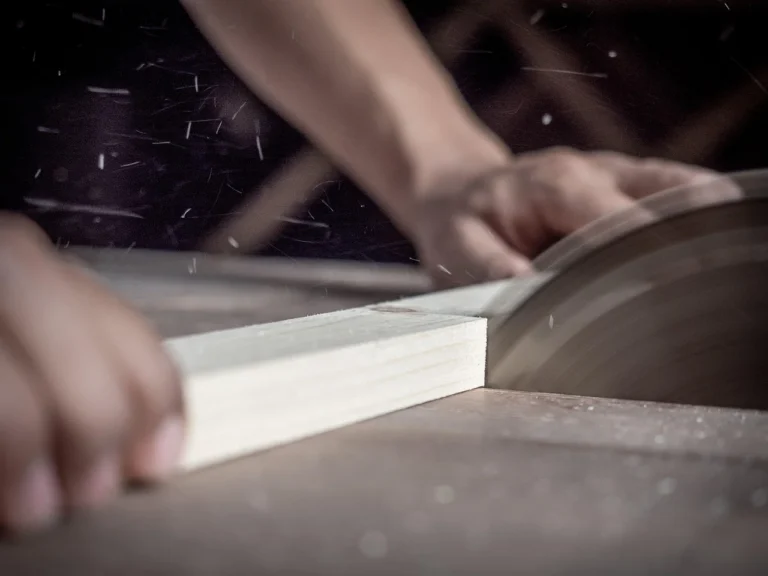
For a broader look at birch plywood in general versus maple — not just the Baltic grade — see our Birch vs Maple Plywood comparison. If you’re also weighing birch against a different species entirely, our Birch vs Poplar Plywood guide covers that comparison in detail. For more on pricing specifically, see what Baltic birch plywood actually costs, and if you’re deciding what to build drawer interiors from, see what wood to use for drawer boxes. When you’re ready to cut either material, these splinter-free cutting techniques apply to both.
Sponsored / affiliate links. As an Amazon Associate I earn from qualifying purchases. I may earn additional commission from eligible campaigns.
 Baltic Birch Plywood Sheets Box of 45 - Laser Engraving Cutting, Scroll Saw Nature Veneer Color, Stronger Than Basswood, A/A Grade,12 x 12 x 1/8”, 3mm Thickness Perfect for Wood Burning
 Baltic Birch Plywood 1/8'' x 12'' x 18'', 6 Pack, B/BB Grade, Void-Free Core, Laser Cutting Ready, Flat Sheets for CNC, Engraving, DIY Crafts, Art Painting, Wood Burning, Staining