Track Saw Comparison: Festool vs Makita vs DeWalt (2026)
Track saws combine a circular saw with a straight guide rail for splinter-free, dead-straight cuts — something a standard circular saw can’t match without an aftermarket guide. Using the wrong saw on sheet goods causes tear-out that can ruin a $60 sheet of veneer plywood in one pass. This guide compares track saw performance and price against circular saws, and shows which specific models fit different budgets and project types.
What Is a Track Saw and How Is It Different From a Circular Saw?
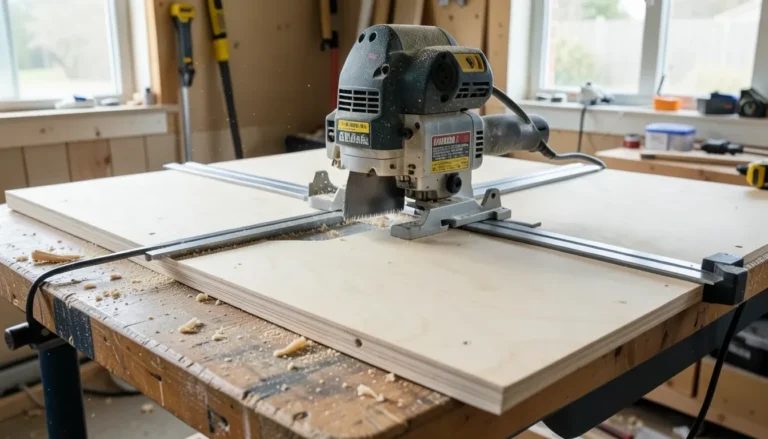
A track saw is a circular saw that rides on a dedicated aluminum guide rail, which clamps or grips the workpiece so the blade follows a fixed, dead-straight line. It differs from a standard circular saw in three ways: the anti-splinter rubber strip on the rail prevents tear-out on the top face of the cut, the plunge mechanism lets the blade drop into the middle of a panel without a starter hole, and the rail itself — not a fence or a straightedge clamp — carries the saw. Use a track saw when cut quality and repeatability matter more than raw portability; use a plain circular saw for framing, rough cuts, or jobsite work where a rail is impractical.

| Factor | Track Saw | Circular Saw |
|---|---|---|
| Cut accuracy over 8 ft | Within about 1/32 in. | Can drift 1/8 in. or more freehand |
| Tear-out on veneer plywood | Minimal (anti-splinter strip) | Common without a guide |
| Plunge cuts mid-panel | Yes, no starter hole needed | No, requires a drilled starter hole |
| Typical price (tool + one rail) | $300 – $650 | $60 – $200 |
| Best for | Sheet goods, cabinetry, fine joinery | Framing, rough cuts, jobsite work |
Best Budget Track-Saw Upgrade Pick
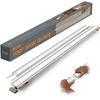 |
BORA NGX 100″ Circular Saw Guide Rail – $69.99 Turns a standard circular saw into a dedicated straight-edge cutting system — the same accuracy advantage the comparison table above covers, at a fraction of a dedicated track saw’s price.
|
As an Amazon Associate we earn from qualifying purchases.
Track Saw Comparison: Festool vs Makita vs DeWalt (2026)
These three brands dominate the track saw market for good reason: each wins on a different priority. Festool leads on cut quality and dust extraction, Makita leads on cordless power and value, and DeWalt leads on jobsite durability.
Festool TSC 55 KSEB
Festool’s rail-and-saw system is the reference point every other brand is measured against. The TSC 55 pairs a smooth plunge mechanism with a rubber-strip guide rail that virtually eliminates tear-out on veneer plywood, and its dust extraction is tight enough to run indoors without a shop vac hose fighting you. It costs more than a comparable circular saw, but for cabinet-grade sheet work it’s the saw cabinet shops actually buy.
Makita SP6000J1 / 40V Max XGT
Makita’s corded SP6000J1 is the best all-around value in the category, and the cordless 40V Max XGT delivers the most raw cutting power of any track saw on the market. Makita rails also fit the Metabo HPT C3606DPA, which widens your rail investment if you ever add a second brand’s saw.
DeWalt DWS520K
DeWalt’s DWS520K uses a parallel plunge mechanism — the entire saw base drops straight down instead of pivoting — which keeps your hand position level through a long ripping cut and feels more controlled on full sheets of plywood. It’s the pick most often chosen for jobsite durability over cabinet-shop finesse.
📊 A track saw typically holds cut accuracy within about 1/32 inch over an 8-foot rip, versus 1/8 inch or more for a freehand circular saw cut — Source: Crafted Wood Creations, 2026
Note: this comparison is built from manufacturer specs and published tool-test data (linked above), not from in-house testing on this site — we have not physically tested these three saws ourselves.
How to Choose the Right Track Saw for Your Shop
Match the saw to the work you actually do, not the highest-rated model on a review site. Work through these in order:
- Rail length: a 55-inch rail handles most cabinet parts; a 106-inch (or two rails joined with a connector) is needed to rip a full 8-foot sheet in one pass.
- Corded vs. cordless: corded saws give unlimited runtime for full-day sheet breakdown; cordless models like the Makita 40V Max XGT trade some runtime for job-site mobility.
- Rail compatibility: check whether the saw’s rail system is proprietary (Festool, DeWalt) or cross-compatible (Makita/Metabo HPT) before buying extra rails.
- Dust extraction needs: if you’re cutting MDF or working indoors, prioritize a saw with a sealed dust port over one with a better price tag.
- Budget ceiling: if a $300–$650 track saw is out of reach, a guide-rail attachment like the one above gets most of the straight-line accuracy for under $70.
Common Track Saw Mistakes to Avoid
- Skipping the rail’s anti-splinter strip trim cut before first use, which causes tear-out on every cut after.
- Buying a short rail and trying to “walk” it down a long panel — use a rail connector instead, since a re-clamped rail rarely lines up perfectly.
- Cutting directly on a hard floor or bench without support underneath the kerf line, which lets the panel flex and pinches the blade.
- Assuming any circular saw fits any rail — confirm brand compatibility (see the rail compatibility step above) before buying a rail separately from the saw.
Track Saw Maintenance and Rail Care
A track saw’s accuracy depends on the rail staying straight and the blade staying sharp — neglecting either turns a precision tool back into a rough-cut saw. Wipe the underside of the rail after each use; resin and dust buildup on the rail’s sliding surface is one of the most common causes of a saw that suddenly binds or drifts mid-cut. Store rails flat or hung vertically rather than leaning them against a wall, since a warped rail cannot be straightened back out and will telegraph that bow into every cut.
Check the blade for pitch buildup and dullness every few sheets of plywood — a dull or gummed-up blade is a more common cause of tear-out than the rail itself, and it’s often mistaken for a rail-alignment problem. Most track saws also have a small adjustment screw on the saw’s base plate that controls how snugly it rides the rail; if the saw wobbles side-to-side on the track, that screw needs a quarter-turn tightening, not a new rail.
Frequently Asked Questions
What is a track saw used for?
A track saw is used for making long, straight, splinter-free cuts in sheet goods like plywood and MDF. It rides on a guide rail instead of being pushed freehand, which is why it’s the standard tool for breaking down full sheets for cabinet parts and flooring underlayment. Unlike circular saws, track saws minimize tear-out on the show face of the cut.
Can I use a track saw instead of a table saw?
Yes, for breaking down full sheets of plywood a track saw is often easier than wrestling a 4×8 sheet across a table saw, and it’s safer for one person working alone. A table saw is still faster and more precise for repetitive rip cuts on smaller stock, so most shops use both rather than one instead of the other.
Do track saw rails work with any circular saw?
No. Festool and DeWalt rails are proprietary to their own saws, while Makita rails also fit the Metabo HPT C3606DPA. A universal guide-rail clamp, like the BORA option above, is the only rail type built to work with any brand of circular saw.
Is a track saw worth it for a hobbyist?
It depends on how often you break down full sheets of plywood. If sheet goods are a regular part of your projects, the cleaner cuts and reduced tear-out justify the cost. If you mostly work with dimensional lumber or make occasional rough cuts, a quality circular saw or a budget guide-rail attachment covers most needs for far less money.
How much does a good track saw cost?
A dedicated track saw with one rail typically runs $300 to $650, depending on brand and whether it’s corded or cordless. Budget alternatives like guide-rail clamp systems cost $40 to $90 and deliver similar straight-line accuracy on plywood, though without a plunge mechanism or anti-splinter strip.
Conclusion
Choosing the right track saw comes down to matching the tool to your actual cut list: Festool for cabinet-grade sheet work, Makita for the best balance of power and value, and DeWalt for jobsite durability. If you’re not ready to commit to a $300+ track saw, a guide-rail attachment on a saw you already own — or pairing it with a good miter saw for cross-cuts and a jig for angled cuts — covers most home shop needs without the bigger price tag.
Sponsored / affiliate links. As an Amazon Associate I earn from qualifying purchases. I may earn additional commission from eligible campaigns.