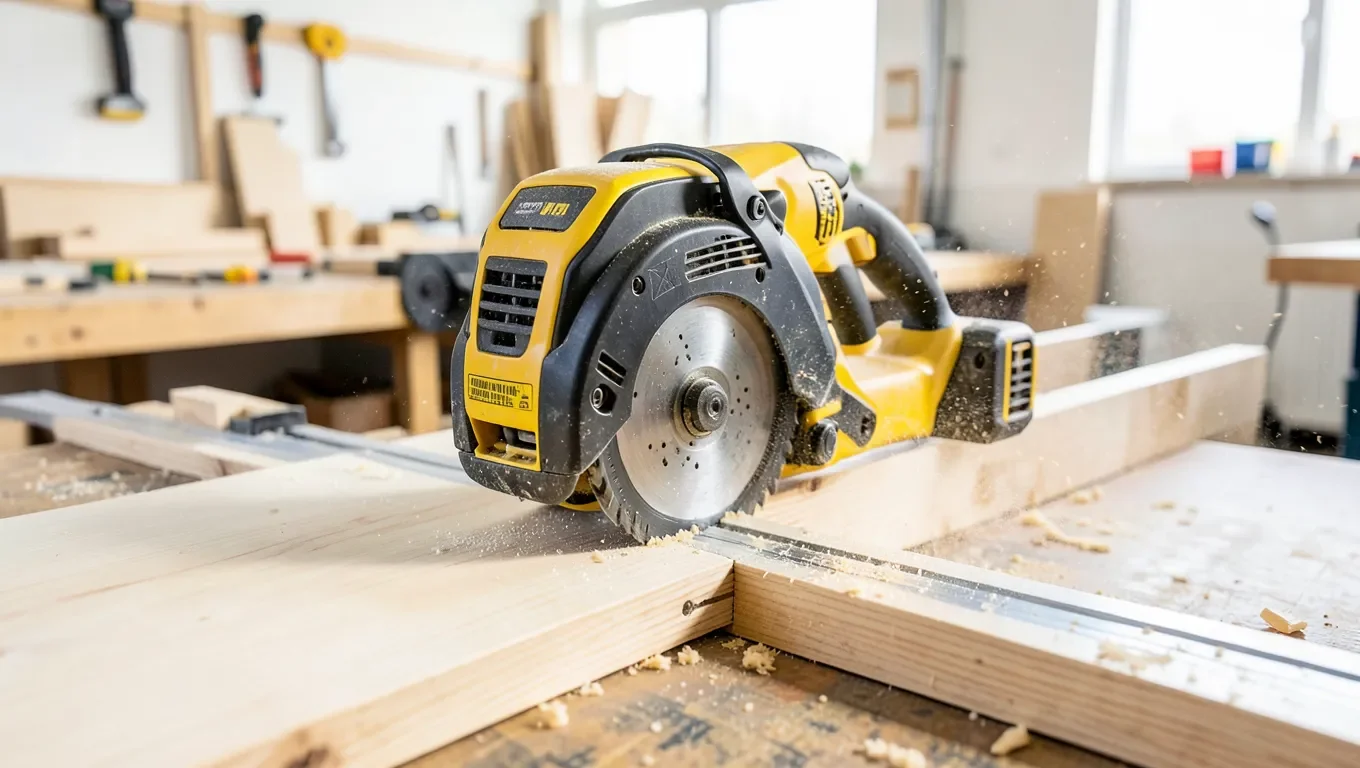
DeWalt Cordless Track Saw Kit: 2026 Review & Buying Guide
If you searched for the DeWalt track saw kit and landed on a “Currently unavailable” listing, that is not a stock glitch. DeWalt discontinued both 60V FlexVolt track saw kits – the DCS520T1 and the DCS520ST1 – and replaced the whole platform with a 20V MAX XR model, the DCS525. Amazon’s own product catalog confirms both old kit ASINs are dead, while the new saw is in stock. Here is what actually changed, what a real cordless track saw setup costs once you add a battery and track, and how to make a clean first cut with one.
The DeWalt DCS520 Track Saw Kit Is Discontinued
CURRENT DEWALT CORDLESS PICK
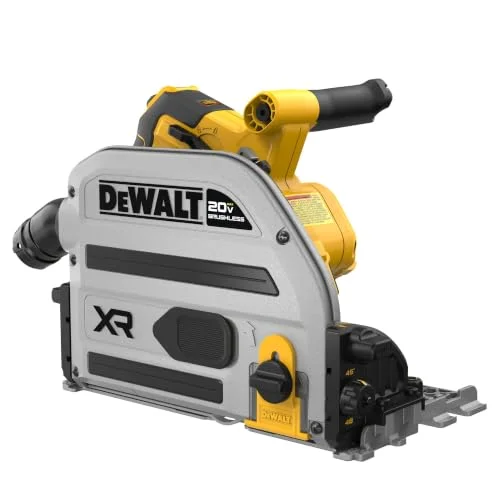 |
DeWalt DCS525B 20V MAX XR Track Saw – $429 The direct successor to the discontinued DCS520 – same zero-clearance track platform, now built on the 20V MAX battery line most DeWalt owners already have.
|
The original DCS520 kits were built around DeWalt’s 60V FlexVolt platform: a 6-1/2 in. blade, a brushless motor spinning 1,750-4,000 RPM, and a cut depth of 2-1/8 in. at 90 degrees (1-5/8 in. at 45 degrees), weighing about 12.5 lbs. The DCS520T1 kit (saw plus one 6.0 Ah FlexVolt battery) listed around $499, and a full setup with tracks, connectors, and a case ran closer to $800. Both ASINs for that kit – the plain DCS520T1 and the DCS520ST1 bundled with a 59 in. track – now return “Currently unavailable” through Amazon’s own catalog data, which is a reliable dead-listing signal, not a temporary stockout.
What Replaced It: The DeWalt DCS525 20V MAX XR Track Saw
DeWalt moved its track saw line onto the 20V MAX XR platform with the DCS525. It keeps the same 6-1/2 in. zero-clearance track design but adds a few things the DCS520 didn’t have. A KICKBACK BRAKE system (part of DeWalt’s PERFORM & PROTECT lineup) automatically cuts power when it senses a pinch, stall, or bind-up. Variable speed runs 2,500-5,400 RPM no-load, and DeWalt rates the accuracy at within 1/32 in. per cut. On a full charge, DeWalt’s spec sheet lists up to 70 cuts or 280 linear feet of rip cuts through 3/4 in. MDF. Dust collection is rated at up to 94% with a vacuum attached, and it uses wireless tool control so a compatible vacuum starts automatically when the trigger is pulled.
The bare tool (DCS525B) is what’s currently listed on Amazon. DeWalt also sells a complete kit, the DCS525STWW1, which bundles an 8Ah 20V MAX XR battery, charger, a track connecting rod, and two 30 in. tracks (60 in. of total track length) – but as of this review that kit isn’t listed on Amazon, only through DeWalt.com and other tool retailers. If you already own DeWalt 20V or FlexVolt batteries, buying the bare tool and a track separately is usually the cheaper route.
DCS520 vs. DCS525: What Actually Changed
| Spec | DCS520 (discontinued) | DCS525 (current) |
|---|---|---|
| Battery platform | 60V FlexVolt | 20V MAX XR (accepts FlexVolt too) |
| Blade size | 6-1/2 in. | 6-1/2 in. |
| No-load speed | 1,750-4,000 RPM | 2,500-5,400 RPM |
| Cut depth (90° / 45°) | 2-1/8 in. / 1-5/8 in. | 2-1/8 in. / 1-5/8 in. |
| Kickback protection | Anti-kickback mechanism + riving knife | KICKBACK BRAKE (auto-stop on pinch/stall/bind) |
| Dust collection | 90% rated, manual vacuum | 94% rated, wireless auto-start vacuum control |
| Weight | ~12.5 lbs | ~11.6 lbs (tool only) |
| Street price (as tested) | ~$499 kit (discontinued) | $429 bare tool |
What You’ll Actually Pay: Saw, Track, and Accessories
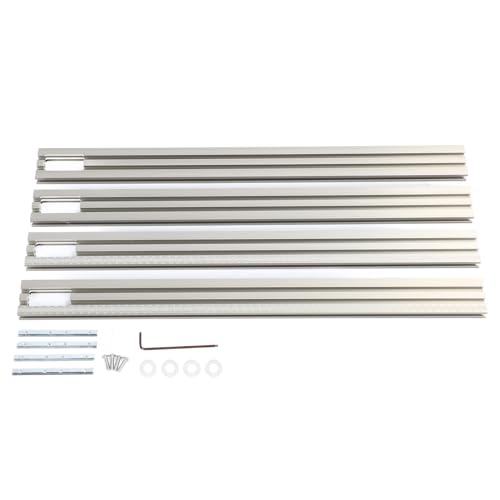
The $429 sticker on the DCS525B is only the saw. Most competitor reviews stop there, which is misleading if you don’t already own DeWalt batteries or track. Based on current Amazon listings, here’s a realistic total: the bare saw is $429, a 59 in. track (DWS5022) runs about $126, a 46 in. track (DWS5020) is about $73, and a track clamp (DWS5026) is around $40. You’ll also need a track connecting rod to join two tracks for longer rips, plus a 20V MAX battery and charger if you don’t already have one in the DeWalt ecosystem – figure another $100-$150 for a mid-size battery and charger if you’re starting from zero. A realistic first-time setup (saw, one 59 in. track, a clamp, and a battery/charger combo) lands closer to $700-$750, not $429.
If cordless isn’t a requirement, DeWalt still sells a corded track saw kit, the DWS520K, which includes the saw and a track together for about $507 and was in stock at the time of this review – often the better value if the tool will mostly live on a stationary bench.
Setting Up and Making Your First Cut
Track saw setup is straightforward once you’ve done it a couple of times:
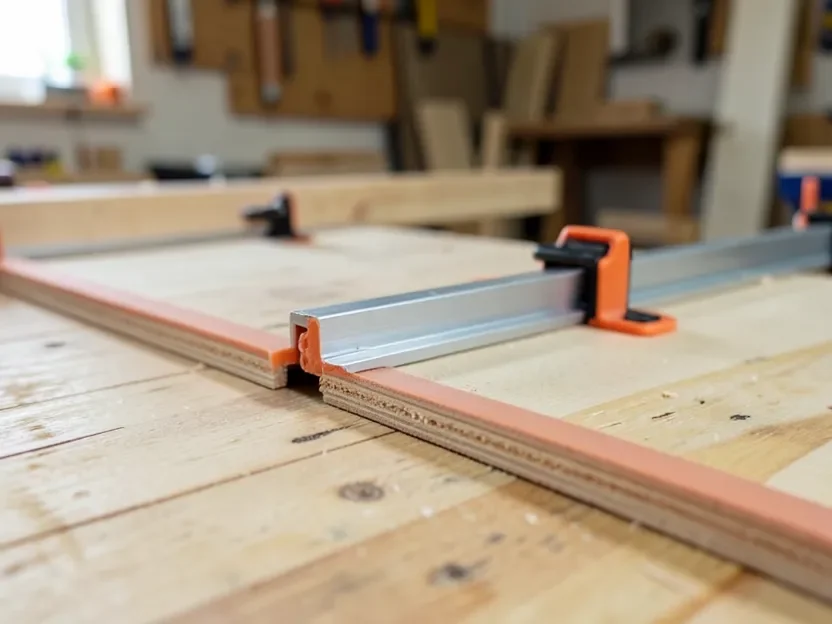
- Attach the battery and lay the track. Line the track’s rubber anti-splinter edge up exactly on your cut line – that edge is what keeps the cut splinter-free, so it has to sit right on the line, not just close to it.
- Clamp both ends of the track. A track that shifts mid-cut is the single most common cause of a ruined cut on a track saw – use the dedicated track clamps (DWS5026), not spring clamps, since they sit flush and don’t interfere with the saw’s base.
- Seat the saw on the track. The DCS525’s base has a machined groove that rides the track’s raised rib, which is what gives the zero-clearance accuracy – you should feel it lock into the rail with no side-to-side play.
- Set your depth. Use the depth scale on the saw, which is calibrated to already account for the track’s own thickness – set it about 1/8 in. deeper than your material to fully sever the cut.
- Let the blade reach full speed before you plunge. Squeeze the trigger, wait a beat for the motor to spin up, then plunge down smoothly and feed forward at a steady pace – forcing the saw through the cut is what trips the kickback brake.
For blade selection, match the tooth count to the material – see our DeWalt track saw blade guide for which blade to run on plywood, hardwood, and laminate.
Common Mistakes to Avoid With a Track Saw
- Cutting with only one end of the track clamped. The unclamped end can lift or drift as the saw’s weight shifts, throwing off an otherwise straight cut.
- Ignoring a dull or wrong-application blade. A blade that isn’t rated for the track’s zero-clearance base can chip the anti-splinter edge, which then has to be replaced before cuts stay clean again.
- Skipping the depth check on scrap first. Track thickness and material thickness both affect the right depth setting – a quick test cut on scrap catches a miscalibration before it ruins your actual workpiece.
- Forcing the saw through hardwood. Feeding too fast on dense material is what triggers the KICKBACK BRAKE unnecessarily – a slower, steady feed rate is both safer and faster in practice.
DeWalt vs. Other Cordless Track Saw Brands
Festool’s TS 55 is the long-standing benchmark for track saws and costs considerably more than the DCS525, with a battery ecosystem and accessory system built around Festool’s own MFT tables. Kreg’s newer 20V Ionic Drive track saw (KPTPS100A) undercuts the DCS525 on tool-only price, around $349, but has a smaller third-party accessory ecosystem than DeWalt’s. For a full breakdown of how the FlexVolt-era DeWalt stacked up against Festool on cut quality, dust collection, and price, see our DeWalt vs. Festool track saw comparison.
Frequently Asked Questions
Is the DeWalt DCS520 track saw kit still available?
No. Both the DCS520T1 and DCS520ST1 kits show as “Currently unavailable” in Amazon’s product catalog as of this review. DeWalt has moved its cordless track saw line to the 20V MAX XR DCS525.
What replaced the DeWalt DCS520 track saw?
The DCS525, a 20V MAX XR track saw with a brushless motor, KICKBACK BRAKE safety system, and the same 6-1/2 in. zero-clearance track design. It’s sold as a bare tool (DCS525B) on Amazon, or as a complete kit (DCS525STWW1) with battery, charger, and tracks through DeWalt.com and other retailers.
Can I use my old DeWalt FlexVolt battery with the DCS525?
Yes. FlexVolt batteries are backward-compatible with 20V MAX tools – they automatically downshift to 20V output when inserted into a 20V MAX tool like the DCS525. A plain 20V MAX battery, however, cannot power a 60V-only FlexVolt tool, so this compatibility only runs one direction.
How much does a complete DeWalt cordless track saw setup cost?
Realistically $700-$750 for a first-time buyer: about $429 for the DCS525B saw, $125-$130 for a 59 in. track, roughly $40 for a track clamp, and $100-$150 for a battery and charger if you don’t already own DeWalt 20V MAX batteries.
What blade should I use with a DeWalt track saw?
A fine-finish blade with 48 or more teeth (like DeWalt’s DWA261248TS) for clean cuts in plywood and hardwood; a lower tooth-count ripping blade cuts faster but leaves a rougher edge. See our track saw blade guide for a full breakdown by material.
Bottom Line
If you’re shopping for a “DeWalt track saw kit” today, the DCS520 you may have seen referenced elsewhere is gone. The DCS525 is the real current option, and it’s a genuine upgrade on safety (KICKBACK BRAKE) and speed range, not just a battery swap. Budget for the track and battery separately from the $429 tool price, and if you’re not tied to cordless, the corded DWS520K kit remains a solid, simpler-to-budget alternative.
Sponsored / affiliate links. As an Amazon Associate I earn from qualifying purchases. I may earn additional commission from eligible campaigns.