My Decking Is Very Slippery When Wet: Real Cause & Fix
Wet decking is almost never slippery from water alone. The real cause is usually one of two things: a film of algae or mildew growing on the wood (common in shaded or damp corners), or a worn-smooth, over-glossy sealer that loses its grip the moment it’s wet. Cleaning fixes the first cause; a textured deck coating or non-slip strips fix the second. Here’s how to tell which one you’re dealing with and fix it for good.
Why Your Deck Gets Slippery When Wet
Water by itself doesn’t make wood dangerously slick — it’s what’s sitting on top of the wood, or what’s happened to the wood’s surface over time, that does. Three things are almost always the actual cause:
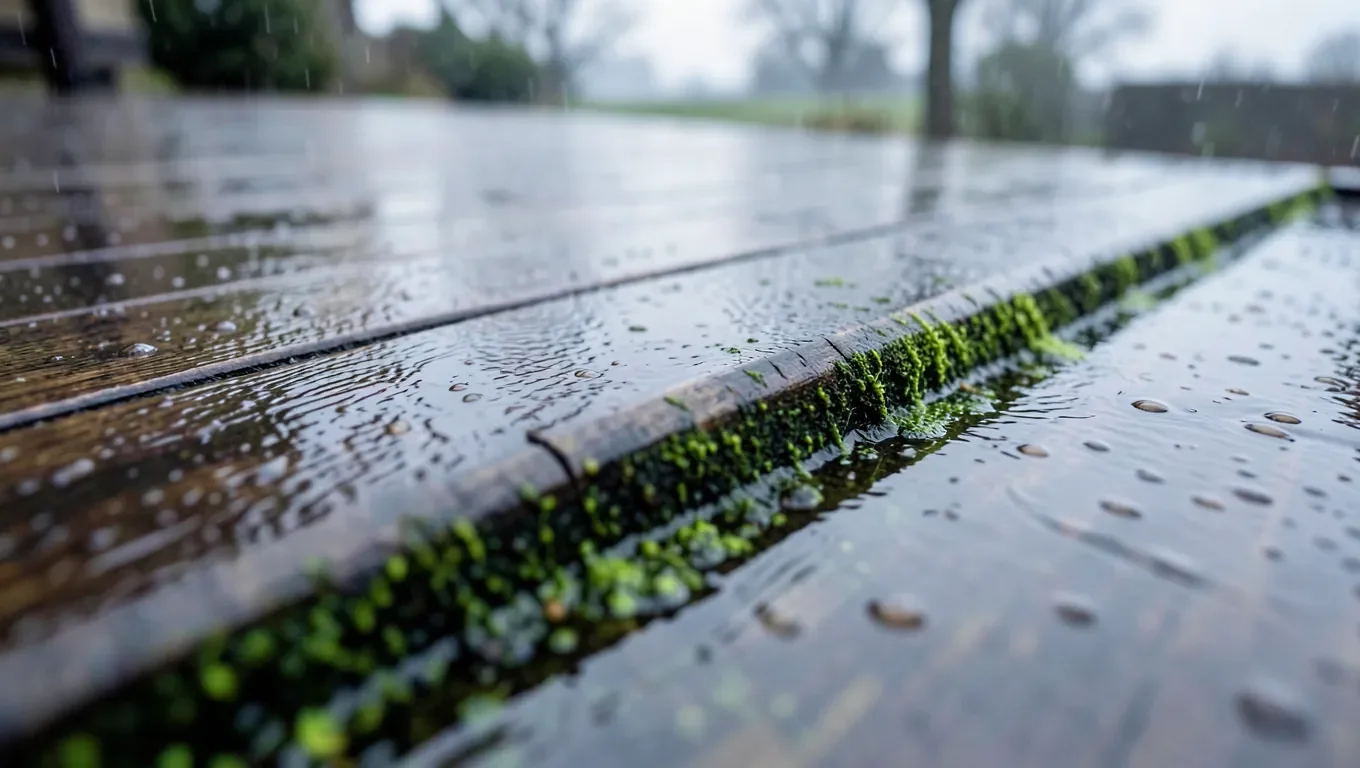
- A biological film. Algae and mildew grow wherever wood stays damp and doesn’t get direct sun — the north side of the house, under overhangs, near sprinklers, or anywhere leaves collect. Once wet, that thin green or black film turns the boards into something closer to a wet rock than wood.
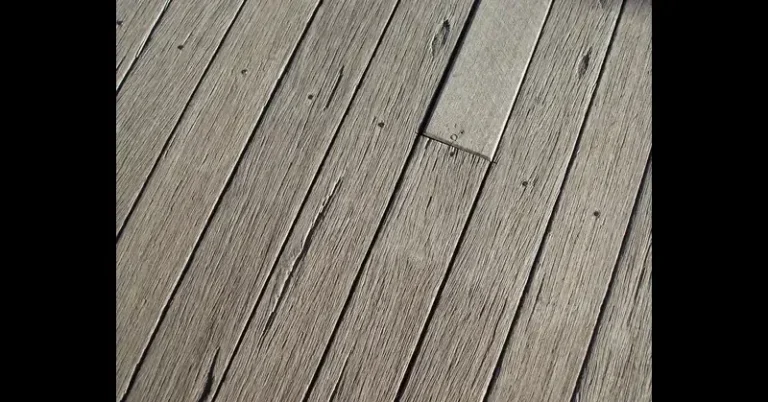
- A worn, weathered surface. New decking has a slightly textured grain that grips shoes. Years of foot traffic and pressure washing sand that texture down to a smooth, worn surface with almost nothing left to bite into.
- A high-gloss sealer. Gloss and semi-gloss finishes look great dry, but they’re the least slip-resistant option on the market — the smoother and shinier the film, the lower its wet-traction. A matte or satin finish with texture beats gloss every time on slip resistance, even though gloss photographs better.
A quick way to tell which one you have: if the deck feels gritty or slightly rough when dry but turns slick only after rain, look for algae first — it’s usually visible as a green or black tint once you’re looking for it. If the deck feels smooth and slick even when dry, you’re dealing with a worn surface or a glossy film, and cleaning alone won’t fix it.
Best Clear Traction Additive
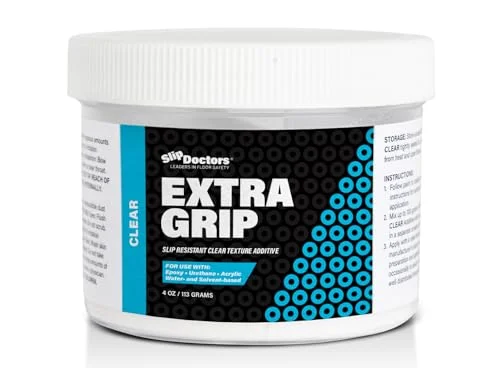 |
SlipDoctors Extra Grip Clear – $35.00 Mixes into your existing deck stain or sealer to add real traction without changing the color or hiding the wood grain.
|
Clean Off the Algae and Mildew First
If your deck has any greenish or blackish tint, especially in shaded spots, clean it before you do anything else — a coating or strips applied over an active algae film won’t bond properly and the slime will just grow back underneath. Sweep off loose debris, then scrub with an oxygen-bleach cleaner (not chlorine bleach, which can discolor and weaken the wood fibers) using a stiff brush, working with the grain. Rinse thoroughly and let the wood dry 24-48 hours before applying anything else. We cover the exact mixing ratio, dwell time, and rinse technique in our full oxygen-bleach deck cleaning guide — it’s the same method, just with more detail than fits here.
One thing worth knowing: a pressure washer on a high setting can gouge the soft grain of the wood and actually make the surface rougher in a bad way — fuzzy and splintery rather than gripping. Keep it on a low, wide-fan setting if you use one at all, and hold the nozzle at a slight angle rather than straight down into the grain.
Add Permanent Traction With a Textured Coating
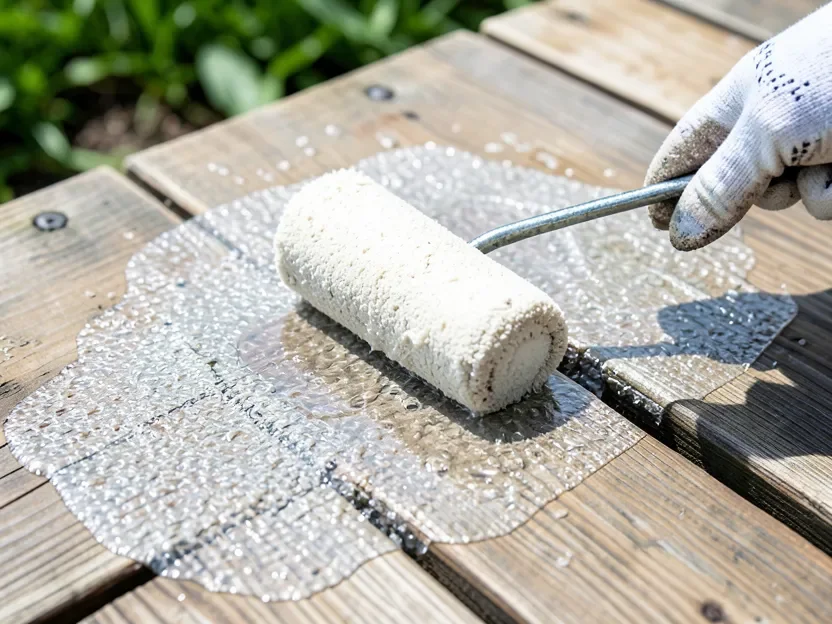
Once the deck is clean and dry, a textured anti-slip additive mixed into your next coat of stain or sealer is the most reliable long-term fix, because it changes the surface itself instead of sitting on top of it waiting to wear off. Mix the additive into the stain or sealer per the product’s ratio, stir it frequently while applying (the grit settles fast), and roll or brush it on the same way you’d apply the stain alone. Avoid re-sealing with a gloss or semi-gloss product afterward — it undoes the benefit by smoothing the surface back down. A matte or low-sheen finish holds the texture and looks less “wet” year-round anyway.
If you’d rather not mix anything, pre-textured deck paints (thicker, rubberized finishes with grit already built in) are a one-step alternative, though they hide the wood grain completely — worth it on a deck you plan to paint anyway, not on one you want to keep looking like natural wood.
Non-Slip Strips for Stairs and High-Traffic Spots
Deck stairs and the areas right around a pool, hot tub, or hose bib get wet more often and see more bare feet than the rest of the deck, so they’re worth treating separately even after you’ve fixed the main surface. Adhesive-backed anti-slip strips or treads are the fastest fix for those specific spots — no drying time, no mixing, just clean and press them on. Because stairs have their own failure points (nosing wear, edge visibility, code minimums) that don’t apply to a flat deck surface, we’ve broken that out into its own guide: what to put on steps to prevent slipping, covering strip placement, tread material by surface type, and how much traction is actually enough by ADA standards.
Preventing It From Coming Back
Algae and mildew need moisture and shade to grow, so anything that reduces either one slows the regrowth cycle significantly:
- Trim back overhanging branches and shrubs that keep sections of the deck shaded and damp longer than the rest
- Make sure the deck has a slight slope or gaps between boards so water actually drains instead of pooling
- Sweep off leaves and organic debris regularly — they hold moisture against the wood and are often where algae gets started
- Re-seal on the manufacturer’s recommended schedule (typically every 1-3 years depending on sun exposure) rather than waiting until the old finish has already worn through
A deck that’s coated with a textured, matte finish and kept clear of standing leaves rarely gets slick enough to be a real hazard, even in wet climates.
Frequently Asked Questions
Why is my deck slippery when wet but not when dry?
That pattern almost always points to algae or mildew rather than a worn surface — the biological film is only slick once it’s wet. If the deck feels rough or gritty when dry, clean it with an oxygen-bleach cleaner before trying anything else.
Does pressure washing fix a slippery deck?
It removes surface algae and grime, which helps, but a pressure washer on too high a setting can gouge the wood grain and leave a rougher, splintery surface. Use a low, wide-fan setting, and follow up with a proper cleaner rather than relying on water pressure alone.
What’s the best coating to stop a deck from being slippery?
A clear traction additive mixed into a matte or satin stain works best if you want to keep the natural wood look, since it adds grit without changing the color. Pre-textured deck paints are a faster one-step option if you’re already planning to paint over the wood grain.
Are non-slip strips as effective as a full coating?
For a specific high-traffic spot — stairs, a pool entry, a hose bib area — strips are effective and fast to install. For the whole deck surface, a mixed-in textured coating holds up longer and doesn’t have edges that can peel or trip someone.
Conclusion
A slippery deck almost always comes down to algae and mildew, a worn-smooth surface, or a too-glossy sealer — identify which one you’re dealing with, clean it properly if biological growth is present, and add real texture back with a traction additive or non-slip strips where it matters most. Do that once, on the right schedule, and a wet deck stops being a hazard.
Sponsored / affiliate links. As an Amazon Associate I earn from qualifying purchases. I may earn additional commission from eligible campaigns.