5/4 Deck Boards at Menards: 12 ft Sizes, Grades & Pricing
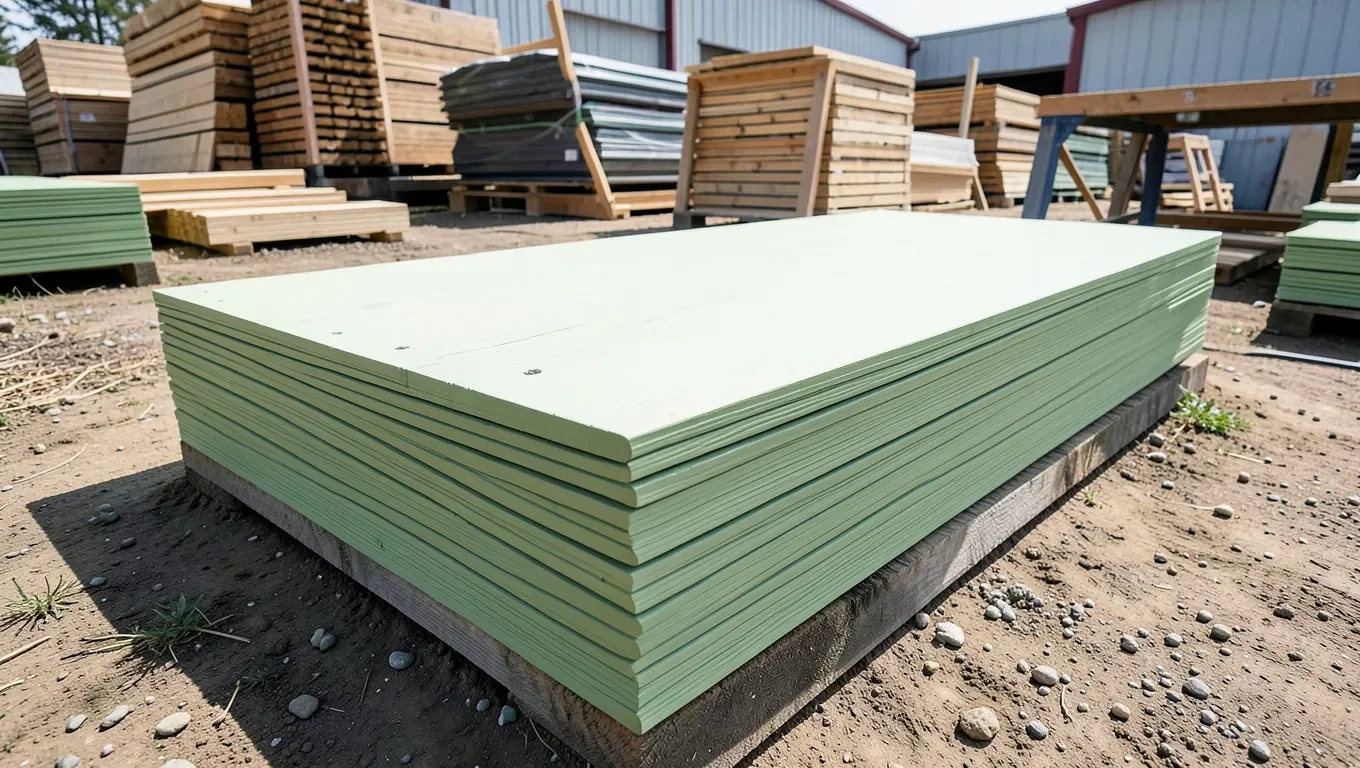
A 5/4 deck board at Menards is a pressure-treated pine board sold in a nominal “five-quarter” thickness — actually 1 inch thick after milling — with a rounded top edge, most commonly in a 6-inch width. Menards stocks these AC2®-treated boards in lengths from 6 to 20 feet, and the 12-foot length is one of the most-bought sizes because it runs the full width of a typical 10–12-foot-deep deck without a seam. Below is what these boards actually cost, how they compare to 2×6 lumber and composite decking, and how to plan, buy, and install them without wasting a trip back to the store.
What Are 5/4 Deck Boards?
“5/4” is a rough-lumber sizing convention, not the board’s finished dimension. A 5/4×6 board starts as a rough-cut 1.25-inch-thick plank, then gets surfaced (planed smooth) on both faces, which brings the actual finished thickness down to about 1 inch. The width follows the same pattern: a nominal 6-inch board finishes at 5.5 inches. At Menards, the standard decking profile also has one rounded (“radius-edge”) long edge, which is more comfortable underfoot and sheds water better than a square-cut edge. Menards sells this profile under its AC2® pressure-treated line, using micronized copper azole preservative that’s pumped into the wood under pressure to resist rot, fungal decay, and insect damage — the same reason it’s rated for direct ground or above-ground exterior use depending on the tag.
Best Screws for Fastening 5/4 Deck Boards
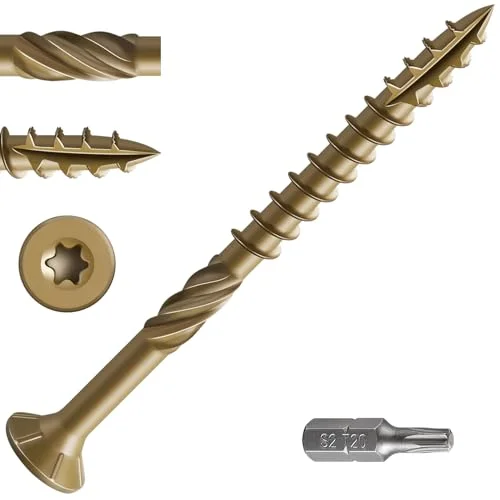 |
Wensilon #10 x 3″ Deck Screws, 137pc – $8.99 A #10 x 3-inch screw is the right length to fully bite into the joist through a 1-inch-thick 5/4 board without bottoming out.
|
5/4 Deck Board Sizes and Grades at Menards
Menards carries 5/4×6 AC2® decking in two grades. “#2 Standard Grade” is the everyday decking most homeowners buy — it can have some tight knots and minor surface checking, which doesn’t affect strength. “#1 Premium Grade” costs more but is sorted for fewer knots and a cleaner face, which matters if the deck will be stained a light color where flaws show more. Both grades come in the same length run: 6, 8, 12, 14, 18, and 20 feet. For a full breakdown of nominal-vs-actual dimensions across 5/4×4 and 5/4×8 sizes too, see our 5/4 deck board actual size guide.
Read the treatment tag before buying, not just the price tag: an above-ground-rated (UC3B) 5/4 board is meant for a deck surface that never touches soil, while ground-contact (UC4) boards cost more and are rated for framing members closer to grade. Mixing these up doesn’t void a warranty on the decking itself since 5/4 boards are almost always sold as above-ground surface material, but it’s worth confirming on the tag if you’re buying from a mixed pallet. For pricing across Menards’ wider treated-lumber lineup, including the 2× framing lumber you’ll pair with this decking, see our Menards pressure-treated lumber price guide.
Why 12 ft Is a Popular Length for This Board
12-foot decking is one of the fastest-moving lengths at Menards for a practical reason: most residential decks are built 10 to 12 feet deep off the house, and a 12-foot board lets the boards run the full width in one piece with no butt joint. Butt joints need to land on a joist and get staggered row-to-row to avoid a visible seam line, which adds cutting and planning time. If your deck is deeper than 12 feet, you’ll either need the 14–20-foot lengths Menards also stocks or plan a staggered joint pattern; if it’s 12 feet or under, the 12-foot board is usually the least wasteful option.
5/4 Deck Board Pricing at Menards
Pricing on treated lumber moves with the commodity lumber market, so treat any number here as a planning range, not a quote — always confirm current price at the register or on Menards.com for your store. As a rough planning range, a 5/4×6×12′ #2 Standard board typically runs in the low-to-mid teens, with the #1 Premium grade running a few dollars more per board. Composite decking of the same length is roughly two to three times the cost of treated wood, which is the main reason 5/4 pine decking stays the more common choice for a first deck or a budget rebuild.
| Material | Typical Cost (12 ft) | Maintenance | Typical Lifespan |
|---|---|---|---|
| 5/4 Treated Pine (Menards) | Low-to-mid teens | Reseal every 1–2 years | 15–25 yrs, maintained |
| 2×6 Treated Lumber | Similar to slightly higher | Reseal every 1–2 years | 15–25 yrs, maintained |
| Composite Decking | 2–3× treated pine | Wash only, no sealing | 25–30+ yrs |
How Many 5/4 Boards Do You Need?
Each 5/4×6 board covers about 5.5 inches of deck surface once you account for the standard 1/8-inch gap between boards used for drainage and seasonal wood movement — call it roughly 5.6 inches of coverage per board. For a 12-foot by 12-foot deck laid with boards running across the 12-foot width, that’s 144 inches of depth divided by 5.6 inches, or about 26 boards, plus one or two extra to allow for trimming and any damaged boards in the pack. Always buy slightly over your calculated count — a board with a bad crown or a hidden crack is common enough in pressure-treated lumber that planning for zero waste isn’t realistic.
Installing 5/4 Deck Boards: Spacing, Screws, and Gaps
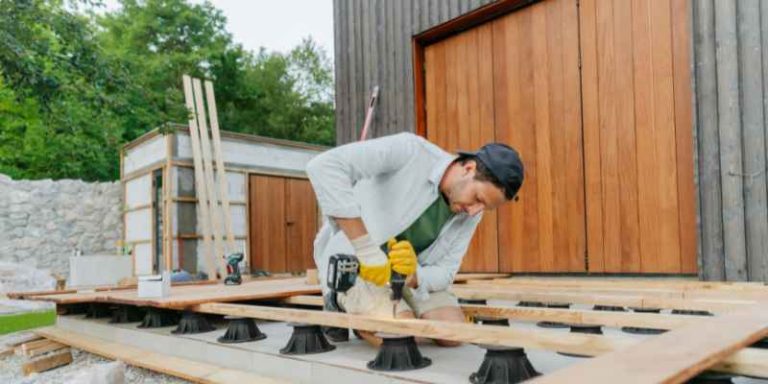
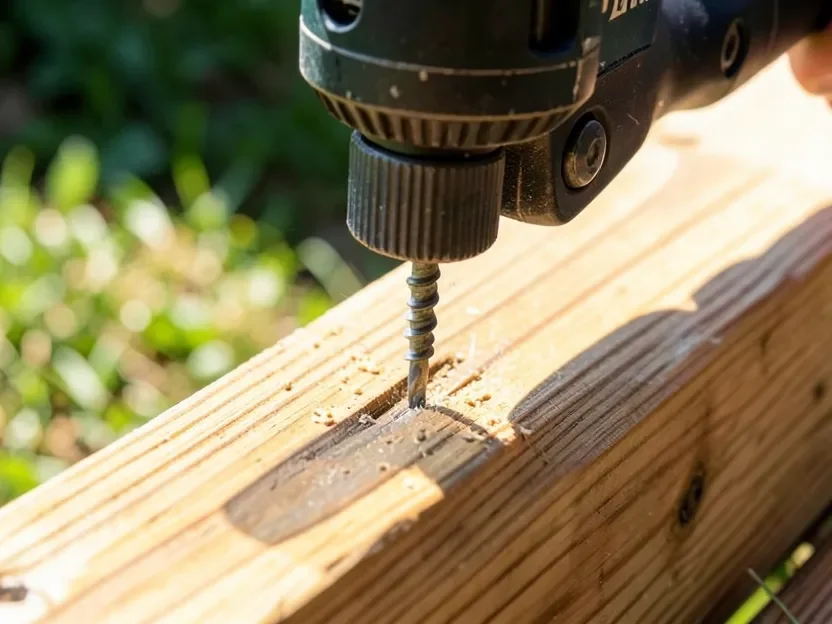
Joists under 5/4 decking should be spaced no more than 16 inches on center; some installers tighten that to 12 inches for boards run at a diagonal, since the shorter span reduces bounce. Leave a consistent 1/8-inch gap between each board — a standard 16-penny nail laid on its side works as a quick spacing gauge. Fasten with exterior-rated deck screws rather than nails: screws resist the seasonal expansion and contraction that gradually backs nails out of pressure-treated wood, and a star- or square-drive screw is far less likely to cam out and strip mid-drive than a Phillips head. Pre-drilling near board ends reduces splitting, which matters more on 5/4 stock than on thicker 2× lumber because there’s less material around the fastener. If a screw head strips out while you’re driving it — common with cheap uncoated screws in dense pine — our guide to removing stripped deck screws covers six ways to back one out without damaging the board.
Maintaining 5/4 Deck Boards
New pressure-treated lumber is shipped wet from the treatment process, and manufacturers generally recommend waiting for the board to dry out — usually a few weeks to a couple of months depending on climate — before applying a sealant or stain, since sealing over trapped moisture can trap it in and cause the finish to fail early. A simple way to check: sprinkle a few drops of water on the surface; if it beads up, the wood is still too wet to seal, and if it soaks in within a minute or two, it’s ready. Once sealed, plan on resealing every 1–2 years depending on sun and foot-traffic exposure, and rinse the deck periodically with a mild soap-and-water solution rather than a high-pressure washer setting, which can gouge the softer grain of pine decking. If a board does develop rot, splitting, or persistent warping despite maintenance, see our guide on repairing decking boards to decide between patching a section and a full board swap.
Frequently Asked Questions
What are 5/4 deck boards made of?
Menards’ 5/4 decking is pine, pressure-treated with AC2® micronized copper azole to resist rot and insect damage. The standard profile is 1 inch thick by 5.5 inches wide (finished dimensions) with one rounded long edge, and it’s rated for outdoor, above-ground deck-surface use.
How many 5/4 boards do I need for a 12×12 deck?
Roughly 26 boards, based on each 5/4×6 board covering about 5.6 inches of surface (5.5″ board plus a 1/8″ gap) across a 144-inch (12-foot) span. Add one or two extra boards to cover trimming and any defective pieces.
Are 5/4 deck boards better than composite decking?
They serve different budgets. 5/4 treated pine costs roughly a third to a half of what composite decking costs per foot, but needs resealing every 1–2 years and will show more wear over time. Composite costs more upfront but needs no sealing and typically outlasts wood decking by 10+ years.
How do I maintain 5/4 deck boards?
Let new boards dry out for a few weeks to a couple of months before sealing, then reseal every 1–2 years. Clean with mild soap and water rather than a pressure washer on a high setting, and check for popped or loose screws once a year.
Can I paint 5/4 deck boards?
Yes, once the board has dried out enough to accept finish — exterior deck paint or a solid-color stain both work. Painting instead of a clear/semi-transparent sealant hides the wood grain but also tends to need more frequent touch-up on a walking surface.
Sponsored / affiliate links. As an Amazon Associate I earn from qualifying purchases. I may earn additional commission from eligible campaigns.