Pine Vs Oak Flooring: Which One Handles Real Life Better?
Oak flooring is roughly 2–3x harder than pine (red oak is commonly rated around 1,290 lbf on the Janka scale versus roughly 380–870 lbf for most pine species), so it resists dents and dog nails far better. Pine costs less, is easier to install and refinish, but shows wear faster.
Choosing between pine and oak flooring really comes down to how the room gets used. A busy kitchen or entryway favors oak’s durability; a low-traffic bedroom or a farmhouse-style space can lean into pine’s softer, more character-rich look.
Wood Characteristics
Best For Cleaning Either Pine Or Oak Floors Safely
 |
Bona Hardwood Floor Cleaner Spray – 32 fl oz – LavenderBona | Our pick | $8.97
Price as of 20 Oct 2026
|
View |
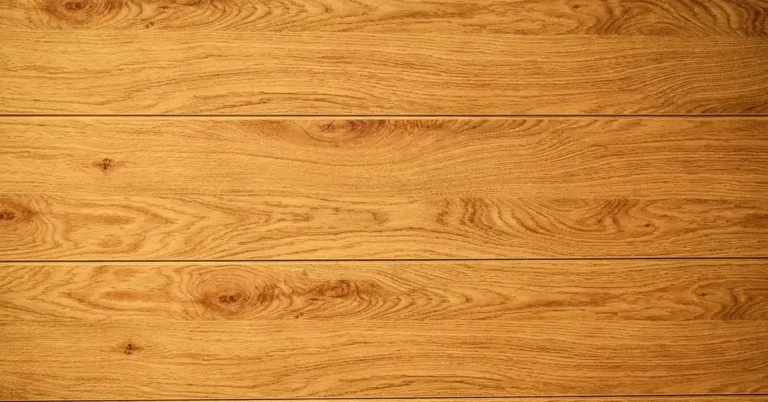
Pine is a softwood, milled from fast-growing conifers, and it looks the part — pale yellow to light amber, with visible knots and resin streaks that give every board its own character rather than a uniform, machined appearance. That character is also its structural weakness: pine’s low density (roughly 380-870 lbf on the Janka hardness scale depending on species) means a dropped pan or a dog’s nails leave a visible dent in a way a harder wood simply resists.
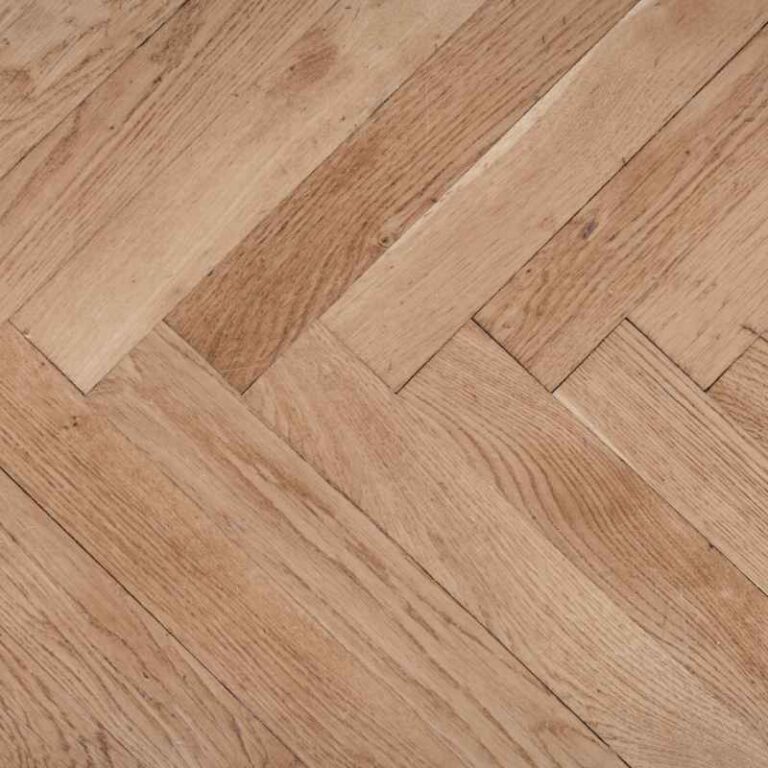
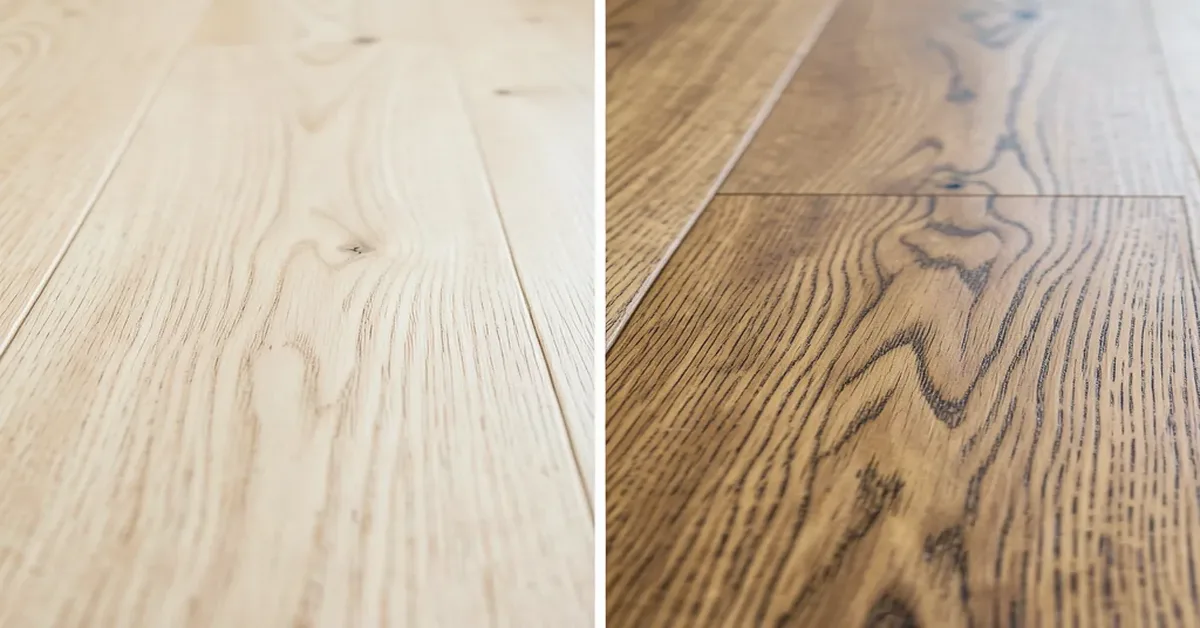
Oak is a ring-porous hardwood with a much denser cell structure, which is what gives red oak its roughly 1,290 lbf Janka rating — over three times harder than the softest pine species. That density shows up as a more pronounced, open grain pattern (the “ring-porous” structure means each growth ring has a visible band of larger pores) and a heavier board for the same dimensions, both of which read as a more substantial, formal material underfoot compared to pine’s lighter, rustic feel.
Aesthetic Appeal
Pine’s appeal is really about imperfection read as character — tight and loose knots, mineral streaks, and a grain pattern that varies noticeably from board to board, all of which deepen into a warm amber-gold as the wood ages and oxidizes under UV light over a period of months to years. That aging process is part of why reclaimed and antique pine flooring commands its own market; the color you get from a newly installed pine floor is genuinely different from how the same floor looks a decade later.
Oak’s grain runs straighter and more consistent board to board, which is exactly why it reads as more formal and uniform than pine even before any stain goes on. It also takes stain more predictably across a wide color range, from pale whitewashed looks to deep espresso tones, because its tighter, more even grain structure absorbs color more evenly than pine’s variable density does — pine is notorious for blotching under stain unless it’s pre-conditioned first, while oak rarely needs that extra step.
Durability And Longevity
Pine’s Janka rating puts real numbers behind what most people notice within the first year of living with a pine floor: dents from furniture legs, pet nails, and dropped objects show up more readily than on a harder species. That doesn’t mean pine wears out — solid pine floors from the 1800s are still in use today — but it does mean each dent and scratch stays visible rather than blending in, so a pine floor’s character is partly a running record of the household’s actual daily life. Sanding and refinishing every several years keeps a heavily used pine floor looking fresh, and pine’s softness actually makes it easier and faster to sand than a dense hardwood.
Oak floors resist the same daily wear far better simply because of that Janka number — over three times the hardness means dents and scratches that would mark pine often don’t register on oak at all. That durability is the main reason oak dominates in higher-traffic settings like kitchens, entryways, and households with large dogs, and why a well-maintained oak floor can go decades between refinishing rather than needing it every few years.
Cost Considerations
Pine’s lower cost comes directly from its faster growth cycle and wider availability — it’s not a “lesser” wood so much as a more abundant one. Solid pine flooring often runs under $5 per square foot for material, with regional and grade variation (knotty grades with more character marks typically cost less than clear, knot-free pine).
Oak typically starts around $8 per square foot and climbs from there depending on width, grade, and whether it’s red or white oak (white oak generally commands a premium over red oak for its tighter grain and better water resistance). Factor in that oak’s greater density also makes it somewhat more expensive and time-consuming to install and cut, so the price gap between the two woods extends a bit into labor as well as material.
Installation And Maintenance
Pine’s softness genuinely speeds up installation — boards cut faster with less blade wear, and nails or staples set more easily without pre-drilling in most cases. That same softness means care during installation matters more than usual: a dropped tool or a misplaced clamp can dent a board before it’s even finished, in a way that wouldn’t leave a mark on oak. Once installed, a quality polyurethane or oil finish is what actually protects pine day to day, since the finish layer takes the abuse that would otherwise go straight into the soft wood underneath.
Oak floors take more effort to cut and fasten due to their density, but that same hardness means the installation itself is more forgiving of minor bumps and drops along the way. Day-to-day care is straightforward: regular dry sweeping or vacuuming to keep grit from scratching the finish (grit, not moisture, is oak’s biggest everyday enemy), a damp (not wet) mop for spills, and felt pads under furniture to prevent the shallow scuffing that heavy furniture legs can still cause even on a hard floor.
Environmental Impact
Growth rate is the main environmental variable that separates these two woods, and it cuts in pine’s favor on paper — though the full picture is a bit more nuanced than “faster growth equals greener.”
Sustainability Of Pine
Pine plantations typically reach harvestable maturity in 25-35 years, versus 60-80+ years for oak, which lets responsibly managed pine forestry cycle through harvest and replanting multiple times within a single human generation. That fast cycle is a genuine sustainability advantage when the pine is sourced from a certified, managed plantation (look for FSC certification) rather than unmanaged wild-cut stock, and pine’s softness also means offcuts and scrap see more downstream use in particleboard, pulp, and other wood products rather than going to waste.
Eco-friendliness Of Oak
Oak’s slow growth cuts the other way on harvest frequency, but a mature oak forest supports meaningfully more biodiversity than a fast-rotation pine plantation — oak trees host hundreds of insect and wildlife species over their long lifespan, more than nearly any other North American tree genus. The sustainability trade-off with oak is really about sourcing: FSC-certified oak from a selectively managed forest is a far different environmental proposition than oak from unmanaged clear-cutting, and the wood’s long service life (an oak floor rarely needs replacing) partly offsets its slower regrowth by simply needing to be harvested less often per square foot of flooring actually used over time.
Suitability For Different Spaces
Pine earns its keep in lower-traffic, character-forward spaces — bedrooms, farmhouse-style living rooms, and homes where a warm, evolving patina is part of the appeal rather than a flaw to manage. Its lower cost also makes it a practical choice for families budgeting flooring across multiple rooms, and its softness is genuinely kinder underfoot for standing or playing, though that same softness means a busy family room with heavy foot traffic will show wear noticeably faster than the same room finished in oak.
Oak flooring is the more sensible choice anywhere durability under sustained traffic matters more than a soft, rustic look — entryways, kitchens, and commercial spaces like offices and restaurants all lean on oak’s resistance to dents and scratches to avoid frequent refinishing. Its more formal, classic appearance also tends to suit traditional and higher-end interiors better than pine’s casual character, which is part of why oak remains the default recommendation for anyone planning to install one floor and not touch it again for decades.
Frequently Asked Questions
What Are The Cons Of Pine Flooring?
Pine flooring dents and scratches easily due to its soft nature. It requires regular maintenance and refinishing. Susceptible to water damage, it can warp or stain. The wood can darken over time, affecting aesthetics. Pine floors may also not be as durable as hardwood options.
What Is The Best Wood For Flooring?
Oak is the best wood for flooring due to its durability, versatility, and timeless appeal. Maple offers a smooth surface and elegant look. Cherry provides rich color and distinctive grain patterns. Hickory is ideal for high-traffic areas with its hardness.
All options enhance home aesthetics beautifully.
Does Pine Or Oak Last Longer?
Oak lasts longer than pine. Oak is denser and more durable, making it ideal for furniture and flooring. Pine is softer, more prone to dents and scratches, but easier to work with. Choose oak for longevity and pine for affordability and ease of use.
Is Pine Or Oak Better For Flooring?
Oak is more durable and resistant to dents, making it ideal for high-traffic areas. Pine offers a rustic charm and is softer, which may be suitable for low-traffic rooms. Choose oak for longevity and pine for a cozy, warm aesthetic.
Both have unique grains and finishes.
Conclusion
The Janka numbers make the practical case clear: oak’s roughly 1,290 lbf hardness against pine’s 380-870 lbf range means oak simply shrugs off the dents, scratches, and dog nails that show up on pine within the first year of daily use. That durability is why oak remains the safer default for a kitchen, entryway, or any room that sees heavy, sustained foot traffic.
But durability isn’t the only variable that matters. Pine costs less, installs faster, and develops a warm, evolving character that some homeowners actively prefer over oak’s more formal uniformity — and in a bedroom or low-traffic space, pine’s softness is rarely an issue in practice. Choose based on how the specific room actually gets used, not just which wood scores higher on a hardness chart.
Sponsored / affiliate links. As an Amazon Associate I earn from qualifying purchases. I may earn additional commission from eligible campaigns.