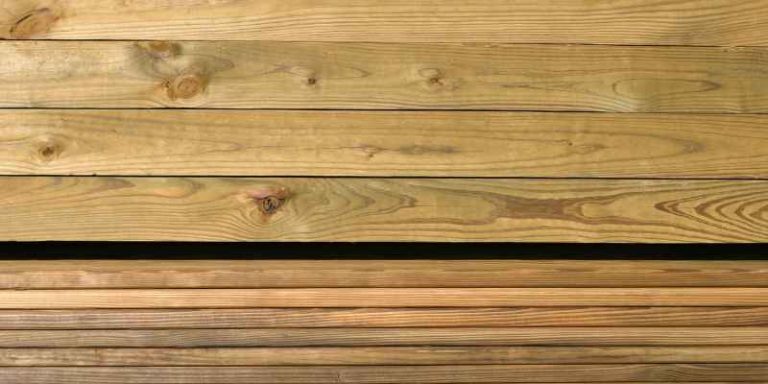
What Is Pressure Treated Kiln Dried Lumber (KDAT)?
Pressure treated kiln dried lumber — sold as KDAT (Kiln Dried After Treatment) — is pressure-treated wood that enters an industrial kiln after chemical treatment, reducing moisture from 50-80% down to 12-19%. Unlike standard wet PT lumber that requires 8-12 months of air drying before you can paint or stain it, KDAT ships from the mill ready to finish immediately. This guide covers exactly how KDAT differs from standard pressure-treated and plain kiln-dried lumber, what the moisture targets mean in practice, best applications, and whether the 15-25% price premium makes sense for your project.
Quick Answer
KDAT lumber is pressure-treated wood kiln-dried to 12-19% moisture content after treatment. It is up to 30% lighter than wet PT, dimensionally stable from day one, and ready to stain or seal immediately — no waiting period required. Best for deck framing, fences, pergolas, and any outdoor structure where warping and finishing delays hurt the project. Costs 15-25% more than standard wet pressure-treated lumber.
What Is Pressure Treated Kiln Dried Lumber (KDAT)?
Best Wood Moisture Meter Pick

General Tools MMD4E Moisture Meter
Reliable pin-type meter with a 5-50% wood measurement range — ideal for confirming KDAT boards are truly at 12-19% before applying stain or sealant.
- Best for: Verifying lumber moisture at the yard or job site before staining
- Why we picked it: Trusted brand, wide 5-50% wood range, calibration checker included, well-suited for KDAT verification
- Main drawback: Pin-type leaves small holes — use on cut ends or concealed surfaces to avoid marks on visible faces
Compare more moisture meter options
 Option 1 Pinless Digital Wood Moisture Meter
|
 Option 2 Mecurate Digital Moisture Meter with LED Indicators
|
 Option 3 RDINSCOS Pin-Type Wood Moisture Detector
|
As an Amazon Associate we earn from qualifying purchases.
Pressure treated kiln dried lumber is treated wood that undergoes two separate manufacturing processes at the mill: pressure treatment first, then kiln drying. Most homeowners know pressure treatment — preservatives like Micronized Copper Azole (MCA) are forced deep into the wood fibers under high pressure, protecting the lumber against rot, decay, insects, and moisture for decades. What makes KDAT different is what happens next.
Standard pressure-treated lumber leaves the treatment plant saturated — moisture content commonly runs 50-80% in freshly treated boards. That wet wood shrinks, warps, and twists as it dries on the job site, which creates gapped deck boards, wavy framing, and a surface that won’t hold paint or stain for months. KDAT fixes this by running the treated lumber through a kiln at the mill, dropping moisture content to a target range of 12-19% before it ever reaches a lumber yard.
What KDAT Stands For
KDAT stands for Kiln Dried After Treatment — the “after” is the critical word. The lumber is treated first (so preservatives bond to the wood fiber), then dried in the kiln (so excess moisture and leftover treatment chemicals are removed). You may also see it labeled KDAT, KD PT, or kiln-dried pressure-treated at the lumber yard. YellaWood, ProWood, and Culpeper Treated Lumber are among the major brands that produce KDAT products in standard sizes from 2×4 through 2×12, plus 5/4×6 decking.
The Two-Step Manufacturing Process
- Pressure treatment: Lumber is loaded into a treatment cylinder. A vacuum removes air from the wood cells. Preservative solution (typically MCA) floods the chamber under pressure of 150-200 psi, forcing chemicals 1/4″ to 3/8″ deep into the wood fiber. The chemical bond that forms protects against fungal decay, termites, and moisture for 40+ years when properly maintained.
- Kiln drying: The freshly treated boards are transferred to an industrial kiln. Hot air circulates at controlled temperatures (typically 140-160 degrees F) for several days, driving moisture content from the 50-80% post-treatment range down to the 12-19% target. Up to 80% of the treatment-induced moisture is removed during this step.
KDAT vs Wet Pressure Treated vs Standard Kiln Dried Lumber
This table covers the three lumber types most buyers compare when planning a deck or outdoor structure. The numbers come from industry data published by the KDAT Lumber Association and major treatment manufacturers.
| Factor | KDAT (Kiln Dried After Treatment) | Wet / Green Pressure Treated | Standard Kiln Dried (No Treatment) |
|---|---|---|---|
| Moisture content | 12-19% | 50-80% | 6-10% |
| Ready to stain / seal | Immediately | 8-12 months air drying | Immediately |
| Weight vs wet PT | Up to 30% lighter | Baseline (heaviest) | Varies by species |
| Dimensional stability | High — pre-shrunk | Low — shrinks and warps on site | High |
| Decay / insect resistance | Yes — full PT protection | Yes — full PT protection | No — indoor use only |
| Cost vs wet PT | 15-25% premium | Baseline | Varies |
| Best outdoor use case | Deck framing, fences, pergolas | Ground contact, structural posts | Interior framing only |
For a deeper comparison of the two base lumber types, see our guide to pressure treated vs kiln dried wood — that article covers when each type works best independently, while KDAT combines both processes.
Benefits of Pressure Treated Kiln Dried Lumber
KDAT delivers four tangible job-site advantages that wet PT lumber cannot match, and they compound for contractor-built projects where callbacks are expensive.
- Stain and seal immediately: KDAT boards are already dry, so you can apply a deck sealer or semi-transparent stain within days of installation — not months later. With wet PT, stain beads off the surface until the board reaches 15% moisture or below, which typically takes a full growing season.
- Less warping and shrinking: The kiln removes the moisture that causes wood to move. A KDAT deck frame stays true through the first winter; the same frame built with wet PT will develop gaps, bows, and popped screws as the boards dry unevenly.
- Up to 30% lighter: Moisture is heavy. A standard 2x6x12 wet PT board can weigh 18-22 lbs compared to roughly 14-16 lbs for the KDAT equivalent. On a full deck frame, that weight savings translates to less labor fatigue and faster installation.
- Full decay and insect protection: Kiln drying does not remove the copper-based preservatives bonded to the wood fiber. KDAT carries the same UC (Use Category) ratings as wet PT — UC3B for above-ground exterior, UC4A for ground contact (when rated) — so you give up nothing in durability by choosing the dry version.
Best Projects for Pressure Treated Kiln Dried Lumber
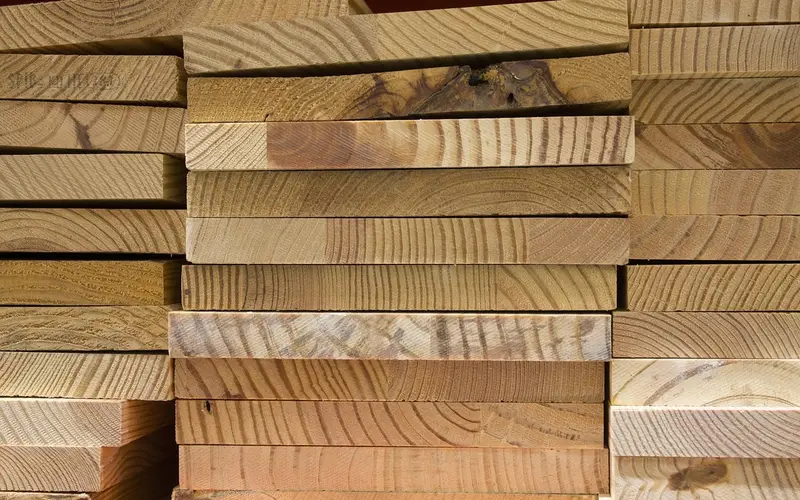
KDAT is the right call for any outdoor project where dimensional stability matters from day one, where you want to finish the wood immediately, or where warping during construction creates structural or aesthetic problems.
- Deck framing (joists, beams, ledgers): The most common KDAT application. Composite decking manufacturers like Trex and TimberTech require kiln-dried framing in their installation specs because wet framing shrinks beneath composite boards, creating squeaks and gaps. KDAT in 2×8, 2×10, and 2×12 is the professional standard for composite deck sub-structure.
- Deck boards and railing: Available in 5/4×6 and 2×6 profiles. Installs with tighter, more predictable spacing because the boards won’t shrink post-installation. You can apply stain the same weekend.
- Fences: KDAT 2×4 rails and 1×6 boards stay straighter through winter. Wet PT fence boards often develop cup and twist within the first 12 months.
- Pergolas and outdoor structures: Overhead framing where visible warping damages appearance. KDAT 4×4, 4×6, and 6×6 posts hold their shape without cracking or checking.
- Pressure treated outdoor furniture: Tables and benches benefit from the clean, finish-ready surface — no waiting to apply an oil or stain.
One practical tip: verify the moisture content yourself before staining, even on boards labeled KDAT. Moisture can vary within a bundle, and a board stored in humid conditions at the yard may have re-absorbed moisture. A digital moisture meter gives you a confirmed reading in seconds.
How to Install Pressure Treated Kiln Dried Lumber
Installation is faster and more predictable with KDAT than with wet PT, but the wood still requires correct handling. Here are the steps that matter most on a deck frame build.
- Check moisture content on arrival: Even labeled KDAT boards can re-absorb moisture during transport or yard storage. Use a pin-type moisture meter on a cut end — target 12-19%. Above 19% means more drying time needed before staining; the board will still install fine, but hold off on the finish coat.
- Store flat and off the ground: Stack boards on a level surface with 3/4″ stickers between each layer for airflow. Never store vertically — boards set on end develop cupping within days. Cover loosely with a tarp if storing outdoors, but allow ventilation to prevent condensation.
- Acclimate before installing in extreme conditions: If lumber is arriving from a cold warehouse into a hot, humid summer job site, let it acclimate 24-48 hours outdoors before installation. KDAT is stable, but a sudden humidity swing can cause minor surface checking on bare wood.
- Pre-drill near ends: Even with the dimensional stability of KDAT, always pre-drill within 3″ of board ends before driving screws. End-grain splitting is a wood characteristic that moisture content does not eliminate — pre-drilling does.
- Use hot-dipped galvanized or stainless hardware: MCA preservative in pressure treated lumber corrodes standard zinc-plated screws and joist hangers within 1-2 years. KDAT and green PT lumber use the same MCA chemistry, so the hardware rule applies to both.
- Leave a 1/4″ to 3/8″ gap between deck boards: KDAT boards are already at their near-final moisture content, so you do not need to install them tight expecting post-shrinkage gaps. Gap them as you go — the structure you build is the structure you will have.

How Long Before You Can Stain Pressure Treated Kiln Dried Lumber?
KDAT lumber can be stained within 1-2 weeks of installation under normal conditions — sometimes immediately, depending on weather and the specific product. The board’s moisture content (12-19%) is already in the range most deck stains require, so you are not waiting for the wood to dry.
The waiting period after KDAT installation is about the surface condition, not the overall moisture. Foot traffic, sawdust from cuts, and handling oils from installation all leave residue that blocks stain penetration. A light cleaning with a deck wash or diluted oxalic acid solution, followed by 24-48 hours drying, prepares the surface.
By contrast, standard wet PT lumber needs 8-12 months of air drying before most stains will penetrate properly. Rushing a stain application on wet PT results in peeling within one season as the stain cannot bond to a waterlogged surface. For specifics on how long to wait before staining treated lumber, including the water-bead test to confirm readiness, see our dedicated guide. Also see our guide on sealing treated wood for sealant options that pair well with KDAT decks.
How Much Does Pressure Treated Kiln Dried Lumber Cost?
KDAT lumber carries a 15-25% price premium over standard wet pressure-treated lumber of the same species and grade. In 2026 pricing across major US markets:
- 2x6x12 wet PT (Southern Yellow Pine): $12-$16 per board
- 2x6x12 KDAT (Southern Yellow Pine): $14-$20 per board
- 5/4x6x16 wet PT decking: $10-$15 per board
- 5/4x6x16 KDAT decking: $12-$18 per board
On a 400 sq ft deck frame, the KDAT premium typically adds $150-$400 to total lumber cost, depending on regional supply. Most contractors find the premium pays for itself in reduced callbacks (no warped framing to straighten post-install) and in labor savings from same-day staining capability.
One pricing note: KDAT availability varies significantly by region. Southern US markets where Southern Yellow Pine is produced nearby tend to have the best KDAT selection and pricing. Northern and Pacific Northwest markets may have limited KDAT inventory or significant freight premiums — call ahead before budgeting for a large project.
Is Pressure Treated Kiln Dried Lumber Safe?
Yes, KDAT lumber is safe for standard outdoor construction applications. The preservative chemistry in modern pressure-treated lumber — primarily Micronized Copper Azole (MCA) and Copper Azole (CA) — replaced the older CCA (chromated copper arsenate) formulation that was phased out for residential use in 2004. The current copper-based systems are stable in the wood once cured and do not present the health risks associated with the older arsenic-containing treatments.
Normal precautions still apply when cutting or sanding KDAT lumber: wear a dust mask rated N95 or better, work outdoors or in a well-ventilated area, and wash hands before eating. Do not burn pressure-treated wood — the preservatives concentrate in ash and smoke and are toxic. For structural raised beds where edibles might contact the soil near treated wood, use a liner or consider naturally rot-resistant species like cedar or black locust instead.
Frequently Asked Questions About Pressure Treated Kiln Dried Lumber
What does KDAT mean on lumber?
KDAT stands for Kiln Dried After Treatment. It means the lumber was pressure-treated with preservatives first, then run through an industrial kiln to reduce moisture content to 12-19%. The stamp or label at the lumber yard may read KDAT, KD PT, or kiln-dried pressure-treated. It is the same decay and insect protection as standard wet PT, but with the dimensional stability of kiln-dried lumber.
Is KDAT lumber worth the extra cost?
Yes, for deck framing under composite decking or any project where you want to stain immediately and avoid warping callbacks, KDAT is worth the 15-25% premium. The math works out clearly for deck framing: the lumber cost premium on a typical 400 sq ft deck runs $150-$400, but a single callback to re-secure warped joists costs more in labor. For budget fencing or simple structures where warping is cosmetically acceptable, standard wet PT is fine.
Can you use KDAT lumber for ground contact?
Only if the specific product is rated UC4A or UC4B (ground contact). Check the end-tag stamp — most KDAT decking and framing lumber is rated UC3B (above-ground exterior only). For posts in concrete or buried applications, you need a UC4A or UC4B rated board, which requires a higher preservative retention level. The kiln drying process itself does not affect the Use Category rating — that comes from the treatment retention level, not the moisture content.
Does KDAT lumber still warp after installation?
KDAT is significantly more stable than wet PT, but no wood is completely warp-proof. If boards are improperly stored at the yard (standing vertically, in direct sun without cover, or in saturated conditions), they can develop cup or bow even before installation. After installation, proper fastening — screws every 16″ on deck boards, blocking between joists — prevents most movement. For more on managing pressure treated wood warping, our guide covers the causes and fixes in detail.
What moisture content should KDAT lumber be at?
KDAT lumber is kiln-dried to a target moisture content of 12-19%. Individual boards within a bundle will vary — the spec means the average of the lot, not every single board. Use a digital moisture meter on 5-10% of boards in a bundle to confirm they are in range. For painting or staining, aim for boards testing below 15%. Above 19% moisture, the board has likely re-absorbed humidity at the yard and needs time to dry back down before finishing.
Conclusion
Pressure treated kiln dried lumber (KDAT) solves the core frustration of standard wet PT: it ships from the mill already stable, already light, and already ready for a finish coat. The 12-19% moisture content target means no waiting for boards to dry before staining, no warped framing to fight during installation, and no gaps opening up across composite deck boards after the first winter. The 15-25% price premium is straightforward to justify on any project where dimensional stability or immediate finishing matters — and that covers most outdoor structures worth building.
The one step worth adding to your routine: verify the moisture content at the yard before loading the truck. A basic moisture meter takes 10 seconds per board and confirms what the KDAT label promises. That 10-second check is cheaper than returning boards that re-absorbed humidity in covered storage.
Sponsored / affiliate links. As an Amazon Associate I earn from qualifying purchases. I may earn additional commission from eligible campaigns.